5 The structure of the genome
The genome of an organism is its hereditary information encoded in DNA. DNA sequences that code for protein are genes.
The structure of the genome — coding and non-coding sequences. A genome is made up of genes and other DNA sequences that do not code for proteins. Non-coding sequences include those that regulate transcription and those that are transcribed to RNA but are never translated. Some non-coding sequences have no known function.
 |
 |
 |
|
|
Homework Sheets 1_8A
Whilst we get used to considering our genome as a series of genes which code for the production of protein. In fact, in eukaryotes (though not prokaryotes) the vast majority of the genome (~97% in humans) does not code for protein. This used to be considered junk DNA, having no function, but the role of these so-called non-coding sequences is beginning to be better understood.
Regulation of transcription
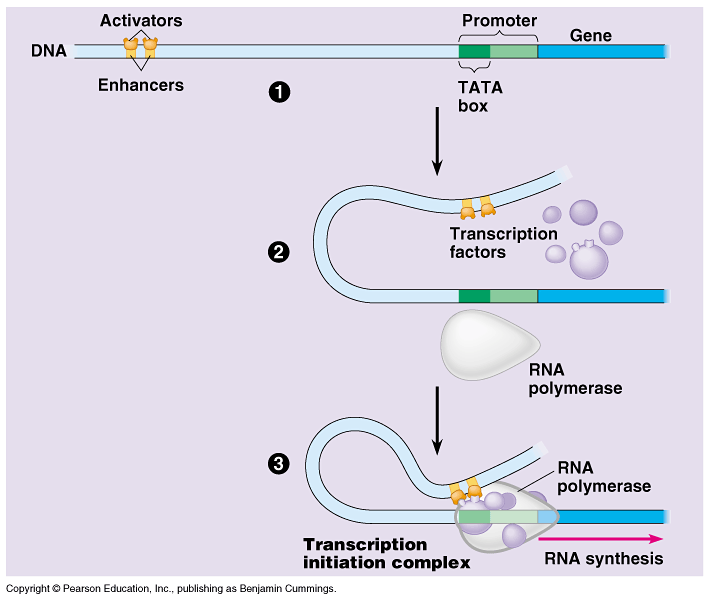
As discussed previously, not all genes in a cell are expressed, and so the expression of genes is regulated by proteins called transcription factors. These transcription factors bind to specific sequences of DNA, often at some distance from the coding portion of a gene. Some of the factors, called activators will come in contact with the RNA ploymerase, attached at the promoter region, as the DNA strand bends, thus initiating transcription.
Protection
(abridged from http://en.wikipedia.org/wiki/Telomere)
A telomere is a region of repetitive nucleotide sequences at each end of a, which protects the end of the chromosome from deterioration or from fusion with neighbouring chromosomes. Its name is derived from the Greek nouns telos (τέλος) ‘end’ and merοs (μέρος, root: μερ-) ‘part.’ For vertebrates, the sequence of nucleotides in telomeres is TTAGGG.
Transcription of non-translated RNA
A number of “genes” in the genome code for RNA which does not produce proteins. Examples include tRNA and rRNA which are discussed elsewhere. In addition, small nuclear RNAs (snRNA) are involved in the production of mature mRNA from the primary transcript by helping to remove introns.
microRNA (miRNA) are around 22 nucleotides long and are involved in regulating translation of mRNA.