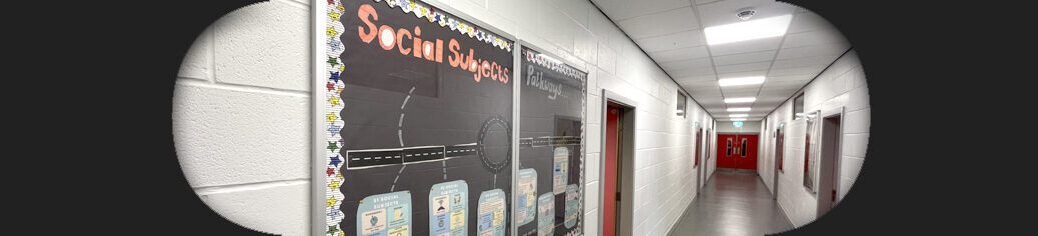
The Humanities Faculty aims to plan and deliver lessons which engage all learners and which motivate learners to achieve their best.
Pupils are encouraged to participate in lessons and voice their opinions. We also develop lifelong skills such as resilience, responsibility, teamwork, leadership, commitment and working independently.
All of our courses allow pupils to study a wide range of topics which help them to build awareness and understanding of the world in which they live.
S1 Curriculum
The S1 Social Subjects course covers Geography, History and Modern Studies. Pupils will experience all three subjects in 8 – 10 week blocks throughout the year.
The theme to our S1 course is Discovering Scotland and all work relates to our local and national community.
| History [CfE – People and the Past] | Mysteries, Myths and Legends |
| Modern Studies [CfE – People and Society] | Stand Up for Your Rights |
| Geography [CfE – People and Environment] | Climate, Landscape and Environment |
| Local Investigation [CfE – People and the Past/Society/Environment] | Drumchapel and Clydebank |
| Enterprise activity [CfE – People and the Past/Society/Environment] | Pupil Exhibition of Work and S1 Tea Party |

The S1 RME course aims to develop a knowledge and understanding of the values, beliefs and practices of world religions, and to reflect on moral issues which impact on our lives.
| Unit | Dates |
| World Religion : Christianity | August – October |
| Festivals and Celebrations | October – December |
| Diversity | January – March |
| Philosophy: Big Questions | March – Change of timetable |

S2 Curriculum
The S2 Social Subjects course covers Geography, History and Modern Studies. Pupils will experience all three subjects in 8- 10 week blocks throughout the year.
The theme to our S2 course is ‘Our World’ and all work relates to Europe and World people, places and events .
In January, S2 pupils will participate in their Options choices and will choose to specialise in one or more of these Social Subjects.
| Geography [CfE – People and Environment] | Earth Forces |
| Modern Studies CfE – People and Society] | Global Inequality |
| History [CfE – People and the Past] | Time Travel: The 1960s |
| Social Subjects [CfE – People and the Past/Society/Environment] | Health and Disease Through Time and Place |

The S2 RME course aims to develop a wider understanding of world religions and of key moral issues. Pupils are given the opportunity to research, discuss and debate issues which impact on their lives.
| Unit | Dates |
| World Religion – Islam | August – October |
| Animal Rights | October – December |
| War and Peace | January – March |
| Inspirational People | March – Change of timetable |

S3 Curriculum
The S3 course allows each pupil to choose one or two of the Social Subjects. They choose their courses based on:
- What they enjoy most
- What they are good at
- What they will achieve most in
- Careers they will take
The units for each Social Subject course:
| History | Geography | Modern Studies |
| History Evidence/skills | Climate Change | Crime |
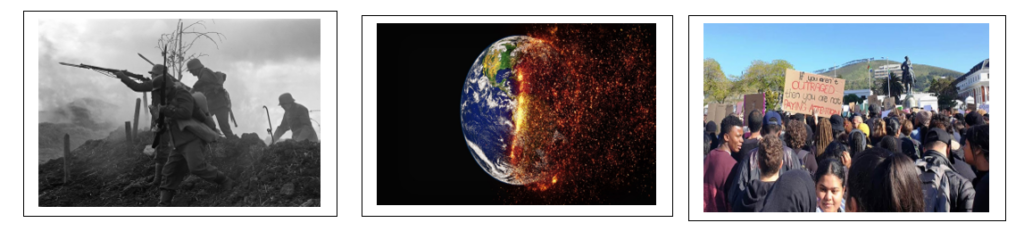
| The Great War | Empty Lands | Power and Protests |
| The Atlantic Slave Trade | Urban Environments | USA |
The S3 R.M.E course continues to develop pupil understanding of the beliefs, values and practices of world religions while also developing a sense of social justice and responsibility for the community. This is done through involvement with the Youth Philanthropy Initiative. Pupils will work in teams and compete for the chance to win £3,000 for their chosen community charity.
| Units | Dates |
| Crime and Punishment | August – October |
| YPI | October – December |
| Judaism | January – March |
| Prejudice and Discrimination | March – Change of Timetable |
Senior Phase Curriculum
We currently offer courses within Geography, History and Modern Studies at National 4, National 5, Higher and Advanced Higher levels. We also offer Religious, Moral and Philosophical Studies at National 5 and Higher levels.
The variety of courses allows all learners to progress within one or more Social Subject area. It also allows learners to move across different Humanities subjects as they progress.
For the past two years, we have extended our range of courses to include National 5 and Higher Criminology. For those interested in a career within the police service or law then this provides a strong foundation to later studies.
Similarly, for those interested in following careers in hospitality or tourism then we provide a Travel and Tourism course at National 4 and National 5 levels.
Therefore, we have courses which support the abilities of all pupils within the school.
| Criminology | Geography | History | Modern Studies | RMPS |
| N4/N5 Units | N4/N5 Units | N4/N5 Units | N4/N5 Units | N4/N5 Units |
| Crime and the Law | Physical Environments | Scottish Unit: The Great War | Democracy | World Religion: Buddhism |
| Crime in the Community | Human Environments | British Unit: The Atlantic Slave Trade | Social Inequality | Moral Issue: Justice |
| Crime Scenes | Global Issues | European Unit: Hitler and Nazi Germany | Global Development | Religious and Philosophical Questions: Suffering and Evil |
| Higher Units | Higher Units | Higher Units | Higher Units | Higher Units |
| Crime and the Law | Physical Environments | Britain 1851 – 1951 | Democracy in Scotland and the UK | World Religion: Buddhism |
| Crime and Society | Human Environments | USA 1918 -1968 | Crime and the Law | Morality and Belief: Justice |
| Nature and Extent of Crime | Global Issues & Geographical Skills | Migration & Empire | Development in Africa | Religious and Philosophical Questions: Suffering and Evil |
| Adv. Higher | Adv. Higher | Adv. Higher | ||
| Geographical Skills Geographical Issue | Weimar and Nazi Germany | Law and Order and Research Methods | ||
| Geographical Study | Dissertation | Dissertation |
Study/Exam Supports
We aim to maximise the performance of every learner within their examinations.
We recognise that exams can cause anxiety.
We aim to reduce any anxiety by supporting learners in every way we can.
This includes:
- Use of Teams to share all class resources
- The issue of paper and digital revision guides to National students
- A planned Supported Study programme for National students
- A planned Easter revision programme
- Staff involvement at the study weekends
- Planned Additional Assessment Arrangements [e.g. added time]
- Access to digital technology
- Interventions to parents/carers if concerns arise
Why study humanities subjects?
Each course provides a range of key skills which are essential to success in Further Education or in a wide range of different careers.
- Active listening
- Critical thinking
- Imaginative understanding
- Logic and reasoning
- Identifying bias
- Analysis and evaluation
- Problem solving
- Verbal communication [discussion/debate]
- Literacy [report writing/imaginative writing/ sequencing]
- Understanding and empathy
- Organisational skills
- Developing informed judgements
- Effective time management
- Digital [research and presentation]
- Confidence Building
Possible career paths
Possible career paths for Humanities subjects:
Banking and finance
Civil Service
Journalism
Nursing
Justice and Law
Policing
Marketing and media
Education
Geologist and Environmentalist
Hospitality
Travel and Tourism
Retail
The range of skills developed in Humanities means that every career avenue would welcome our subject qualifications.
Key Document Links