

This covers the curriculum organiser: Cyber Resilience and Internet Safety.
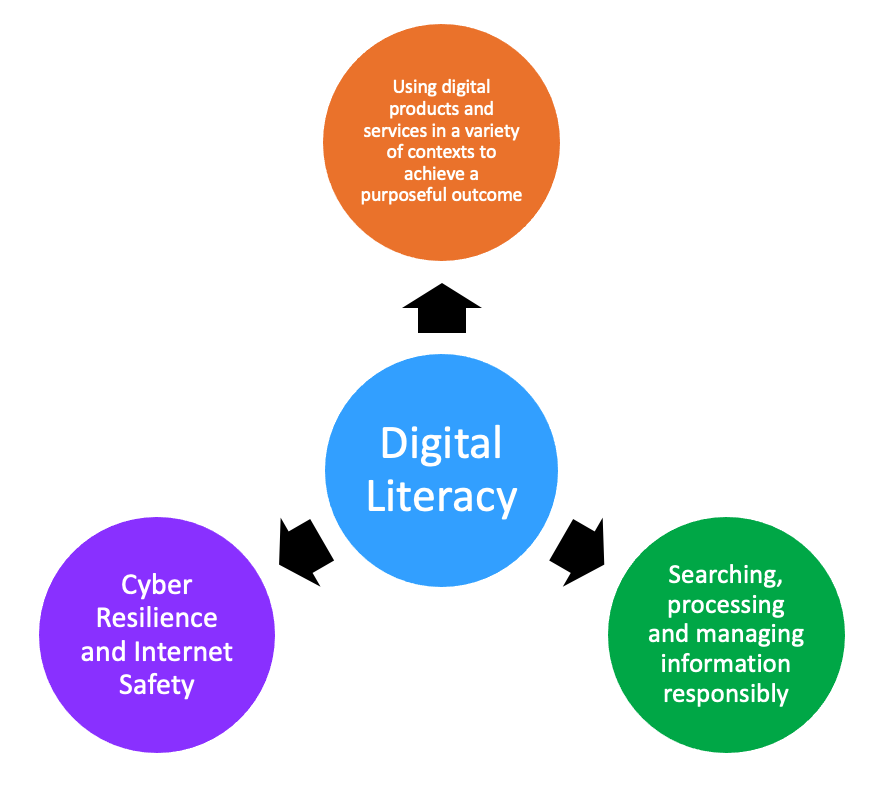
The Digital Literacy Progression Pathways can be accessed here. This progression pathway is intended to provide a framework for practitioners as they plan and deliver Digital Literacy to ensure all learners have the skills and experiences required to use digital tools safely to support their learning across the curriculum.
| Experiences and Outcomes | Benchmarks |
|---|---|
| I can explore, play and communicate using digital technologies safely and securely. TCH 0-03a | • Demonstrates an understanding of appropriate behaviour and language in the digital environment. • Demonstrates an understanding of the importance of passwords and passcodes for example access to school building. |
I can extend my knowledge of how to use digital technology to communicate with others and I am aware of ways to keep safe and secure. TCH 1-03a | • Demonstrates understanding of my rights and responsibilities as a digital citizen. • Demonstrates understanding of the potential dangers online and who to go to for advice and who to report a concern to. • Demonstrates an understanding for the need for strong passwords. • Explains the need to get a person’s permission before taking a picture or video of them. |
I can explore online communities demonstrating an understanding of responsible digital behaviour and I’m aware of how to keep myself safe and secure. TCH 2-03a | • Demonstrates an understanding of the content they should include in an online profile. • Discusses the importance of being a responsible digital citizen, giving examples of appropriate online behaviours and actions. • Identifies appropriate ways to report concerns. • Uses strong passwords. • Has an understanding of the law as it relates to inappropriate or illegal online behaviours, for example, the sharing of inappropriate images. |
I can keep myself safe and secure in online environments and I am aware of the importance and consequences of doing this for myself and others. TCH 3-03a | • Demonstrates an understanding of the legal implications and importance of protecting their own and others’ privacy when communicating online. • Evaluates online presence and identifies safeguards. • Present relevant ideas and information to explain risks to safety and security of their personal devices and networks including encryption. • Applies appropriate online safety features when becoming involved with online communities such as online gaming, chat rooms, forums and social media. • Demonstrate an understanding of different cyber threats, for example, viruses, phishing, identity theft, extortion and sextortion. • Demonstrates understanding of device security including personal and domestic devices. |
I can explore the impact of cyber-crime for business and industry and the consequences this can have on me. TCH 4-03a | • Demonstrates understanding of how industry collects and uses personal data ethically and how this relates to data security legislation. • Demonstrates understanding of how cyber security breaches in industry can impact on individuals. • Evaluates the digital footprint of industry and identifies good practice • Identifies the main causes of security breaches in industry. • Demonstrates understanding of safe disposal of data and devices. |
Professional Learning Book
To further support knowledge and understanding of digital skills, engage with our professional learning book by clicking here.