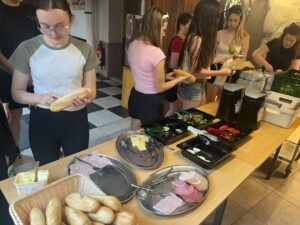
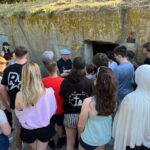
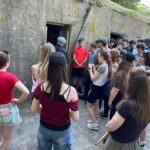
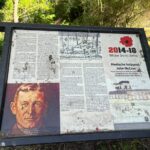
 The breakfasting, and lunch making was ever efficient. Thankfully, it was a later “get up” than yesterday with all the sites close together, and close to Ypres. Our first stop was Essex Farm. This was a place that John McCrae had worked. He was a Canadian doctor who had worked here in a dressing station during World War I. He is perhaps best known as a poet, with his magnum opus being “In Flanders Fields”, written in 1915.
In Flanders fields, the poppies blow
Between the crosses, row on row,
That mark our place; and in the sky
The larks, still bravely singing, fly
Scarce heard amid the guns below.
We are the Dead. Short days ago
We lived, felt dawn, saw sunset glow,
Loved and were loved, and now we lie,
In Flanders fields.
Take up our quarrel with the foe:
To you from failing hands we throw
The torch; be yours to hold it high.
If ye break faith with us who die
We shall not sleep, though poppies grow
In Flanders fields.
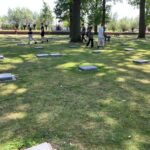
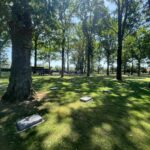
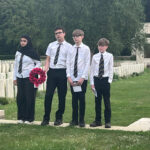
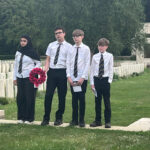
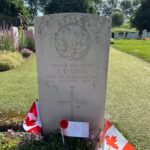
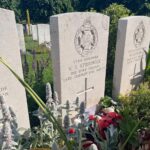
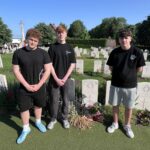
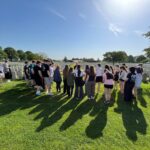
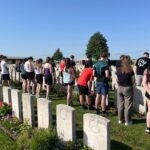
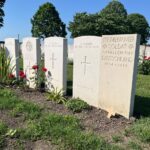
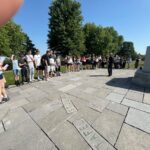
We recite this at all of our remembrance assemblies at the school. After learning about John McCrae, we then visited the graveyard, and found the stone a soldier listed as being 15 when he died in action. He is one of the youngest to die. Sam asked Shane, Caleb, and Charlie to help illustrate this. All three 14, or 15, and could easily persuade a recruiting sergeant they were older. The classic “come back when you’re 18” (that is, later today) was a common instruction with the recruiters fully away of the truth, but no birth certificate necessary for evidence.
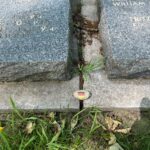
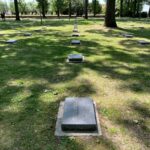
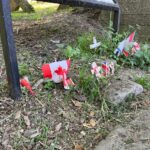
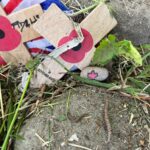
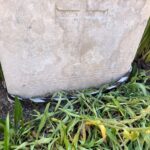
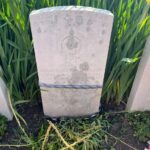
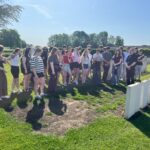
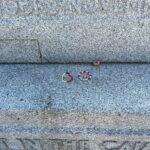
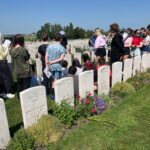
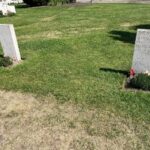
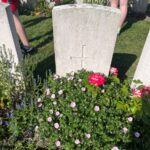
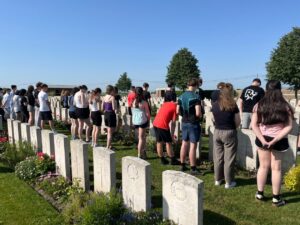 Next, we visited Poelcapelle Cemetery. This contains some 7000 graves, of which most are of unknown soldiers. No evidence was found to identify them. In silence, the pals each laid a poppy at the grave of an unknown soldier, and with eyes closed were encouraged by Sam to build up a picture of this person, who the were, what they looked like, what they did. It was a beautiful moment, in an immaculate place. One of the graves had a music stave carved on it. It is still unknown as to exactly what the tune is and why it may have been important to the person buried here.
We also learned of the new graves placed here only a year or so ago. One of them was in fact, a German soldier. He was laid here with the UK soldiers he was found with, both countries being pleased with this arrangement.
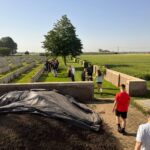
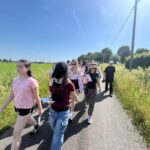
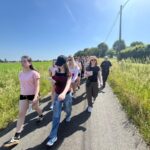
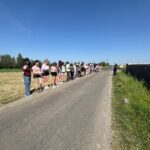
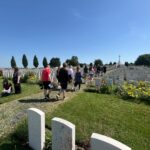
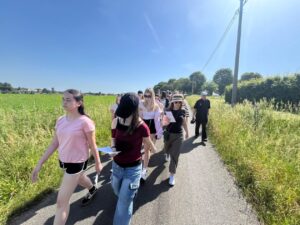 We then marched – literally. We marched and marched and marched and marched and marched and marched again. This was the Passchendaele Ridge. The pals all sang with gusto, and saluted people on cars, and bikes who only looked mildly bemused by the site of us. Towards the end, the battalion started to get quieter. This may have been weariness in the head, but may also have been at least partly due to the site of our destination. Tyne Cot cemetery.
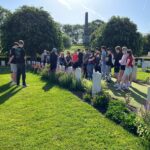
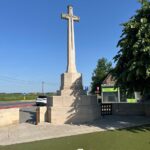
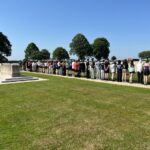
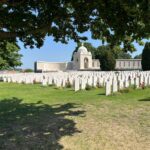
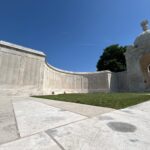
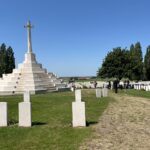
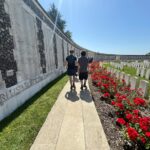
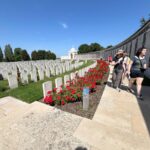
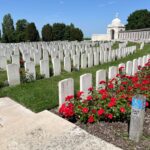
Tyne Cot is the largest UK military cemetery with some 40 000 names either buried, or commemorated. I have very strong memories of being here on my History trips. I was pleased to see a similar impact on the modern team. It is an incredibly beautiful place. This is particularly true with the sun splitting the sky, and roses blooming on many of the graves.
Sam told us of a soldier whose family has kept up contact with his grave to this day. One of his sons, or perhaps grandsons had been on the televised event commemorating the centenary next to this grave. Himself, now also in the forces.
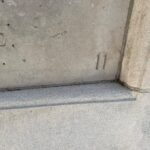
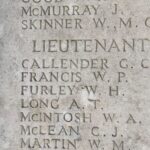
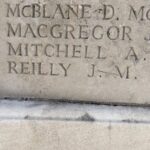
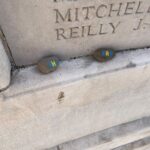
We managed to find the two names commemorated here on panel 11.
William Pollock Frances
John M. F. Reilly
I read some of their histories from “The Memorial in the School”, and we had a moment of silence to remember them.
We will remember them.
The pals conducted themselves with distinction here, showing respect of the highest order. We were all really proud of them.
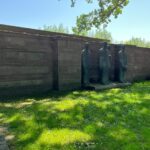
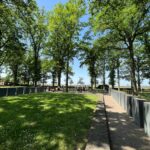
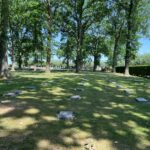
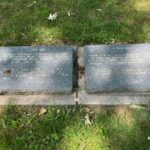
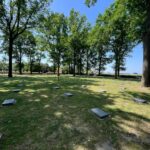
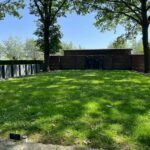
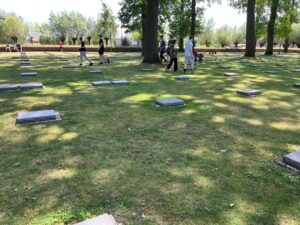 Our last visit was to Langemarck. This is a German cemetery, and a place of the most powerful memory I have from these trips, and pretty much of my entire schooling. When we arrived here in 1996, it was a misty morning. As you looked through the archway, you could see the flat grave stones through the mist, and just make out the sculptures at the back. It was incredibly atmospheric. Today, the figures have been moved, and the entrance remodelled to be more like it was originally. It is still a very atmospheric, and special place.
Sam explained the differences between this, and the other graveyards we have visited. This was much darker, and shaded by oak trees. These are very important to Germans and seen as a sign of strength. My very rudimentary German came in useful for translation of some words, and pronunciation of the names. The pals were kind enough to ask me about my experiences here, so I recounted the misty morning story. It still brings up goosebumps.
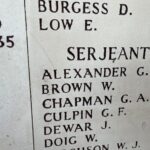
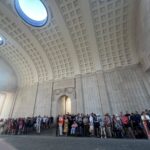
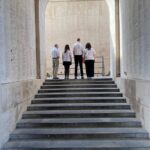
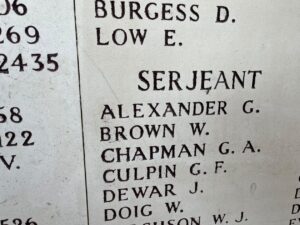 After lunch, we remembered sergeant George Alexander, a relative of Emily’s who is commemorated on the Menin Gate. As it happens, he is listed on panel 37, close to James Stratton Roberts, a KHS pupil mention in the first blog post from this visit. Like Thiepval, the names of UK soldiers missing in World War I are listed here. It is a stunning structure, and we will be back later.
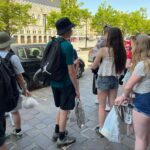
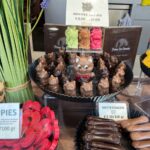
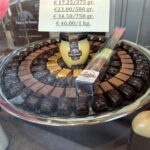
There was then a strong desire to visit a chocolate shop. Sam was good enough to help in this regard, and so led us to “Peter de Groote”. This an empire of Belgian chocolate, and since Sam is a regular customer they had some deals ready for us. Chocolates duly purchased, the pals then had some leave to explore the city.
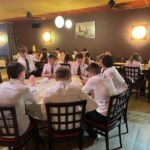
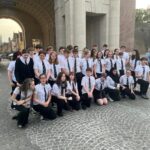
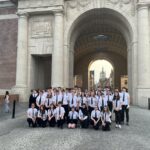
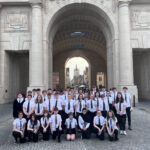
We had dinner in a local restaurant, where the chicken and chips were well received. After, in full school uniform, we marched to the Menin Gate ready for the Last Post Ceremony.
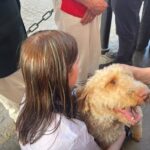
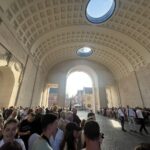
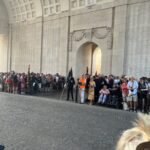
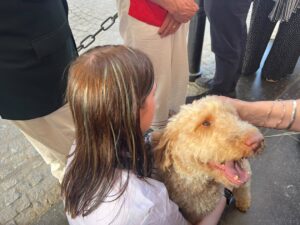 We were quite early to get a good place, so we chatted to the others in the crowd. Everyone was very friendly, and keen to share stories with us. Aimee even managed to make a very enthusiastic, wooly, canine friend. She also had a long conversation with a lady who had been attended Kirkcaldy High School in 1961. It’s true that wherever you go in the world, you’re not very far from someone else from you area of Scotland.
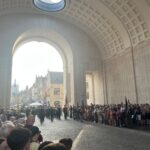
This “Last Post” ceremony has been happening every day, at 8.00pm since the 1920s, with a brief break during World War II. I saw it both in 1996, and 1998, so I knew this would be a memorable moment.
At 7.45pm, a marching band came into the archway. There was all sorts of wind, and brass instruments including a number of giant sousaphones. We could see the flagbearers lining up either side of the stairs leading to the wreath laying area before the bugles started just after 8.00pm. The haunting sound rang through the massive arch before the reading of the last lines of “For the Fallen”. There was a silence, and then the band started up, again a coincidence with the classic tune “Highland Cathedral”.
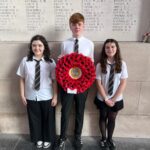
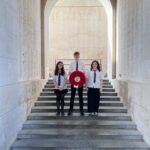
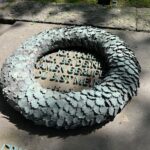
After various wreath layers had been, and gone we watched Charlotte, Emily, and Shane laying our wreath on behalf of the school.
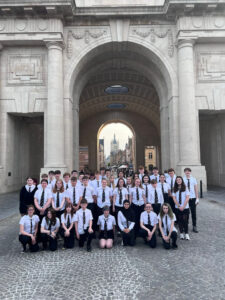 They, and all the pals did us, themselves, and Kirkcaldy High School extremely proud.
Afterwards, we boarded the coach and went to “Polygon Wood” for our own wreath laying ceremony. Lucy was our candle bearer, with Harry, and Zoya our wreath bearers. Aiden and Damien then again read “For the Fallen”, and we filled out to the tune of “The Dark Island” played on Sam’s speaker. There was silence still as the bus drove slowly down the road with music playing, and Sam holding the candle in the isle. Again, so much respect was shown by the pals who were very clearly mulling over their own thoughts of everything they’d seen, heard, and learnt about this week. I felt so, so proud to be a member of the Kirkcaldy High School community.
Back at the hostel there was packing, but also games, fun and socialising. I got the impression that people who weren’t perhaps usually “friends” were enjoying the company of each other. I hope these memories will linger for them, as they have for me from the times I spent with my friends in the 90s. I value them to this very day, and will always do so.
-
- KHS Battlefields Trip 2026 – Day Five, “The South Salient”