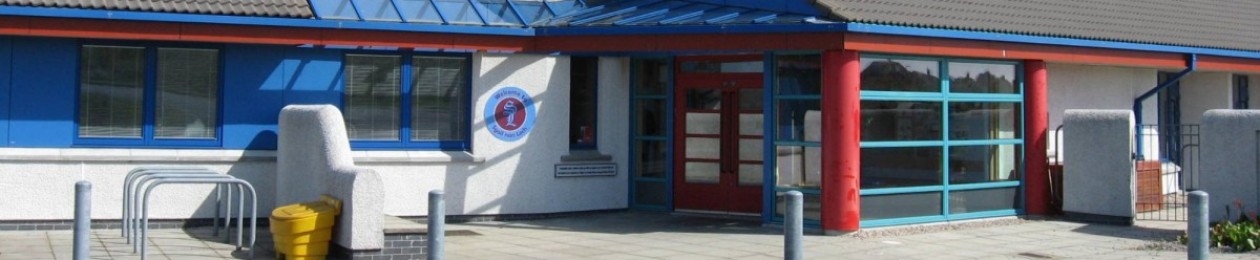
Sgoil Araich nan Loch Parents’ Handbook
CONTENTS
- WELCOME
- AIMS
- ADMISSION, ENROLMENT, BOOKING, CONTRACTS AND CHILD FEES
- GENERAL INFORMATION
- ASSESSMENT
- HOW YOU CAN HELP YOUR CHILD
- CURRICULUM AND PLANNING
- POLICY AND PROCEDURES
- CONTACT DETAILS
WELCOME
We hope that you and your child will enjoy the time that you spend here with us. We trust that you will find this ‘Welcome Handbook’ interesting and helpful.
The Nursery provides pre-school funded sessions in Gaelic and English as well as childcare spaces for children from the age of 2½ to five years.
| Monday | Tuesday | Wednesday | Thursday | Friday | |
| English | 8.45 – 1pm | 8.45 – 1pm | 8.45 – 1pm | 8.45 – 1pm | 8.45 – 1pm |
| Gaelic | 9.30-1pm | 9.30-12.30 | 9.30-12.30 | 9.30-12.30 | Closed |
The nursery is registered with the Care Inspectorate, under the Regulation of Care Scotland Act 2002 and meets the National Care Standards. The Care Inspectorate inspects the premises on average every 3 years. The nursery is subject to a joint HMIE/Care Inspectorate inspection. These reports are available from the school or on the following web sites: www.scswis.com or www.hmie.gov.uk
The following adult child ratios apply:
2 – 3 year olds 1 adult to 5 children
3 – 5 year olds 1 adult to 8 children*
*Where children aged 3 and over attend for a session that is less than four hours the adult: child ratio may be 1:10
A minimum of 2 members of staff are present at all times.
The nursery works with the following documents:
- The National Care Standards
- The Child at the Centre
- Curriculum for Excellence
- The Pre- Birth to Three – Positive Outcomes for Scotland’s Children and Families
Staffing and Who to Contact
The nursery is managed by the school Head Teacher, with the day to day running of the nursery delegated to the Playleader.
All nursery workers are required to register with the Scottish Social Services Council. This regulatory body ensures that staff have appropriate qualifications for their role and continue to update their knowledge and skills. All staff are required to go through an enhanced Disclosure Scotland check or more recently through the ‘Protecting Vulnerable Groups Scheme’ (PVG)
For the general day-to-day running please contact:
| Manager | Andrew Reeves | 01851 70 5187 |
| Playleader | Pat MacAskill | 01851 70 5187 |
AIMS
In order to provide you with a good quality of pre-school education we
have set ourselves the following aims.
Ethos
We aim
* to create a caring climate of mutual respect and confidence encouraging positive relationships among staff, parents and children.
* to establish effective partnership with parents where we can join with them in furthering their child’s development and learning.
* to establish and maintain effective two way communication with parents giving frequent opportunities for exchange of information including written
reports about children’s progress.
Support for Children and Families
We aim
* to establish care routines which are flexible and responsive to children’s emotional and physical needs, reflecting familiar routines at home.
* to be vigilant about health and safety.
* to provide high quality childcare and high quality early education.
* to support development and learning through carefully selected well organised activities appropriate to each child’s needs.
Development and Learning Through Play
We aim
* to create a stimulating and challenging environment providing appropriate opportunities for learning through play in each of the key aspects in children’s development and learning to ensure that childcare and learning are effectively integrated to meet children’s needs.
Curriculum
We aim
* to provide children with a varied balance of high quality experiences according to their individual needs.
* to provide a good balance between activities chosen by children and those chosen by adults.
* to be responsive to their needs and interests and to ensure progression in children’s learning and development.
Resources and Accommodation
We aim
* to provide a safe, secure, hygienic, pleasant and stimulating environment.
* to ensure that resources are well matched to the needs and interests of the children and provide appropriate support and challenge.
ADMISSION, ENROLMENT, BOOKING, CONTRACTS AND CHILD FEES
Admission
The nursery aims to ensure that the admission of children is fair and equitable and responsive to the needs of children, their parents and carers. Intakes of children are done throughout the year when space becomes available.
The nursery is open to children aged 2.5 – 5 years and is registered with the Care Inspectorate to provide a care service to a maximum of 40 children. Children aged 2.5 can be enrolled at the group if there is sufficient space and their third birthday falls before the 28th of February of the current academic year. If demand for places outweighs supply priority will be given to children eligible for their pre-school funded place.
Application, Registration and Consent forms
An application/registration form, consent form and contract will be issued to parents on application for a place at the nursery. It is essential that all forms are completed by parent/guardian prior to the child attending.
Enrolment and Eligibility for Pre-school Education
Pre-school education enrolment usually takes place in January on a date notified to
parents by local press advertisement. Children who enrol in the nursery will be invited to spend an induction session in the nursery to experience a little of the nursery atmosphere and to meet the nursery staff.
With the exception of children born in March, your child is entitled to a funded pre-school place in the term after their 3rd birthday.
| Birthday | Funding |
|---|---|
| 1st of March – 31st August | Autumn term |
| 1st September – 31st December | Spring term |
| 1st of January – 29th February | Summer term |
Children receiving a funded place are entitled to 475 hours over 38 weeks. A maximum of 12.5 hours pre-school education hours will be provided in any one week. The group charge for wrap around care based on a rate of £3.10 per hour for children aged 3-5 years and £3.60 per hour for children aged 2- 3 years. This cost increases annually by 10 pence each August. Children eligible for pre-school funding will have their pre-school hours deducted from their final bill.
When children receive pre-school funding there will be a charge of 60 pence each day for snack whether they attend or not. This includes child absence through sickness or additional holidays. The charge for snack fee increases annually by 10 pence each August. The snack money is also used to purchase extra treats for the children for example a gift (£5) at Christmas, a gift (£5) for children leaving to go to school, food for parties, food for special tasting sessions in relation to plans, food for outings and trips.
You may be able to claim help with childcare costs through the Childcare Tax Credits 0845 300 3900 www.inlandrevenue.gov.uk/taxcredits
An invoice for your child’s fees will be issued termly in advance. The preferred method of payment is by Direct Debit, or for CNES employees by payroll – relevant forms have are available from the Education and Children’s Services Department, Early Years Office. If you any queries regarding methods of payment you are asked to contact the Early Years Office (01851 822280). Failure to pay can result in the service no longer being available to your child.
Bookings and Cancellations
Priority will be given to children who are eligible for pre-school funding. On enrolment parents will be asked to sign a parent contract and to indicate what days are required. It is important that you read this contract carefully prior to signing as it outlines the conditions attached to your childcare/pre-school place.
As detailed above, parents will be expected to pay for the days their child is booked into the nursery whether they attend or not. This includes absence through sickness and holidays. The nursery does however have the discretion to reduce fees in the event of a child’s long term sickness. The nursery manager will liaise with parents with regard to this.
Please note: Parents must give a months notice in writing when leaving the nursery or changing their contract. You may continue to be billed for your child’s place if you fail to do so.
Late fees
If you are late in collecting your child, the nursery reserves the right to charge £15.00 over and above the normal fee.
Holidays
Parents will be provided with information on all school holidays. The nursery is closed when the school is closed. No fee will be charged on these days.
Open Day
During the year the nursery will hold an open day when parents / carers or other family members can come in to visit the nursery and talk to staff. There will also be an induction day in June for those who will be starting in the nursery the following August.
GENERAL INFORMATION
Snack
Staff raise awareness of healthy eating by purchasing healthy options for daily snack. The children are encouraged to help in the preparation and serving of their snack.
Snack Money
If your child attends for pre-school education parents are charged 60p per day to help with expenses such as daily snack; baking or special tasting sessions in relation to their plans; birthday cakes / special treats or snacks off the premises when on outings.
Clothing
Please ensure that your child attends the nursery in clothes suitable for playing indoors and out. While every effort will be made to protect clothes nursery staff cannot guarantee that children’s clothes will remain clean. Clothing labels are also advisable.
Nappies
For children in nappies, a supply should be provided; this may be in bulk and left in the nursery or brought in every day in the child’s bag. Parents are asked to supply nappies, baby wipes, cream (if used) and nappy sacks. Parents will be advised by staff when nappies etc. need replenishing.
Birthdays
In the Nursery we celebrate birthdays with a special snack. There is the option for parents to bring in a purchased cake for such occasions. If any parent does not wish their child to be given cake or sweets, it is important that they inform nursery staff as soon as their child joins the group.
Photographs
We use photographs to record evidence of participation in activities and progress of child’s development. In line with Local Authority policy parents will be requested to give permission in writing allowing their child to be photographed.
Nursery Accommodation
The nursery has 2 play rooms and dedicated outdoor areas. The nursery also uses other areas of the school such as the snack bar and gym hall.
An advanced booking system operates to enable staff to make well planned provision for all children using the service.
Security
For the safety of all our pupils a door security system is operational in the school.
Notice Board
We maintain an information notice board for parents. Please check the notice board regularly and read the nursery policies which are also on display for your interest and information.
Signing in System
Parents are asked to sign their child in on arrival at nursery and sign out on departure. Adults, not the children, are required to sign the sheet. Parents must notify nursery staff if/when another adult is to collect their child. To ensure the nursery meets the required adult child ratios, please ensure your child does not arrive at the nursery until the time they are booked in.
Outings
We frequently visit places of interest and attend events in the wider community. Parents are sometimes invited along to enjoy the learning experience. At such times we may need more adult supervision. Staff will follow the guidelines set out within the school’s administration handbook section M.3 “Use of Voluntary Helpers in Schools”.
Use of Volunteers
The nursery occasionally needs parent volunteers to help within the nursery and for outings/trips. Where volunteers are used regularly and are left on their own for short periods of time with the children it is necessary for those volunteers to have a Disclosure check. Information on the use of voluntary helpers is included within your pack along with an application form. If you are interested in becoming a volunteer for the nursery please fill in the form in the Welcome Pack and return it to the playleader. Extra help is always appreciated.
Additional Educational Support Needs
Some children can have short or longer term additional needs and support in the early years could make life easier for the child in school. We welcome any children who might be considered to need any extra support and are more than willing to work alongside any other agencies involved. Such agencies could include, e.g. Speech and Language Therapy, Occupational Therapy or Educational Psychology.
Partnership with Parents
Parents are welcome to come in and discuss their child’s progress. Please speak to the Playleader to discuss a mutually convenient time.
Parents are the primary educators of their children and have an important role to play in their children’s development. Parental contribution is invaluable and greatly appreciated and encouraged at nursery. We welcome support from parents at all times.
ASSESSMENT
Pre school staff will assess your child’s learning by
- Watching your child at play
- Listening to them
- Talking to them
They will build a record of your child’s progress which will include
- Examples of your child’s work
- Photographs
- Observations of children’s learning
Profiles
Child profiles provide a record of your child’s development during their time at nursery. Parents and children are encouraged to contribute to the content of the profile and children are fully involved in deciding the next steps in their learning. The profiles will be kept in the nursery where parents and children can have access to their own profile. Prior to your child stating at the nursery parents will be asked to contribute to the first part of the profile e.g. their child’s likes and interests.
This record of your child’s learning follows your children from the Nursery to P1. The contents of the folder i.e. children’s progress and achievements, will be shared with you at a prearranged meeting with nursery staff and forwarded to the receiving school.
HOW YOU CAN HELP YOUR CHILD
You can help your child to learn by playing together at home and;
- Encouraging them to be independent, for example, in getting dressed and washing their hands before meals, and to share and join in with other children; encouraging them to develop healthy habits in diet, exercise and hygiene.
- Reading to them every day, talking about books with them and reading familiar words to them, for example, the labels on their favourite foods.
- Talking with them and answering questions and playing remembering games and guessing games like “I Spy.”
- Helping them to match and sort things, for example, putting together forks and knives or cups and saucers, and pairing up socks, sorting out big tins and little tins, putting packets in order of size.
- Encouraging them to count and use numbers in everyday situations and in nursery rhymes.
- Encouraging them to listen to music, songs, stories and rhymes.
- Encouraging them to express their ideas and feelings, for example, using crayons, pens, pencils, paint, music and play.
- Giving them the chance to use their fingers and hands, for example, building with bricks, cutting out with scissors, helping with baking and fastening zips and buttons.
There are many Gaelic books which your child will become familiar with in the nursery which have been made into audio books. Some of these along with many other resources that you can use to support you child can be found on the Gaelic4Parents website http://gaelic4parents.com/nip and on the Learn Gaelic website http://www.learngaelic.net/underfives/
The Gaelic 4 Parents website also has information on Gaelic medium education and the benefits of bilingualism. If you would like more information on Gaelic medium education contact:
Iona Mactaggart,
Gaelic Medium Information Officer
01851 701802
iona@cnag.org.uk
CURRICULUM AND PLANNING
Learning through play is the main principle within the nursery.
Young children learn very naturally through play and they enjoy learning. In their play they may find out about materials, use and develop language, act out situations, ask questions, look for information in books, make friends, see how their actions affect other people, try out ideas, learn rules or read stories.
A Curriculum for Excellence
The ‘Child at the Centre’ documentation provides the benchmark of quality in the early years’ sector.
The nursery provides a flexible and stimulating environment to engage children in their learning through well planned and challenging play. We believe that children learn best when they have scope for active involvement in a wide range of learning experiences. ‘A Curriculum for Excellence’ provides statements of the aims of education in Scotland. By providing structure, support and direction to children’s learning, the curriculum should enable all children to become:
- successful learners
- confident individuals
- responsible citizens
- effective contributors
‘A Curriculum for Excellence’ has 8 curricular areas, which in the Gaelic room are all delivered in Gaelic. The following summarises some aspects of learning which will take place within each area.
Language/Literacy
· Listen with enjoyment and respond to stories, songs, rhymes and poems
· Listen and talk to children and adults
· Explore books/texts and understand some of the language, layout
· Develop an awareness of letter names and sounds
· Have fun with language and making stories
Mathematics/Numeracy
- Explore numbers; develop understanding of counting, number processes, order, money, time and measure
- Collect objects, ask questions to gather information, organise and display, share findings with others
- Investigate shapes and objects
Health and Wellbeing
- Develop confidence, resilience, self-awareness and self worth
- Form positive relationships, take turns and share resources, follow rules
- Take part in physical play and activities, develop body control, use equipment safely
- Develop awareness of healthy eating and healthy lifestyles, fitness, hygiene, safety
Expressive Arts
- Choose and explore ways to create images and objects using a variety of media
- Explore line, shape, form, colour, tone, pattern and texture
- Make music by singing, clapping, playing musical instruments and music technology
- Explore role play and drama
Social Studies
- Explore the importance of special occasions and important people in our lives
- Explore places of interest in local and wider environment and the role of people in it
- Develop an understanding of the weather
- Make choices and take responsibility in play experiences
Technology
- Play with and explore technologies; communication methods, audio/visual, electronic games
- Show care for the environment through recycling methods
- Explore a wide range of resources, materials, software and tools
- Explore ways of presenting ideas
Science
- Develop an understanding of sustainable materials, plants, animals, climate and earth, outer space
- Explore healthy eating and healthy bodies
- Develop an understanding of electricity, sound and ways of communicating
- Develop an awareness and an understanding of the senses
Religious and Moral Education
- Explore Christian beliefs
- Become familiar with religious beliefs all over the world
- Raise an awareness of festivals and celebrations
- Develop beliefs and values
Pre – Birth to Three
Positive Outcomes for Scotland’s Children and Families
Experiences for Children Birth to Three
The nursery is aware of the Importance of the Early Years. Babies are born with a predisposition for learning. They are naturally curious about the world around them and especially the people who engage with them. Whilst babies are eager to learn and make sense of the world, they require positive and consistent relationships to support them in this journey. Babies are ‘programmed’ to look to other people to help them make sense of their world.
There is a strong relationship between early life experiences and how babies develop cognitively, socially, emotionally and physically throughout their lives. The Early Years Framework states that:
‘It is during our very earliest years and even pre-birth that a large part of the pattern for our future adult life is set.’
(Scottish Government, 2008d, p 1)
The Rights of the Child, Relationships, Responsive Care and Respect are the four key principles which form the basis of the Pre-Birth to Three guidance. All staff working with babies and young children should be aware that these key principles are interrelated and interdependent.
Rights of the Child – Within the United Nations Convention on the Rights of the Child (UNCRC) is the principle that children should be valued and respected at all levels and have the right to have their views heard and acted upon. This means that all adults and agencies should ensure when supporting babies and young children that their views are ‘…given due weight in accordance with the age and maturity of the child’ (UN, 1989, Article 12).
Children are active citizens in the world and, from a very early age, children are finding out about their rights, often through relationships and the ways in which others treat them. They are learning about expressing themselves, their interdependence with others, how valued they are, and about sharing, making choices and their place in the world.
Relationships – Babies are genetically predisposed to form relationships; this is their strongest evolutionary survival mechanism. This important process begins even before the baby is born. Relationships begin with the care and attention that babies experience whilst in the womb. As a result of this, babies are born with a predisposition to form relationships and make connections with others. Relationships are essential to the baby’s health and wellbeing, and determine their future potential and life chances (Balbernie, 2001)
It is essential that all staff working with children are aware of their responsibilities in ensuring and promoting positive relationships and the impact this has on children’s future outcomes and life chances. The importance of respecting children, and ensuring they are welcomed into a safe, secure, loving and familiar environment, cannot be overstated.
Responsive Care – Responsive care means knowing and accepting children and respecting that they are unique individuals. Babies make sense of the world through adults, and the responses that they receive let them know that the significant adults in their lives are consistent, reliable and trustworthy, and responsive to their needs. As a result of adults being responsive and affectionate, babies start to trust the adults around them and are more likely to feel secure within themselves.
Responsive care means building close relationships with children, being observant of them and meaningfully involved with them. Adults need to demonstrate a sensitive and caring approach through words and facial expressions. Providing companionship, time and physical affection is essential if children are to feel, safe, secure and valued. Responsive adults need to be reflective and in tune with what babies are telling them and this enables adults to make sensitive and informed decisions about how to respond appropriately.
Respect – One of the most effective ways of demonstrating respect for children and families is where staff express a genuine interest in them. Children’s views, values and attitudes are shaped largely by family and more indirectly by communities, which can support parents to improve outcomes for themselves and their children. Respecting parents’ knowledge of their children and learning from them about effective strategies are fundamental to successful practice. Encouraging self-respect and respect for others begins through the kind of experiences and relationships children have with the people around them.
As children develop their own interests and preferences they become increasingly aware of their needs. Staff should consult directly with children where possible and appropriate.
Children with additional support needs and children who are vulnerable in other ways often require individualised support for the consultation to be effective.
Children need a sense of belonging and a feeling of being appreciated and valued if they are to participate in and contribute to society, feel happy and thrive. Feeling included is essential for all children and is based on mutual respect and warm, reciprocal relationships.
References:
(Early Years Framework, Scottish Government, 2008d, p 1)
(www.LTScotland.org.uk/pre-birthtothree)
POLICY AND PROCEDURES
Policies and Guideline information provides clear advice to staff, students and parents about the procedures and practice at the nursery. Well written policies ensure that all staff and service users are provided with up to date, relevant information about their respective roles and responsibilities. The Manager, in consultation with staff review and update policies regularly. Updated policies are shared with parents. Policy information is available on line at http://www.cne-siar.gov.uk/earlyyears/policyandprocedure.asp, the school web site and on the nursery notice board. Paper copies are also available on request. Some information is contained below.
Behaviour Management
To ensure that the nursery is a happy place for each child it is important that everyone abides by a standard of appropriate behaviour. We have simple nursery rules for children to follow. The rules are reinforced through encouragement and praise by the staff who will act consistently and fairly in dealing with children. Physical punishment is never used in the nursery.
Where there is continued concern regarding behaviour it may be necessary to carry out a risk assessment to identify individual behaviours and potential triggers. This will allow parents and staff to identify appropriate and consistent approaches to behaviour. The staff will at all times be clam and controlled and although they may deal firmly with the unwanted behaviour, they will not imply to the child that he is unworthy of love, respect and care.
Medical and Health Care
It is very important that full details of your child’s medical history are provided when completing the enrolment form. This ensures that staff are as prepared as possible should a health emergency arise. If a child becomes ill or has an accident while attending the nursery every attempt will be made to inform the parents. If the illness or accident is of a serious nature, the child will be taken to Accident and Emergency at the hospital and the parents will be contacted and advised to join the child there. The nursery staff take advantage of good weather by taking the children outside. Parents are asked to apply sun cream to their child before leaving home on sunny days. Parents must also complete a consent form giving staff permission to apply more sun cream later on in the day, provide the sun cream and ensure that children are wearing hats.
Medication in the Nursery
All staff have been advised not to administer medicine to children.
However, when / if it is essential for a child to have medication this may be carried out within the nursery, at the discretion of the nursery manager and/or head teacher, in the presence of a witness but only when the appropriate request form has been filled in and signed by a parent /guardian.
No medication will be given without a written request from a parent / guardian and signed consent. Parents must advise staff of when the last dose of medicine was given and the time that the next dose is due. It is the responsibility of the parent or guardian to deliver and collect medication or to replace medication when it becomes out of date.
All medication should be given to staff on arrival at the nursery. Medication, for example, sachets of Calpol, must not be left in children’s pockets/bags.
Child Illnesses
A sick or infectious child may not attend the nursery. If a child becomes sick during his / her time at the group, parents or the emergency contact will be informed and asked to take the child home.
The nursery is unable to look after children who are ill or have contagious illnesses. If your child has a contagious illness, please notify the nursery as soon as possible as it has implications for other users.
The following are guidelines for minimum periods of absence related to certain illnesses:
Chicken Pox – 5 days after rash appears
Measles – 5 days after rash appears
Impetigo Until lesions are crusted over or healed
Diarrhoea and vomiting – 48 hours after symptoms have ceased
Emergency Closure
It may be necessary, very occasionally, to close the nursery at short notice and send the children home e.g. in exceptionally bad weather or if the electricity or heating system fails. If parents are not regularly available / at home during nursery hours, they should always make arrangements to have someone collect their children should such an emergency occur. The nursery asks each parent to provide the name, address and phone number of a person who can be contacted in emergency circumstances. Parents should also feel free to contact the school if they are concerned about their children in severe weather conditions and are free to collect them at any time. In cases of closure prior to the pre-school day starting, the arrangements will be announced on local radio as soon as they are known. If school is closed the nursery will also be closed.
Child Protection Information
As stated in the National Care Standards, staff “should have a clear understanding of their roles and responsibilities in protecting children and young people from harm, abuse, bullying and neglect”, therefore all staff will attend child protection training and records kept of the training attended. The centre will take every step in its power to build up trusting and supportive relationships between families and staff. Where abuse at home is suspected, the centre will continue to welcome the child and family while the investigation proceeds. All staff in a childcare position will have a disclosure check.
Confidentiality
In the interests of safety it is necessary for us to hold information on children. All information exchanged will be held in the strictest confidence. If you have anything you wish to discuss with the staff you can be safe in the knowledge that all information will be handled in accordance with the confidentiality policy. As dictated by the data Protection Act .
Complaints Policy
We believe:
- that children and parents are entitled to expect courtesy and prompt attention to their needs and wishes.
- that most complaints are made constructively and can be sorted out at an early stage.
- that in the best interests of the nursery and parents, concerns should be taken seriously and dealt with fairly and in a way that respects confidentiality.
The Comhairle’s Complaints procedure governs the nursery. This policy is available on line at http://www.cne-siar.gov.uk/complaints.asp, paper copies are also available on request. Complaints will be dealt with speedily, within an agreed time limit. We will keep a register of oral and written concerns. The register will be available to HM Inspectorate of Education, the Local Authority and Care Inspectorate.
If the issue has not been resolved parents may wish to contact the Care Inspectorate
Contact details
Contact details as follows.
Care Insoectorate
Custom House
Quay Street
Stornoway
Isle of Lewis
HS1 2XX
Tel. No: 01851 706157