Friday 28th February 2025

Hi readers,

Welcome to this week’s blog post 🙂

Literacy 

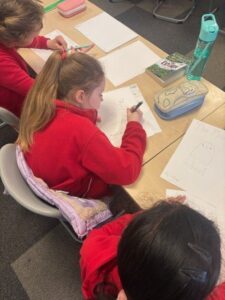
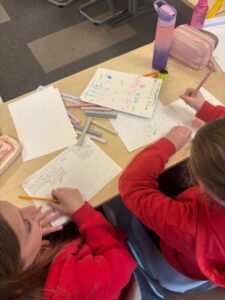
We have started creating children’s books for World Book Day. We planned our stories using a storyboard and looked at children’s books for inspiration.

IDL – Democracy 

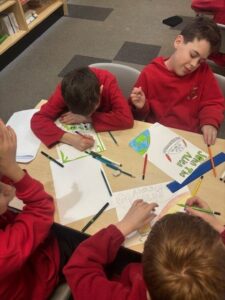
This week, we explored different movements.  We research different movements and presented our information onto a mind map.

We researched:

  • The purpose/aim of the movement?
  • How it began?
  • Key figures involved?
  • What action took place in this movement? (protests, strikes etc)
  • Any shocking facts about the movement?
  • What was the change that happened in the end?

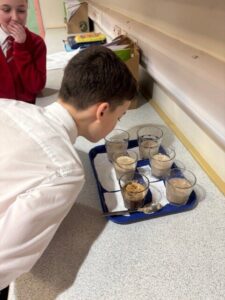
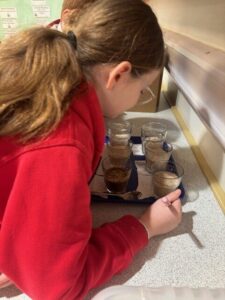
Science – The Yeast Experiment

Thank you for reading this week’s blog post 🙂

P7a


Friday 14th February 2025

Hi readers,

Welcome to this week’s blog post 🙂

Debating

We have enjoyed developing our debating skills and taking part in class debates. This week’s debate focused on the argument of ‘litter should be kept out of our oceans.’
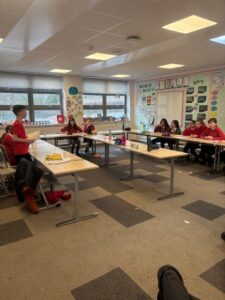
We look forward to participating in more debates 🙂

Literacy – Dictionary Relay Race!

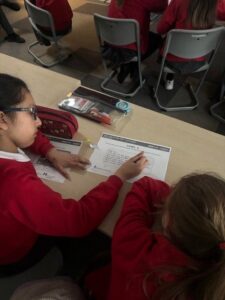
We were split into teams to participate in a dictionary relay race. We were given a table with a range of different questions, and we had to take it in turns to look for the answers in the dictionary. We started with the person whose birthday comes next and then worked our way in order.

Internet Safety Day

For Internet Safety Day, we watched a live lesson that spoke about Phishing and Scams.  We participated in a range of activities during the live lesson. This included:

  • Identifying SCAM warning signs
  • Identifying clues for phishing scams
  • Creating a safe password based off a recipe
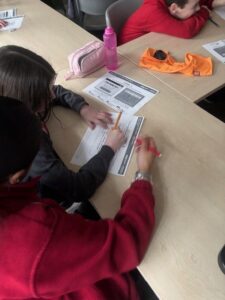
We also enjoyed our workshop with the Campus Police Officer where we developed our knowledge and understanding further on why it is important to stay safe online.

IDL – Votes for Women

For the open afternoons this week, we participated in a range of stations to develop our knowledge further on the roles of the Suffragettes and the Suffragists. These stations included:

  • Guess the headlines
  • Suffrage around the world
  • Famous figures
  • Vote or not?
  • Pins and poster making

Thank you for reading this week’s blog post 🙂

P7a
Learning Journeys with Mr Atkinson

Hello to all the P7A blog readers, it’s Mr Atkinson here! As you will know this year I am doing NCCT for primary P7A with a focus on developing Crookfur’s Inquiry Based Learning approach so I wanted to give you an update of what we have been doing.

In our first Learning Journey – Plant Growth and Farming, we revisited parts of plants and what they require to survive. Once having been explained how fertilisers affect the development of plants the pupils then researched different types organic and inorganic fertilisers. We also studied some labels on fertilisers and discussed the importance of how to use them safely and we looked at the percentages of the chemicals in them.  The pupils then created farming maps of Scotland and made a key to label arable, dairy and mixed farming areas. We then had a heated debate about land use with pupils eagerly defending and arguing against who should get priority with developing land and who damages environments the most.  We have also partnered with the University of Glasgow and taken part in their educational programme Sci-Seedlets. In this project we did a science experiment to test and compare how maize seeds grow when given water or salty water. This was to check whether sea water would make a good alternative option to watering plants as droughts are increasing in parts of the world. We recorded the growth progress of the plants over a few days and at the end of the experiment we took them out the soil. The pupils observed that the roots were smaller in the salt water container and concluded that salt water could be used to feed plants but their  growth would be delayed.

Afterwards, the META Skills of Creativity and Curiosity were introduced to the class through a series of lessons and activities. We also discussed how these skills are relevant in everyday life and how they can be further developed.

Our current Learning Journey – Carbon Footprint, is being delivered through the STAT WARS competition tasks. First the class explored some of the sources of CO2. Then the pupils organised themselves  into groups and by using Excel recorded their individual carbon footprints which identified a shared common problem. Since then the pupils have displayed excellent teamwork and collaborative skills whilst designing their campaign posters using Adobe Express, summarising the project in a blog entry  and producing presentations with graphs and charts that they created. I have been incredibly impressed with their enthusiasm, resourcefulness and dedication throughout this Learning Journey!

Mr Atkinson