Friday 30th January – Science

This week, we have been exploring the effects of friction on how far something can move.

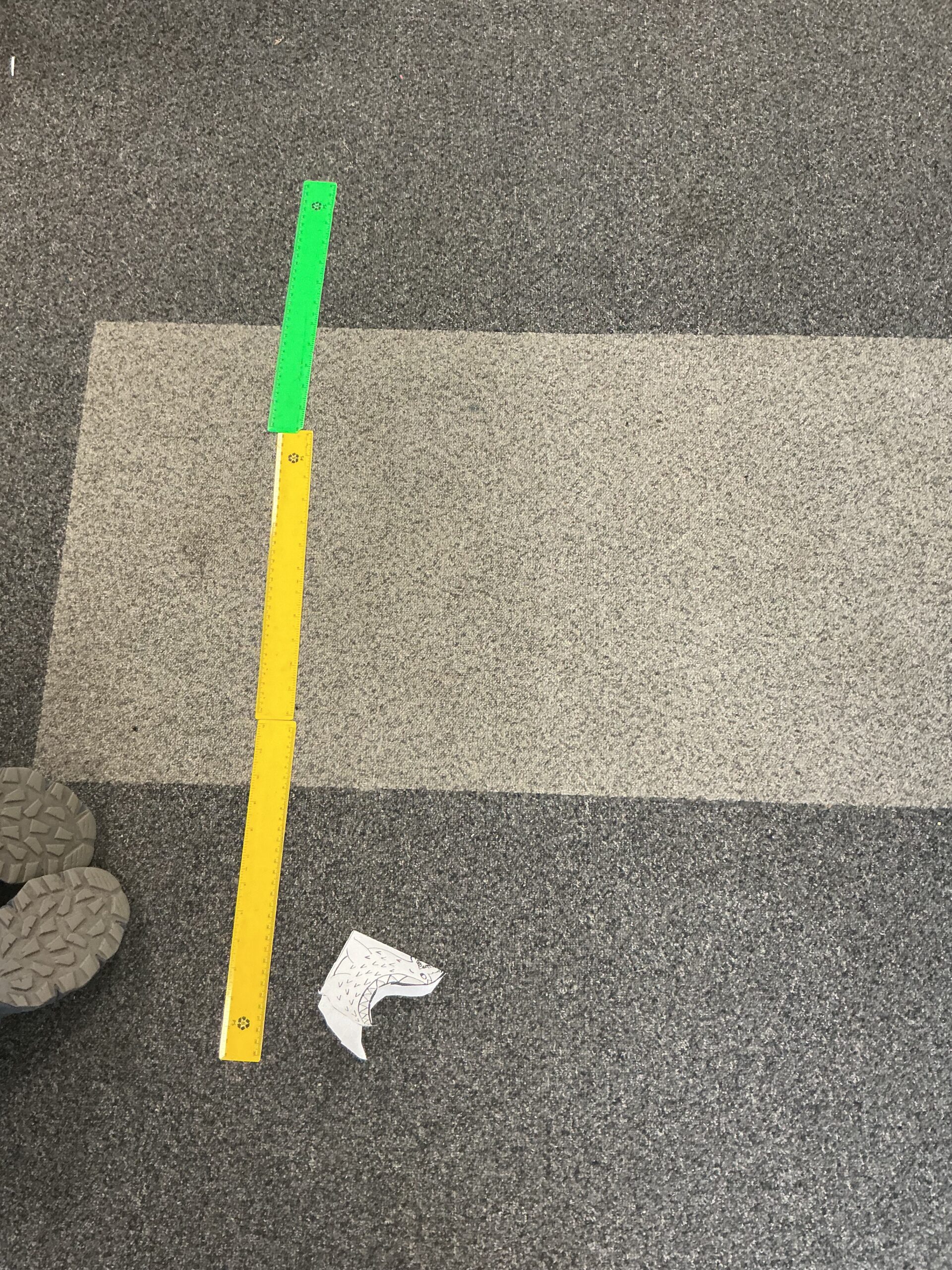
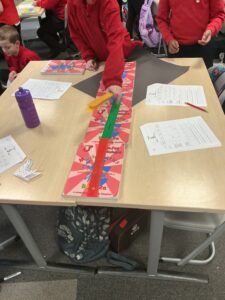
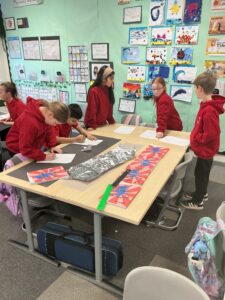
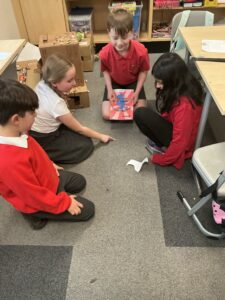
We measured how far paper “Dragon Racers” moved on different surfaces when we moved them with air. Most groups discovered that the more bumpy or textured a surface is, the more friction is caused and the Dragon Racer moved a shorter distance.
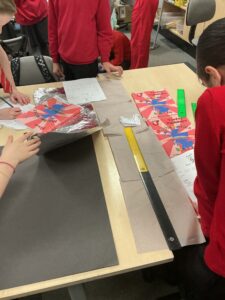
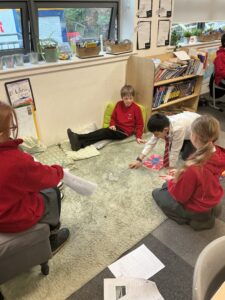
     

“Surprisingly, my team got 790cm on the carpet” HA

“Our Dragon Racer went a lot further on the table top because it has a flat surface” LR

“I didn’t think it would go that far on the aluminium foil.” AM

“We placed the Dragon Racer upwards so it would go further than facing downwards.” IR

“I made a prediction about one of the surfaces and in the end my prediction was right.” SS

“I thought the dragon wouldn’t go far on the rug but it did.” IM

“I was very surprised about two of the surfaces.  the rug only went 25cm and the textbook was the furthest.” FS

“Surprisingly it went really far on the tin foil and I thought it wouldn’t go far” FF
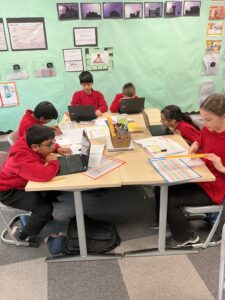
Friday 23rd January – Expressive Arts and Numeracy and Maths

This week, we have been focussing on fractions.  We have been using fraction walls to help us find equivalent fractions.  We realised that multiplying by the same number would also give us equivalent fractions.


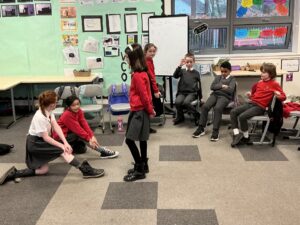
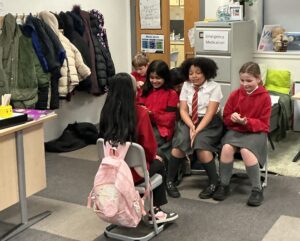
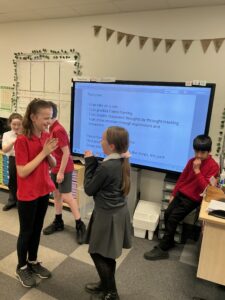
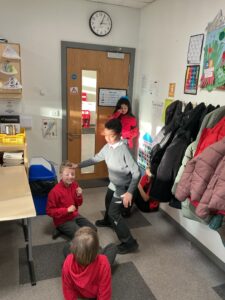
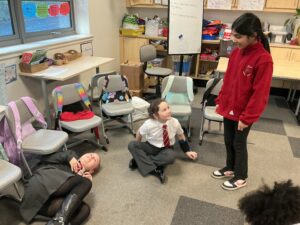
We finished our block of Drama skills by creating freezeframes and thought tracking to explore fixed and growth mindsets.  Many more of us felt confident to take on a role and speak a character’s thoughts out loud.  We also developed our skills in evaluating and giving feedback to others on their performances.

Friday 16th January – Health and Wellbeing and Expressive Arts

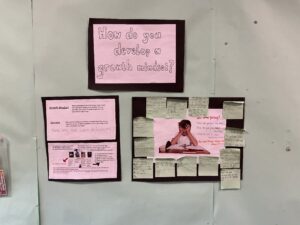
This week, we have been developing our Growth Mindset in Health and Wellbeing.  We wrote a definition of it, and talked about what success means and how we feel when things feel difficult. then, we made Top Trump cards showing our own Growth Mindset scores.


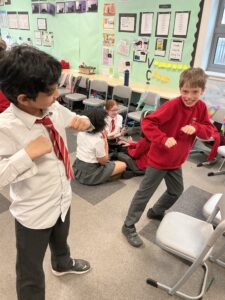
In Expressive Arts, we started some work on Drama skills.  We worked on freeze-framing, which is showing a specific scene starting frozen, moving around silently, and then freezing again.  We explored a poem called “The Loner” and tried to show the emotions in the poem.  Then we used “thought tracking” to put that character in different situations.

Learning Journeys with Mr Atkinson

Hi P5a readers, I wanted to update you on what we have been doing in our most recent Learning Journey since my last entry.

I am delighted to share that the pupils confidently applied many of the Meta Skills when constructing their wonderful models for stopping and collecting marine litter. Whilst working in their groups the pupils displayed brilliant adapting, initiative, collaborating, leading, communicating and critical thinking when proposing and designing a solution to address this global issue.

The class has also utilised their curiosity when investigating different types of litter and then they researched how long it takes for them to degrade. Pupils were shocked to learn about the Great Pacific Garbage Patch and the state of Arrochar’s beach after discovering it was acting as a sink where litter gathered when it washed ashore. Inspired from the Keep Scotland Beautiful online lesson, the children took notes on the cleanliness of a variety of Scottish waterways and explored what was being done to prevent them being polluted. To help illustrate how marine litter can travel all around the world the children created a map and tracked the journey of 28,000 plastic bath toys that fell overboard and were surprised to learn that even after all these years some rubber ducks were being found in America and Scotland! To deepen their knowledge of the conditions of oceans, the class typed up ‘blogs’ about major environmental incidents and they shared their views on the damage these have had on marine life.  We also discussed how using different colours, shapes, artistic styles and materials can help evoke emotions when looking at artwork. With this in mind, everyone created their own marine themed artwork using tissue paper and litter to highlight the impact humans have on sea life.

Thank you for the donations of materials throughout this Learning Journey it was greatly appreciated!

Friday 9th January

Happy New Year from P5a!


This week we looked at non-fiction texts in literacy and chose the facts we thought were interesting.  Then we created questions for each other.

We made 2026 calendars using lots of different techniques:

pointillism for the 2026 using paint

zentangles for the background

paper sculptures for the bouncy springs.

They look great!