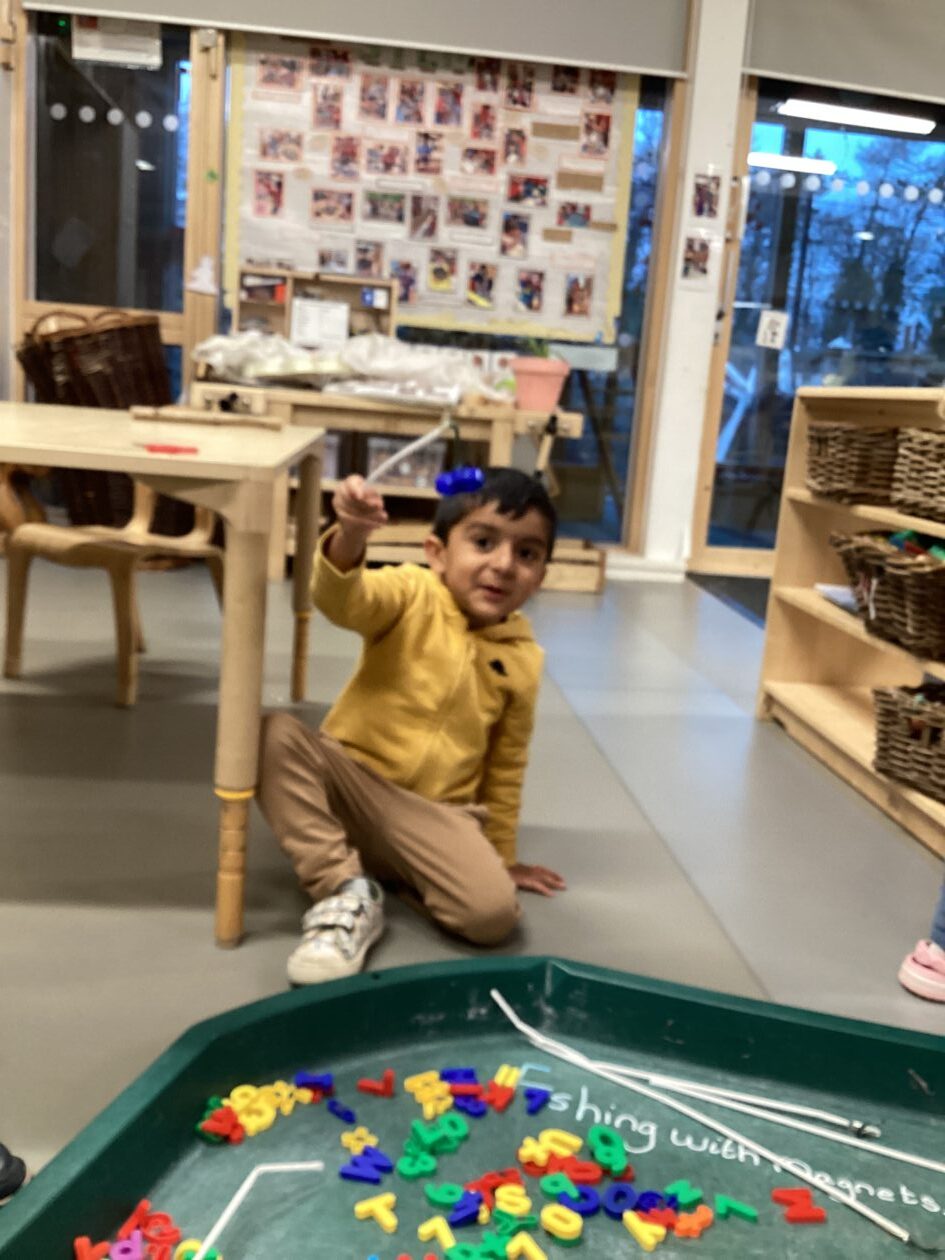
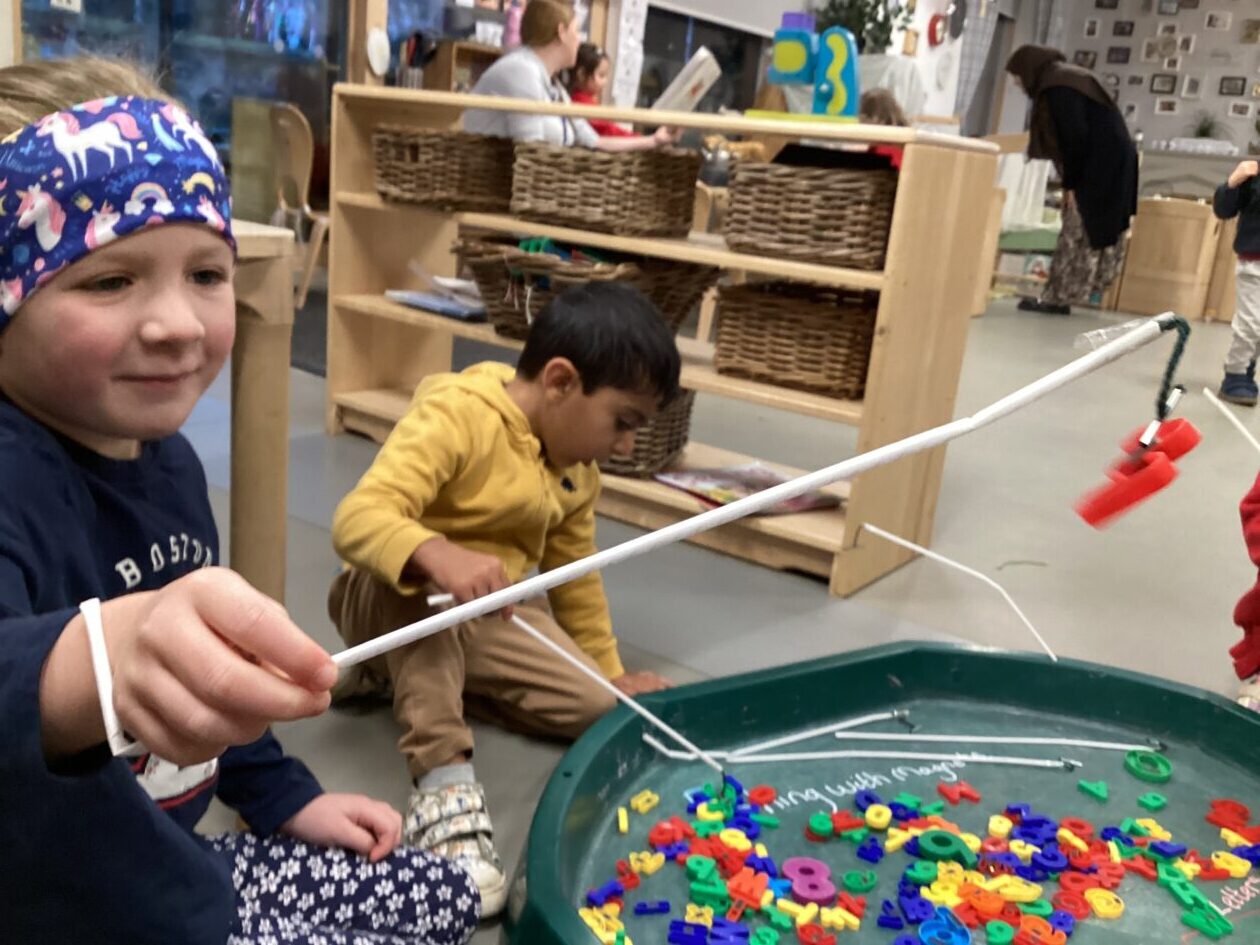
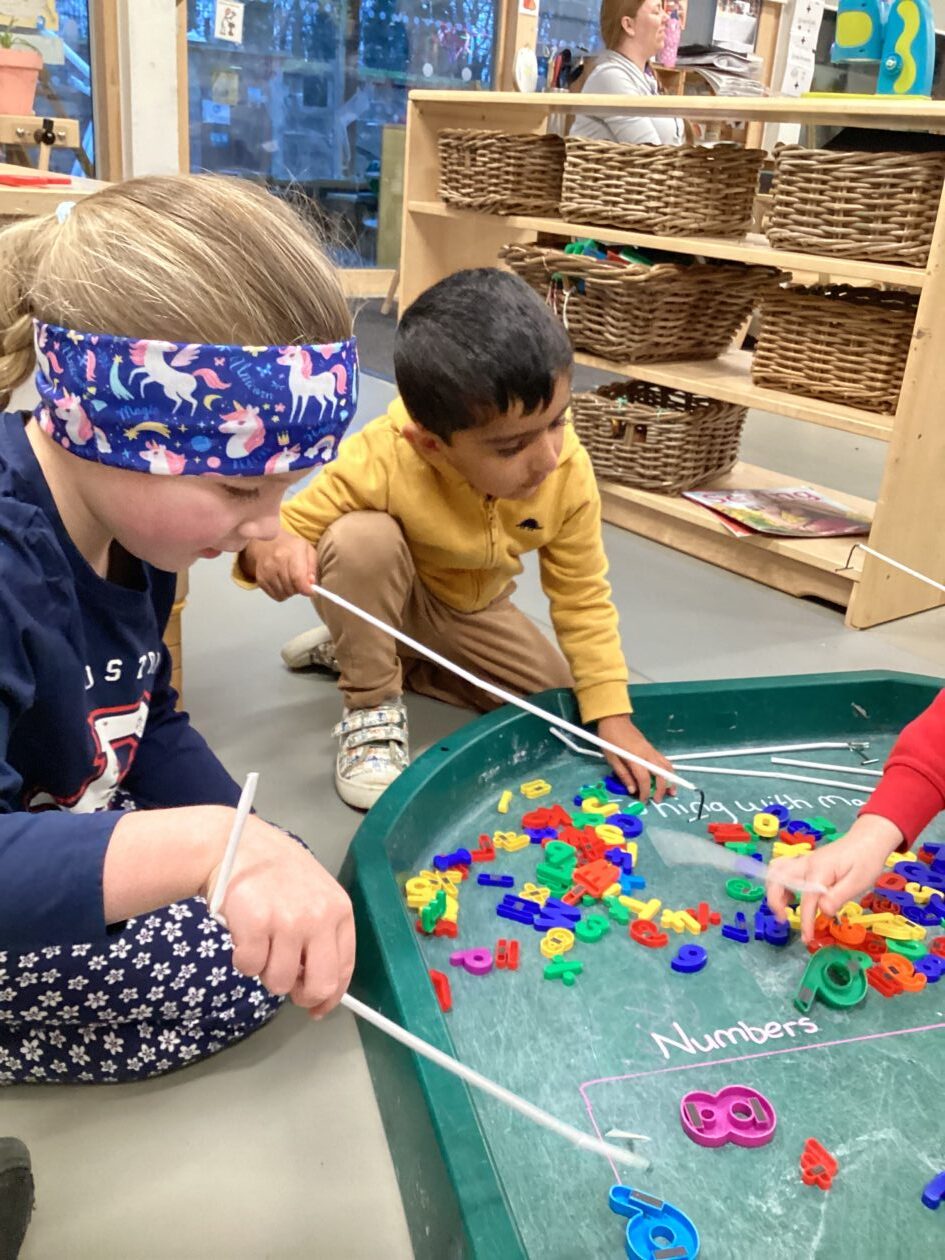
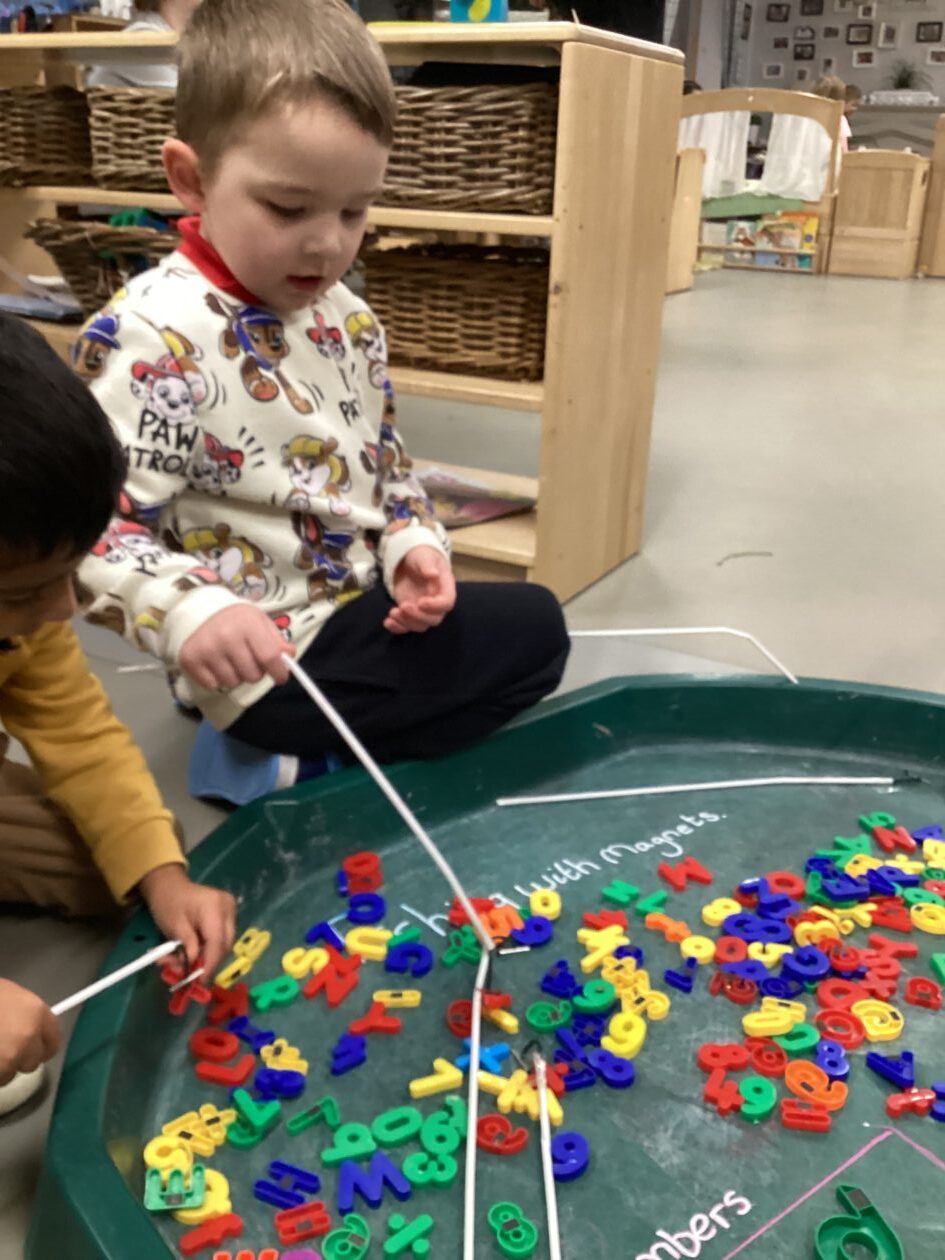
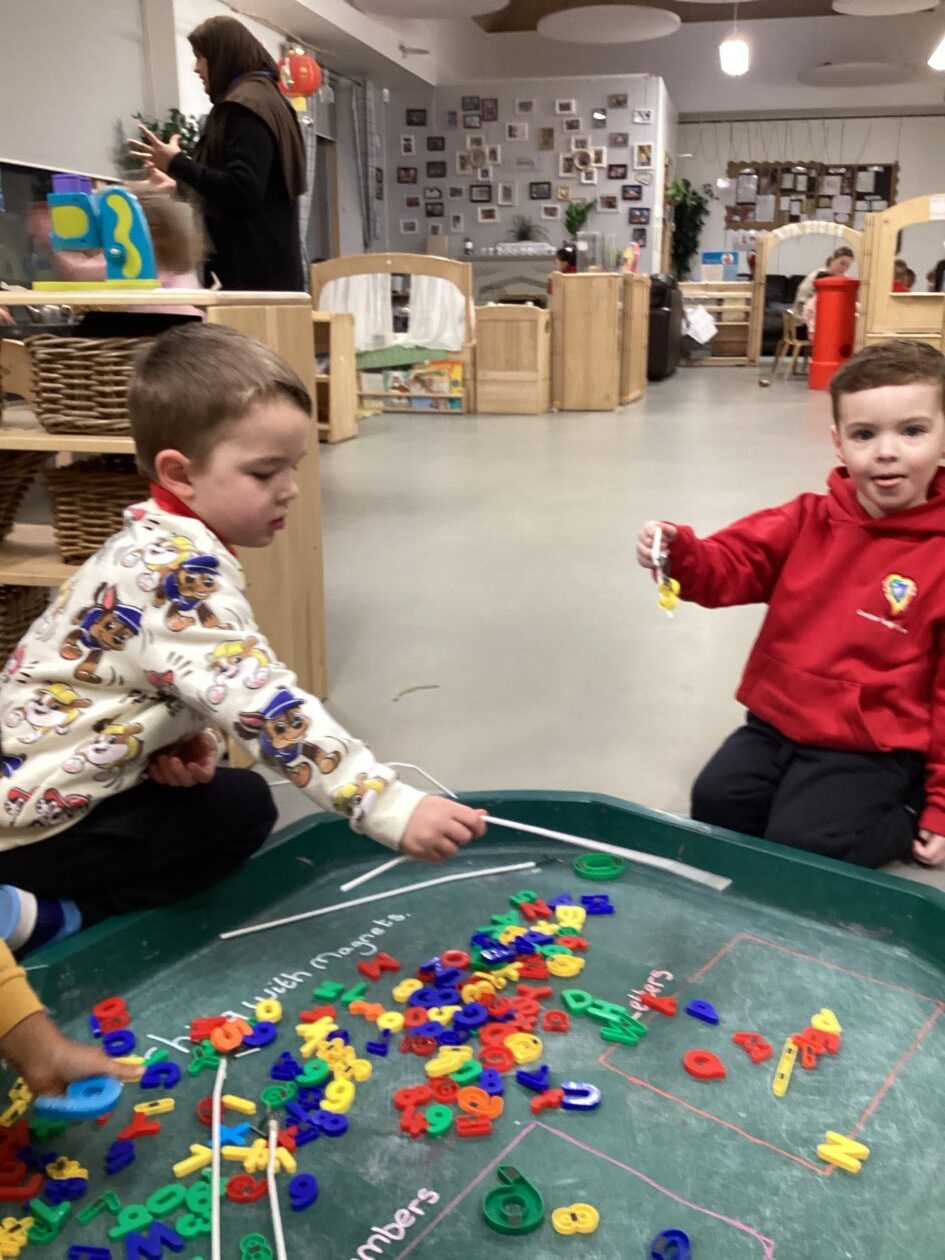
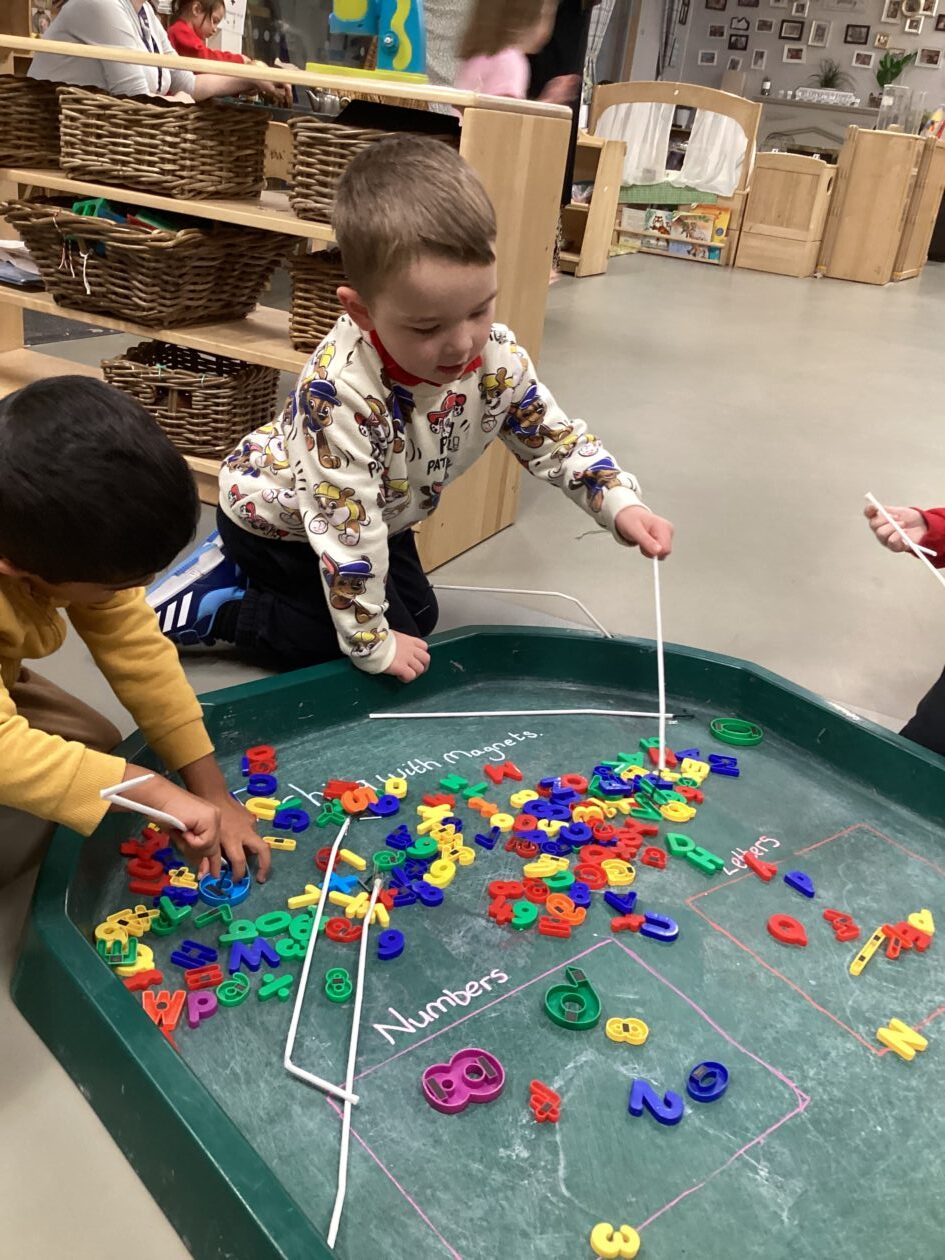
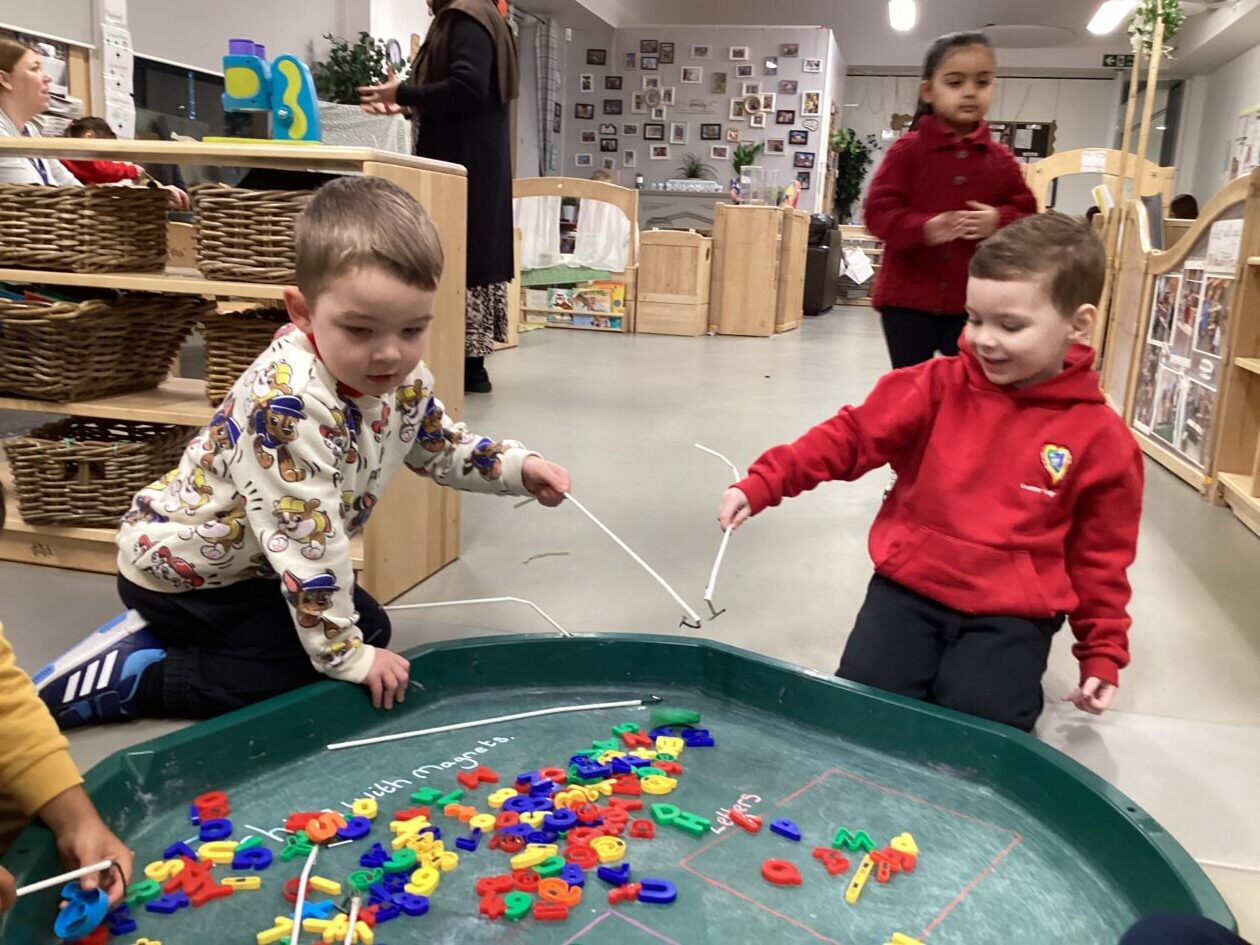
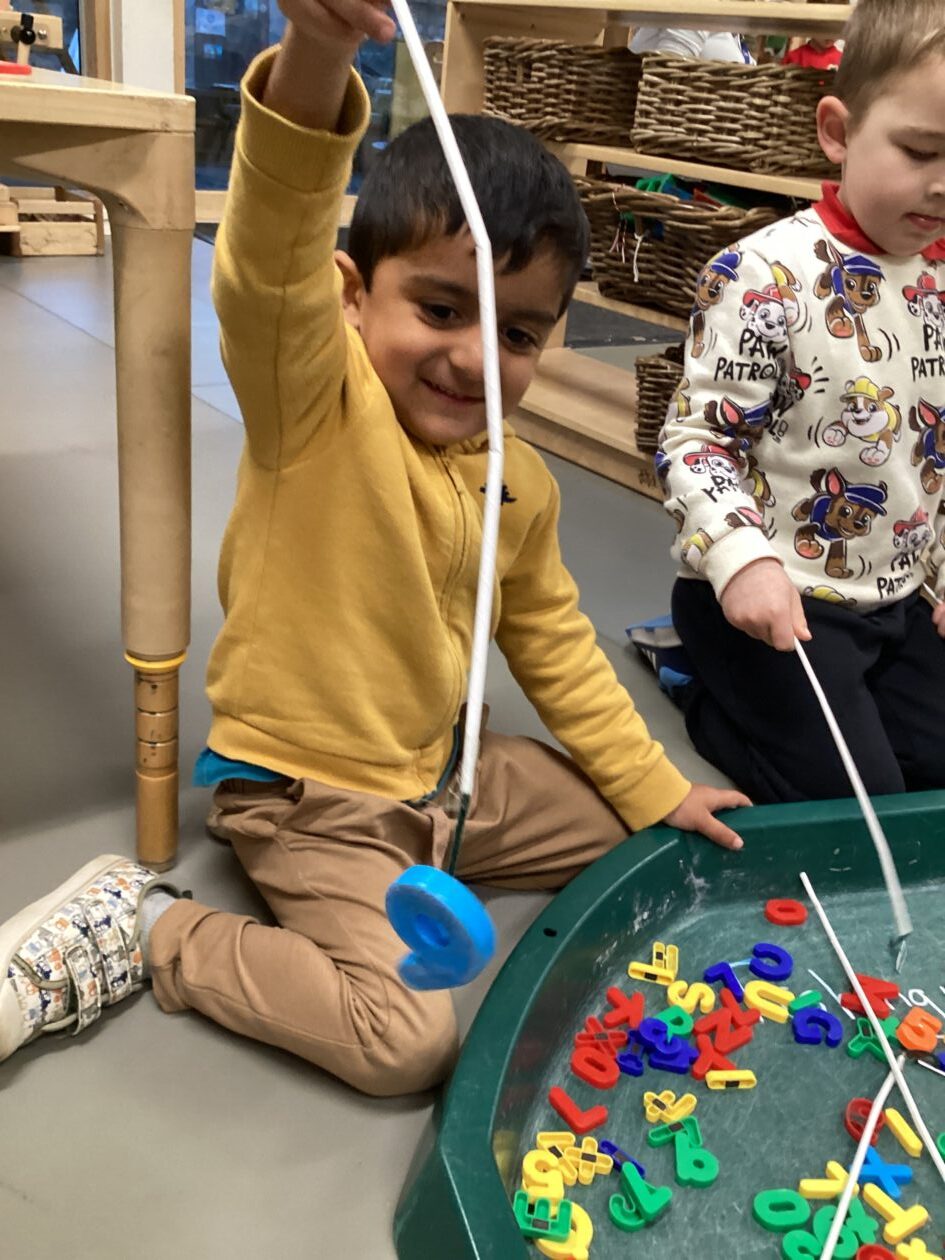
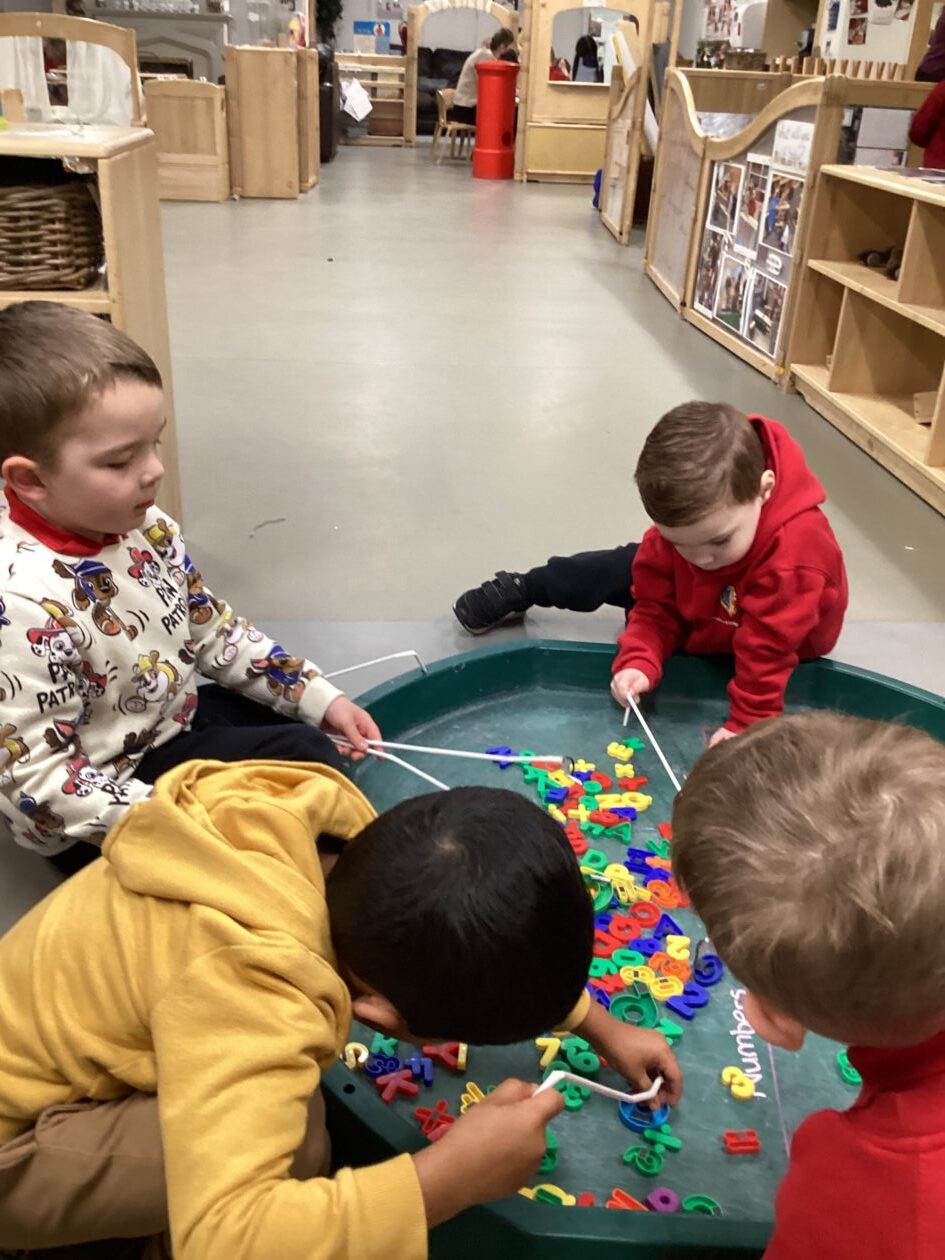
This week at the discovery area the children have continued their interest in magnets and have tried some fishing with magnets. The children made positive attempts to capture the letters and numbers and differentiate between the two. Some of our learners were also able to differentiate between upper and lower case letters. There was also curiosity as to some of the magnets that had mathematical symbols which we will continue to explore.
HC “Now I’ve got two numbers and one letter now”
JK “I’m getting all the big letters”
AY “I’ve got a big A at the start of my name and a little a at the end”
NM “Looked I catched my letter-its red







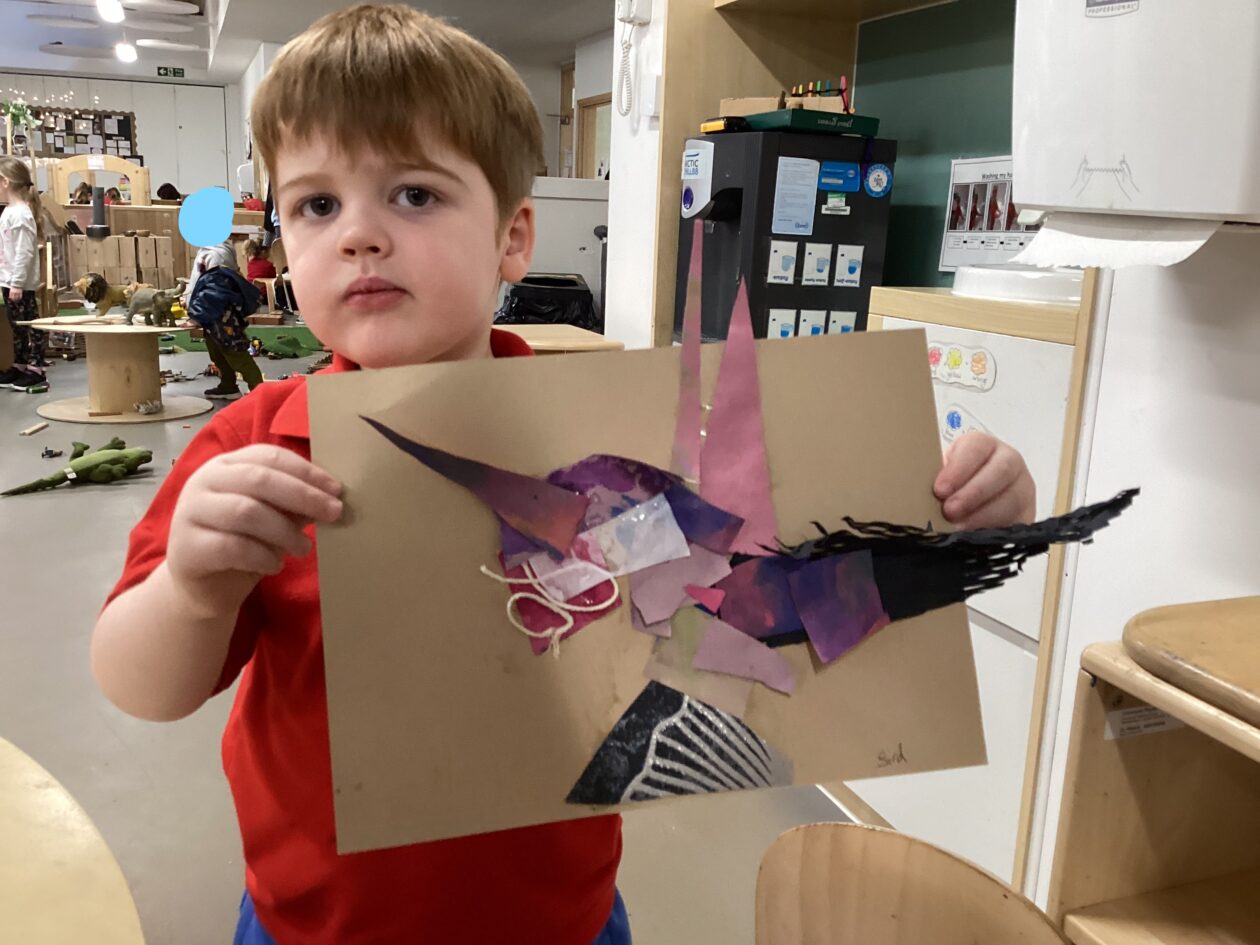
In the creative area this week we’ve been busy, making collages with various recycled materials. FM created a lovely bird and I.C-I made a detailed aeroplane.
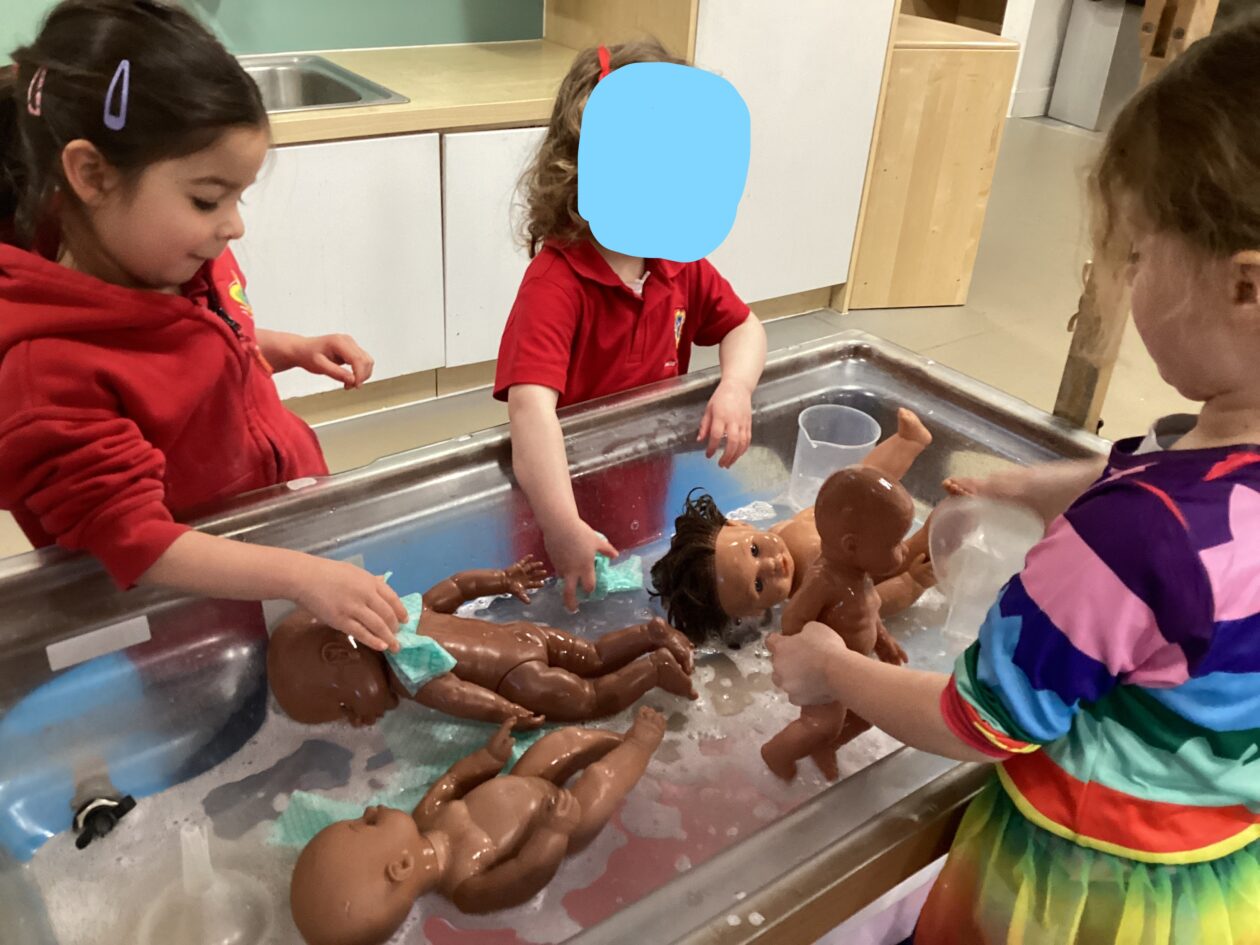
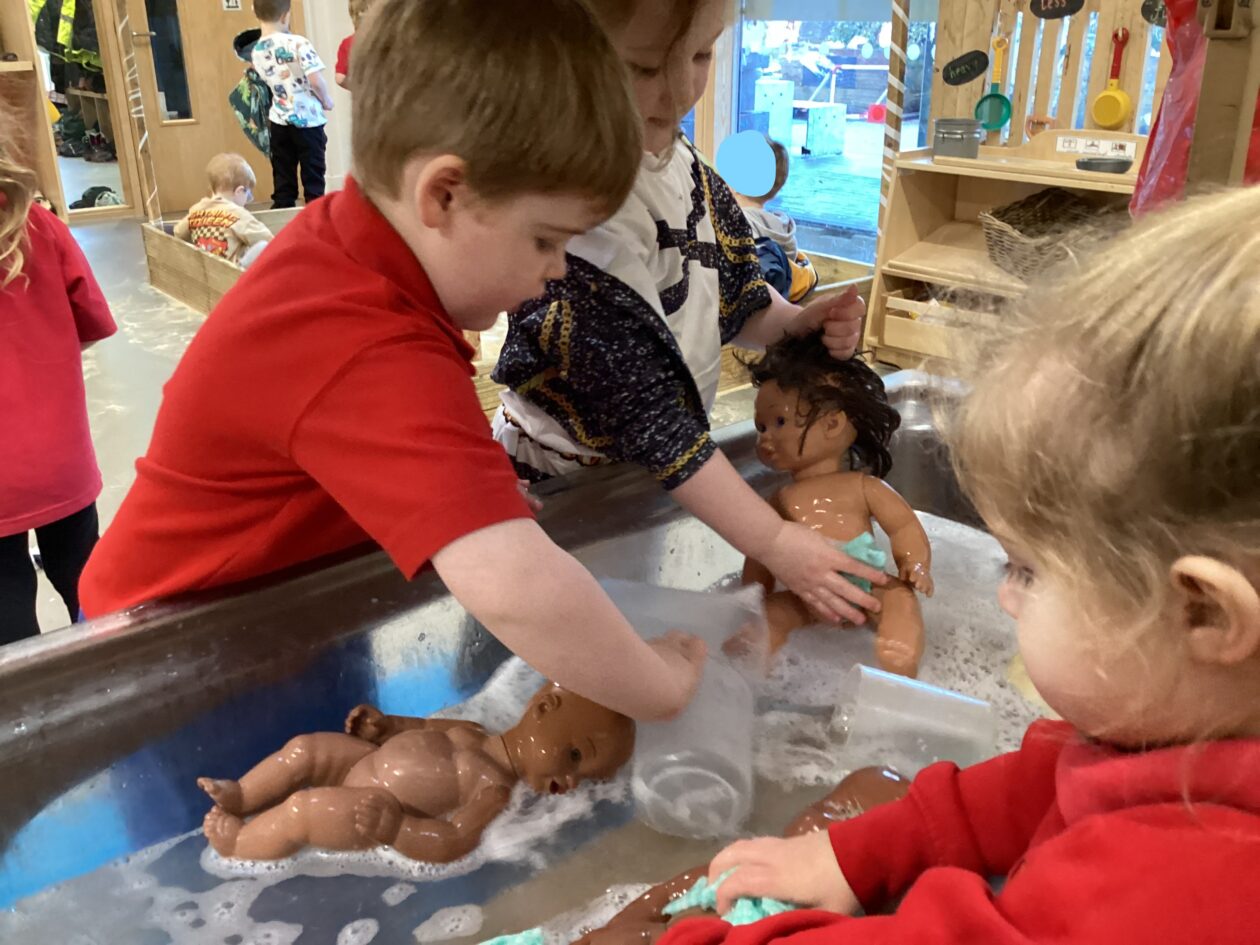
At the water table the children have been washing the ‘babies’, and we’ve been discussing the importance of keeping our bodies clean, linking to Health and Wellbeing.


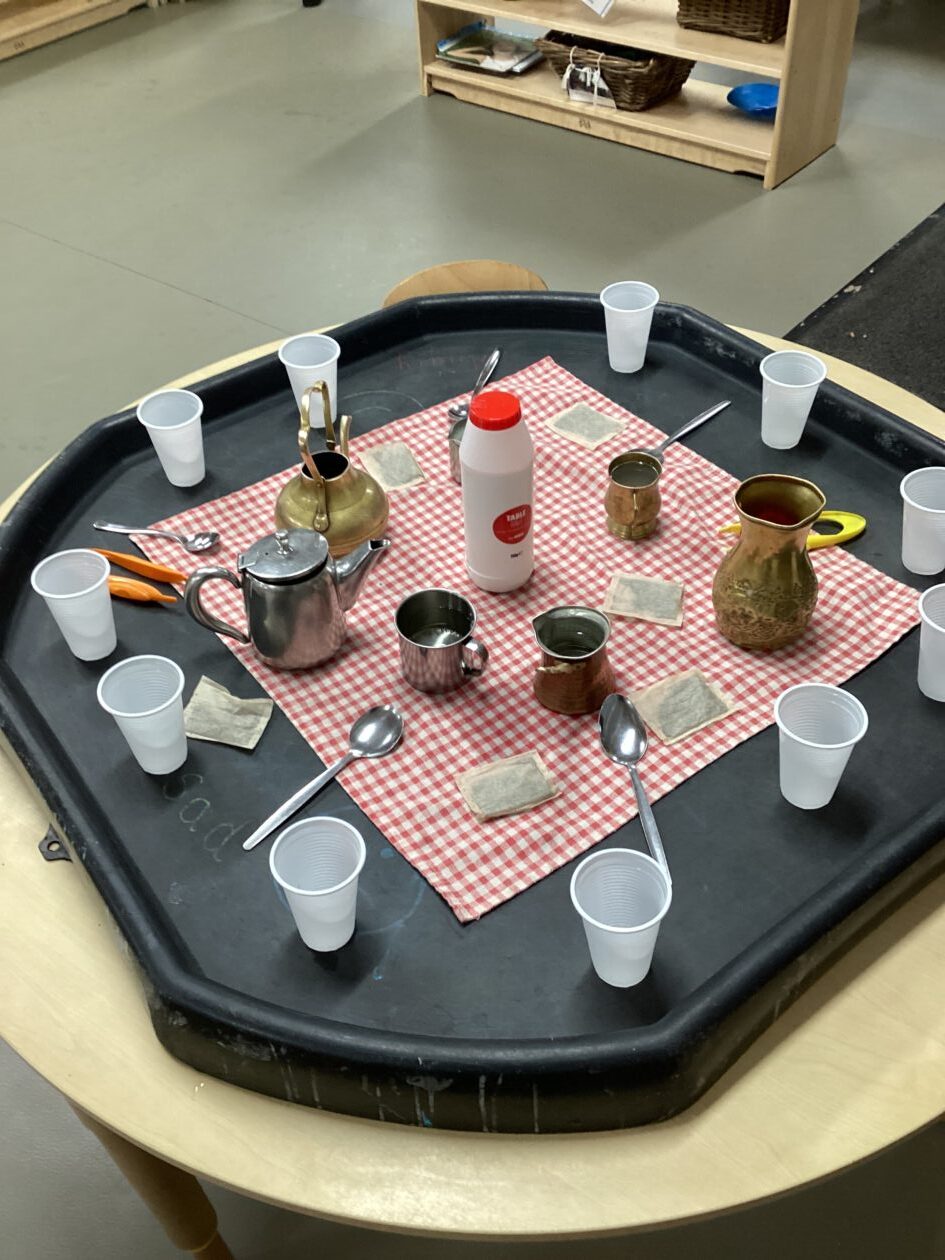
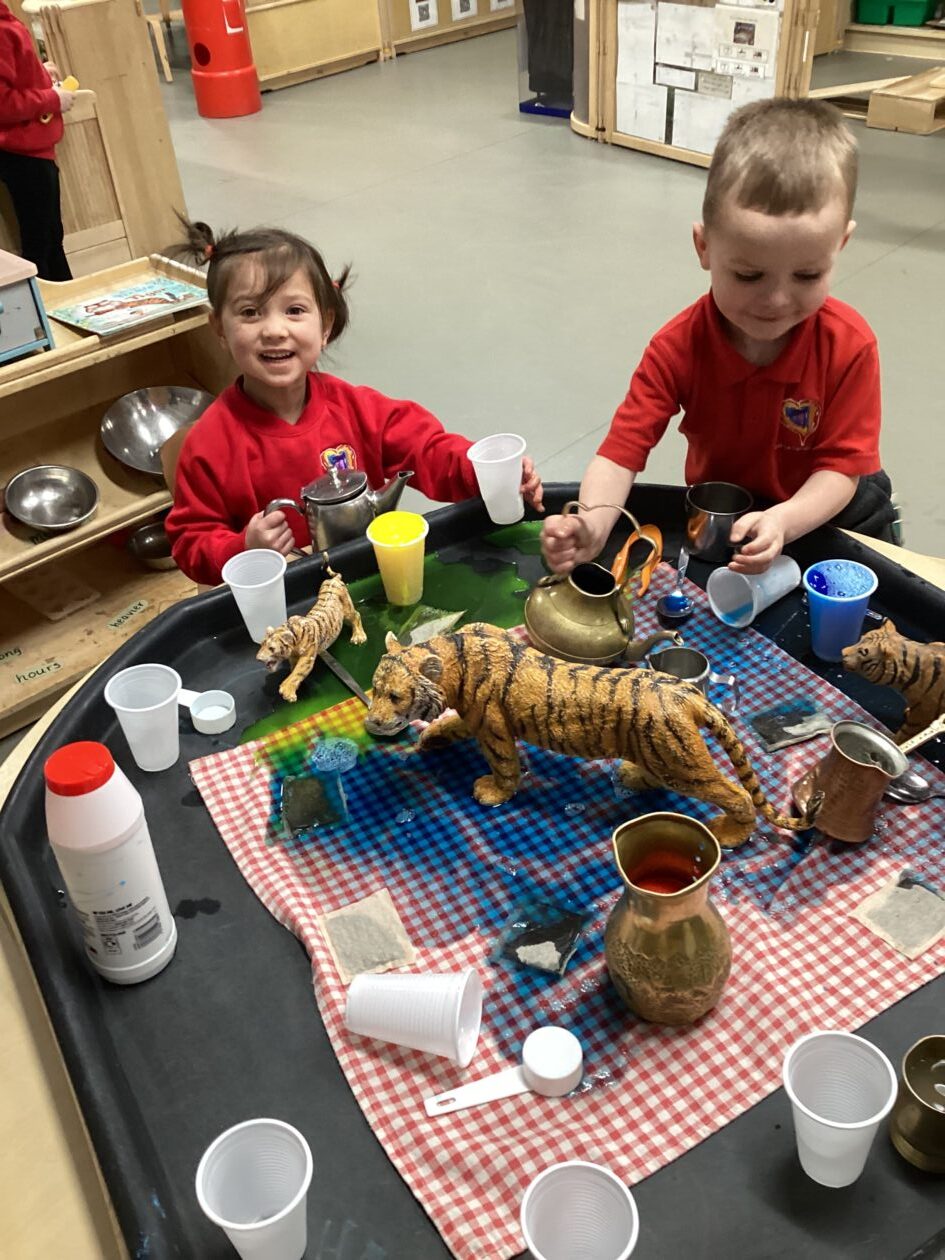
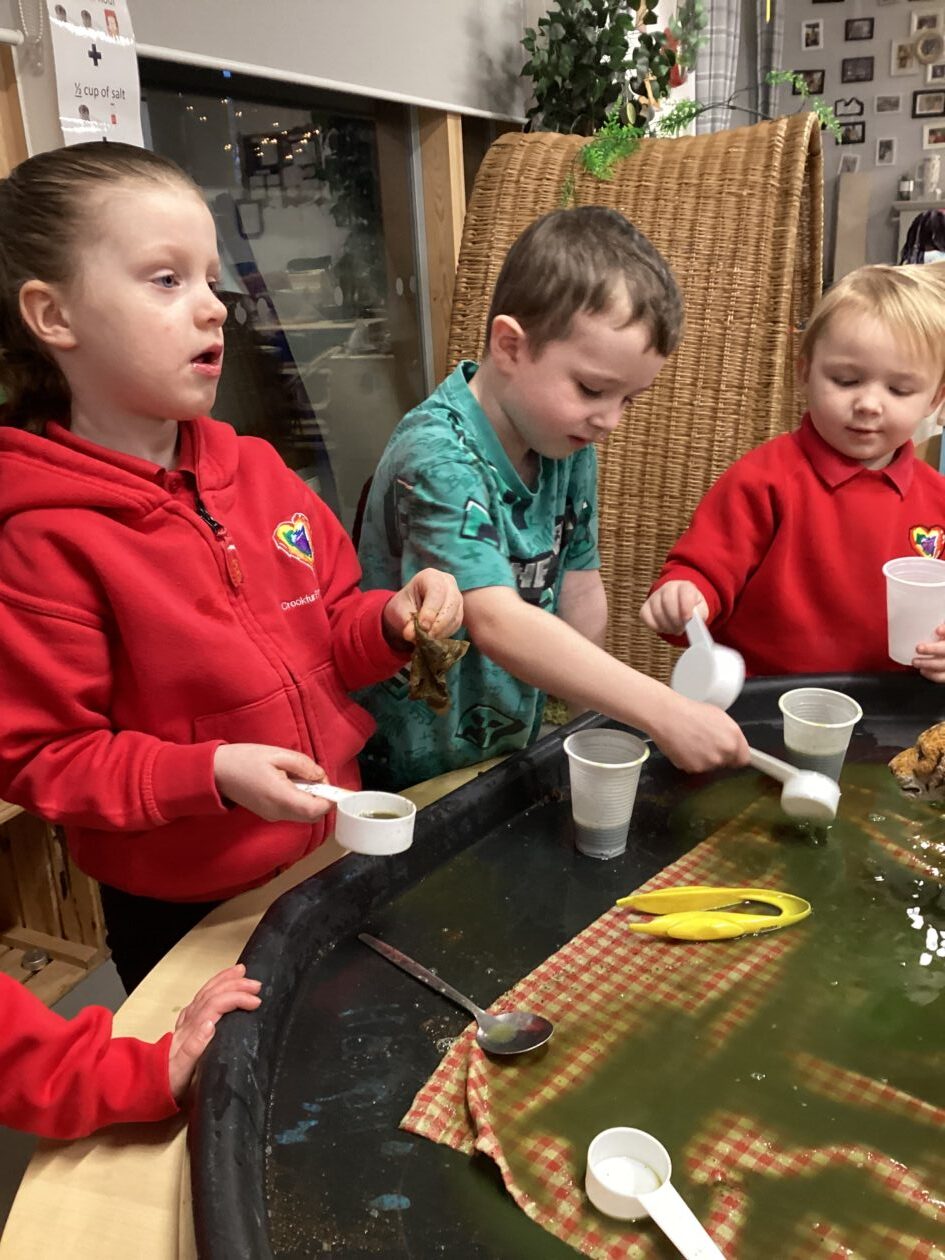
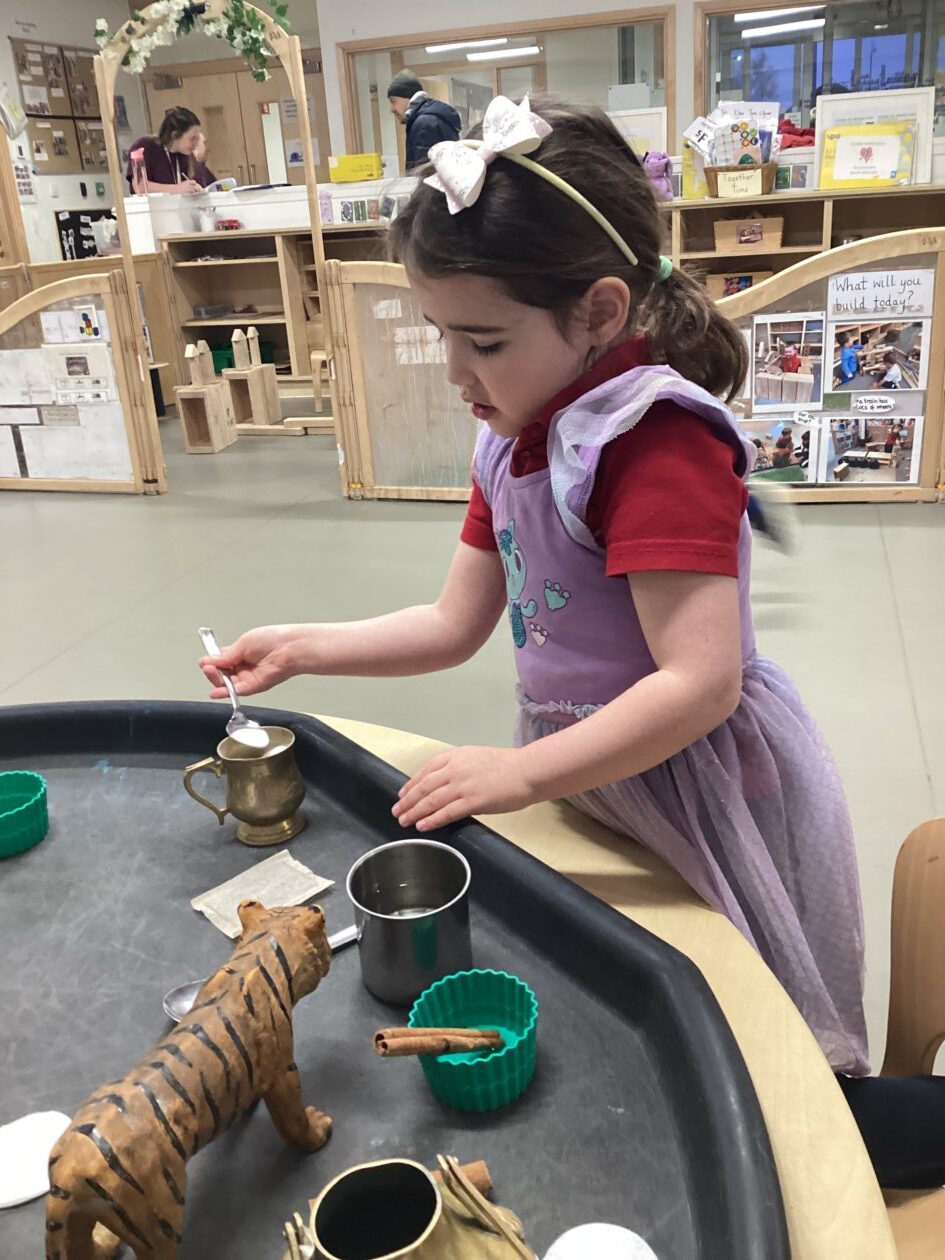
In the malleable area the children explored malleable materials while revisiting key themes and ideas from The Tiger Who Came to Tea. They investigated volume and capacity through practical play and engaged their senses by tasting flavoured tea. Using iPads, children researched tigers, learning where they live and what they eat. They sequenced tigers by size, using mathematical language related to size and measure, and shared discussions about what they eat for their own dinner or tea.
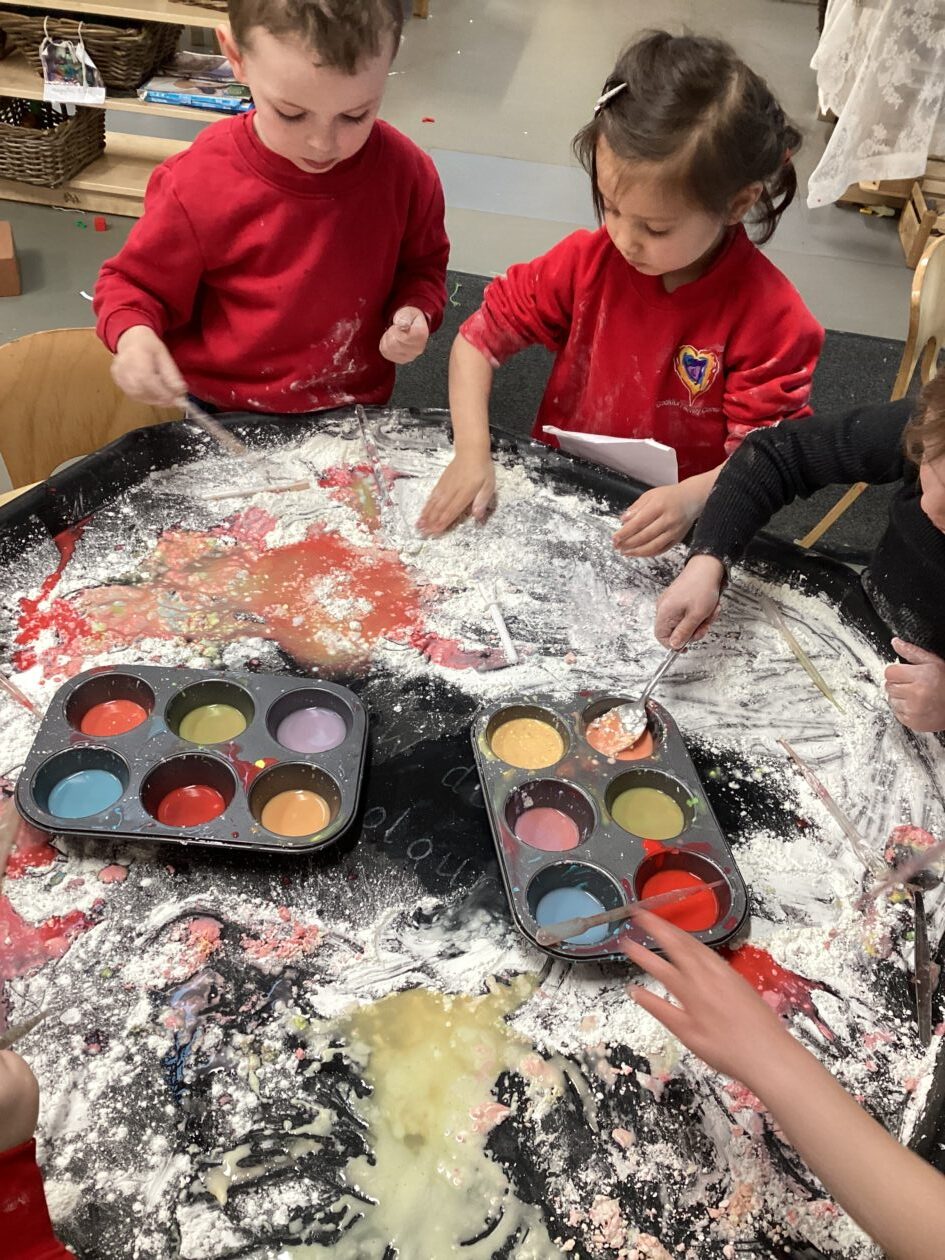
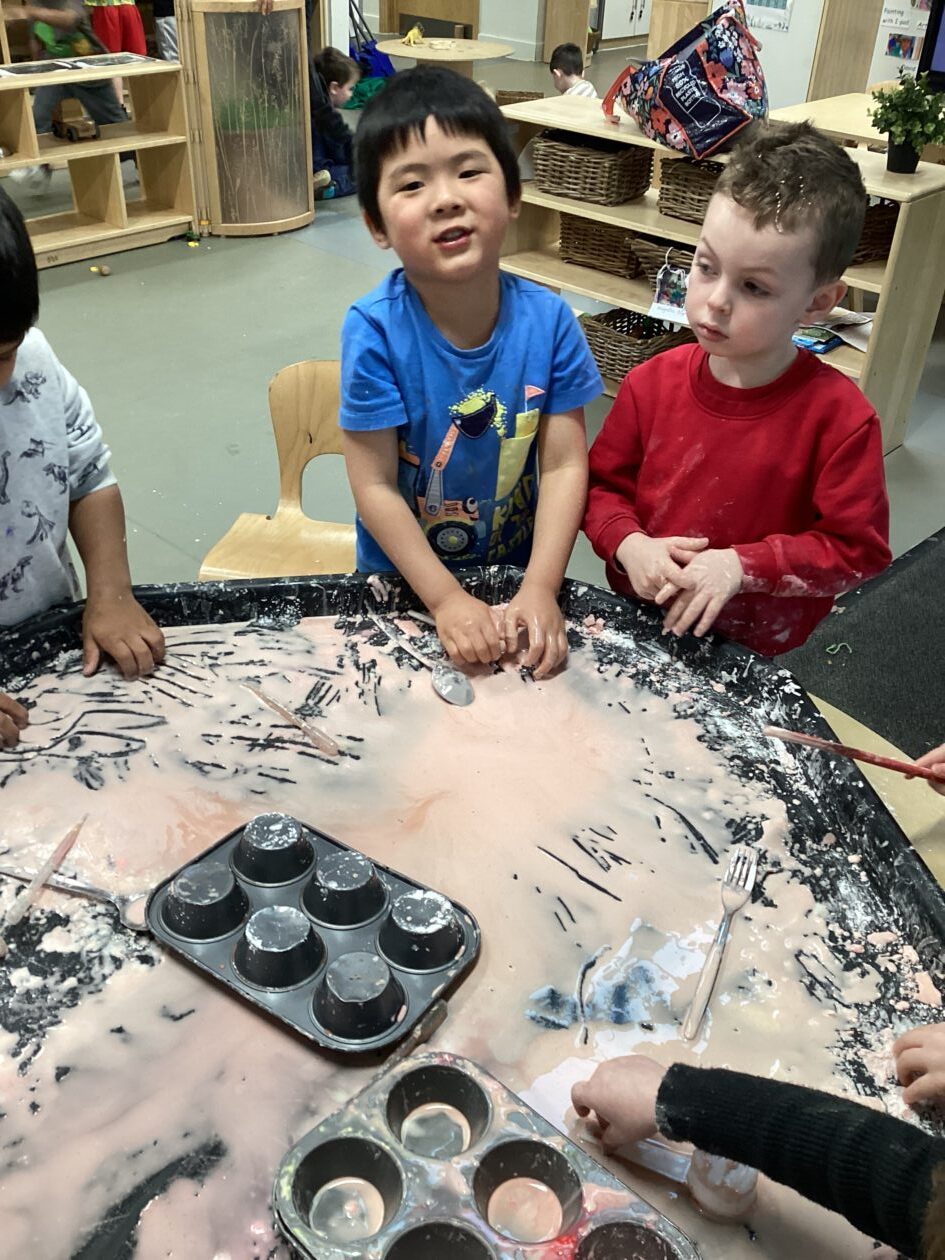
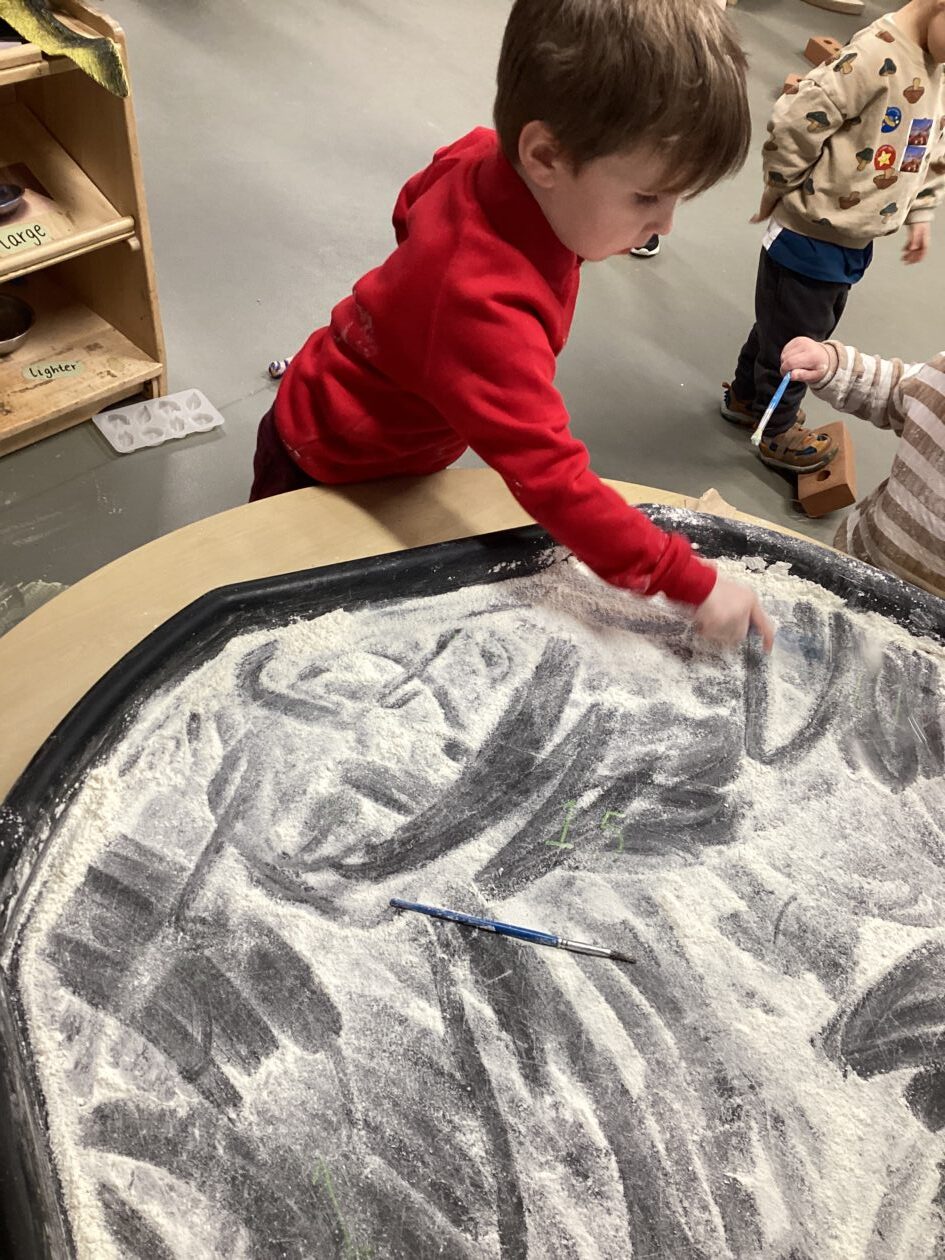
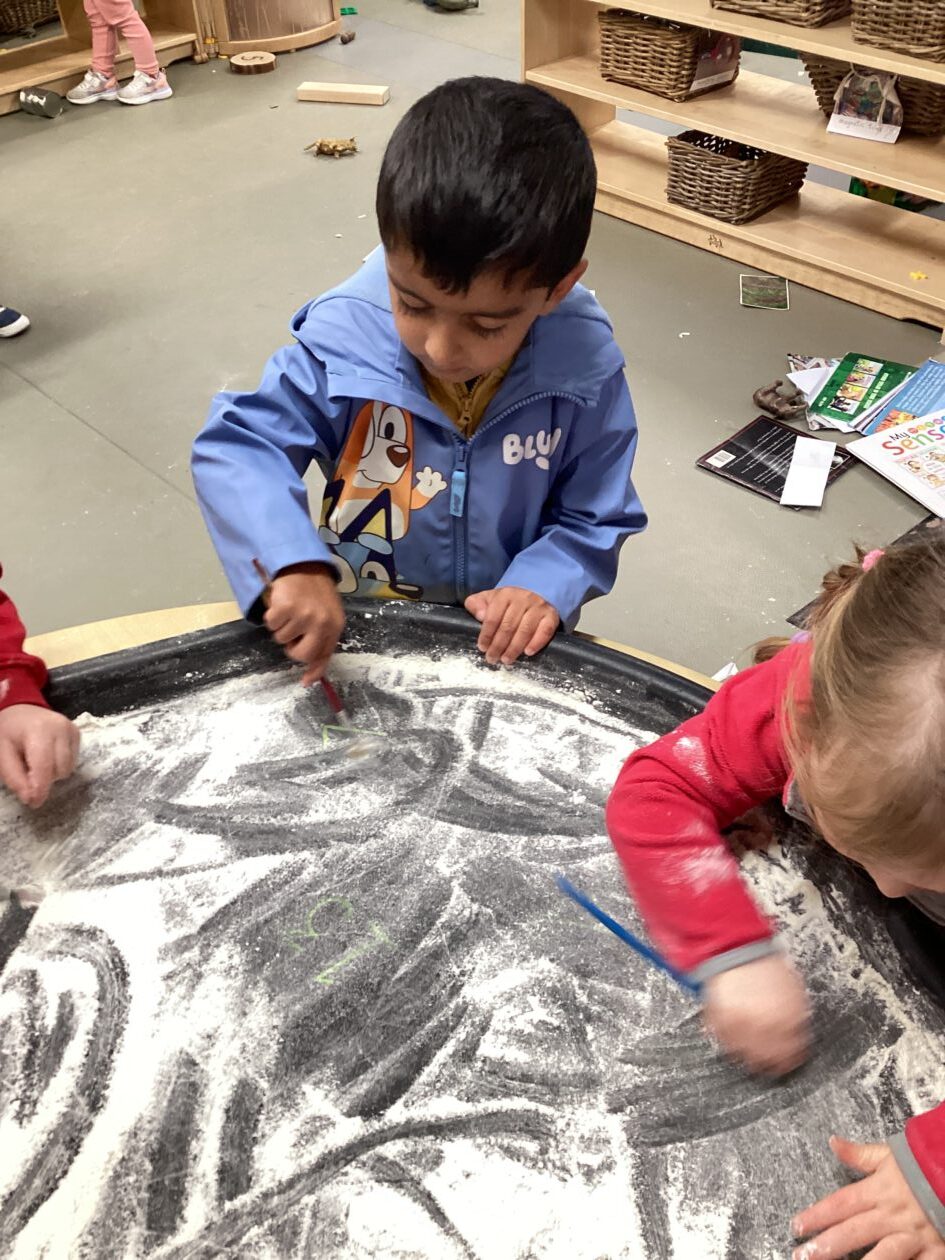
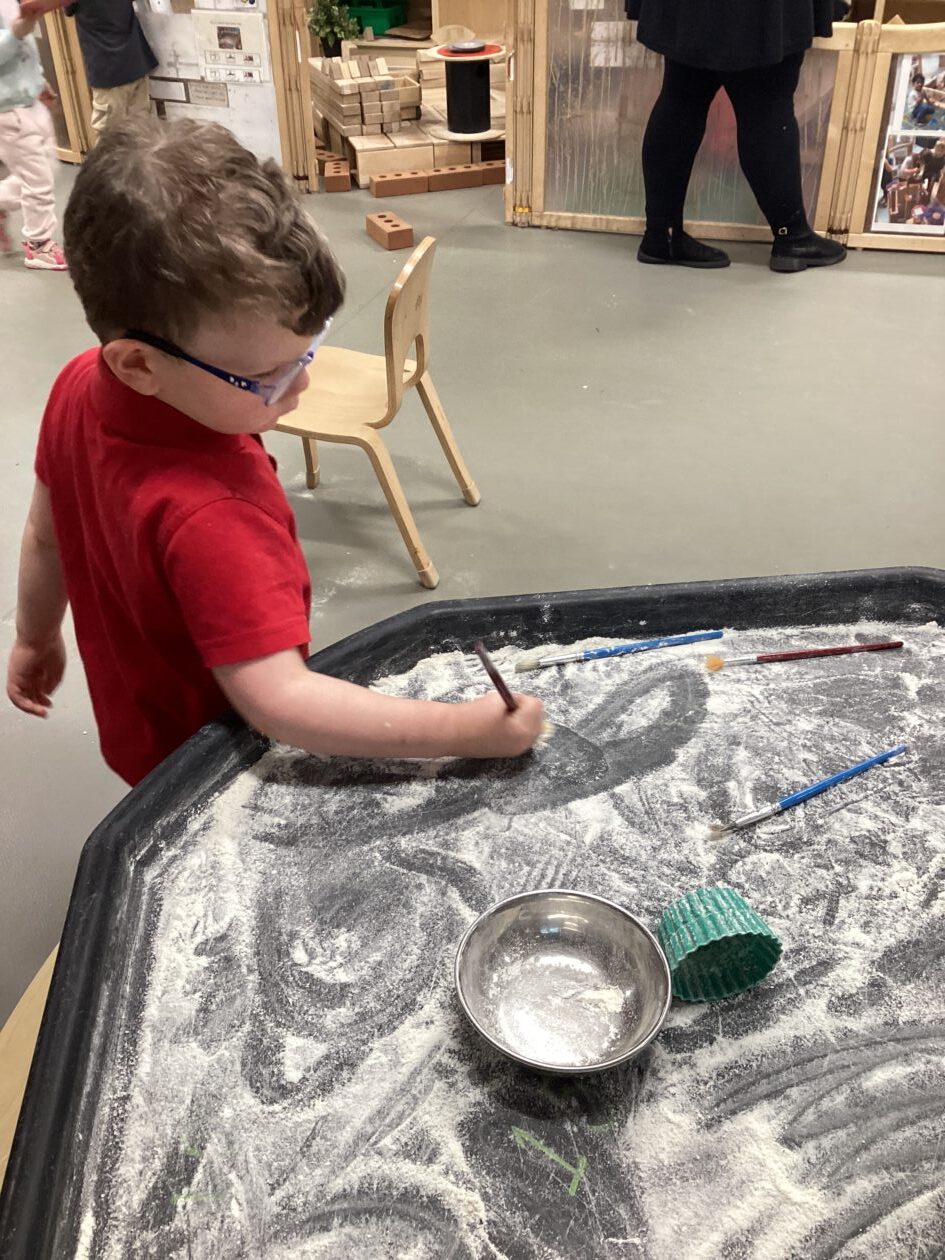
Through sensory mark-making activities, children hunted for letters and numbers in flour, developing early literacy and numeracy awareness. While exploring gloop, they created shapes, letters, and numbers, strengthening fine motor control and supporting early writing skills.
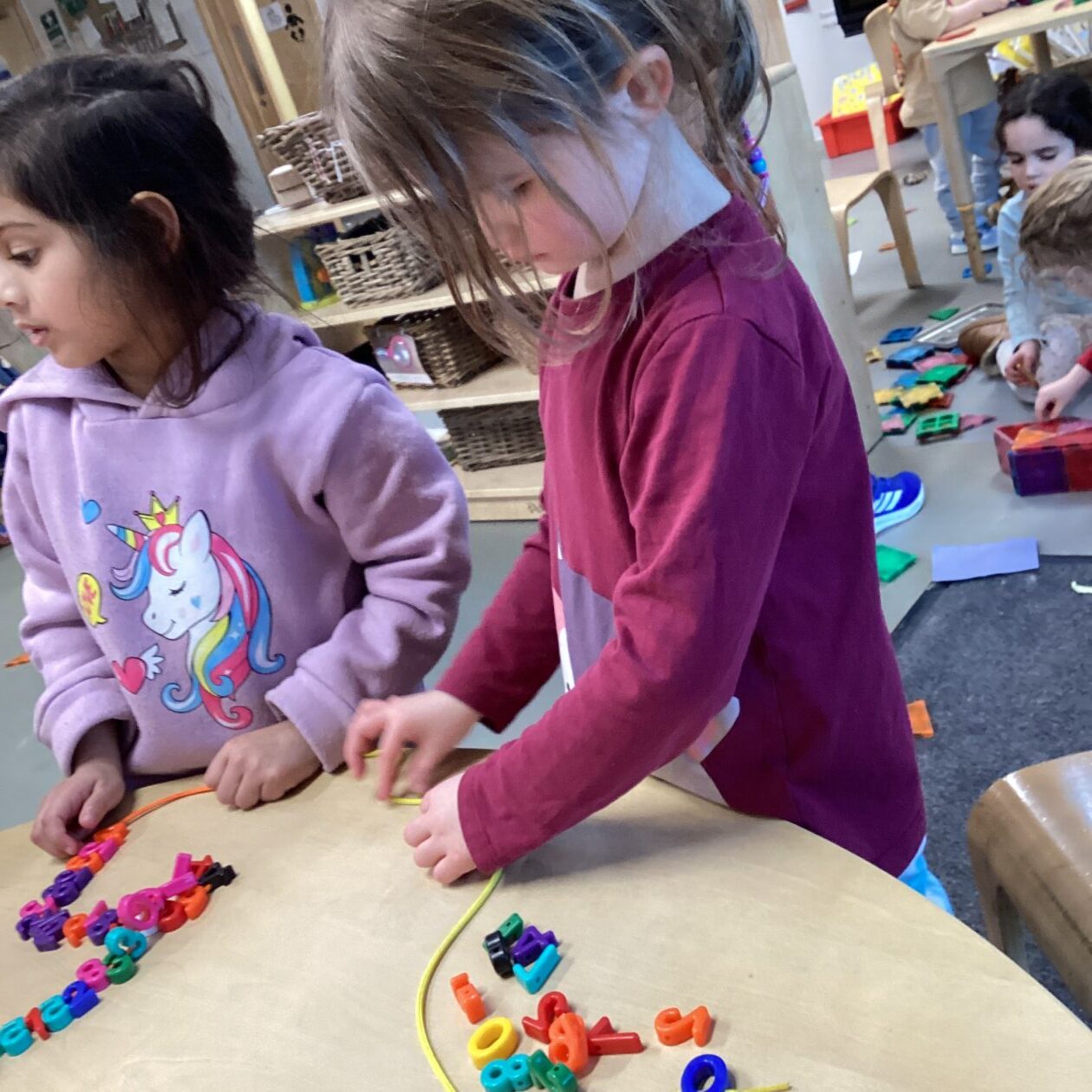
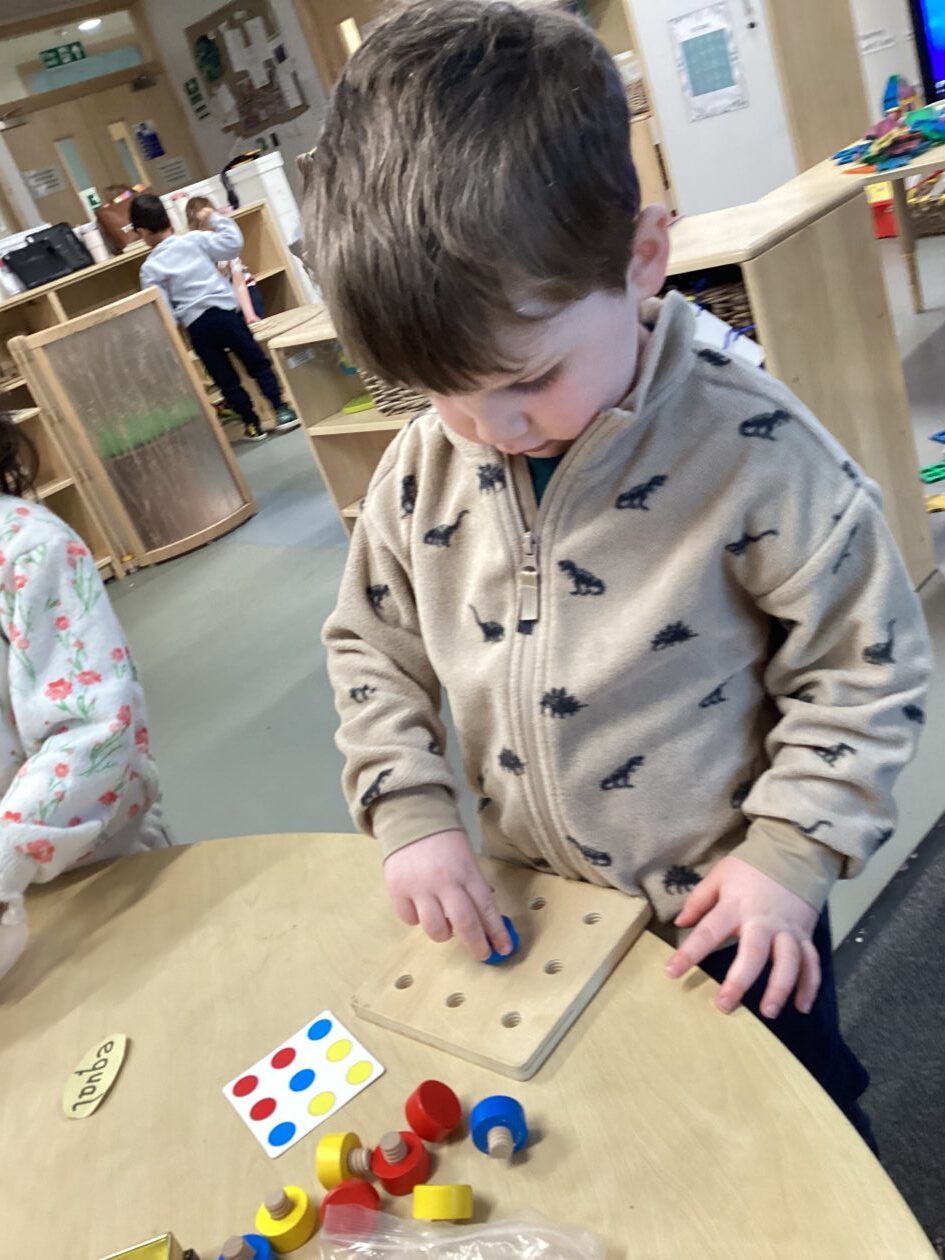
Children developed fine motor skills through threading activities while practising number recognition. They explored numbers that come before and after, sequenced numbers from 0–20, and matched number patterns, supporting their understanding of number order and relationships.
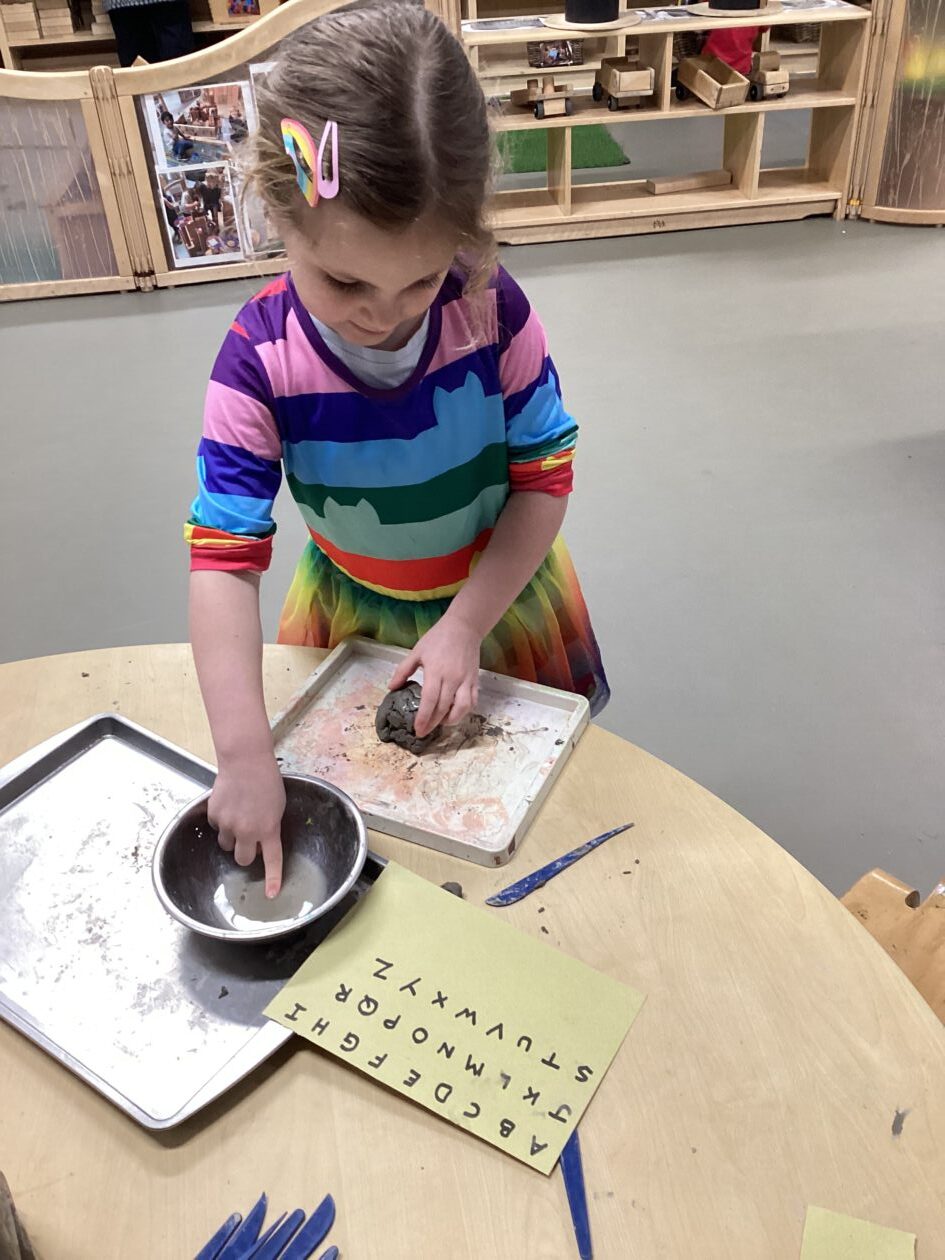
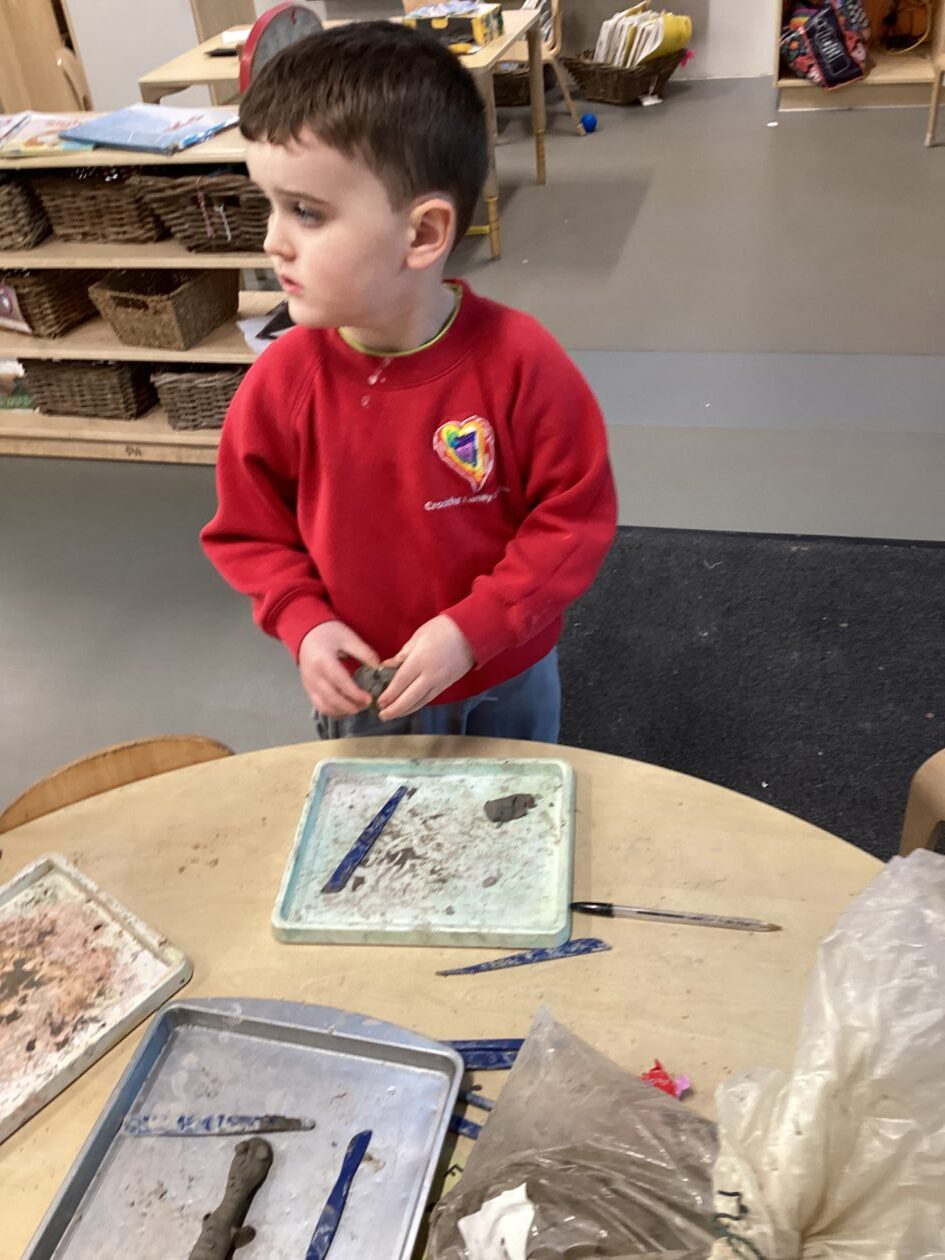
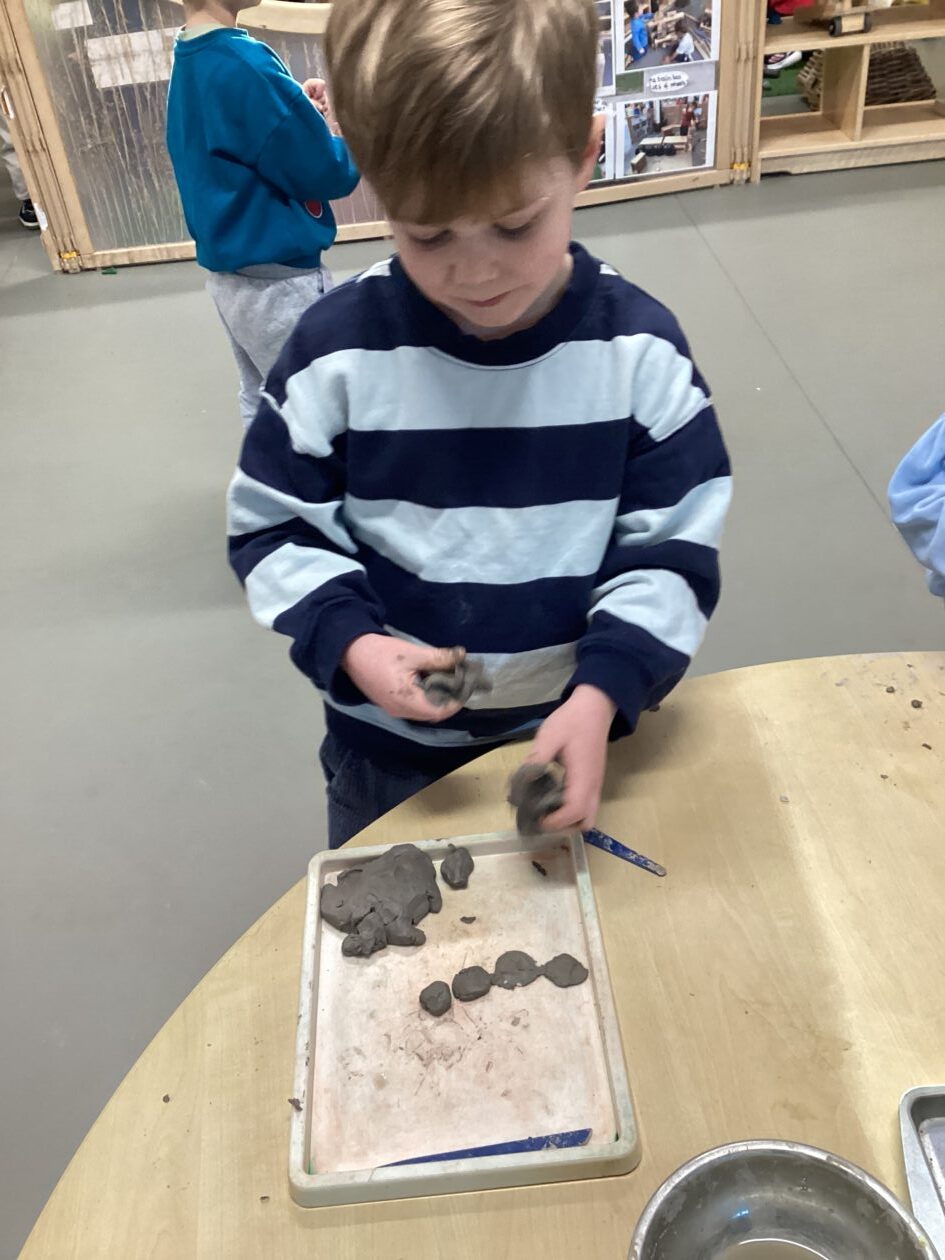
Children experimented with sculpting and moulding clay, developing hand strength and creativity. Some children created the initial letter of their name, leading to discussions about letter sounds and words that begin with the same sound. Children shared and talked about their design ideas with others, supporting communication and confidence.
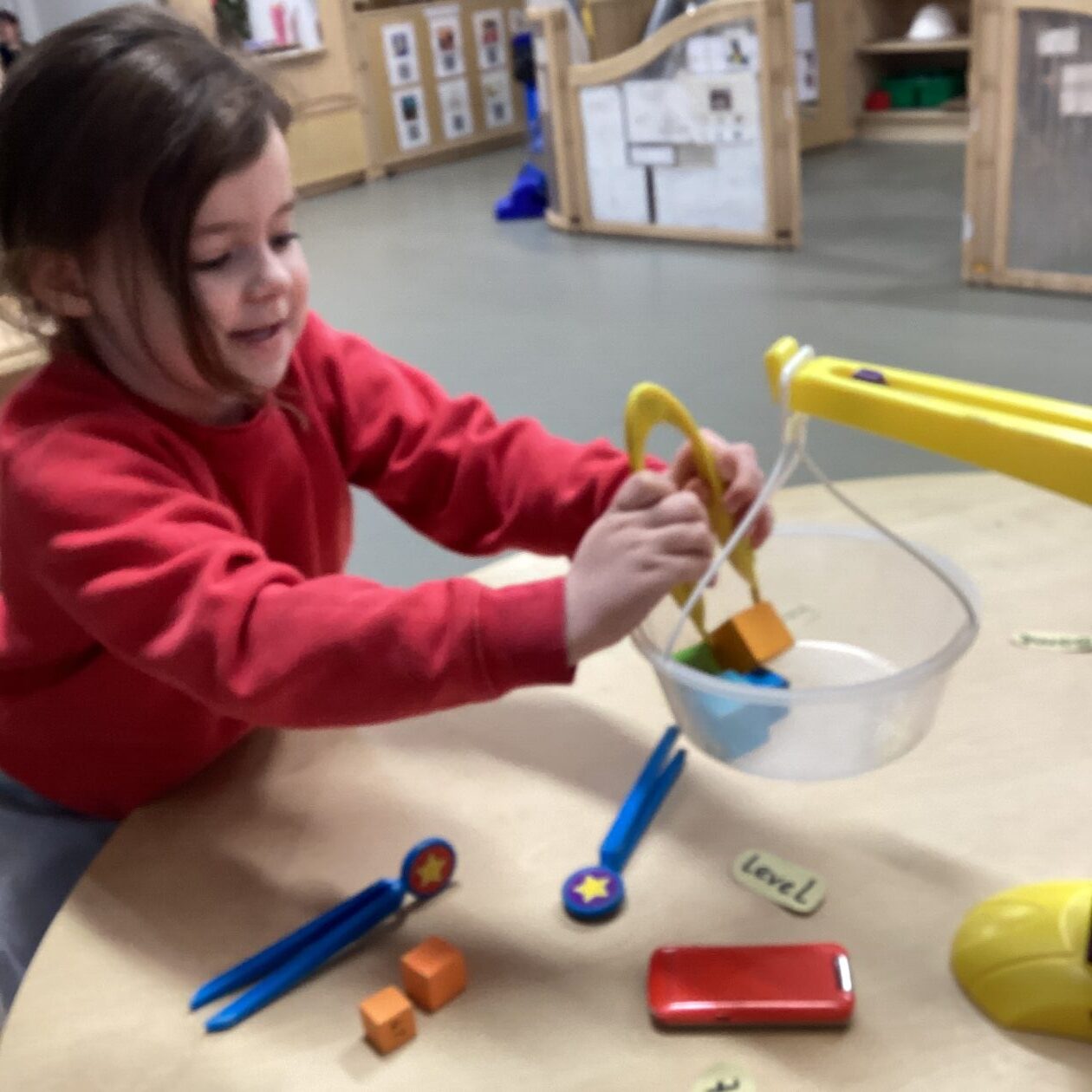
Using balance scales, children compared size and measure and made predictions about which side would be heavier. They learned that the quantity of objects does not always reflect weight and applied touch-counting skills and one-to-one correspondence during the activity.
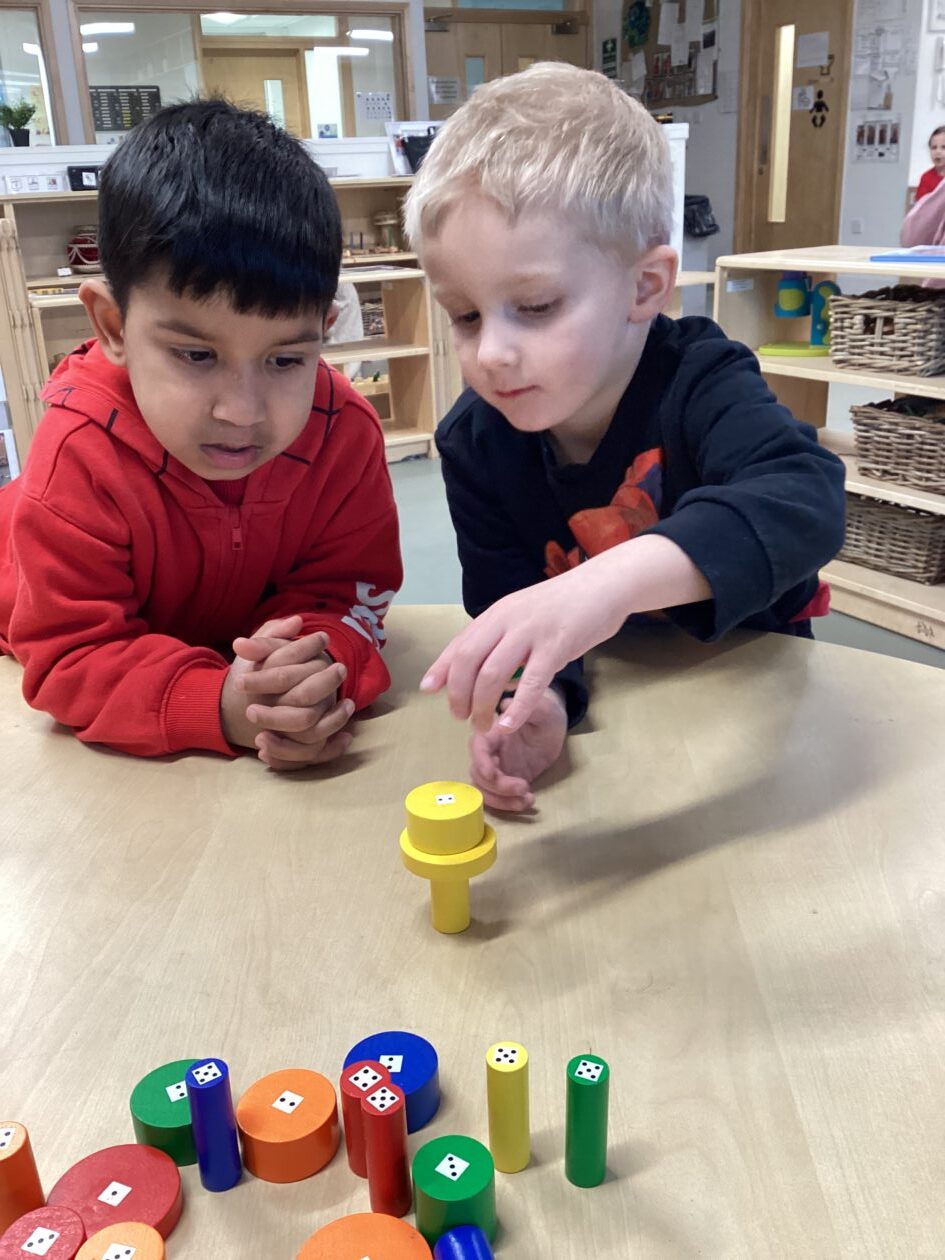
Children developed hand-eye coordination while engaging in the tower game. They practised subitising, touch counting, and number and colour recognition as part of their play.
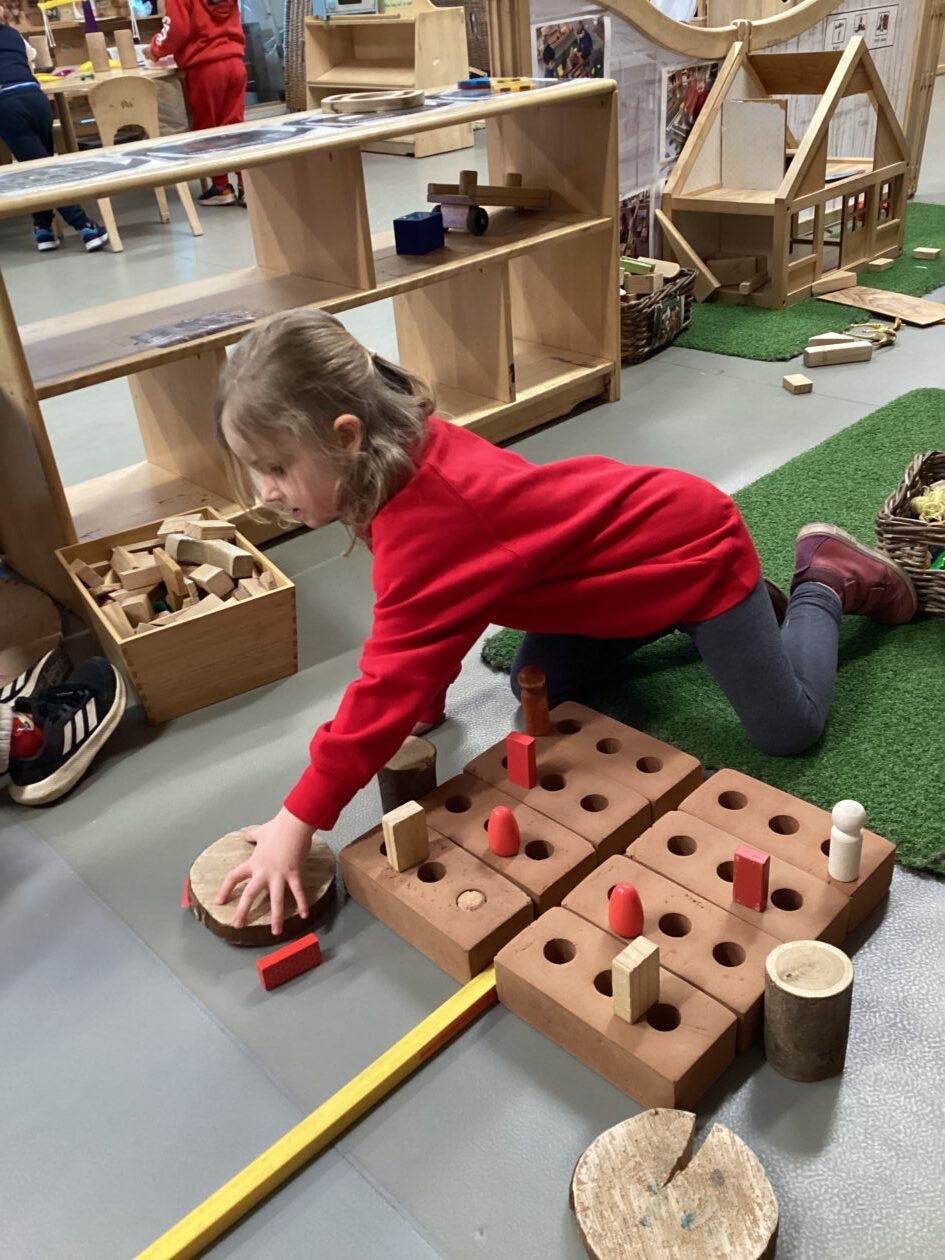
During block play, children strengthened hand-eye coordination and problem-solving skills as they explored which size elastic band would fit on each block. They compared the size of elastic bands, created colour patterns, and used touch counting to find out how many bands were on each block. Children also explored numbers as quantity by identifying who had the most bands.










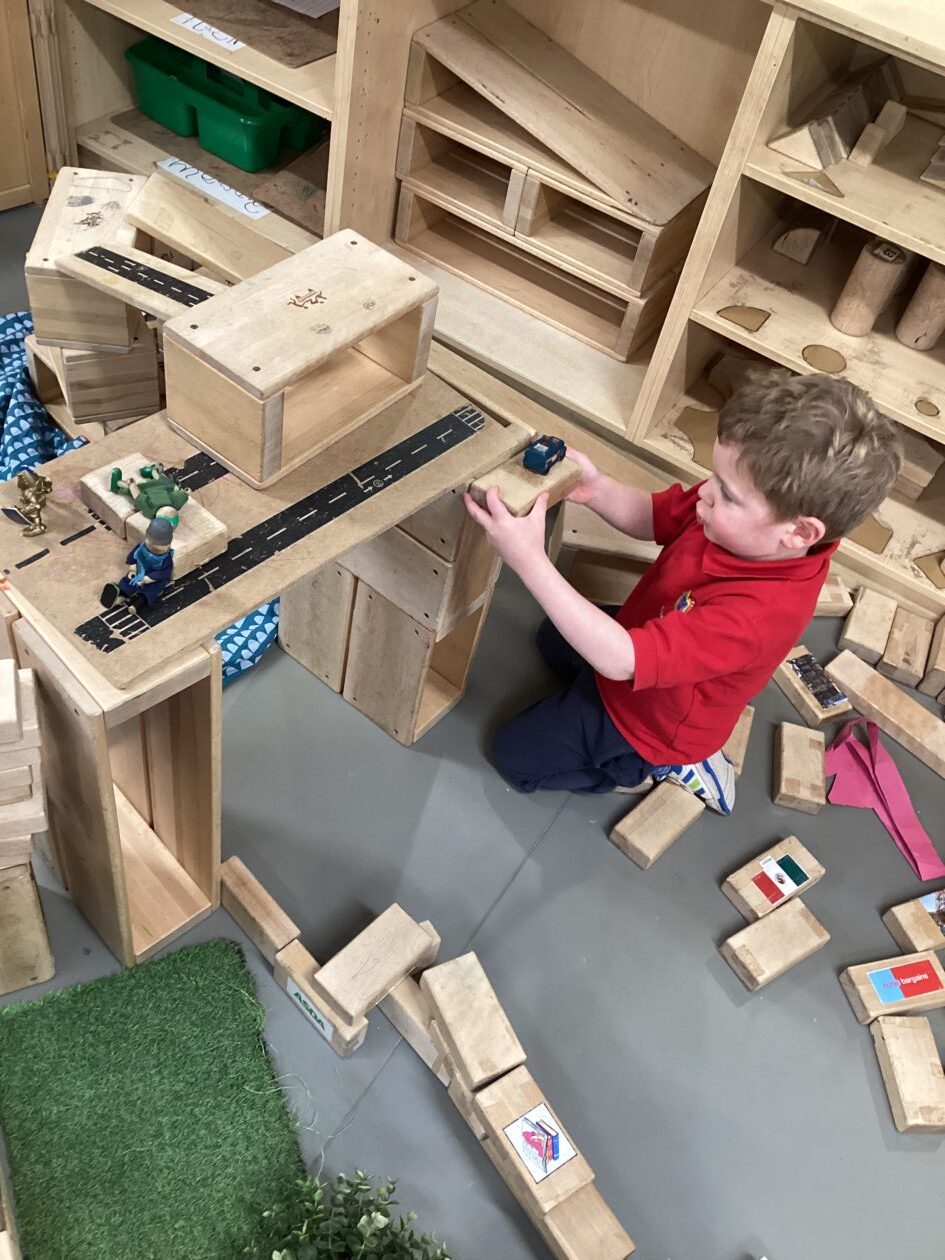
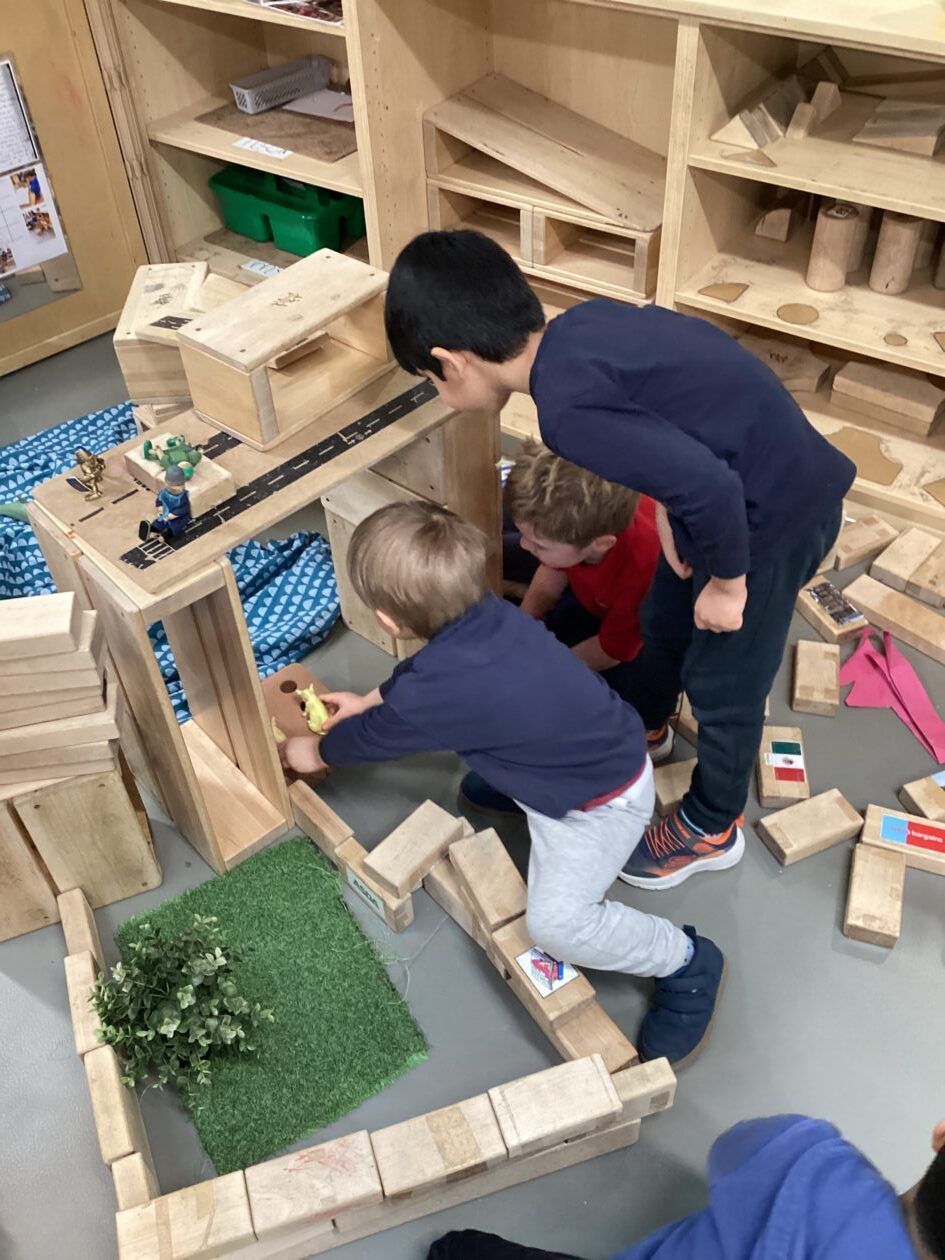
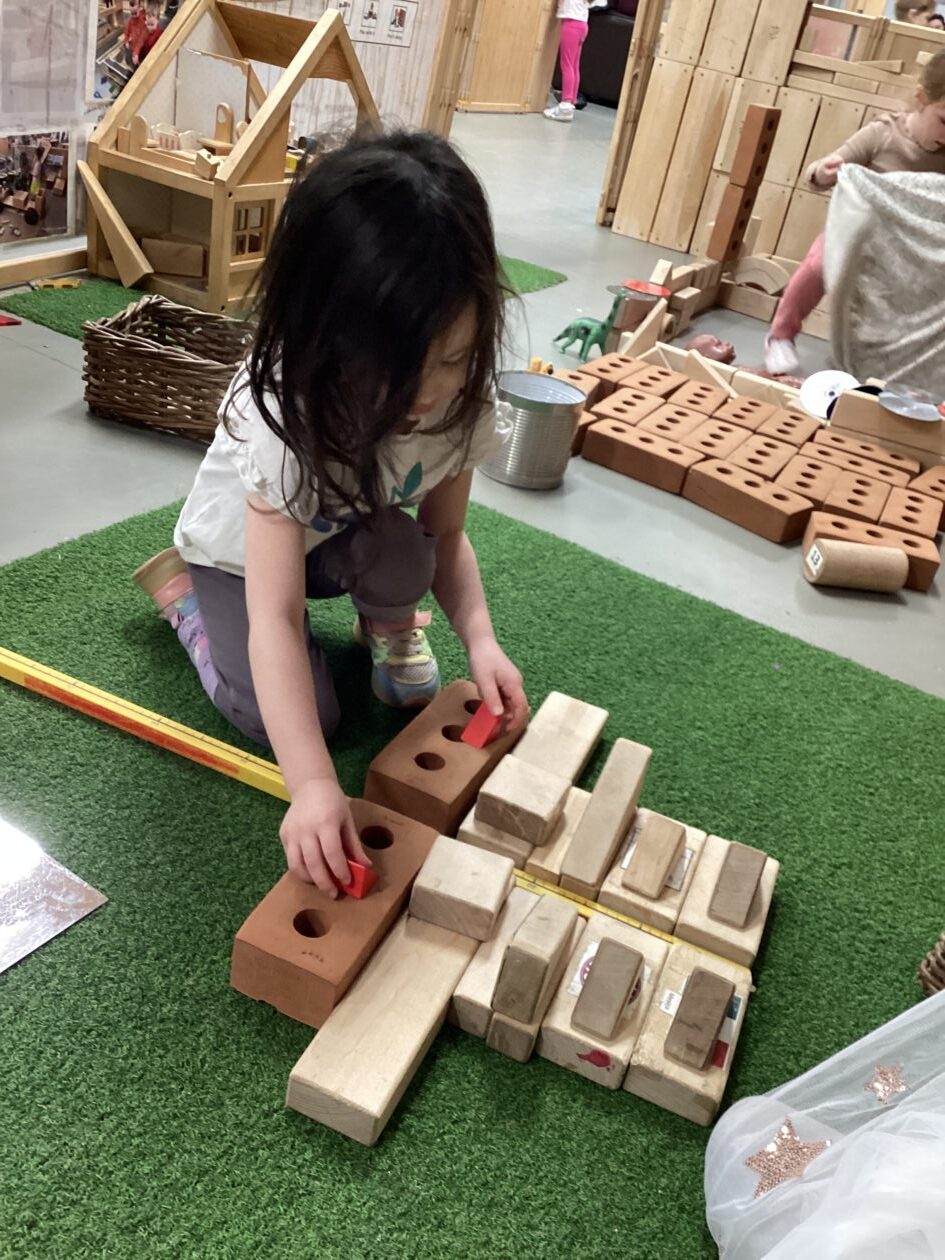
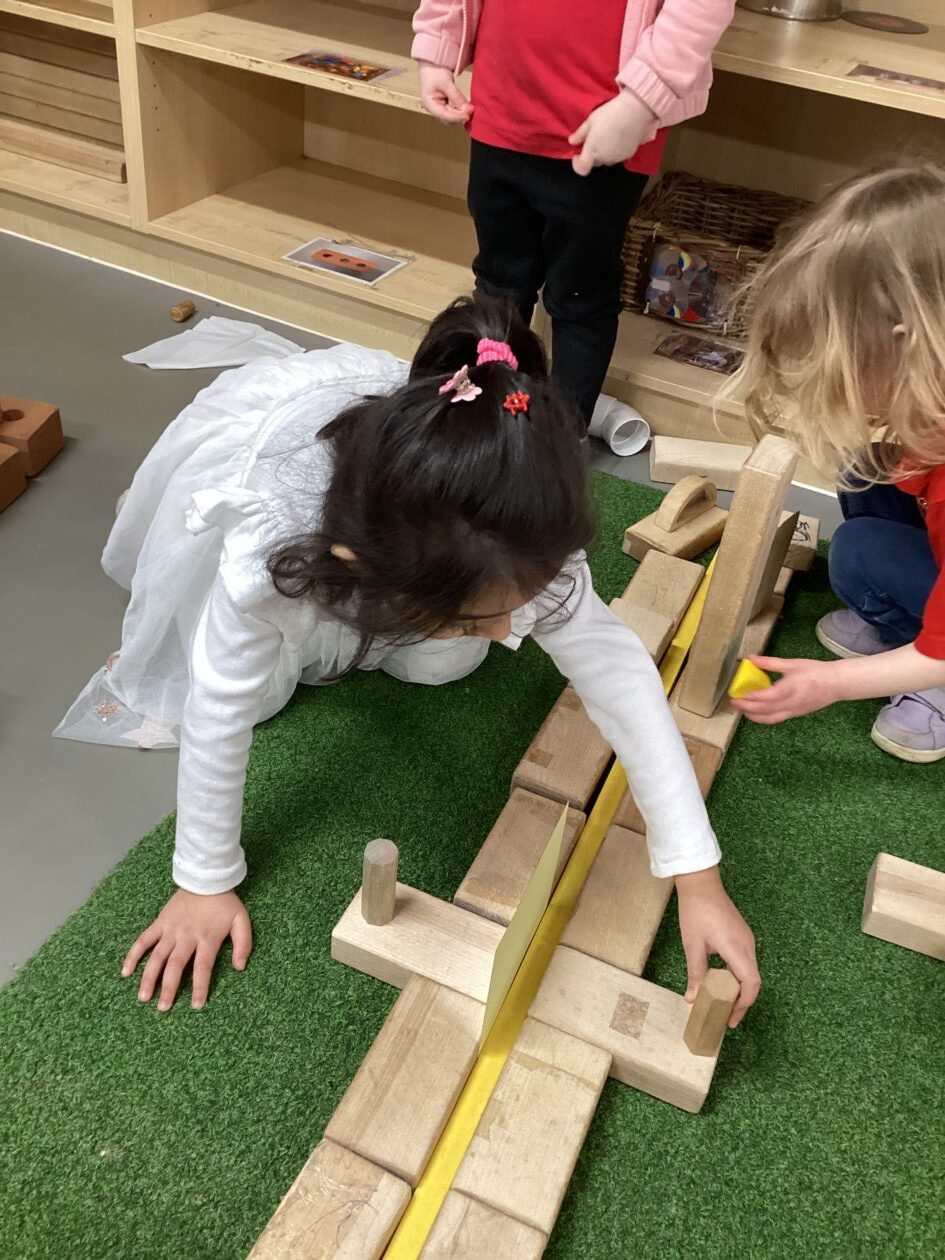
This week in the block area the children have been talking a lot about castles and have made their own using different sizes and shapes of blocks. We had a look at some pictures of real life castles in Scotland and spoke about who might have lived in them in the past or present. The children really thought about their models and considered how they could make the walls, doors, windows, and other details including a moat, bridge and towers.
We also continued to talk about symmetry this week and some children used the mirrors to look at the reflections of their structures before creating the other side. Some children were able to create large scale models with a line of symmetry also.