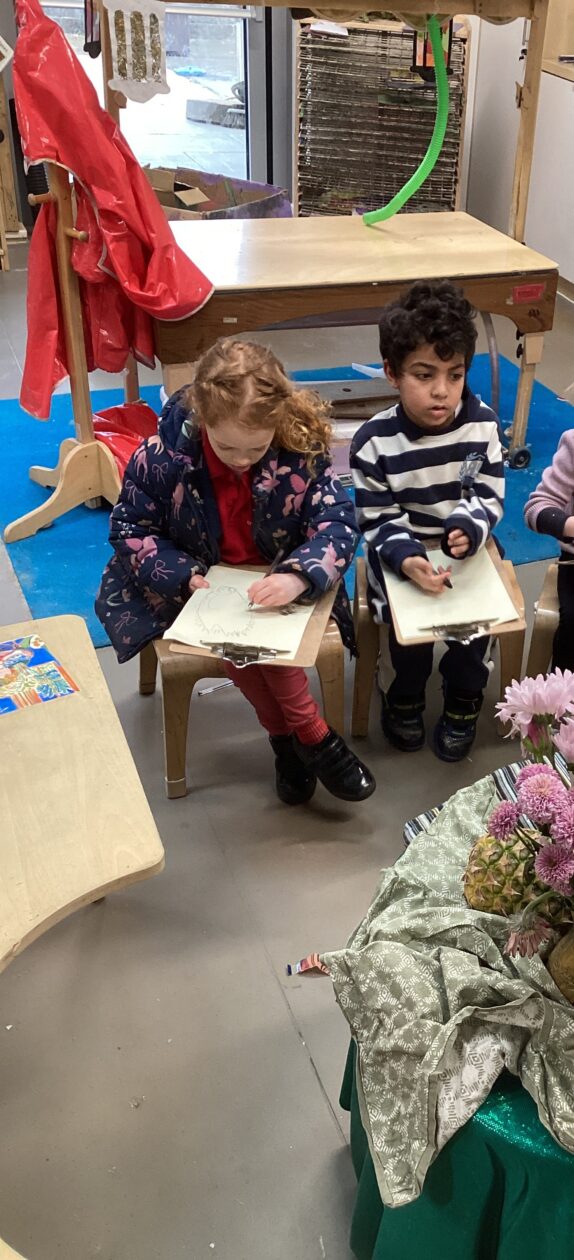
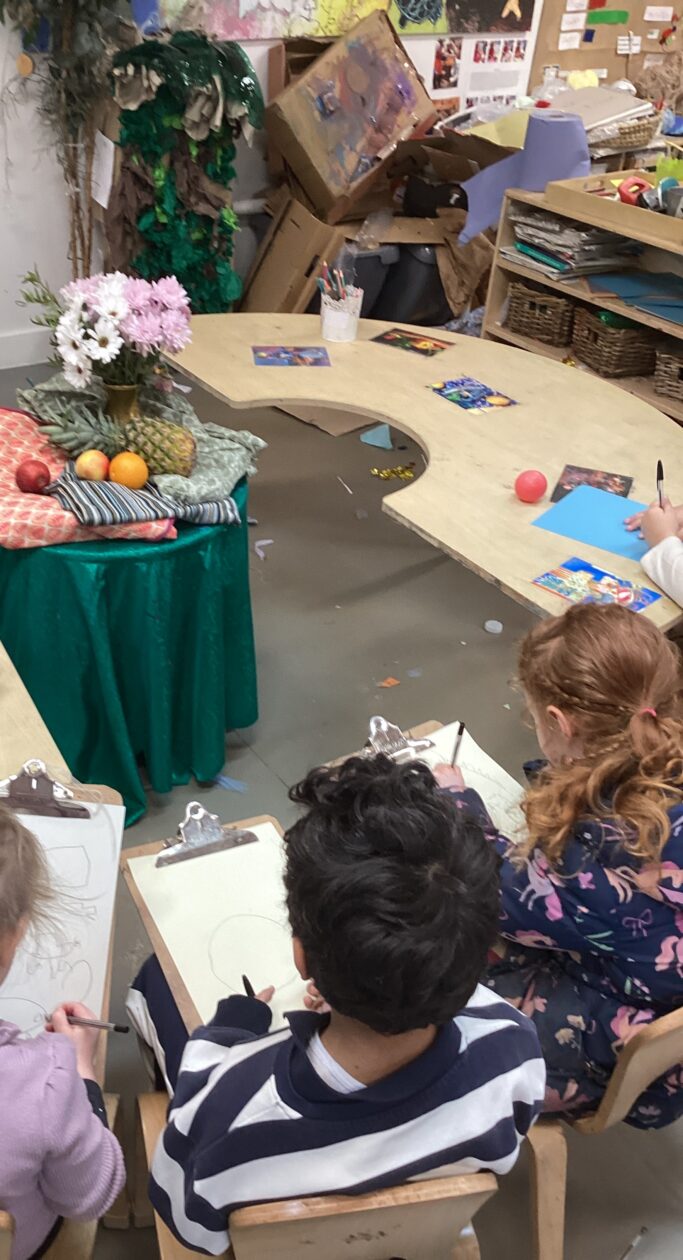
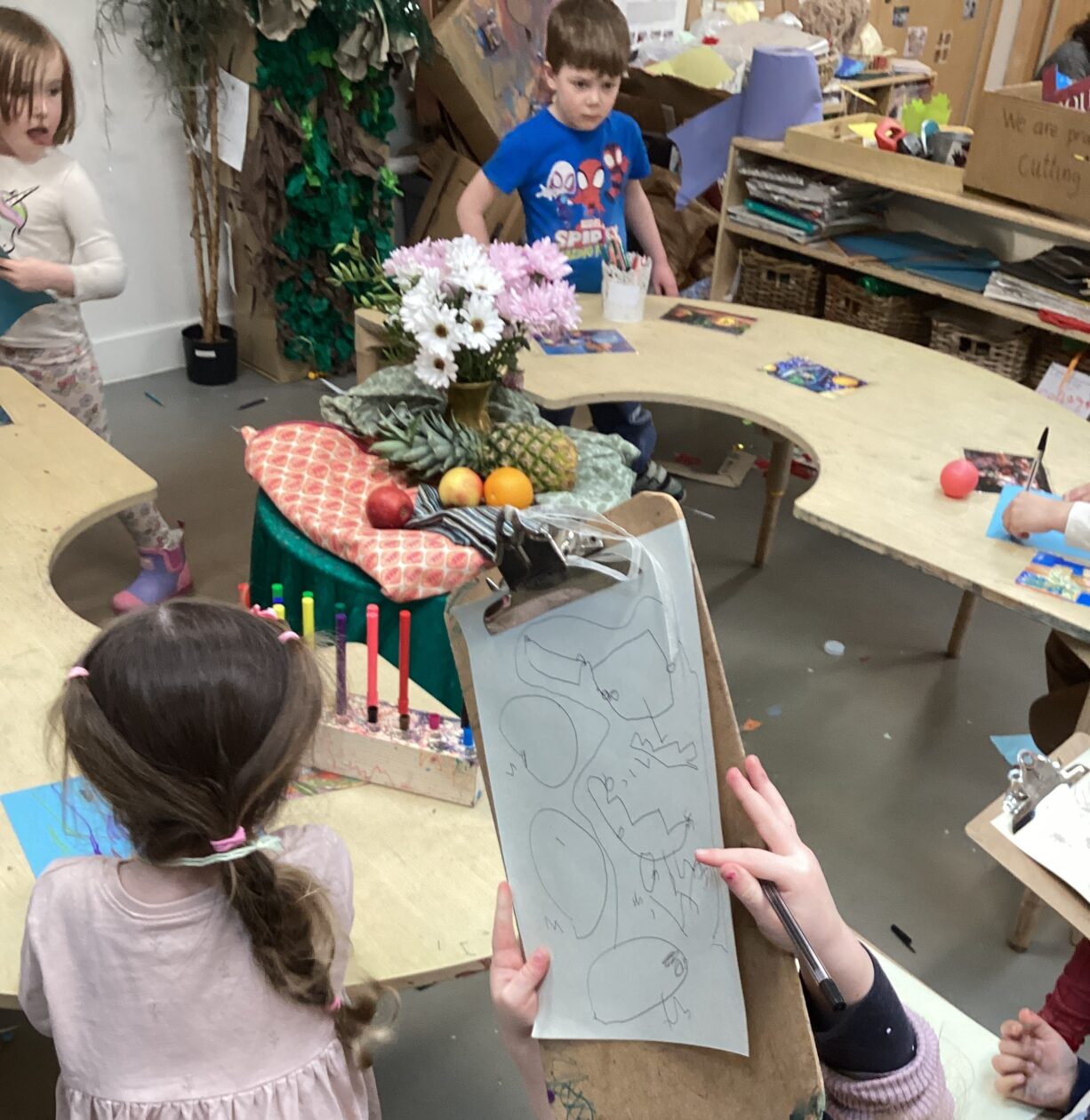
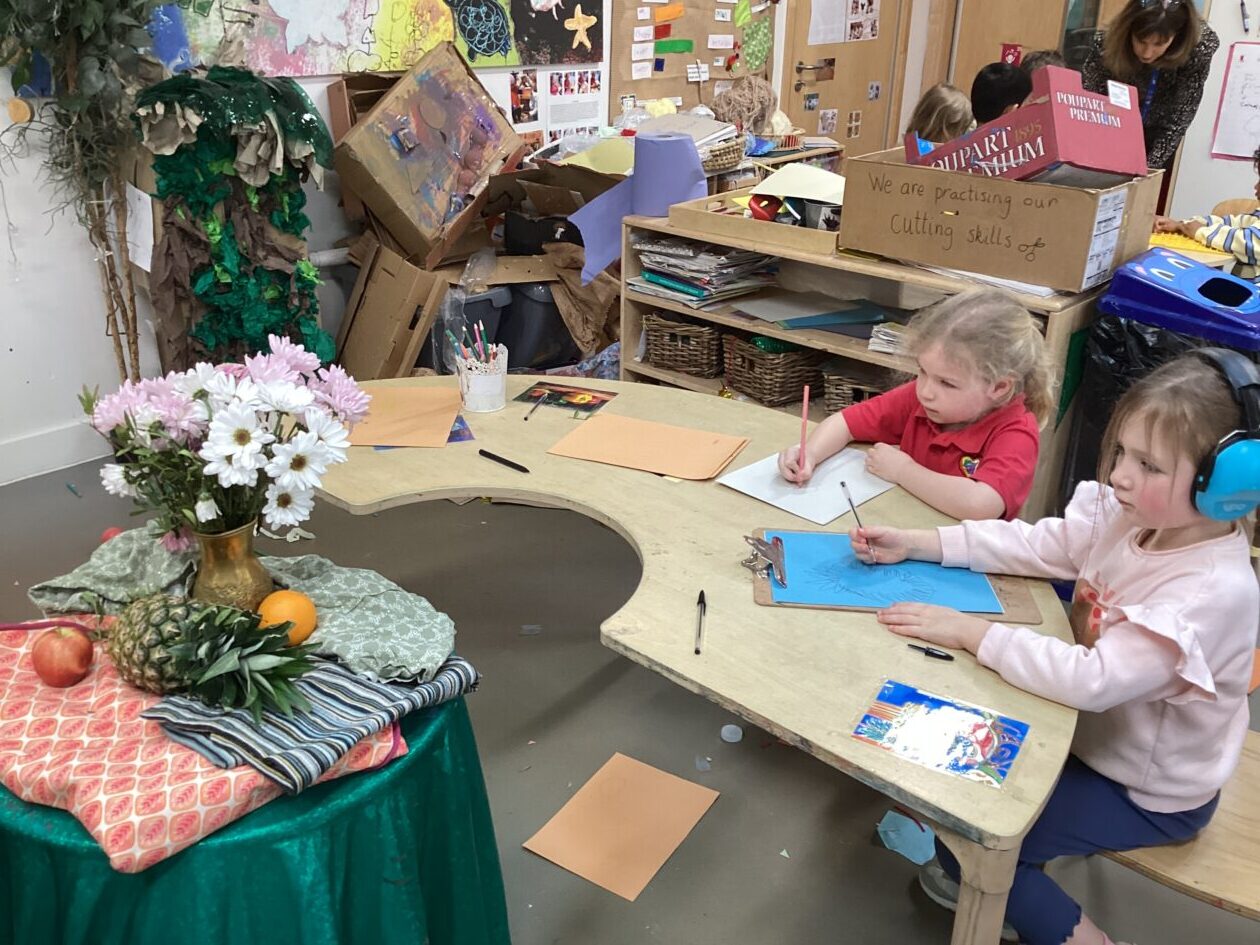
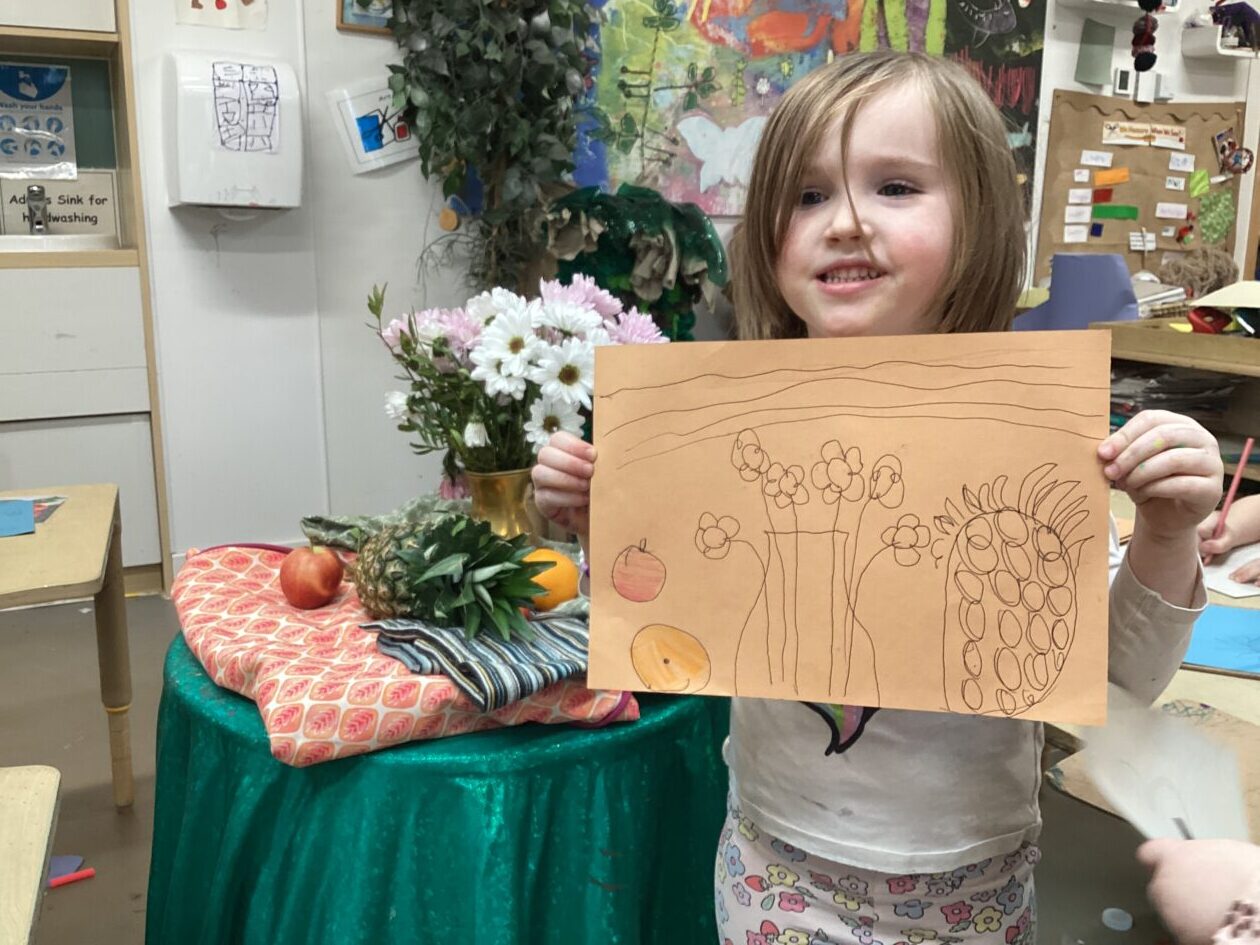
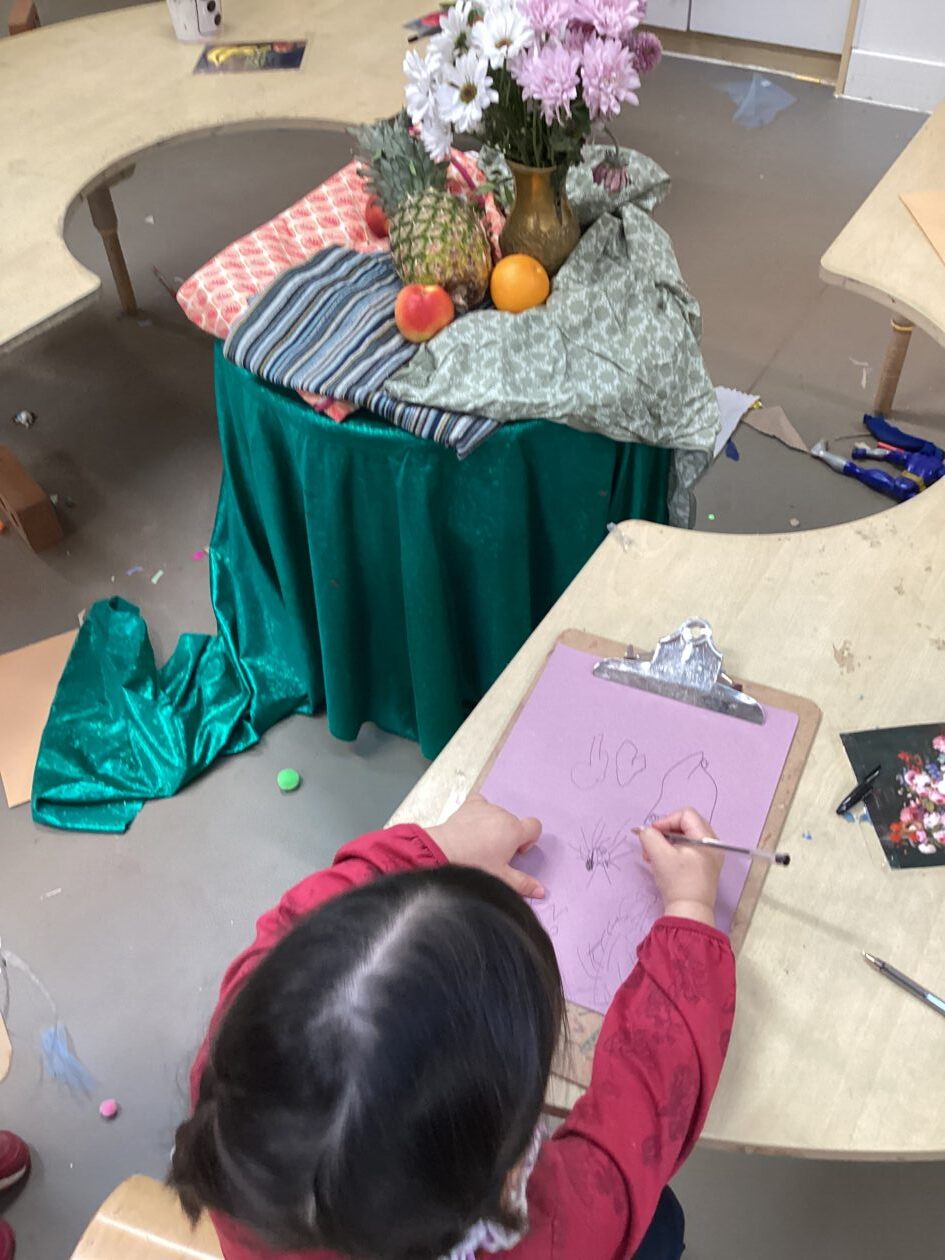
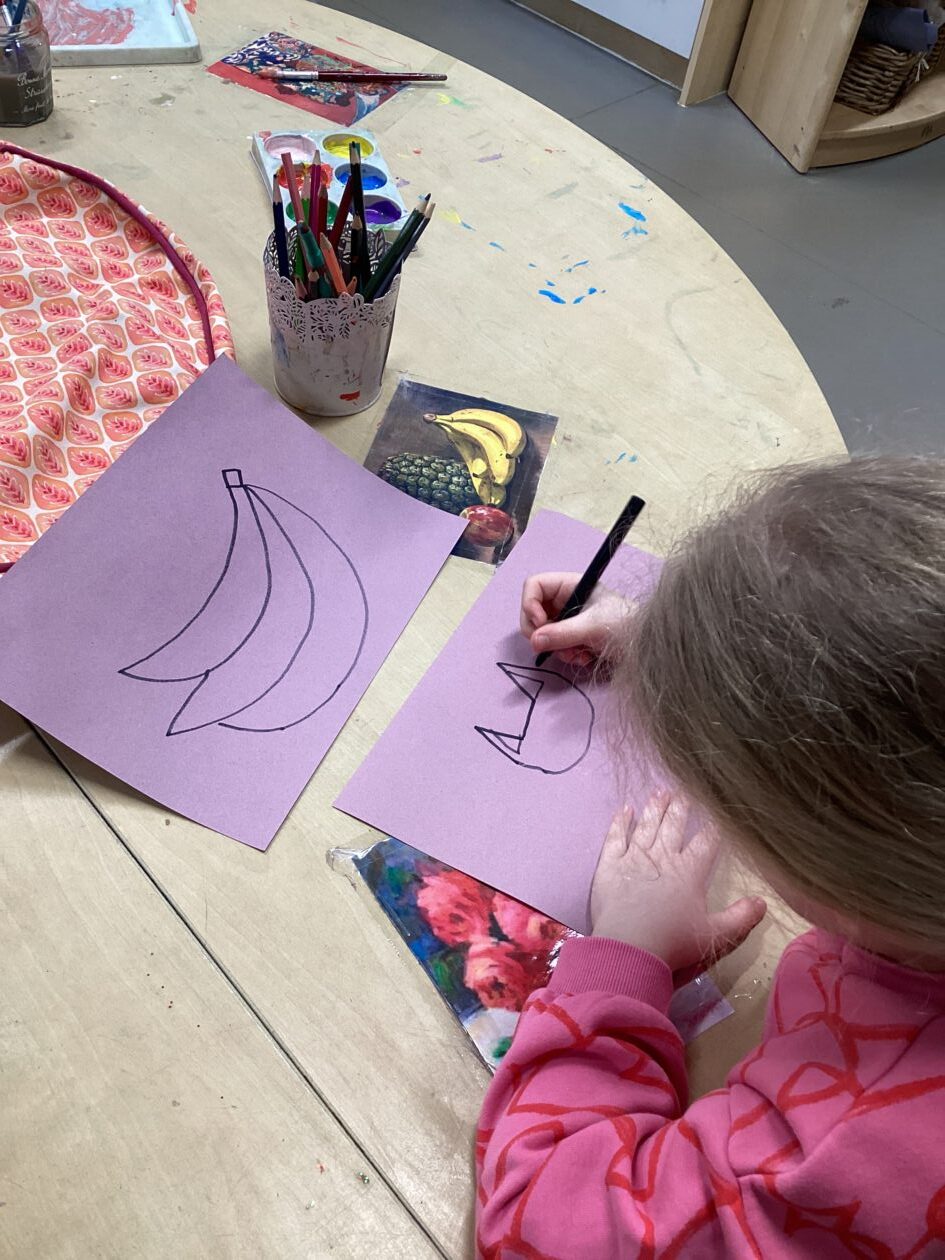
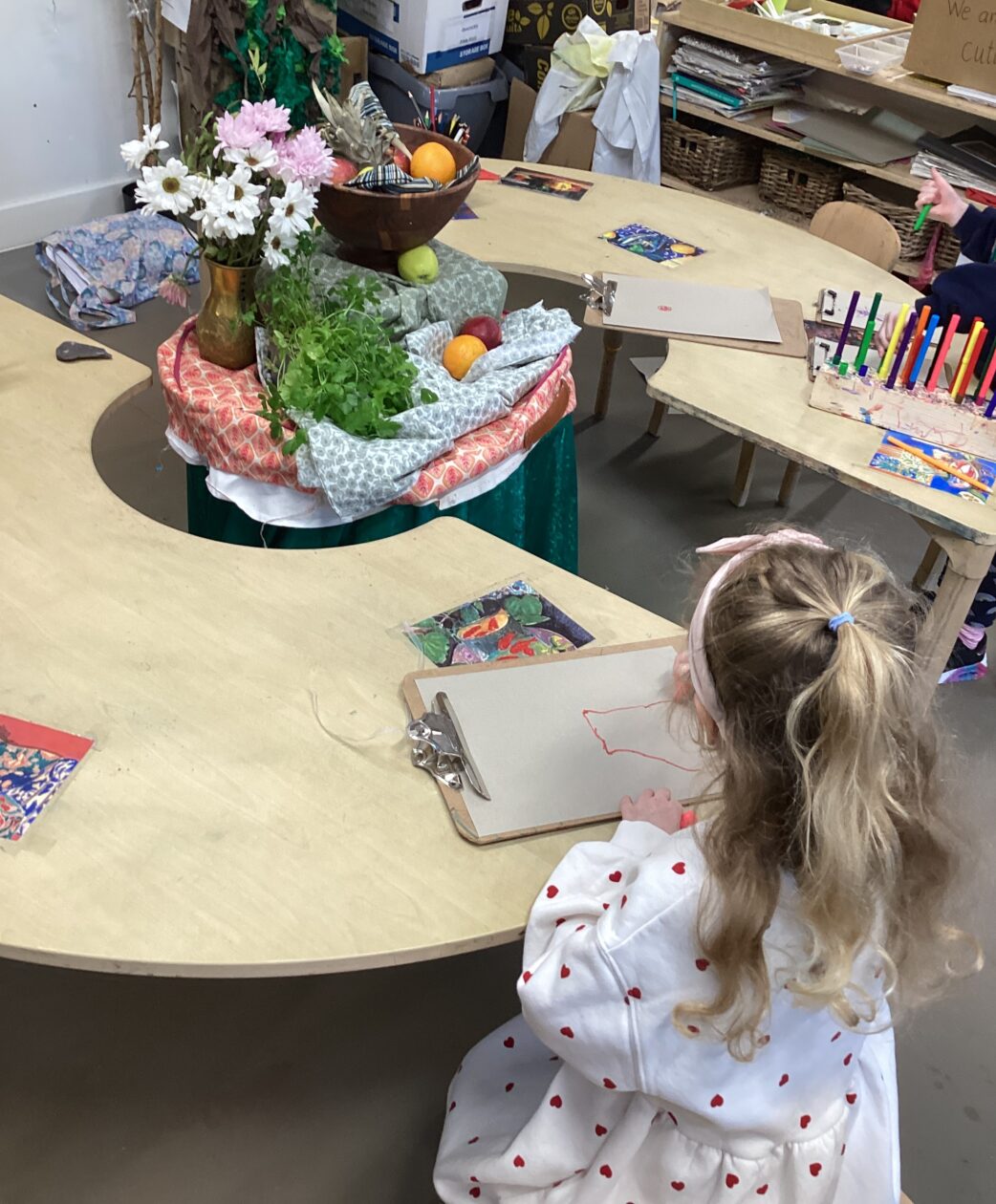
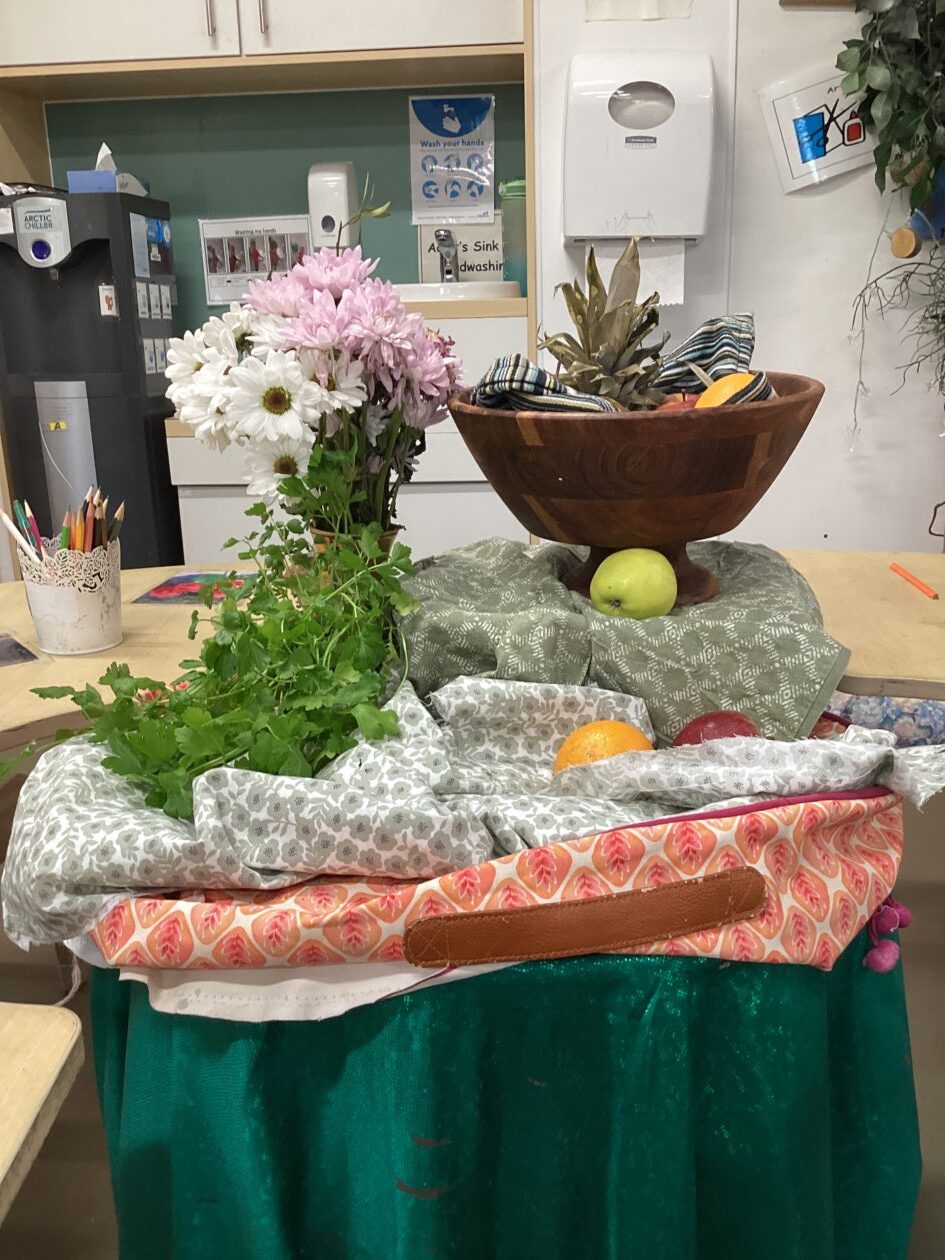
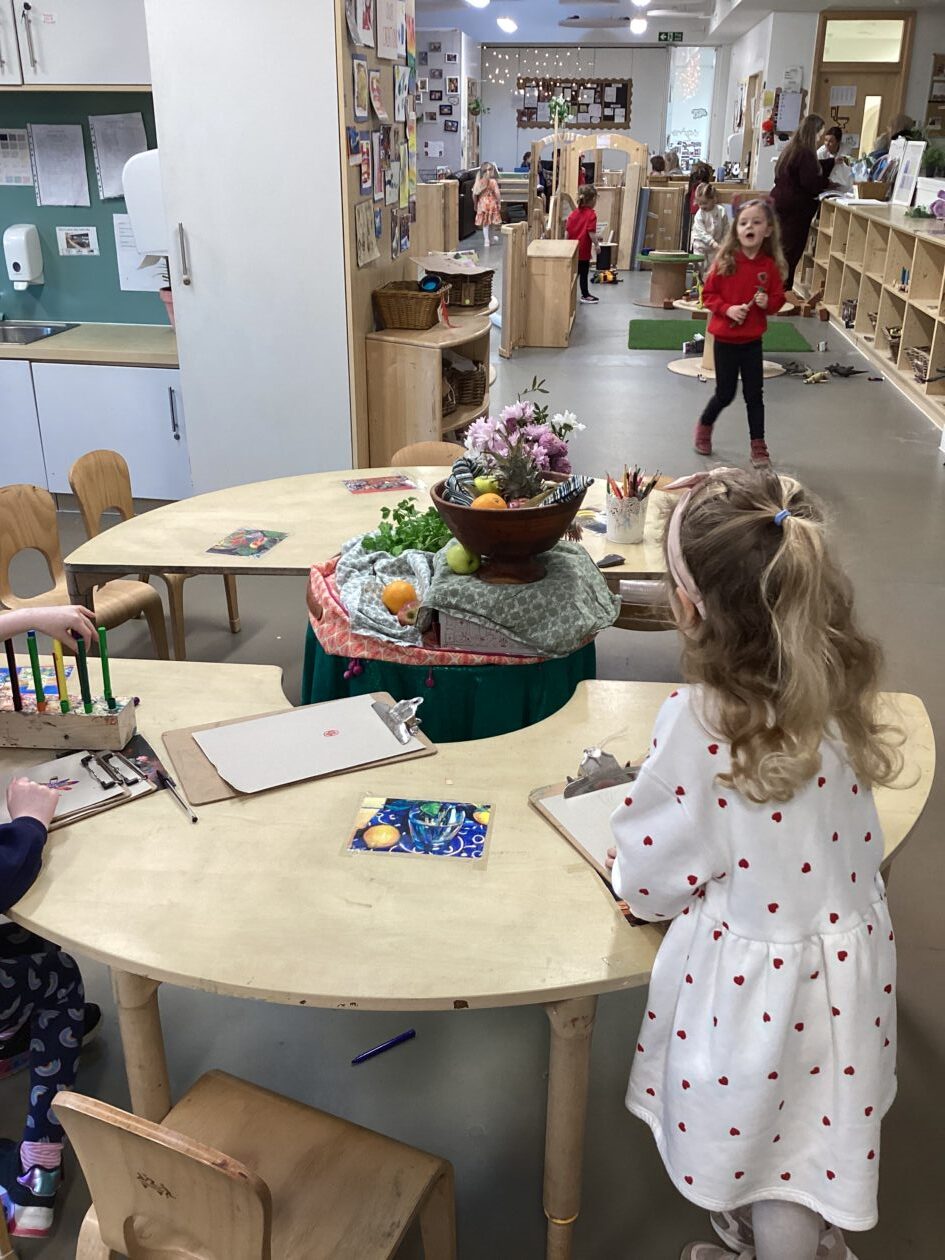
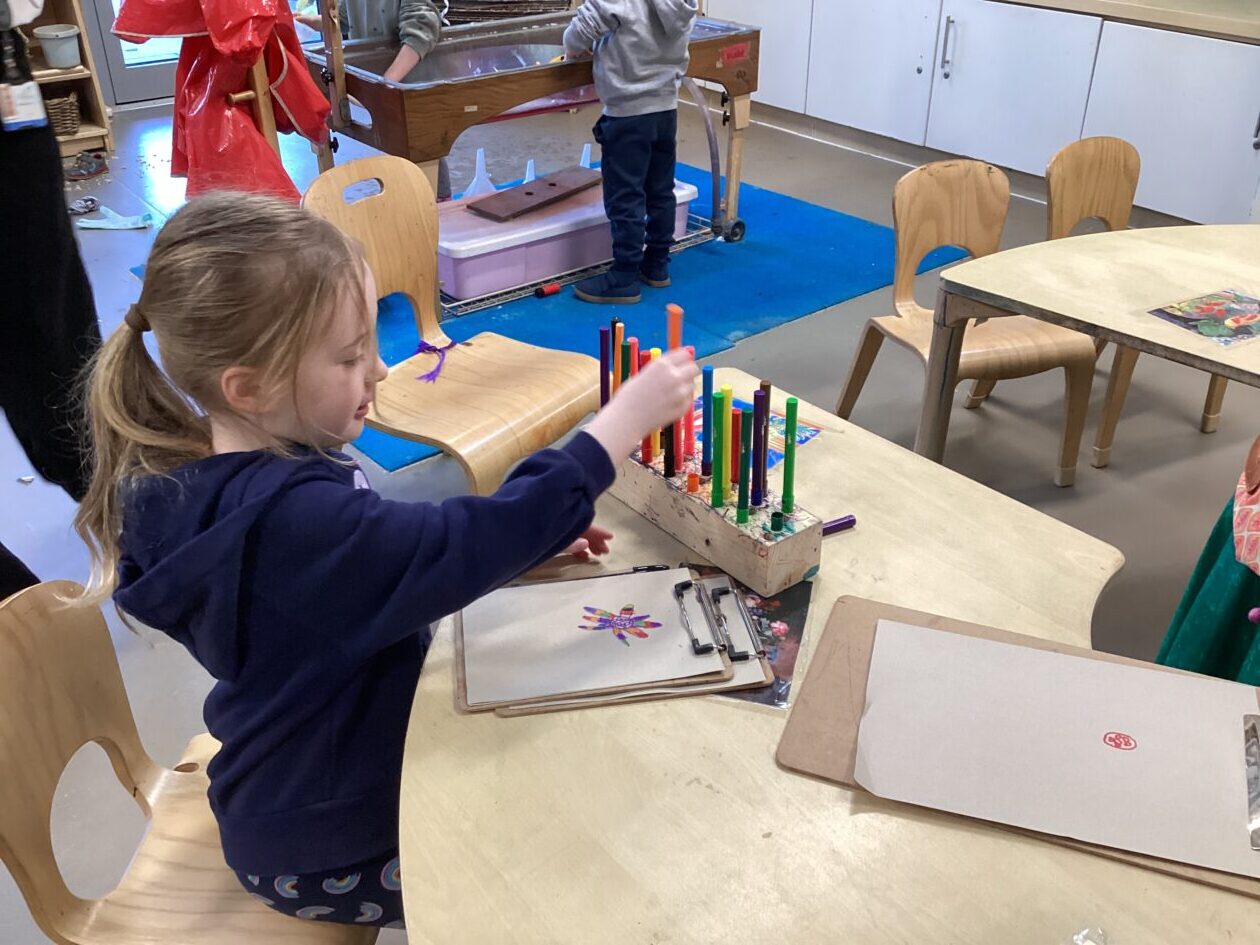
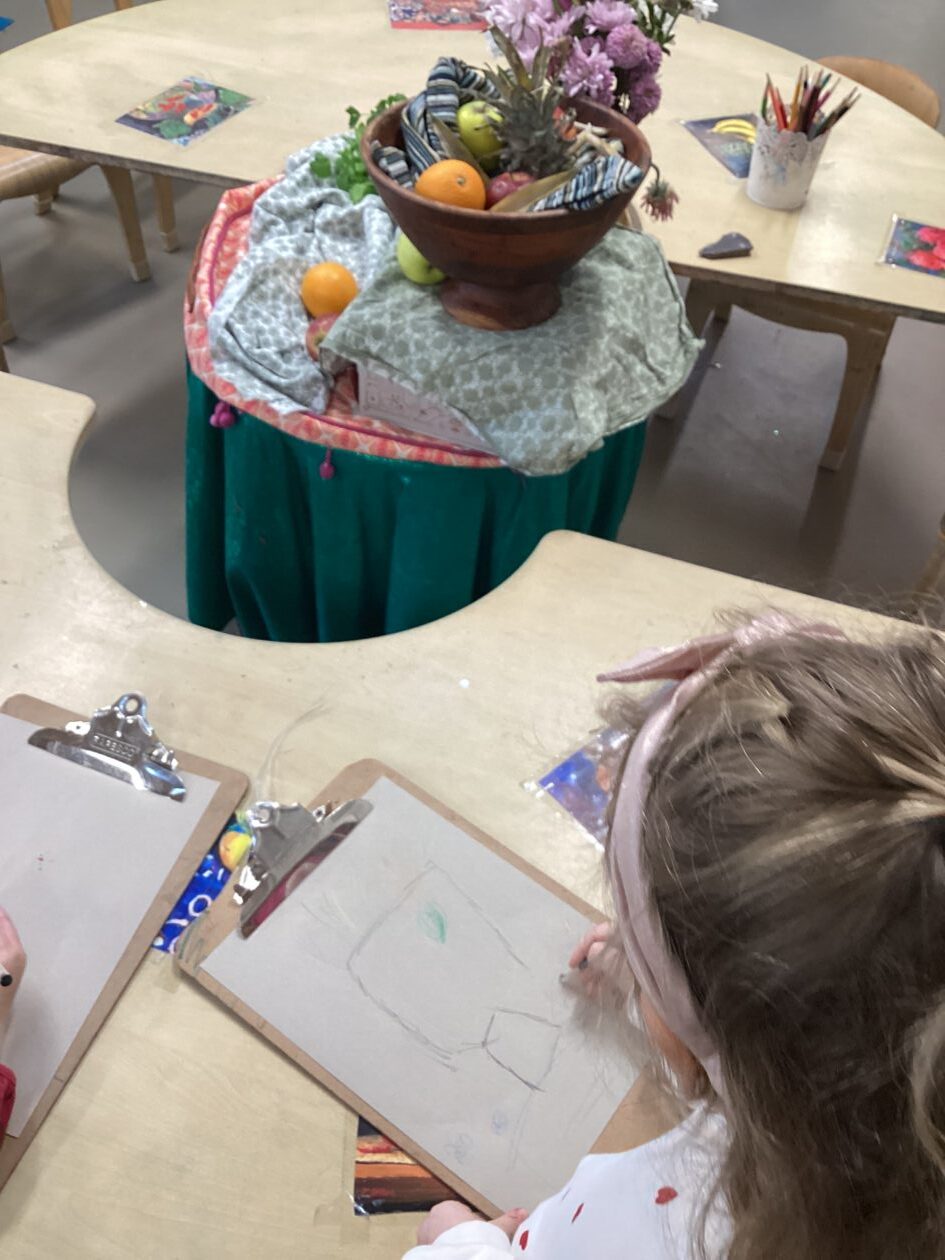
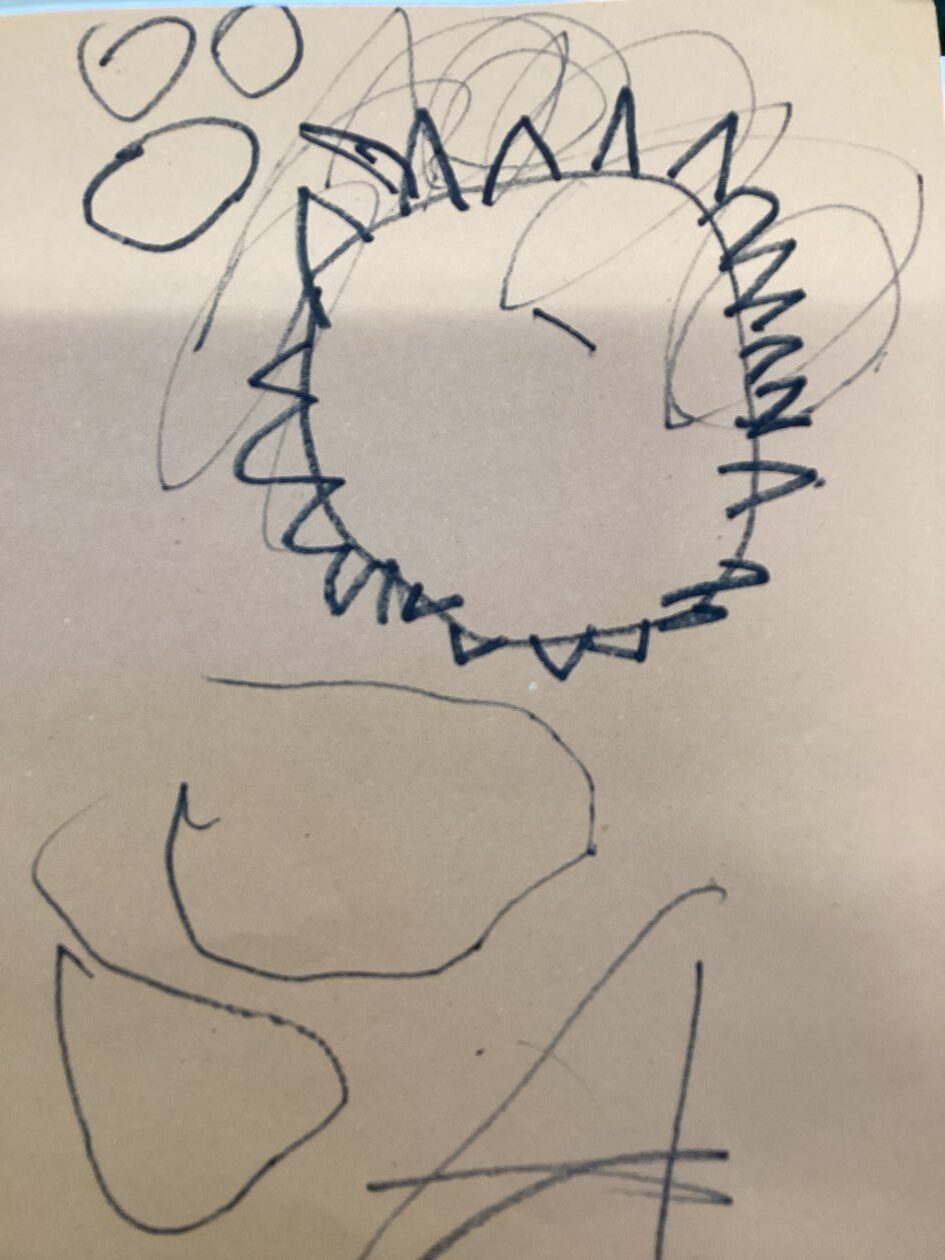
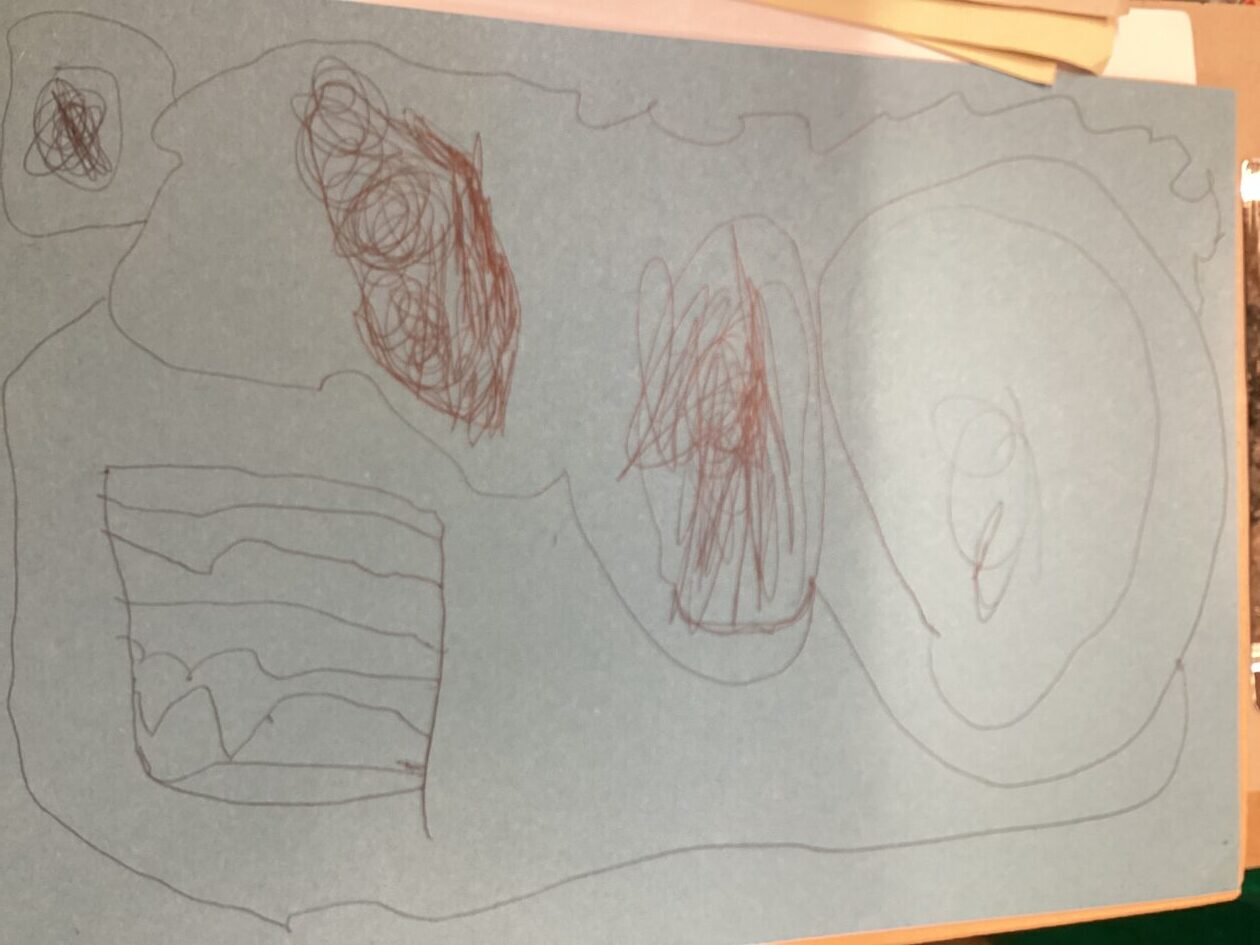
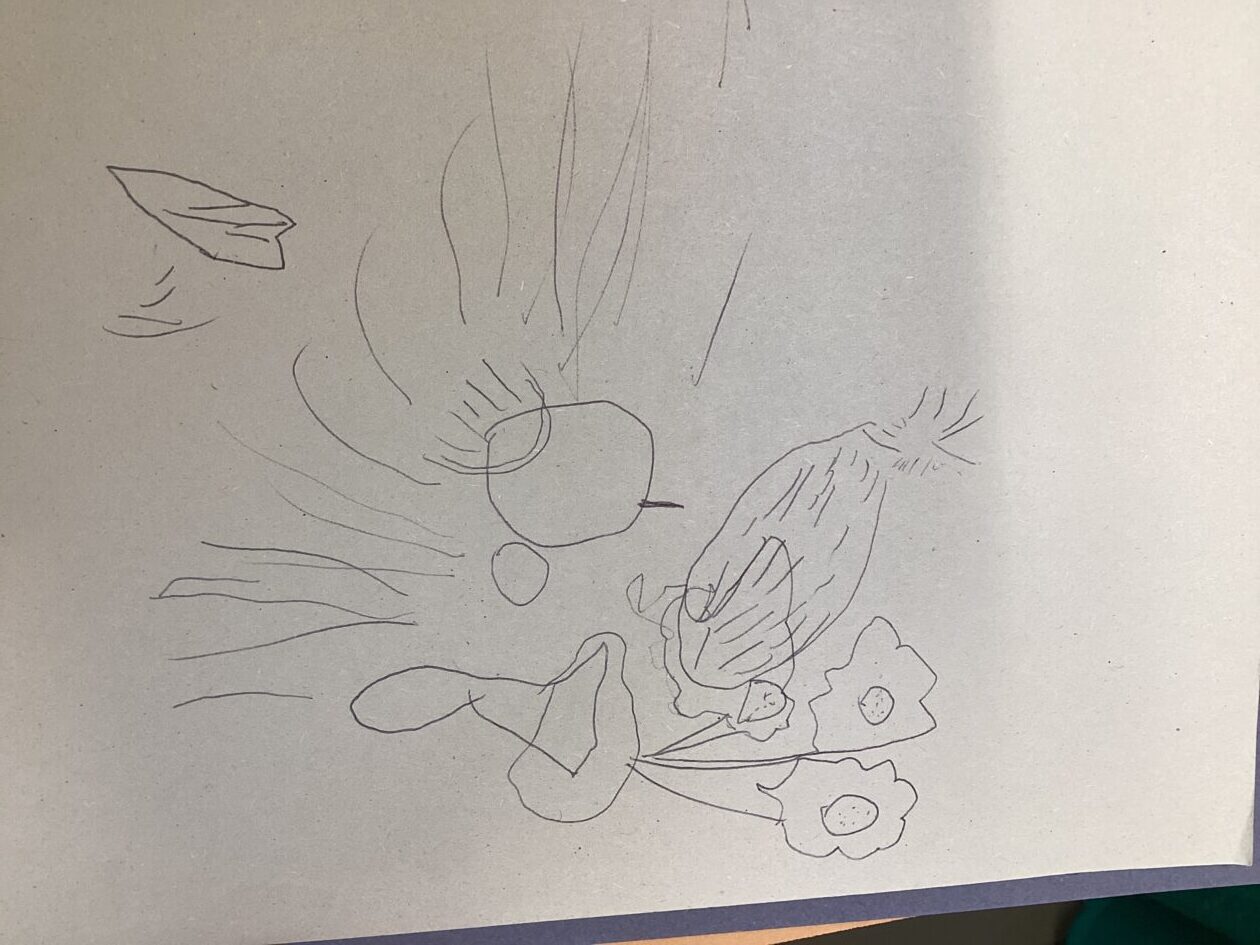
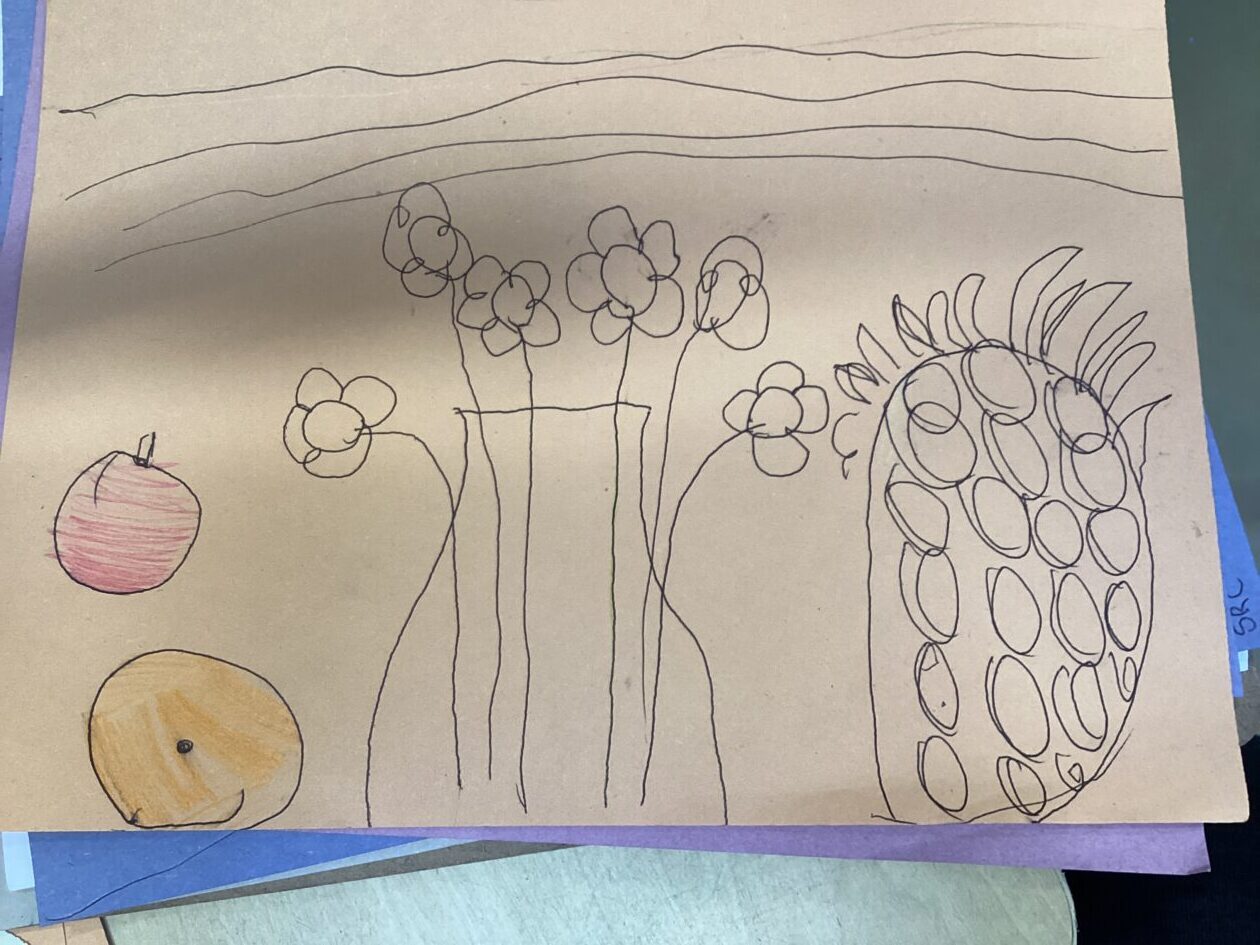
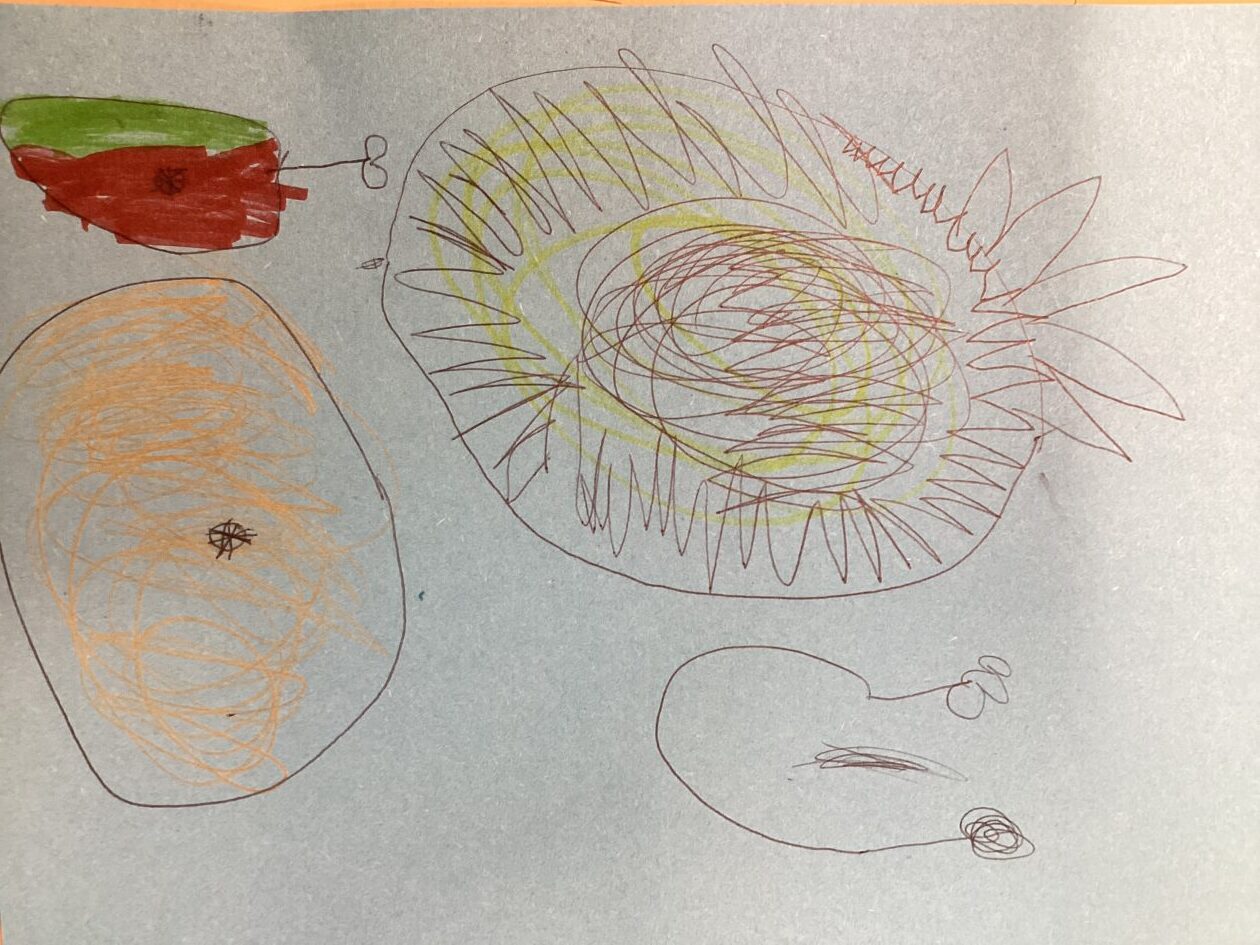
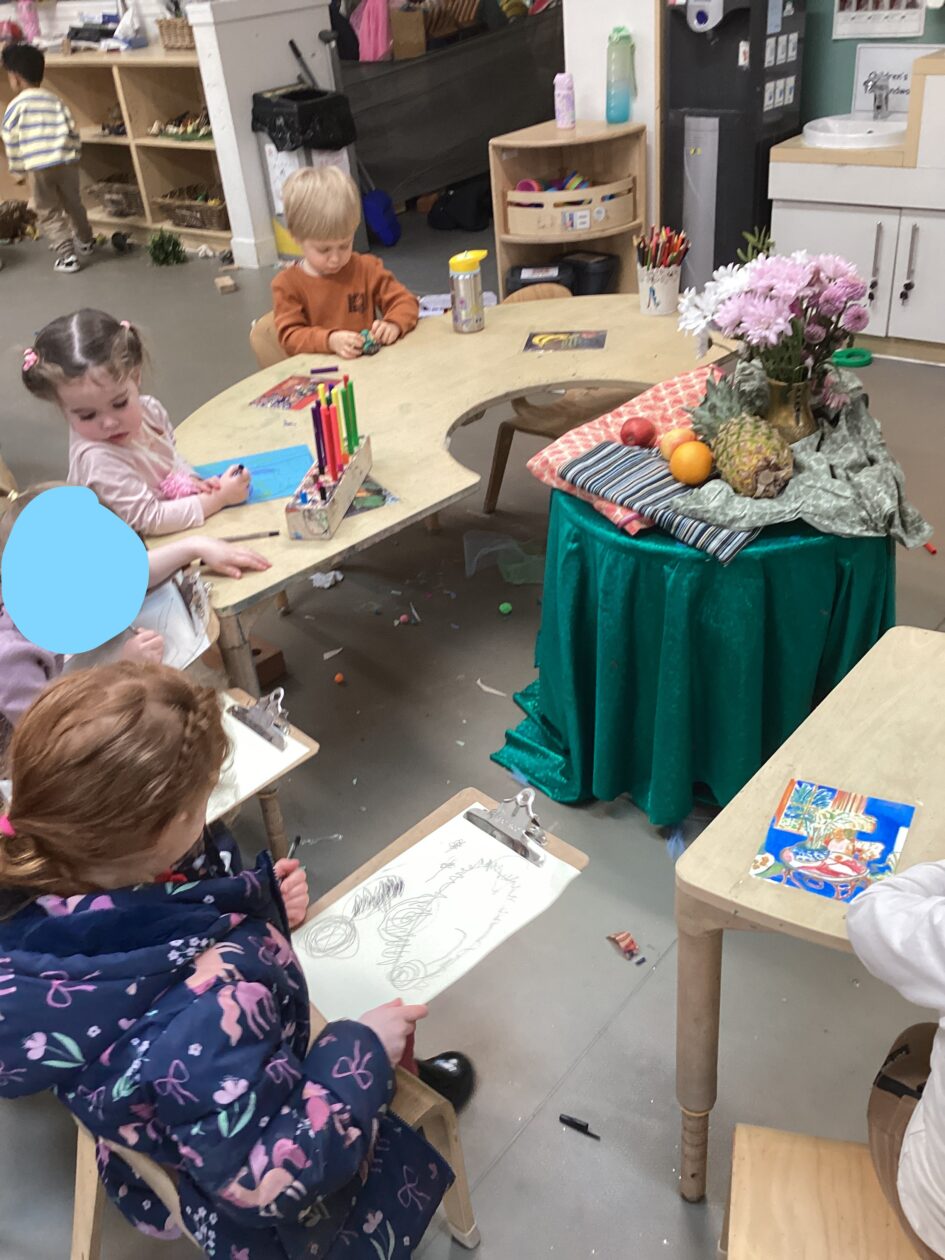
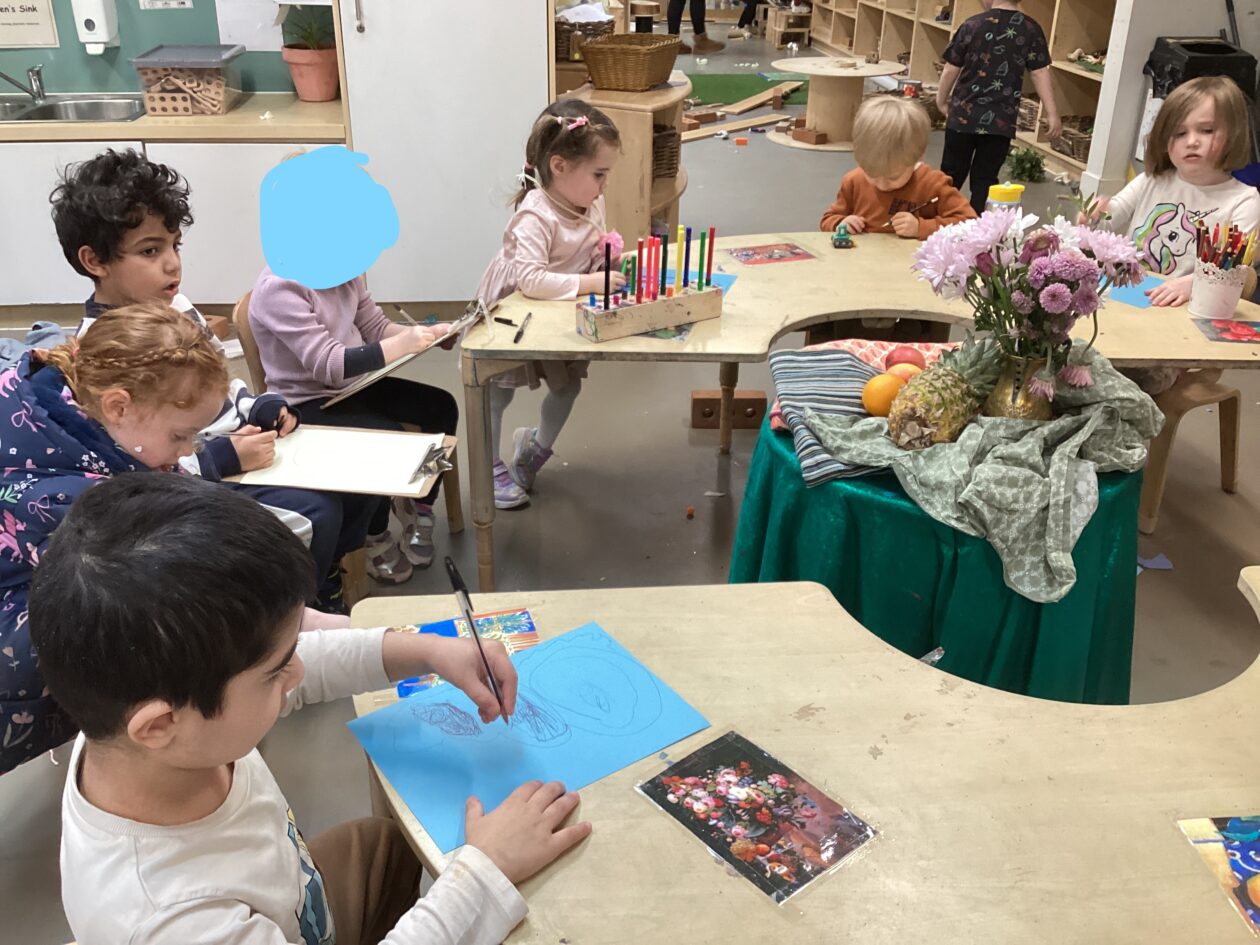
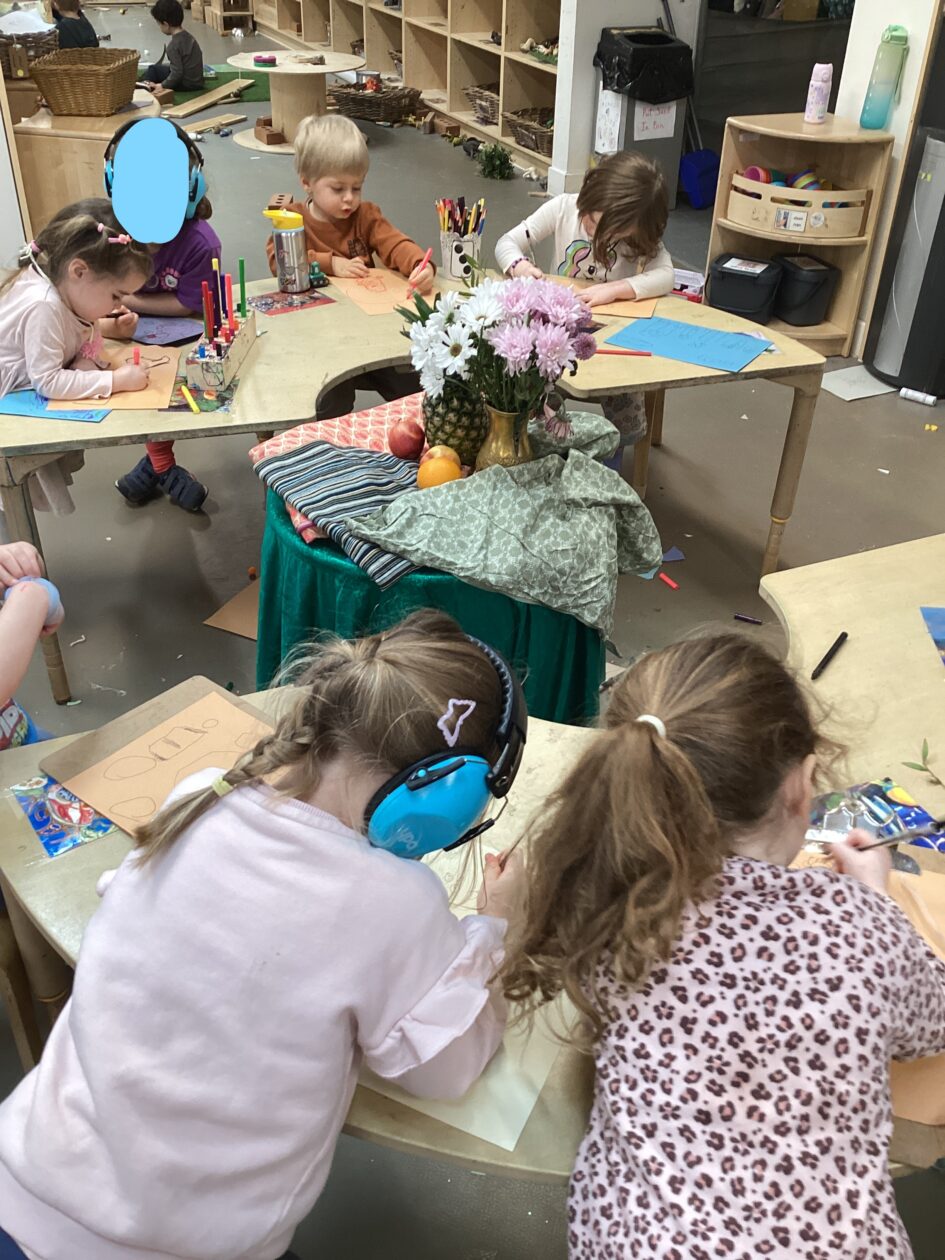
This week in the art area the children have been exploring still life compositions and demonstrated great focus and concentration as they used their observation skills to capture the various visual elements such as line, colour and pattern. We discussed why people made paintings this way and looked at some work of some famous artists and talked about what we liked and didn’t like about their work.
SG “the table and the orange were the hardest thing to draw”
RU “You don’t make it up in your head you need to draw what’s in front of you”
“ some people didn’t have cameras so this is how you show them what things look like”
RM “It means you draw what you see”
ZM “ the hardest bit was the spikey bit of the apple”
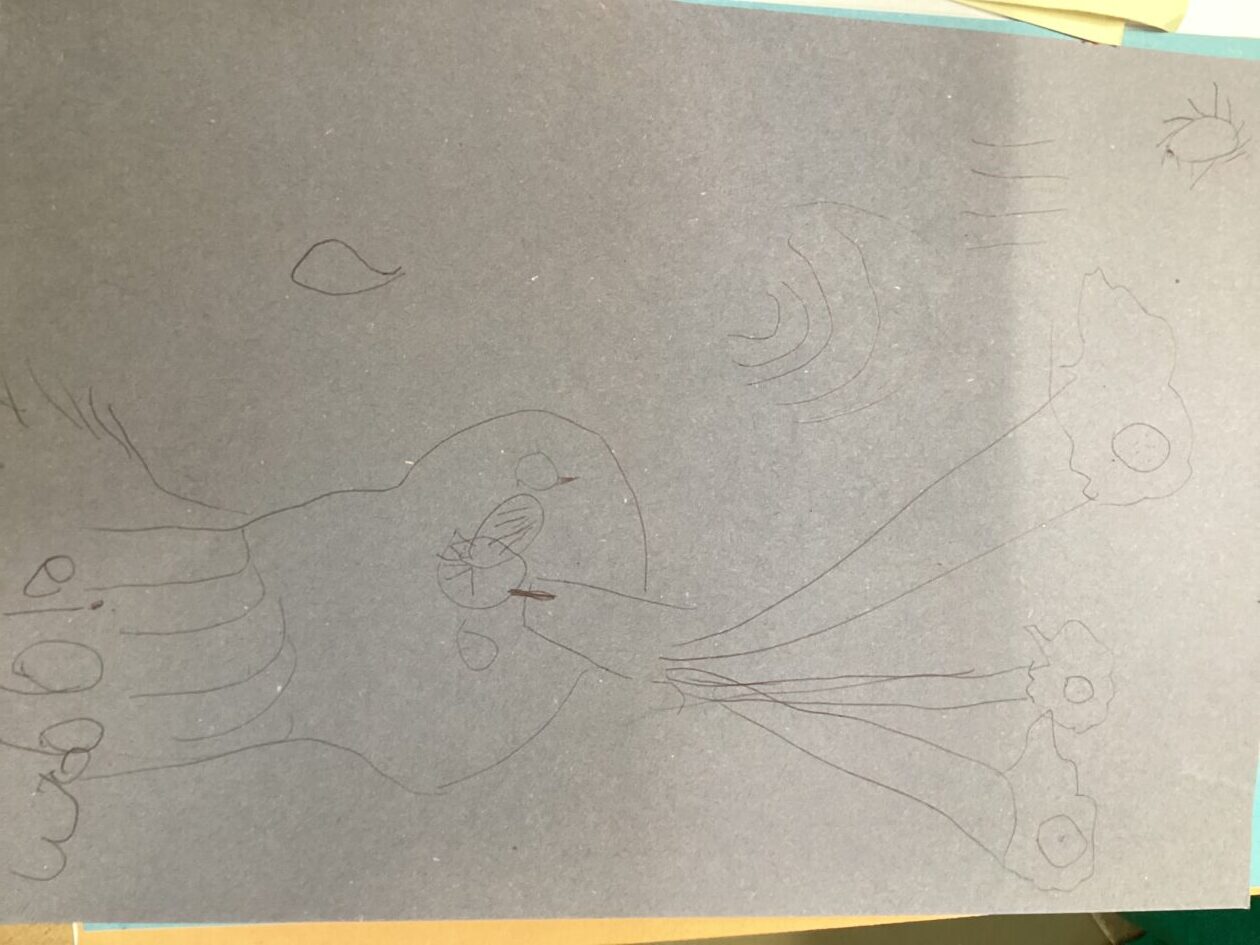
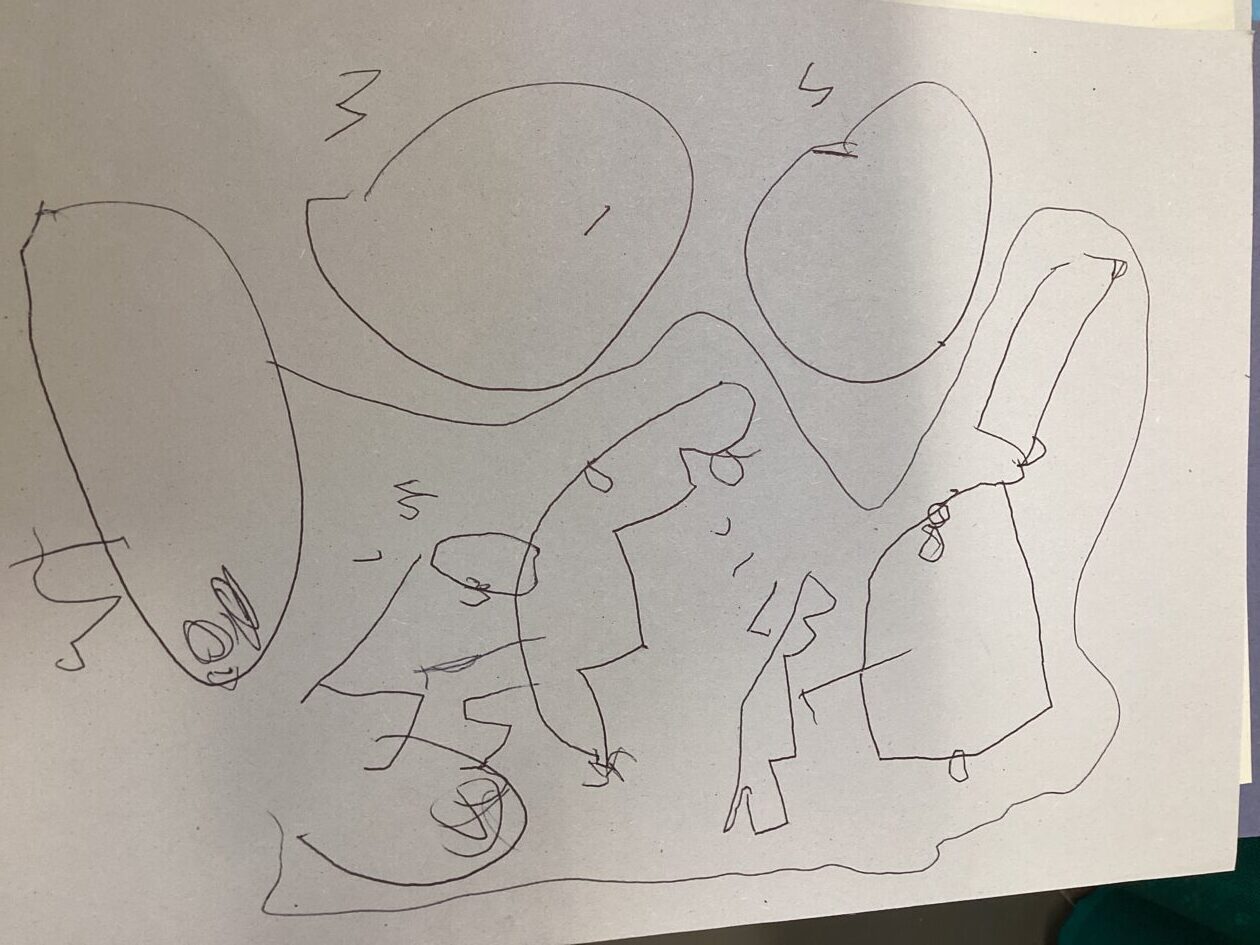
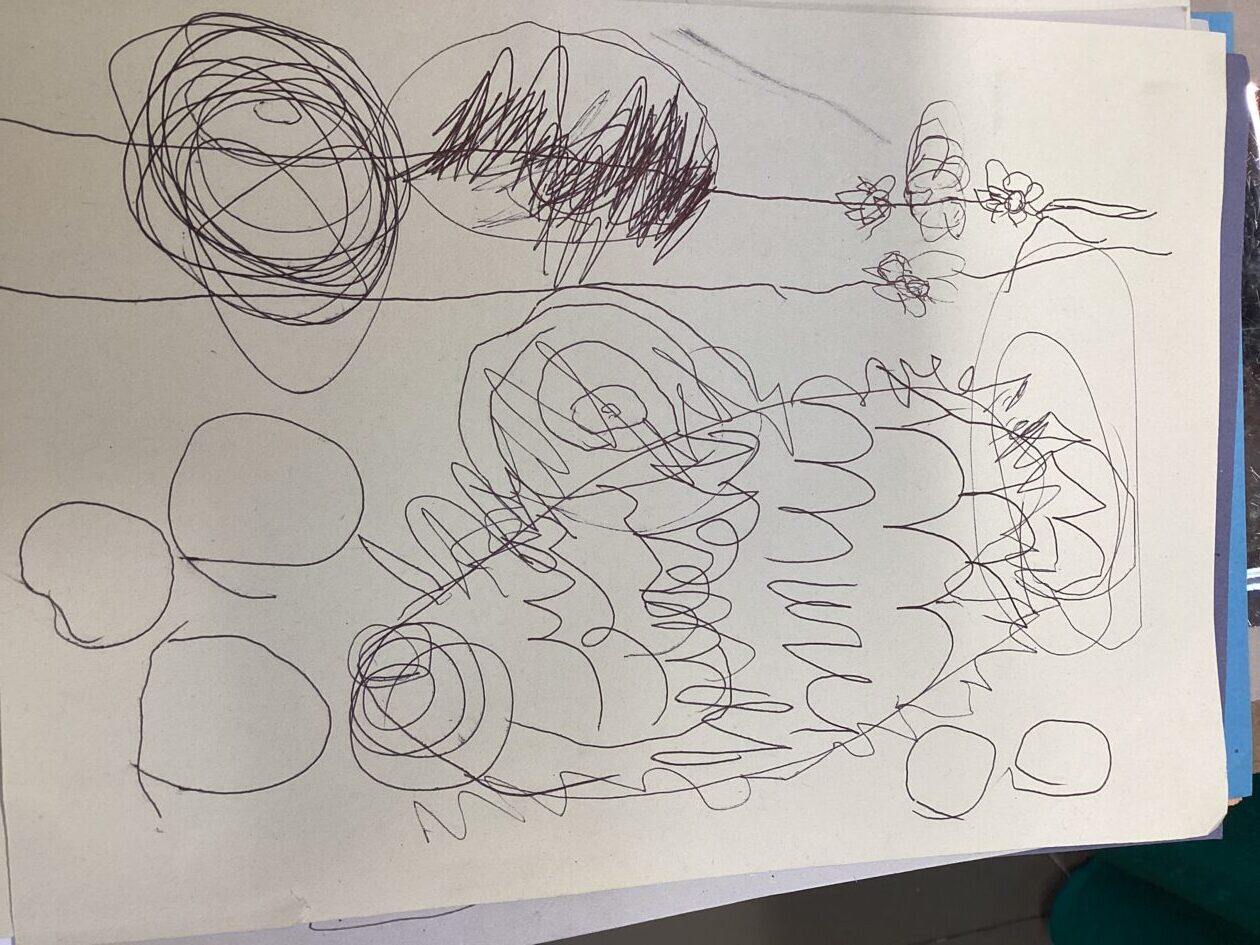
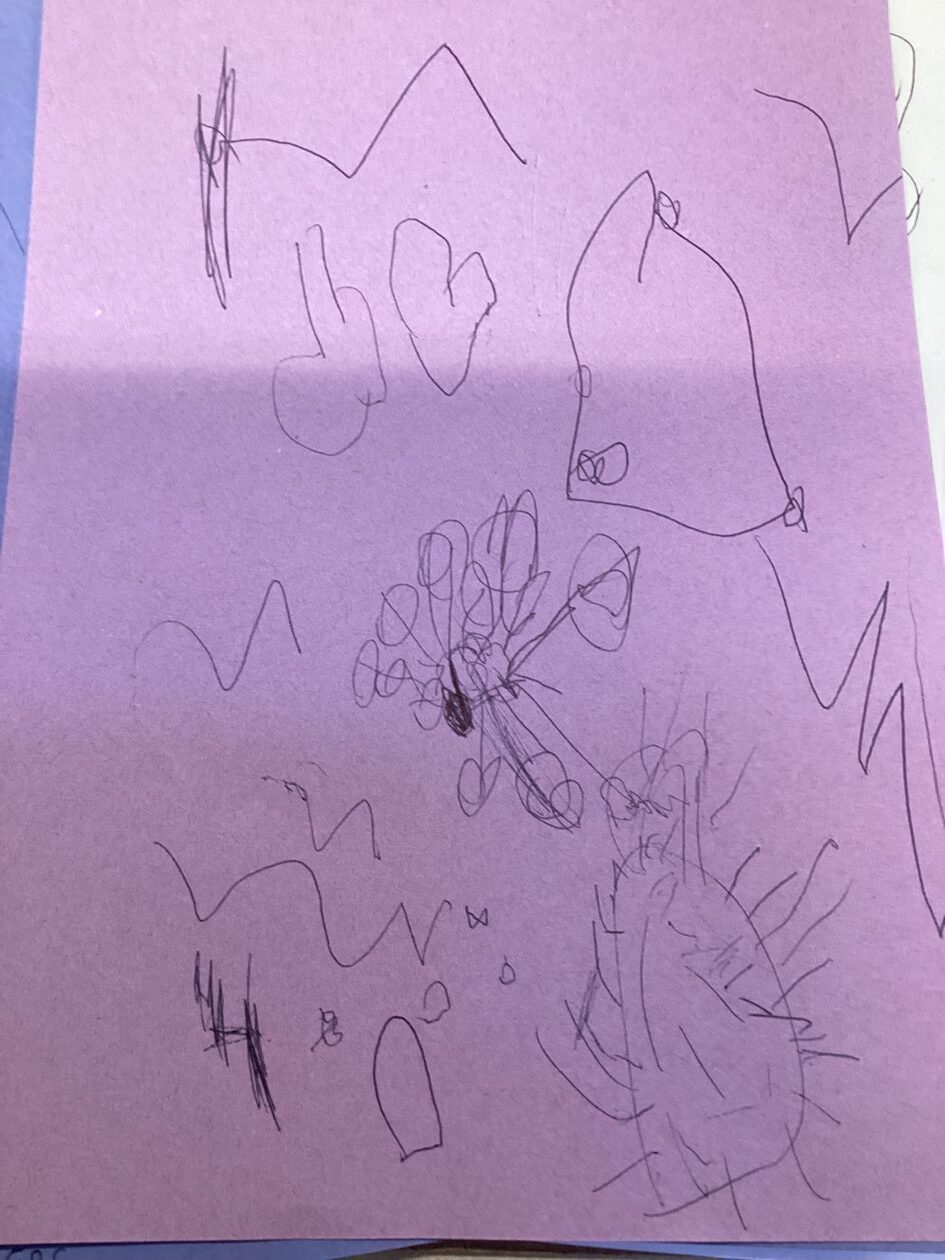
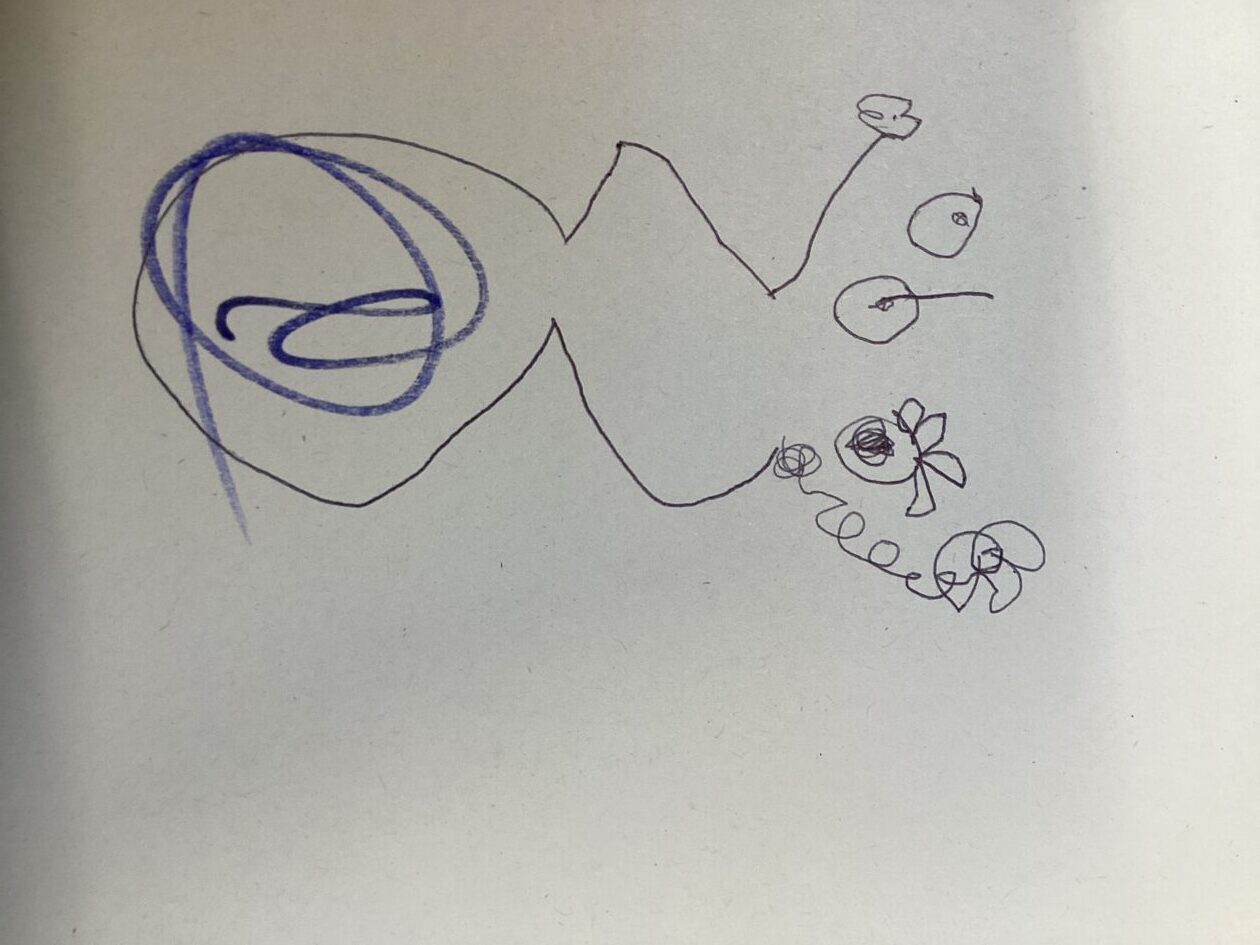
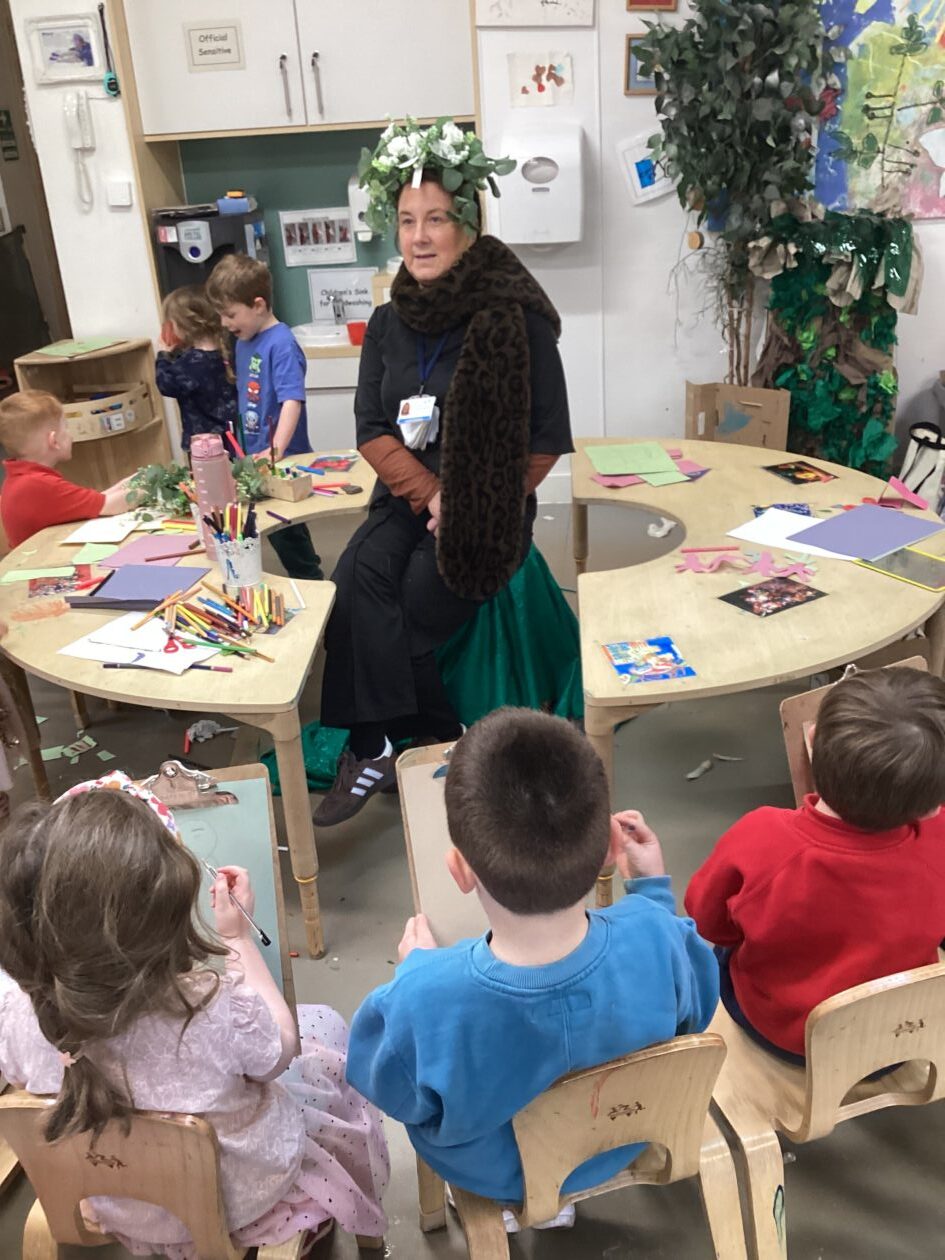
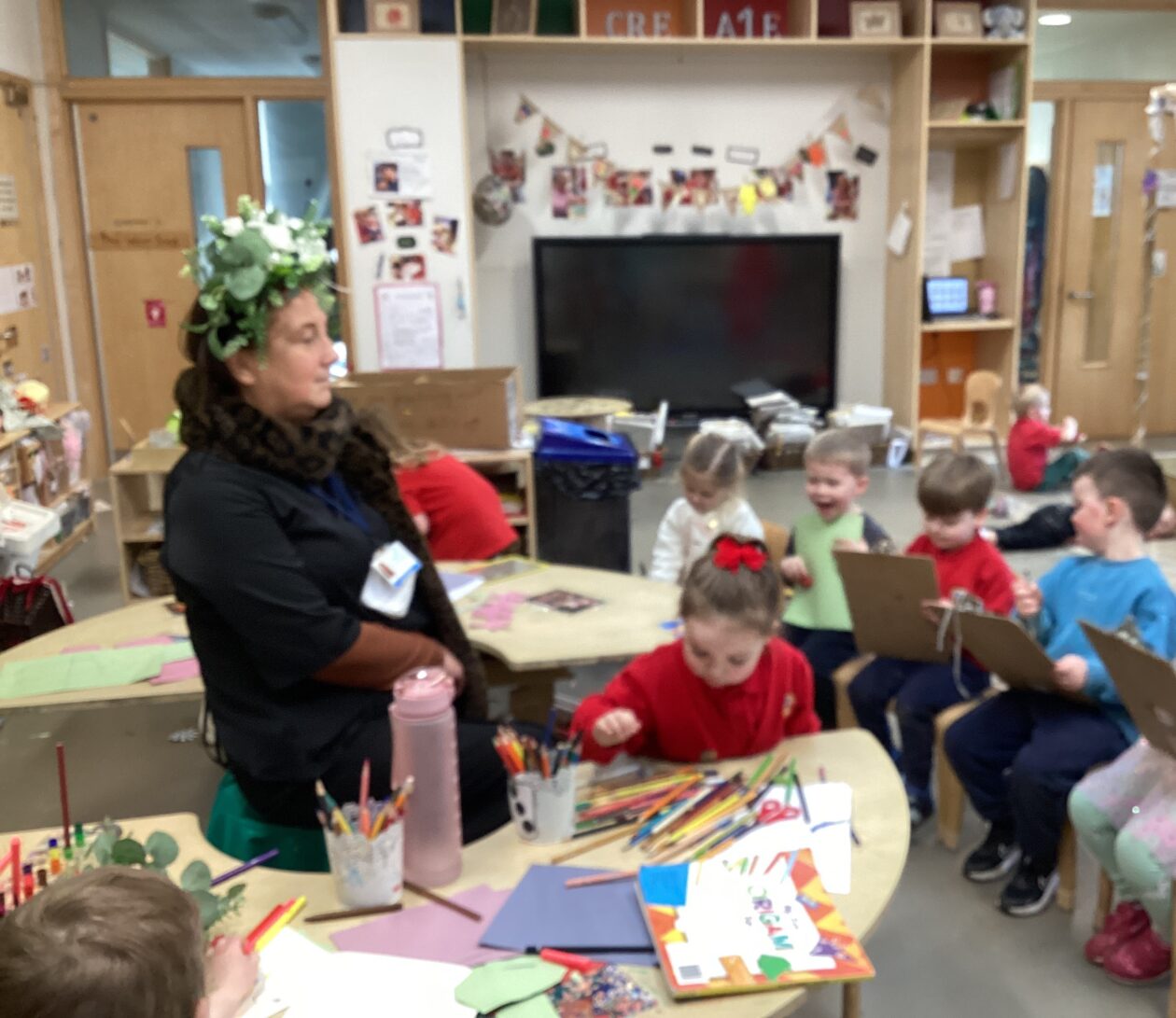
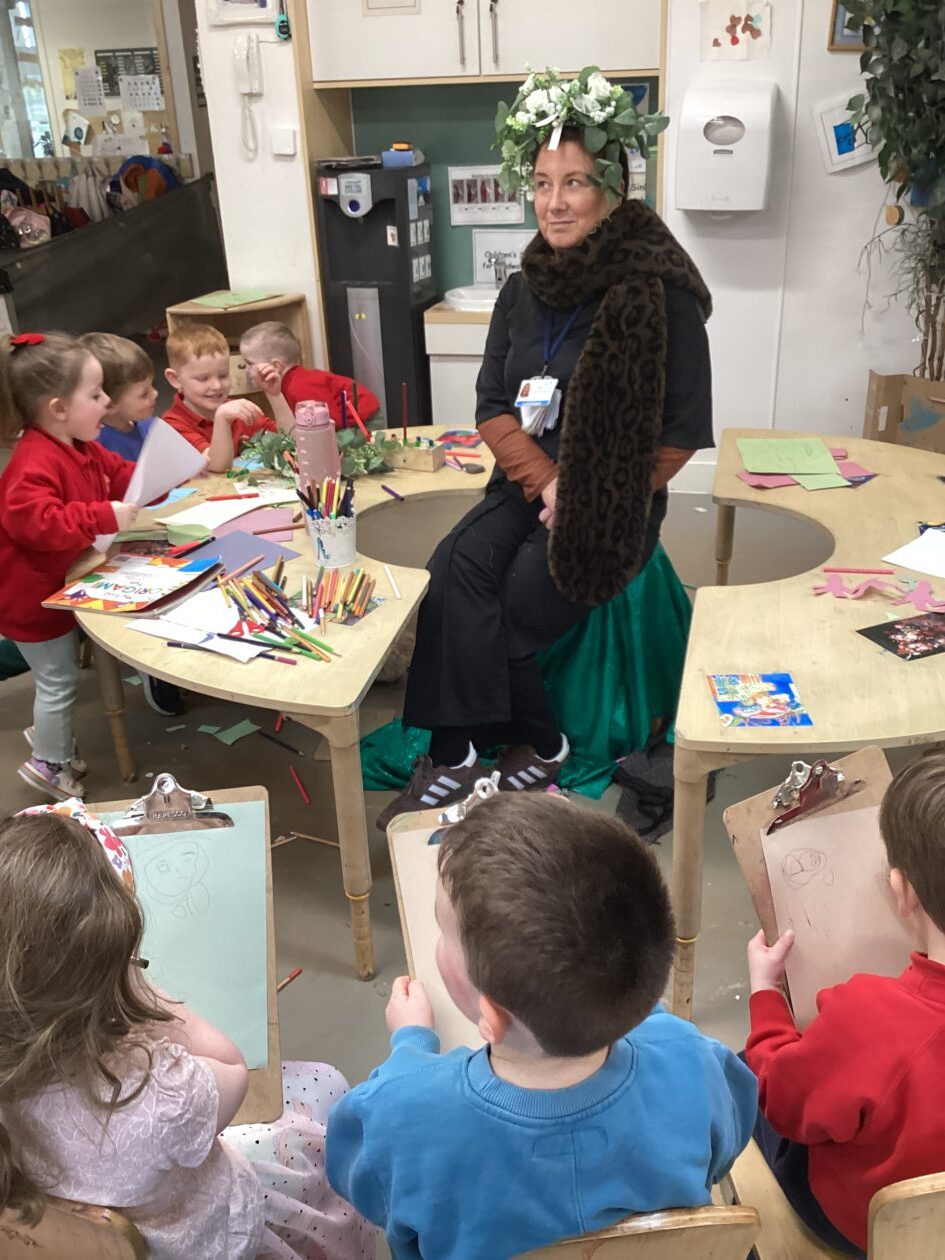
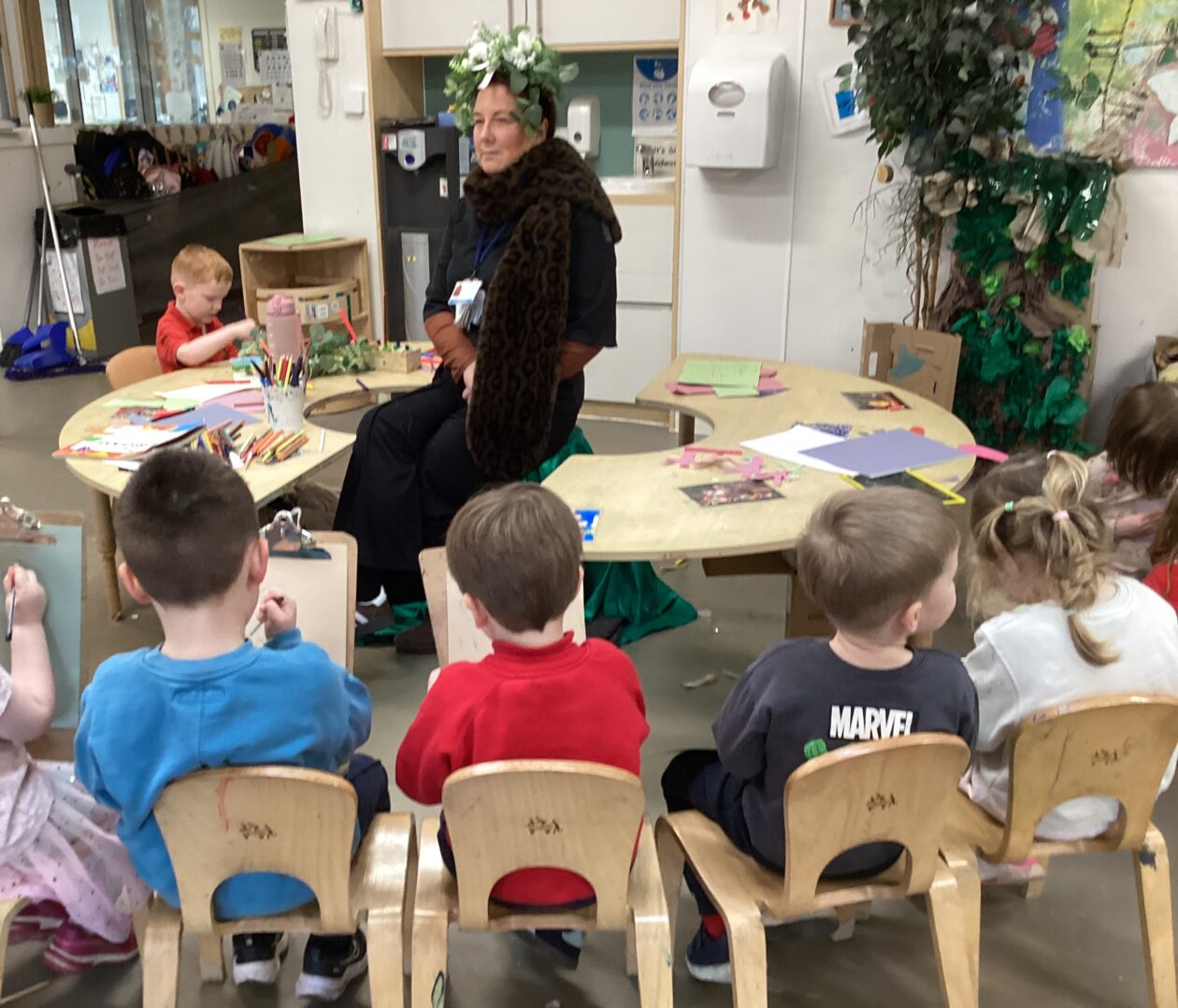
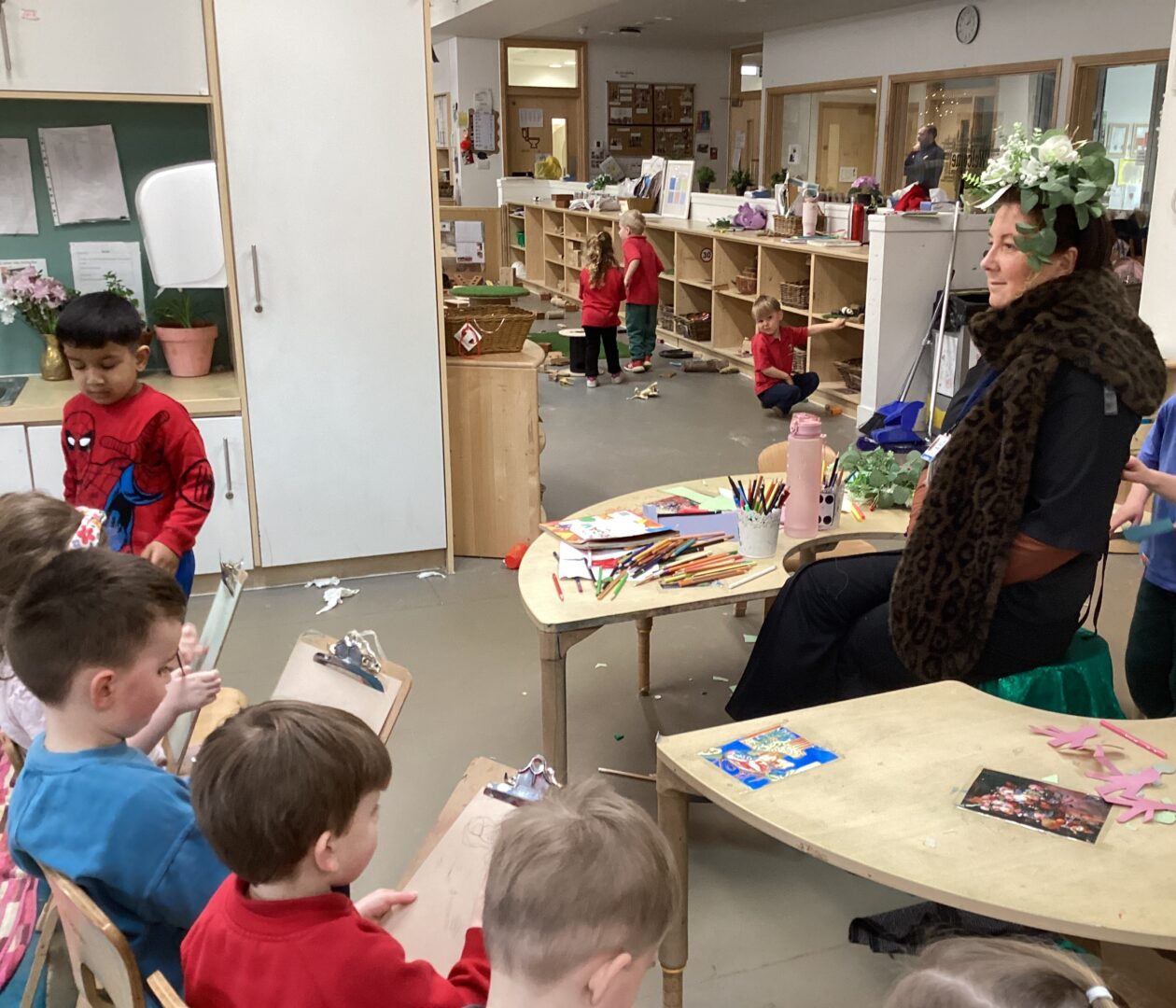
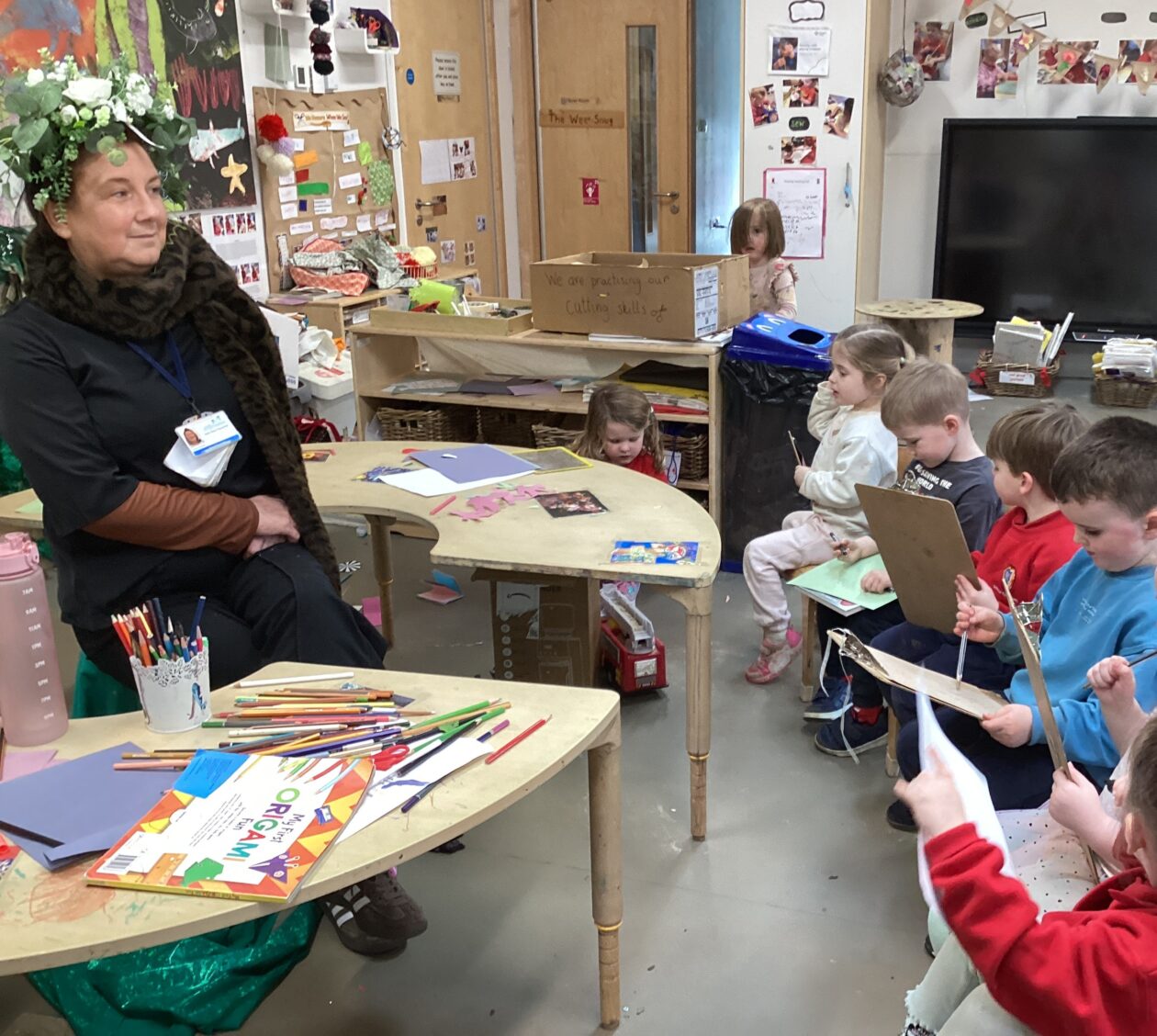
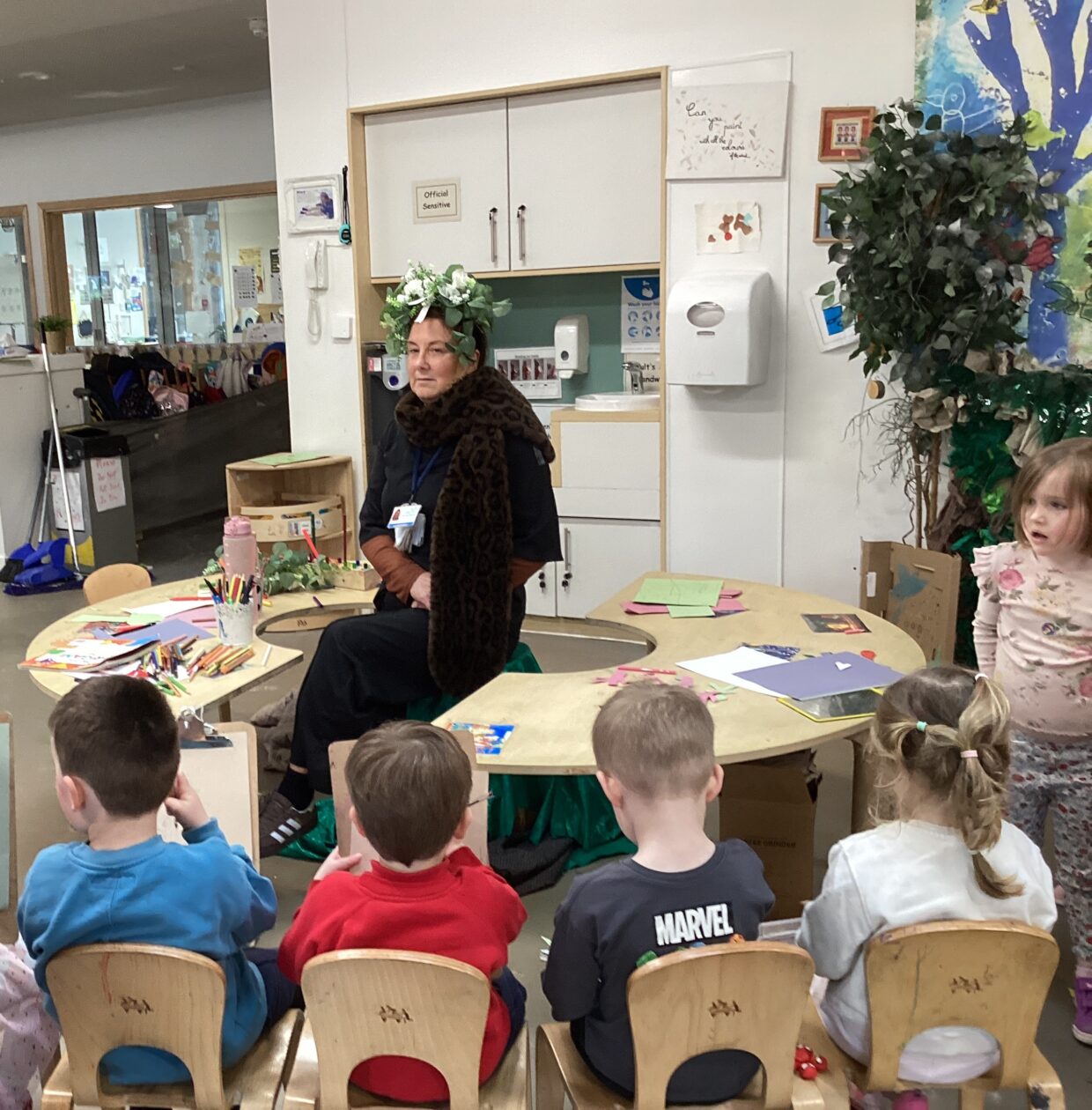
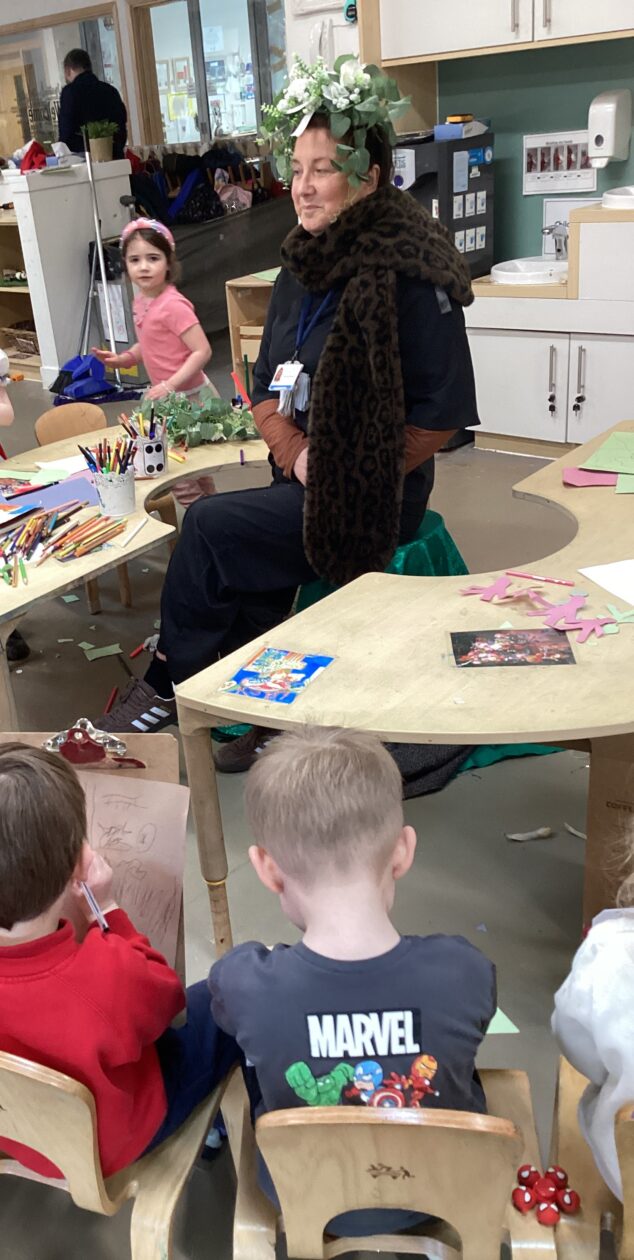
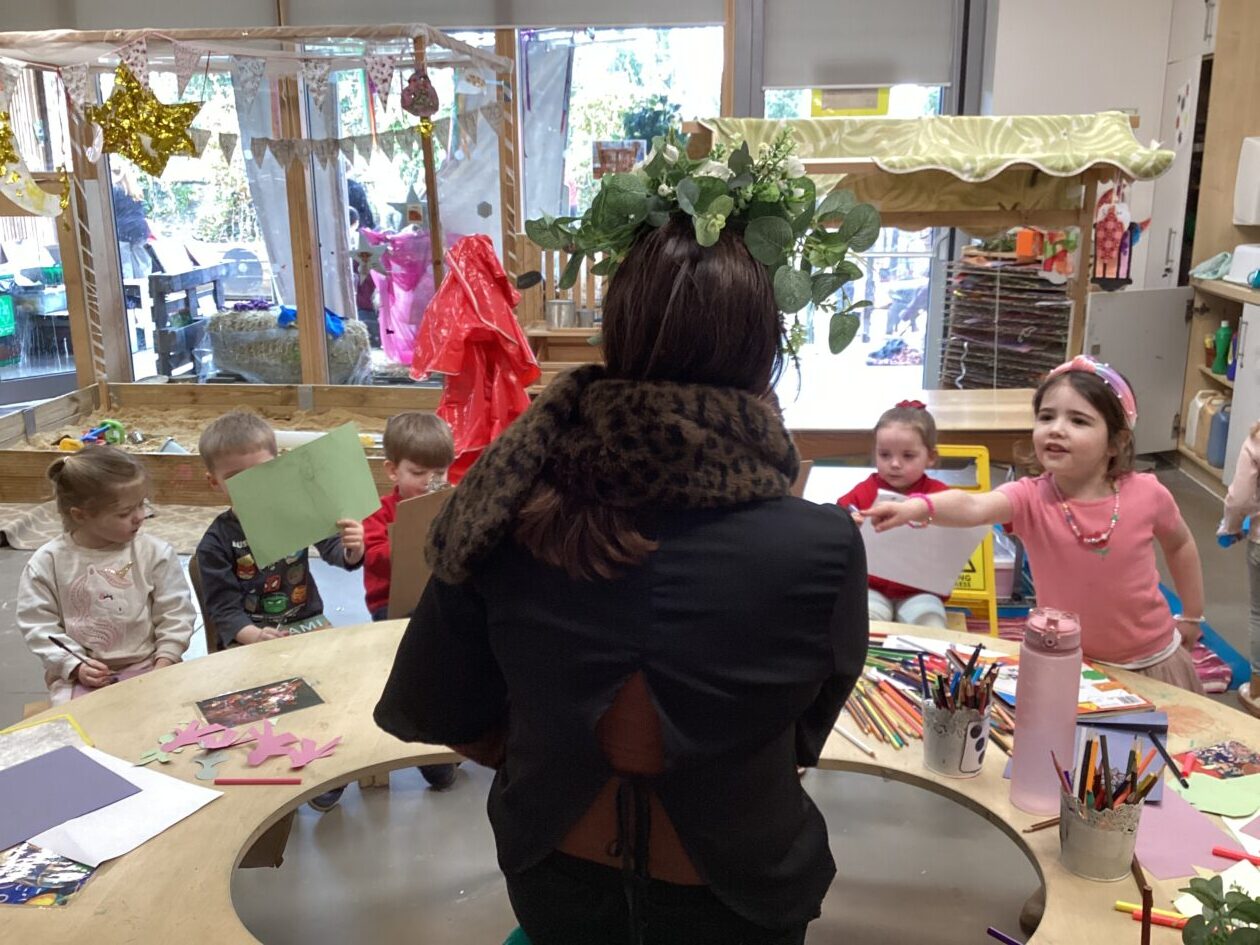
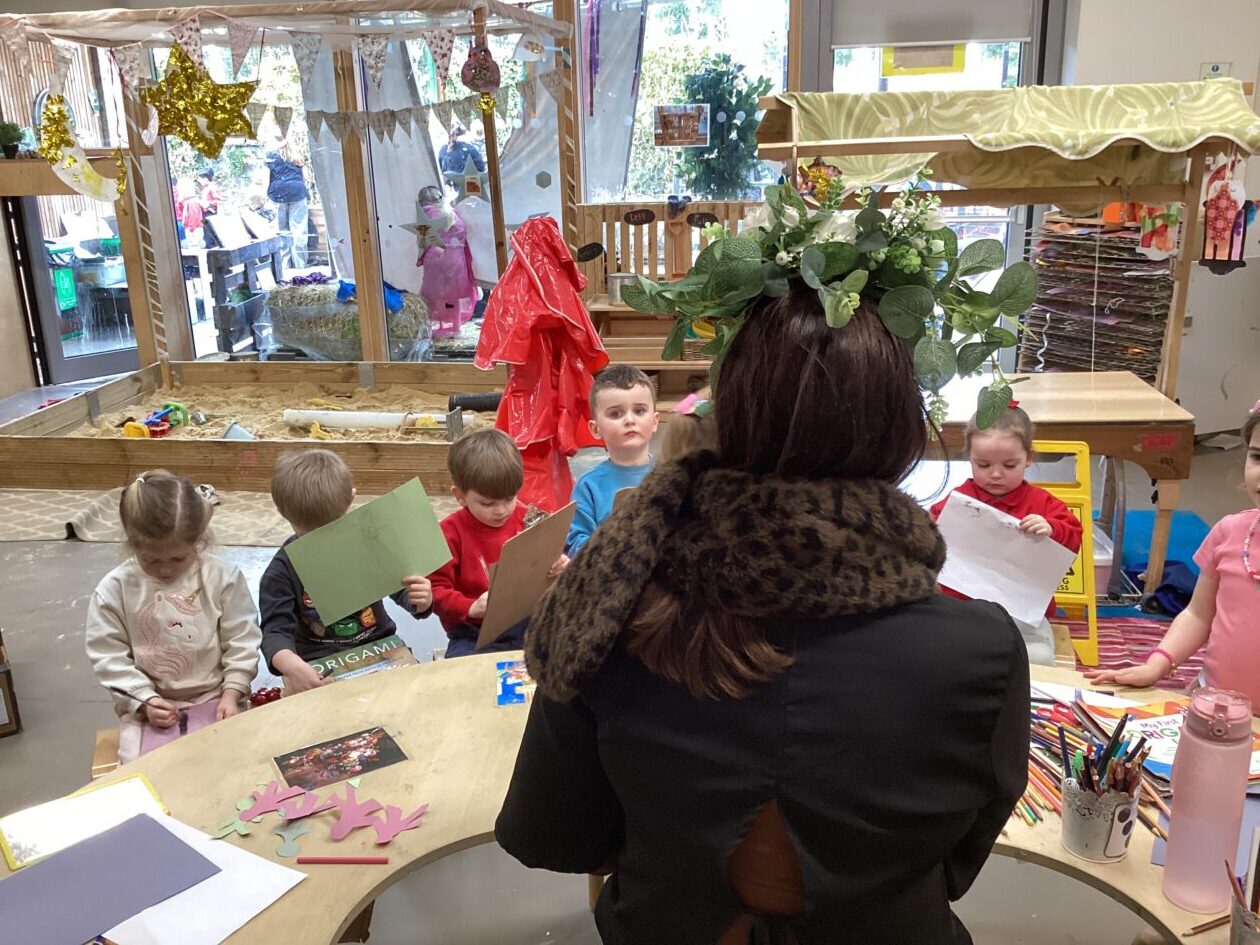
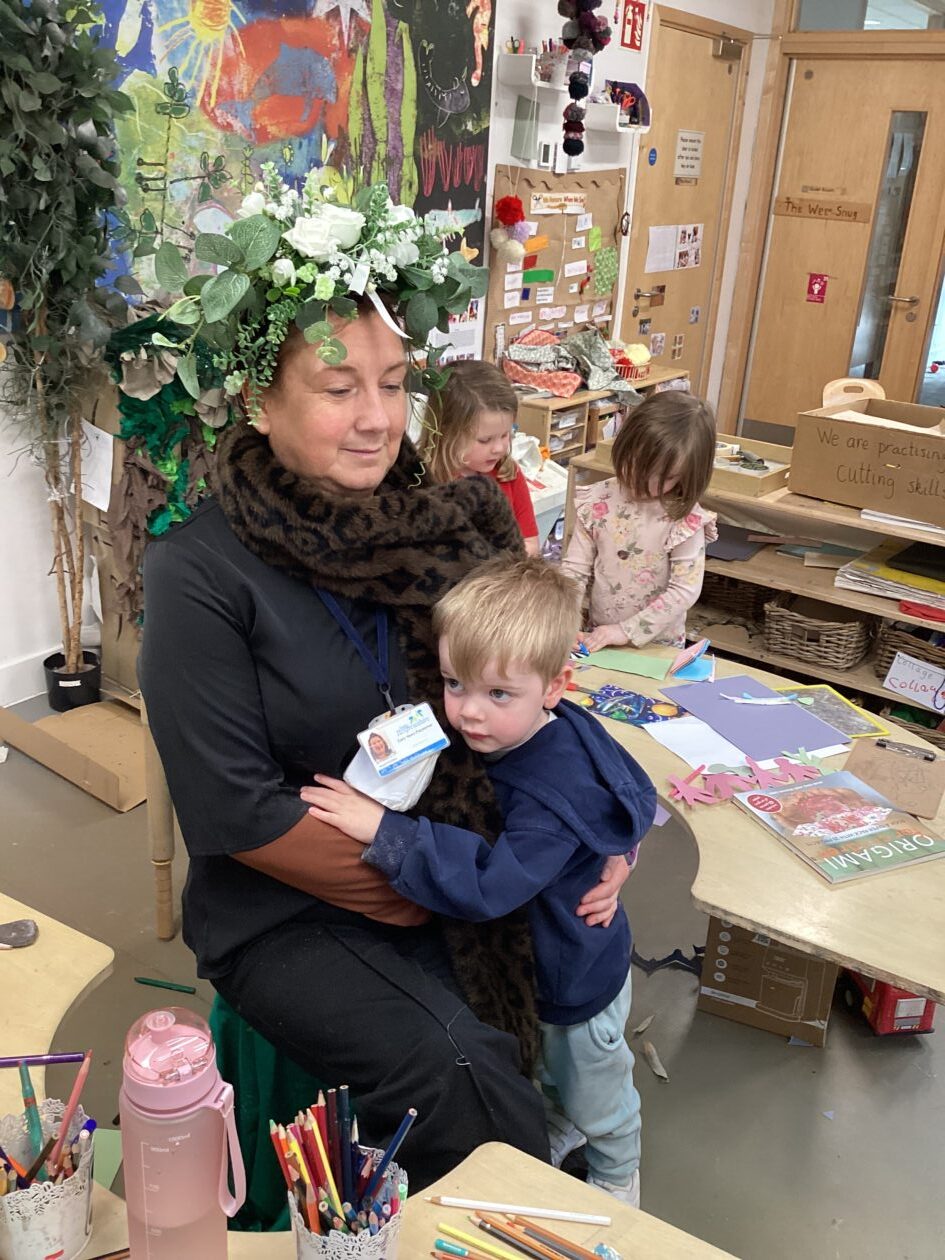
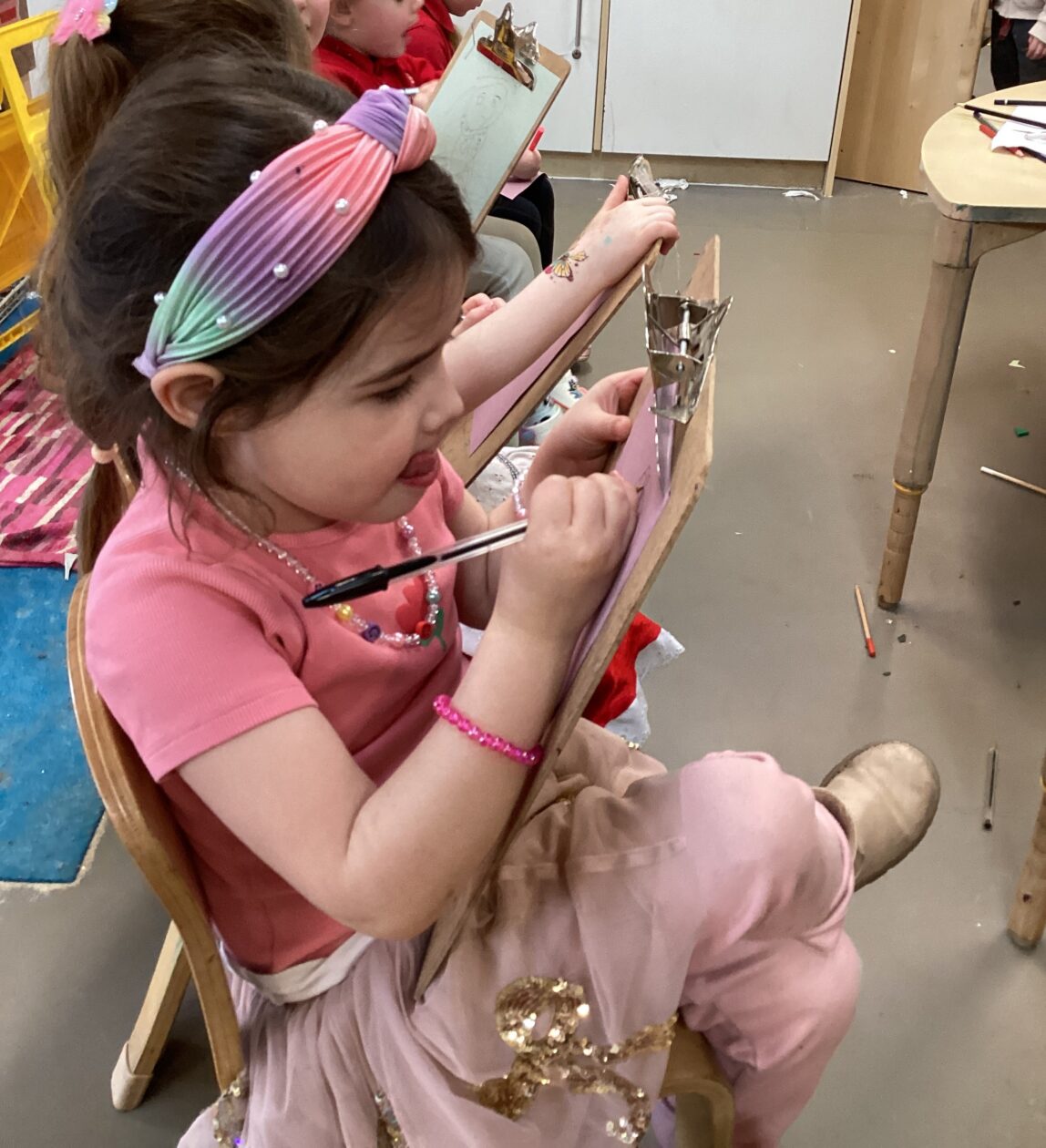
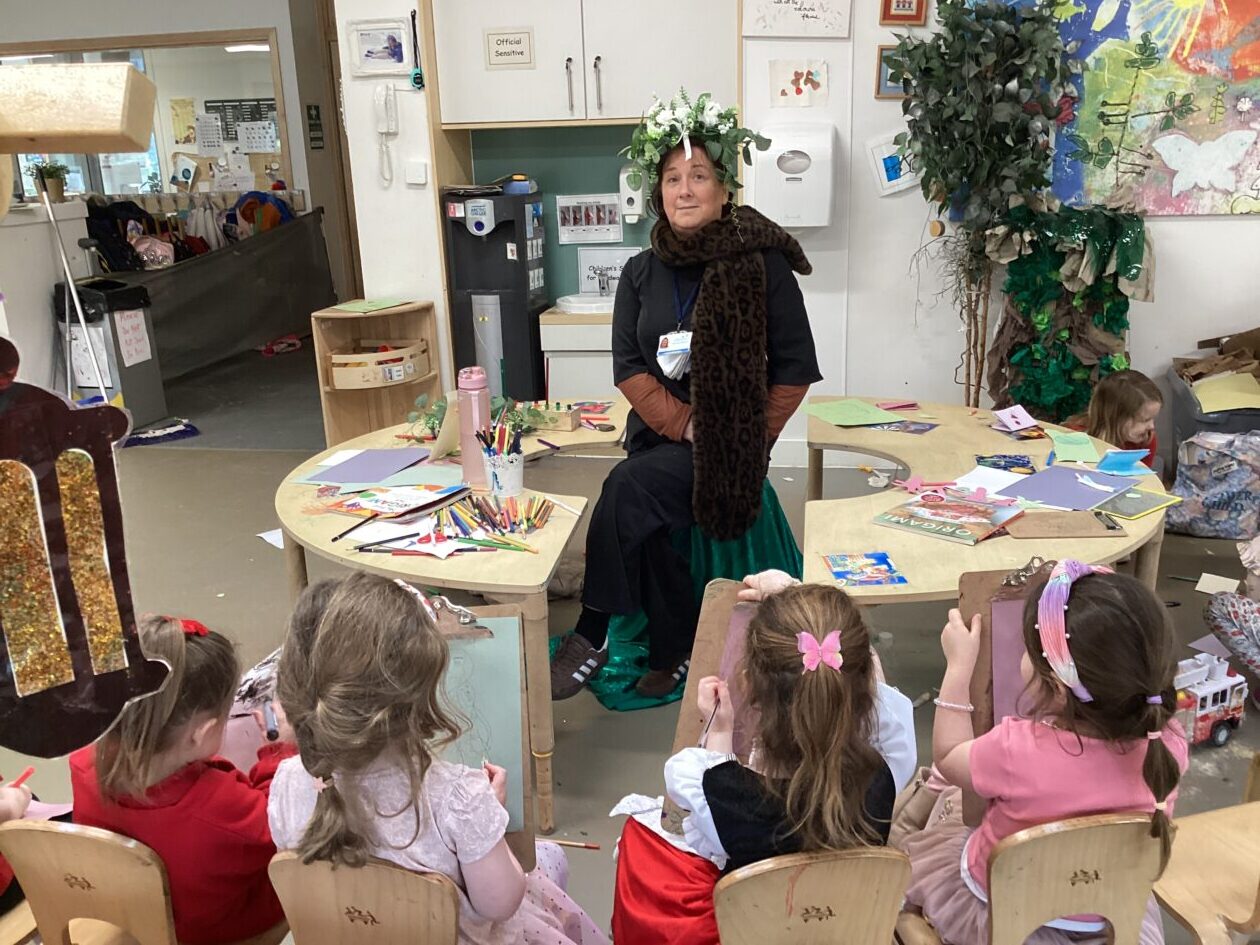
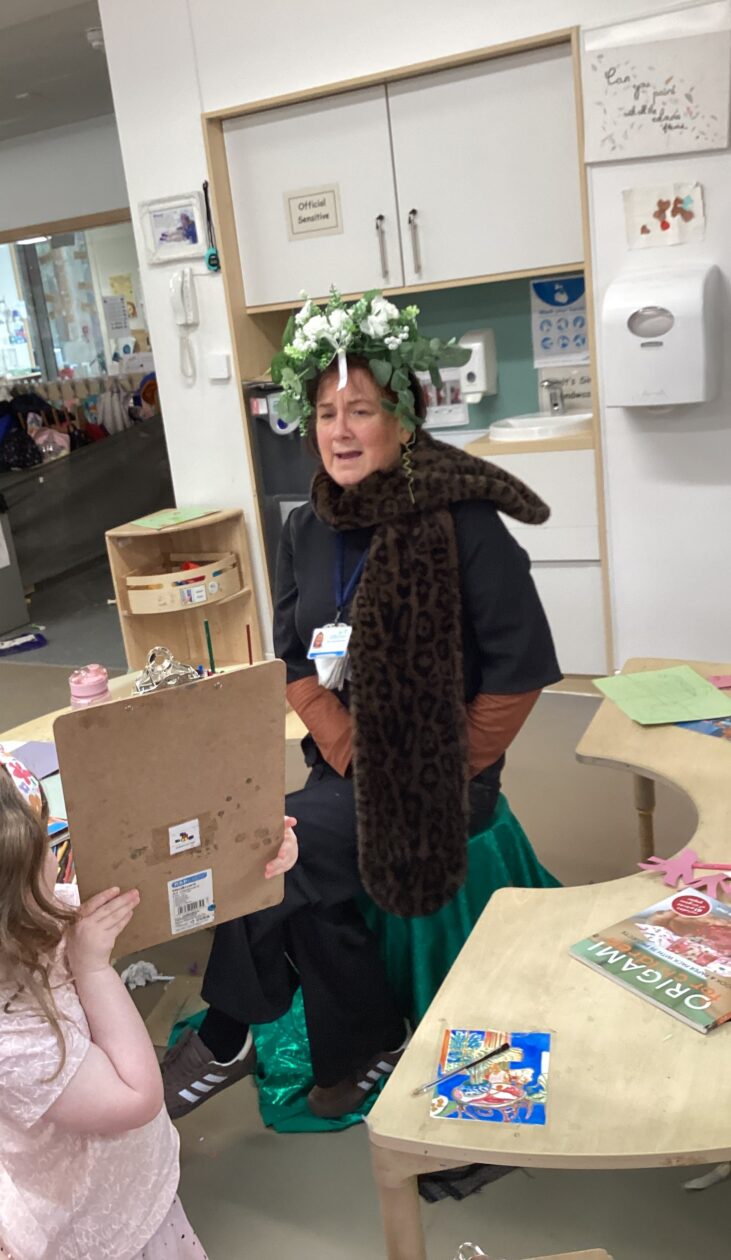
The children also explored life drawing and attempted to replicate our enthusiastic model Mrs Mundagie. The children spent a prolonged period of time doing this and we discussed what some of the visual elements might mean.
AL “ It means we have to copy Mrs Mundagie “
HG “She has to stay very still-I’m going to make her laugh”
MS “ I have to draw all her patterns”
“ I think she’s wearing flowers because she likes to be in the garden”
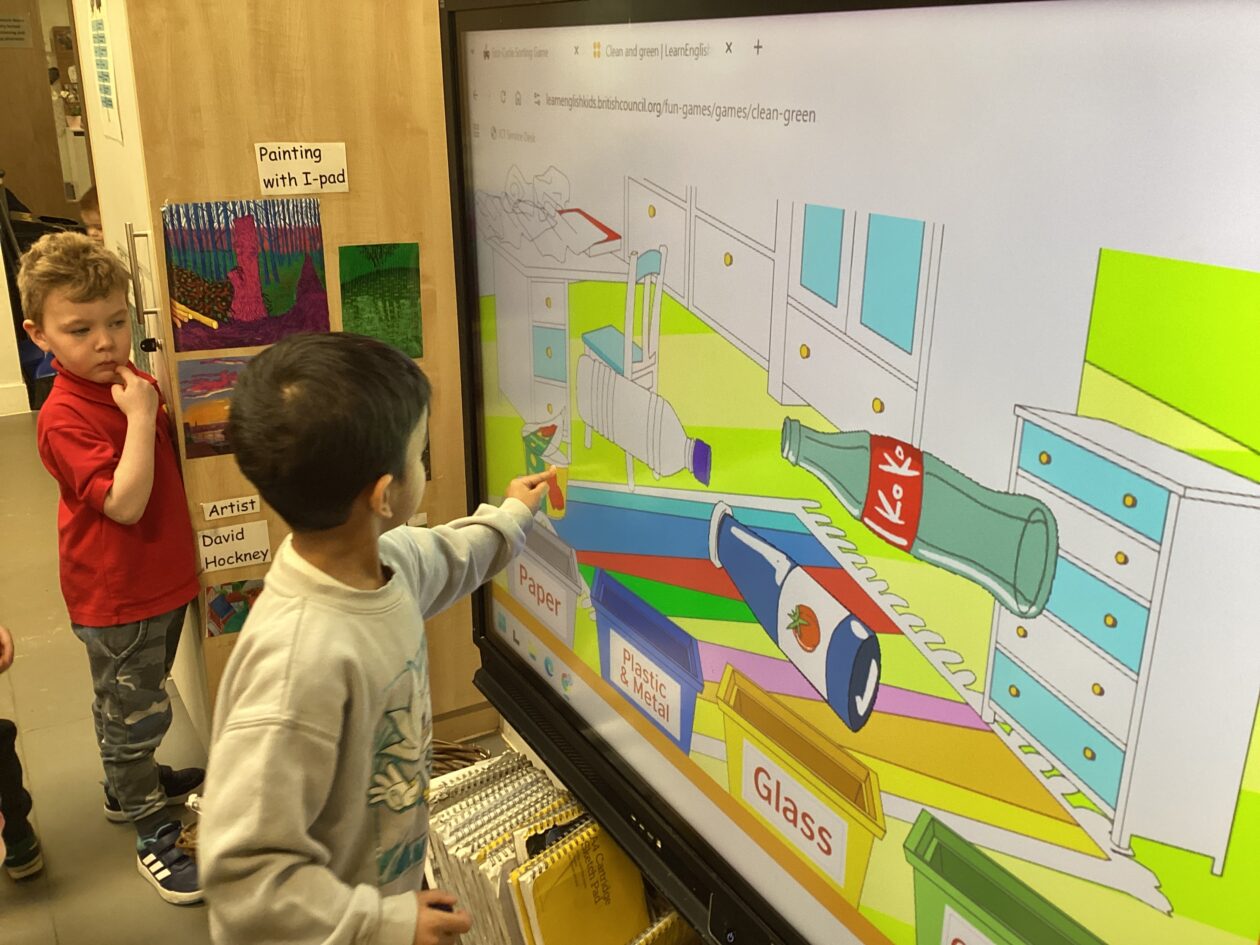
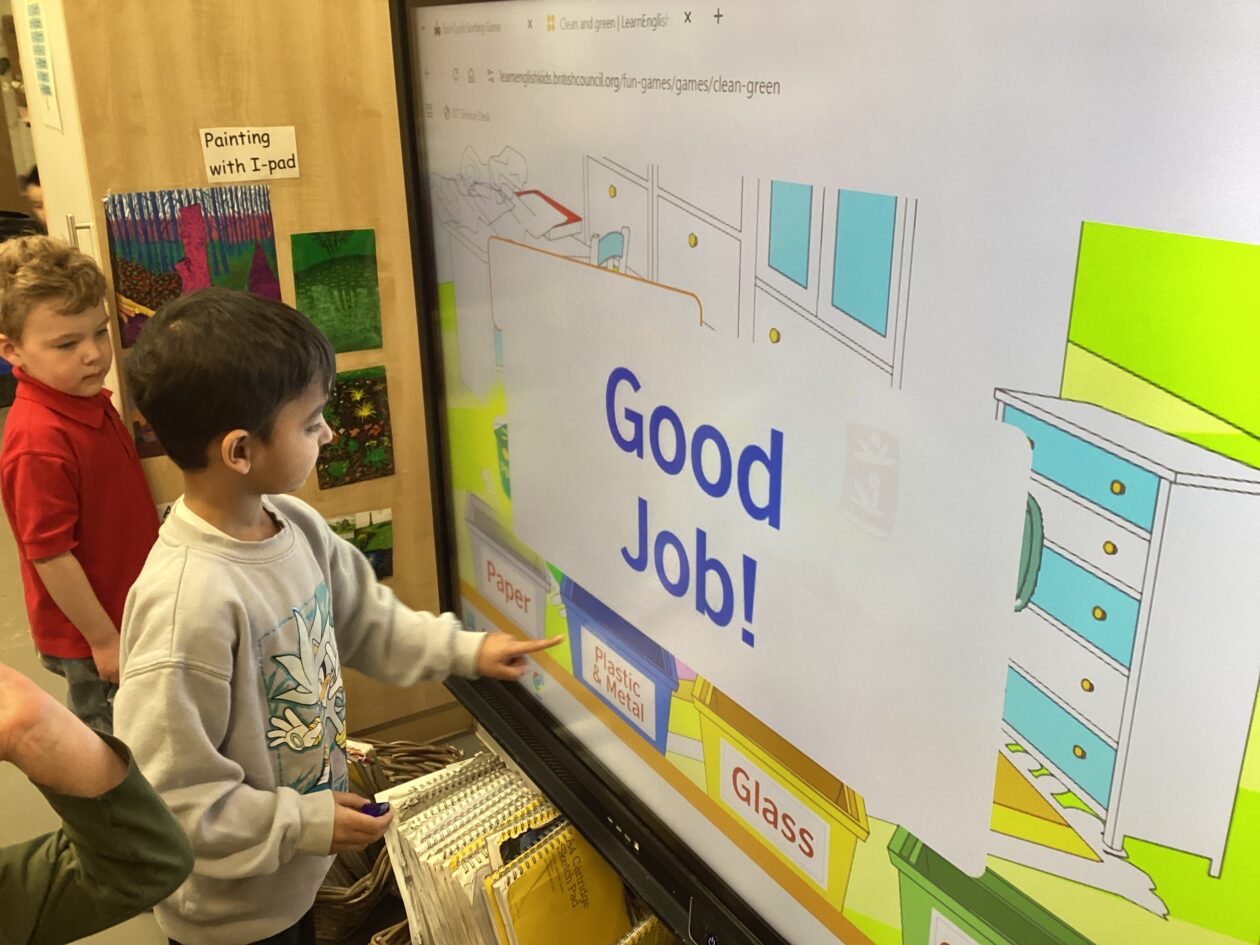
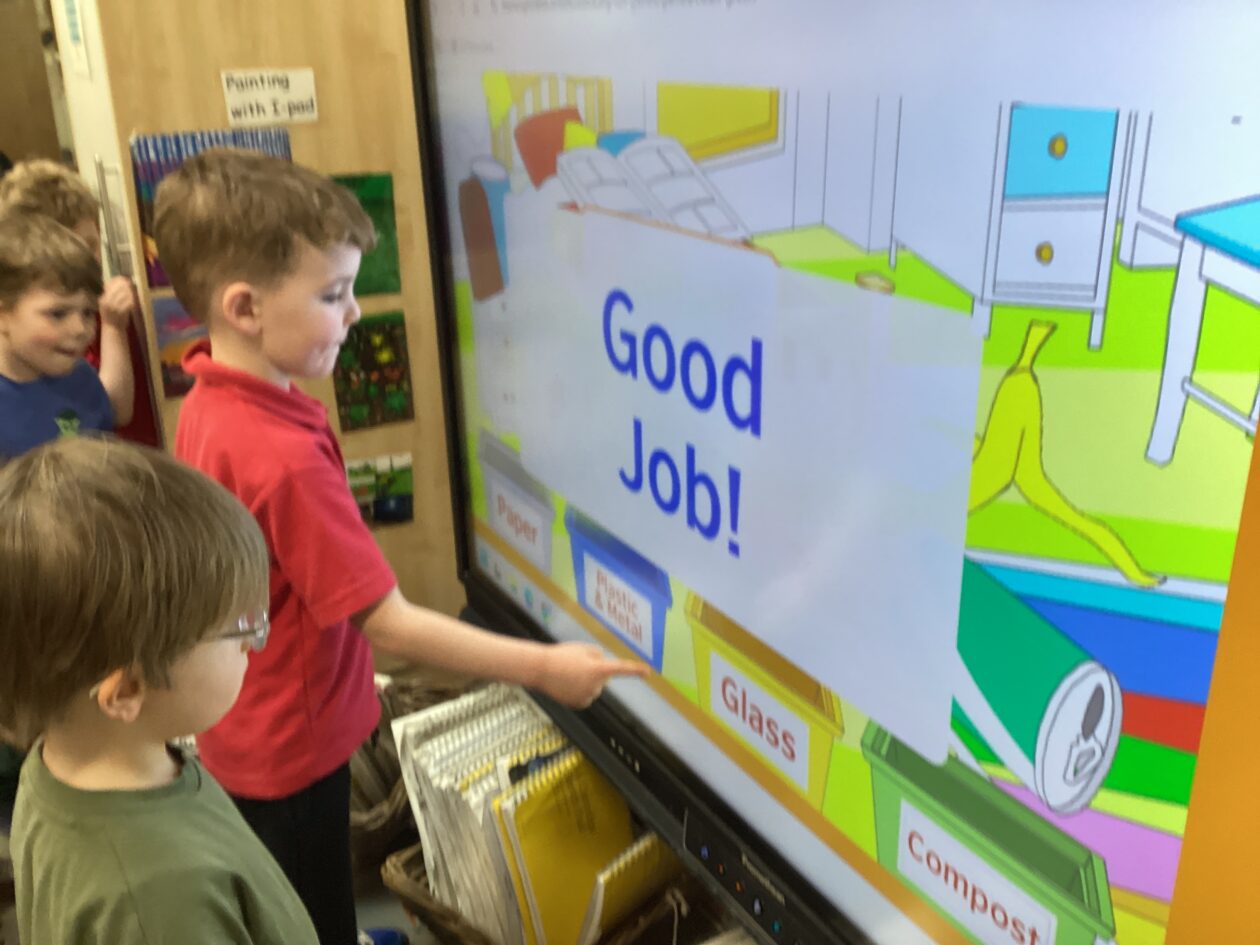
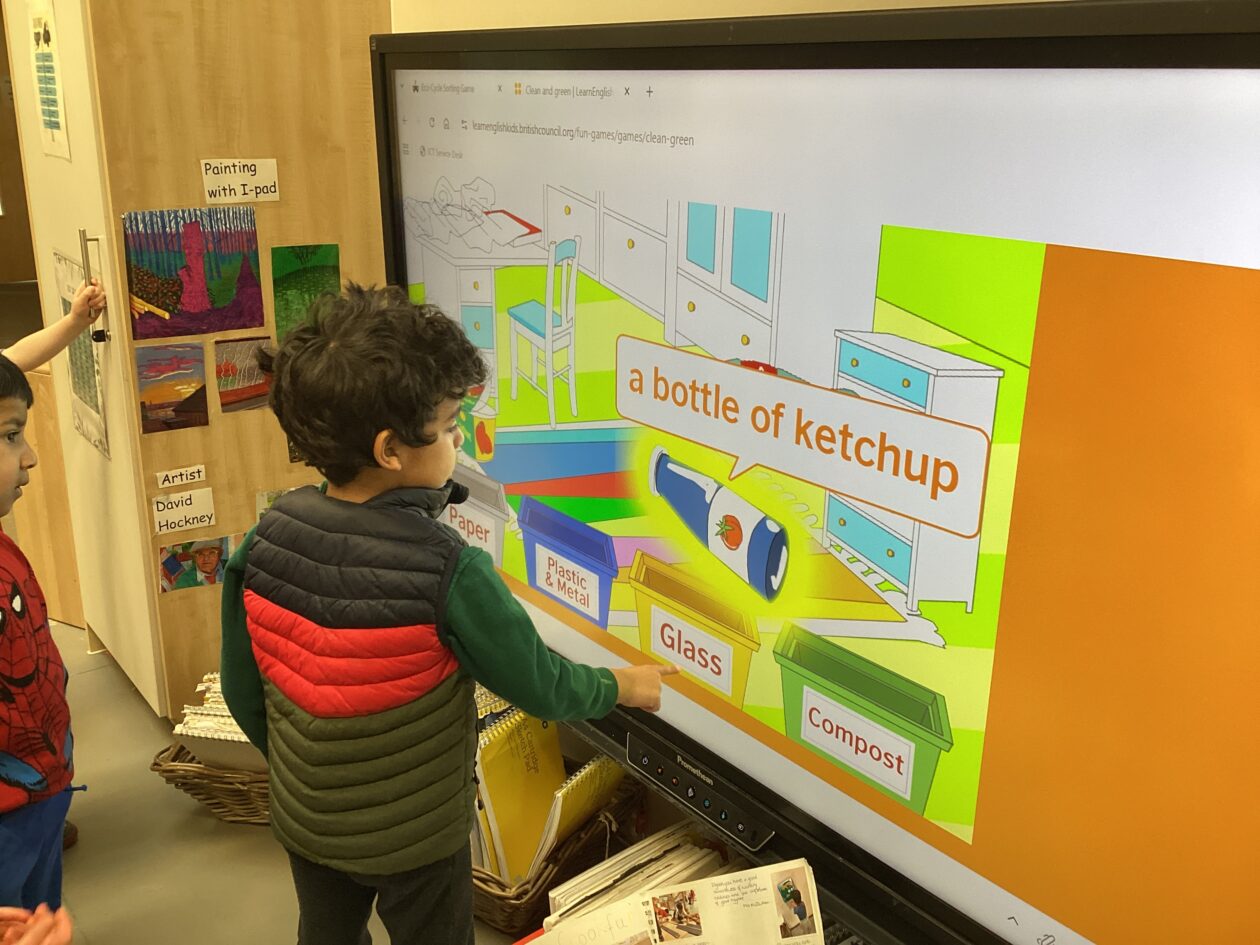
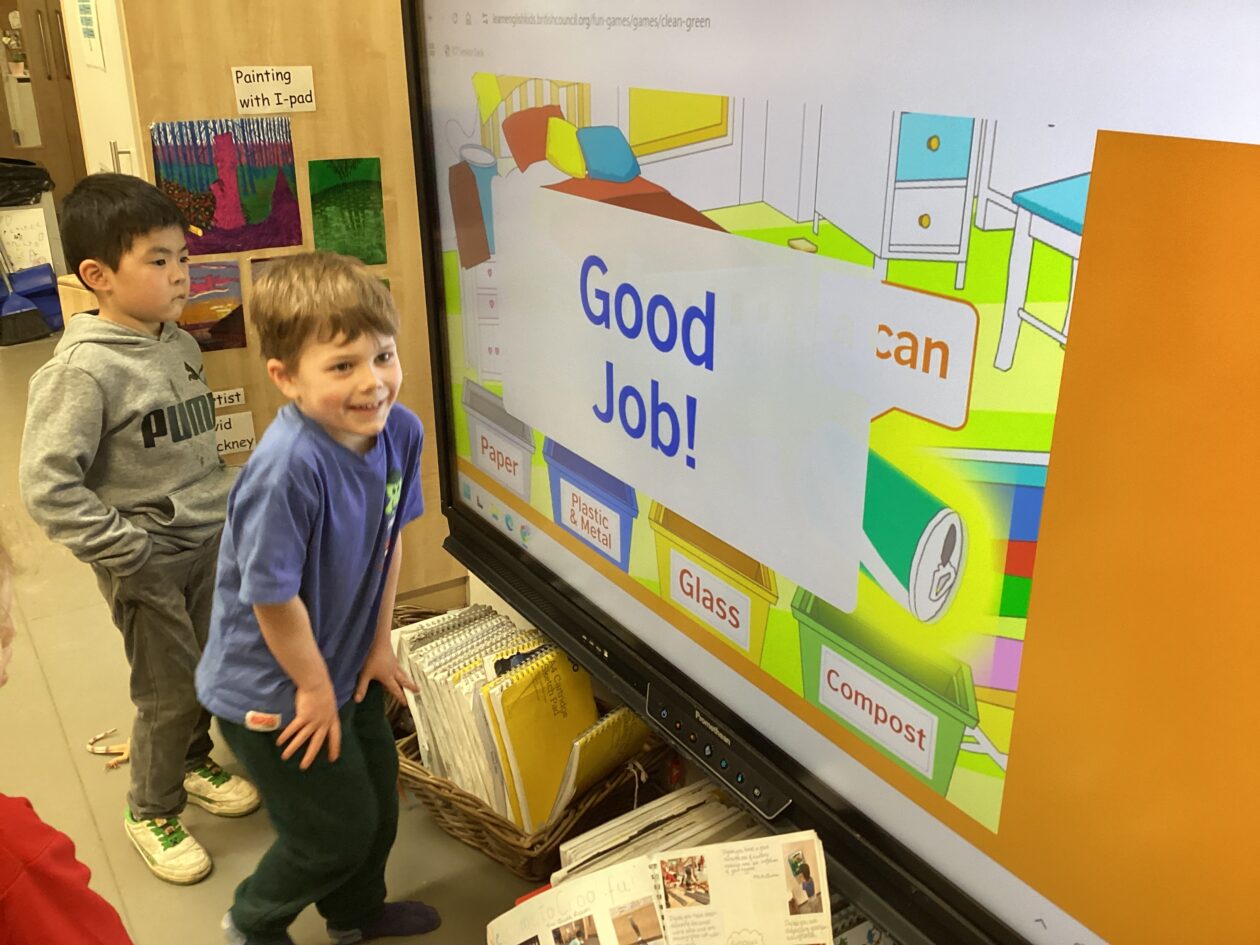
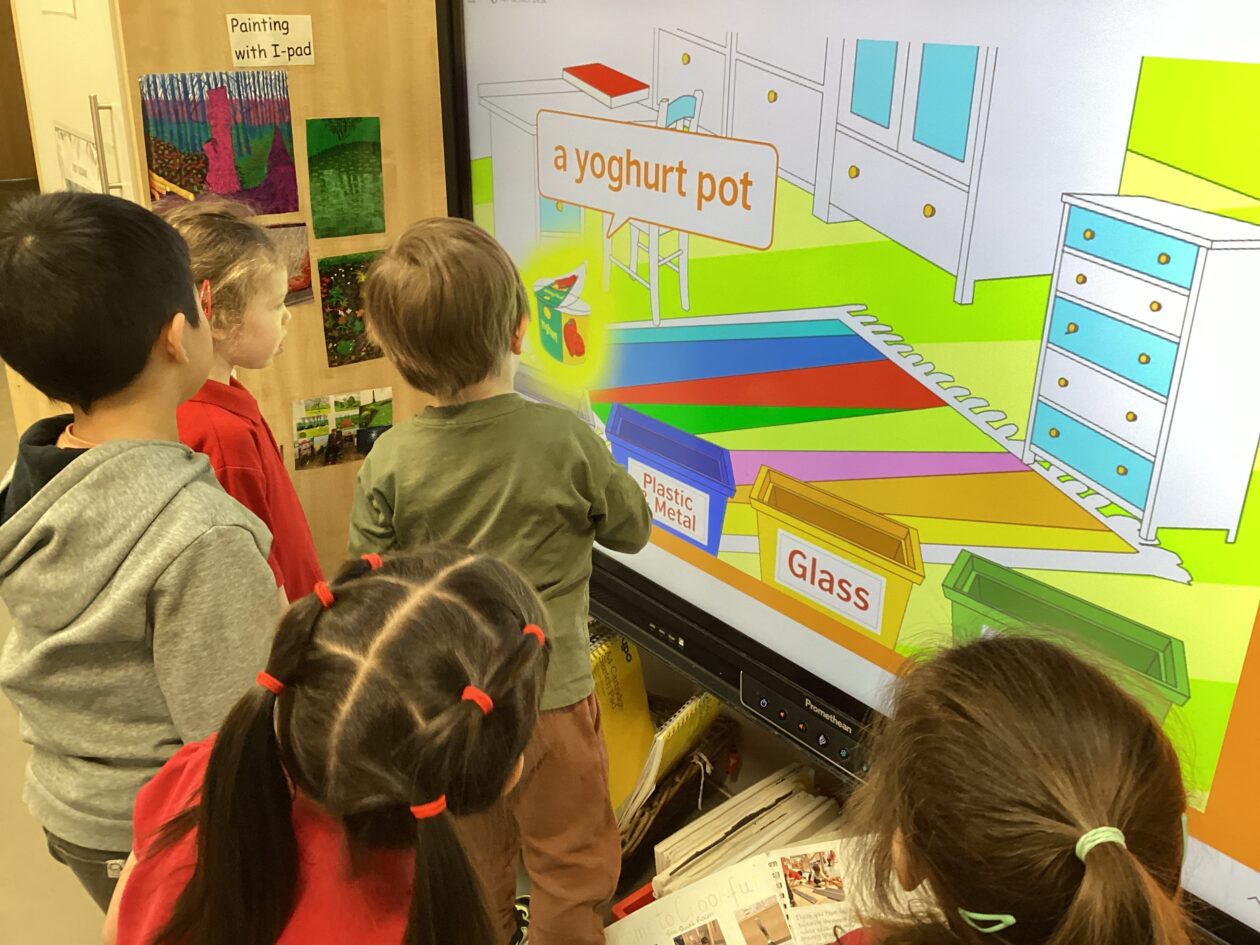
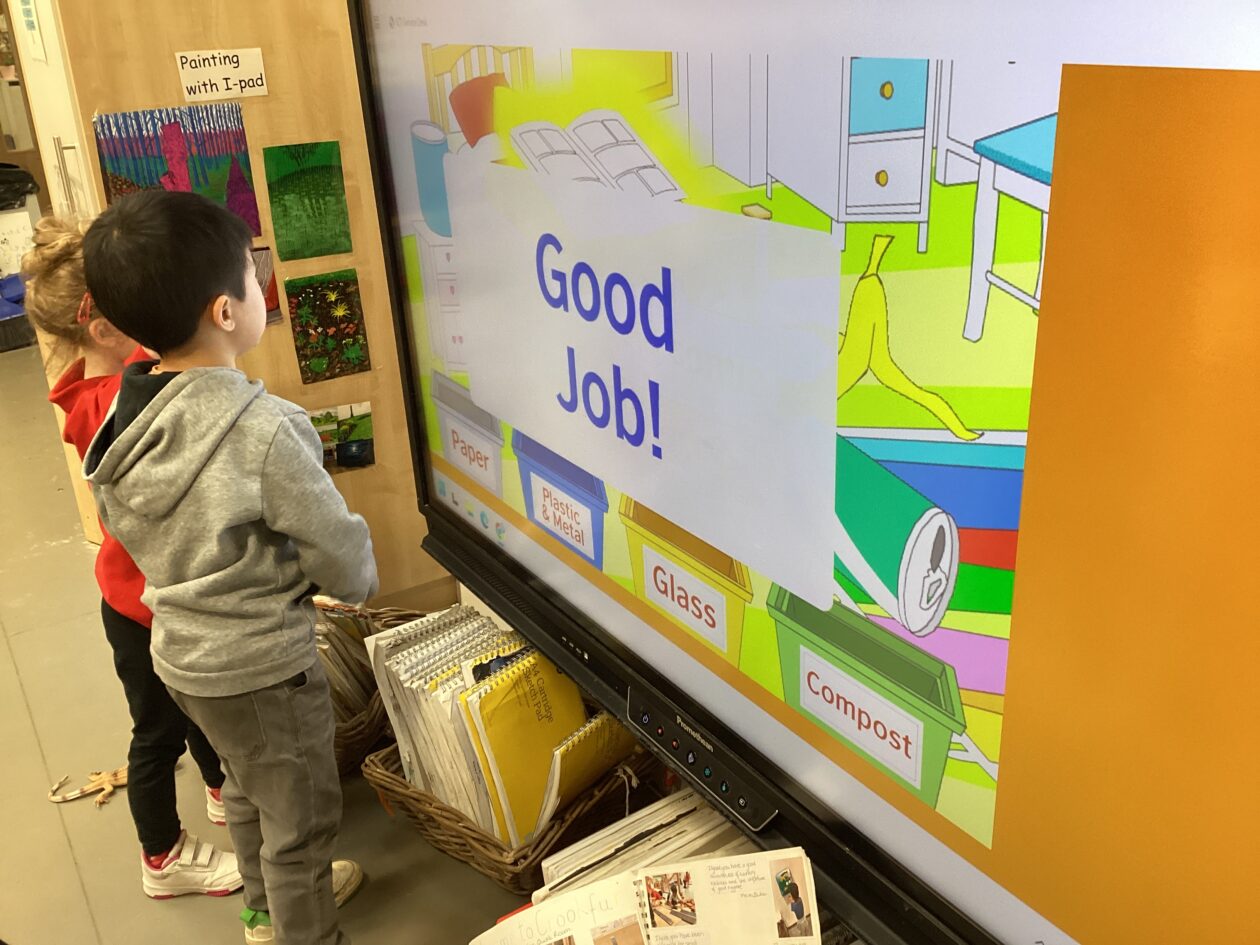
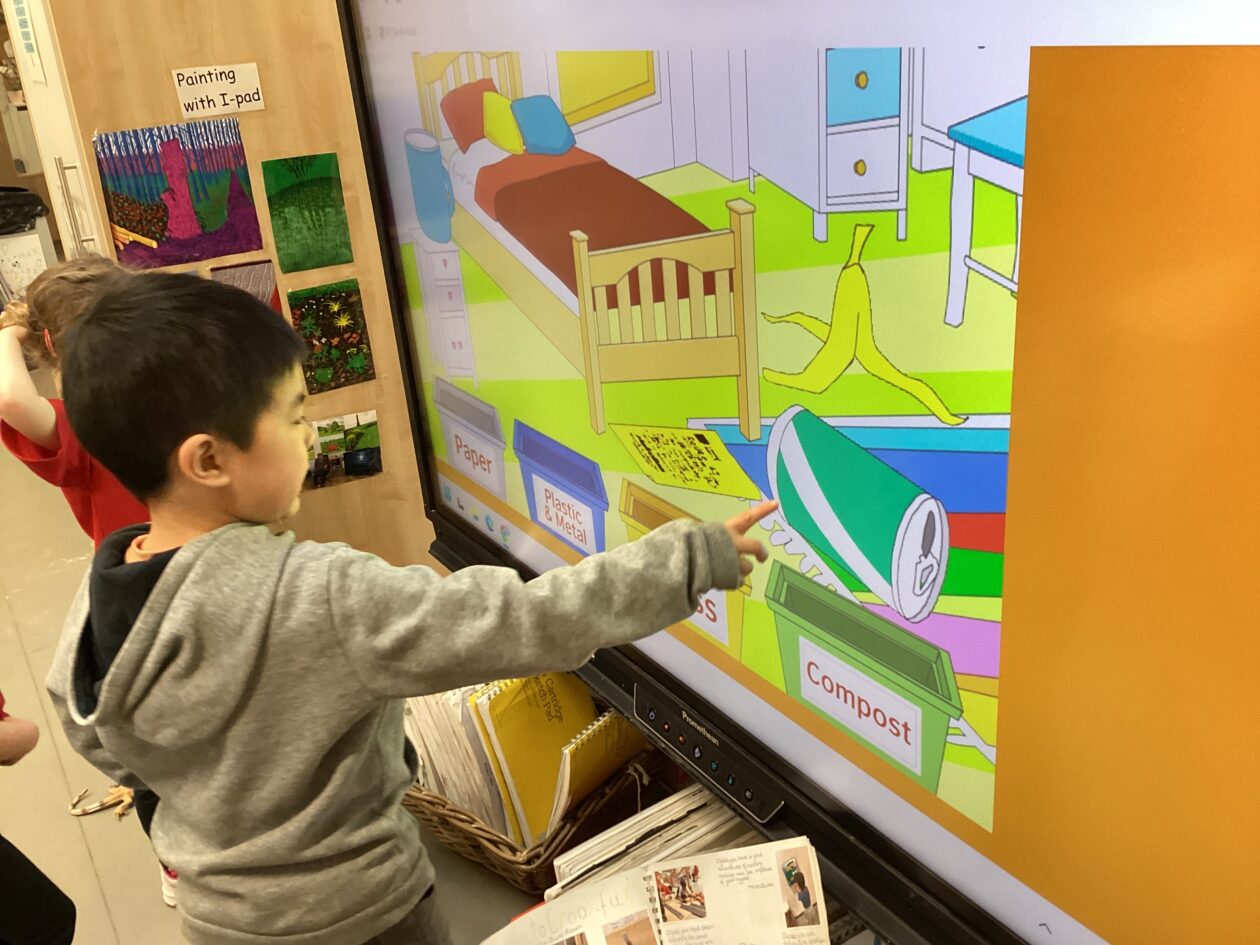
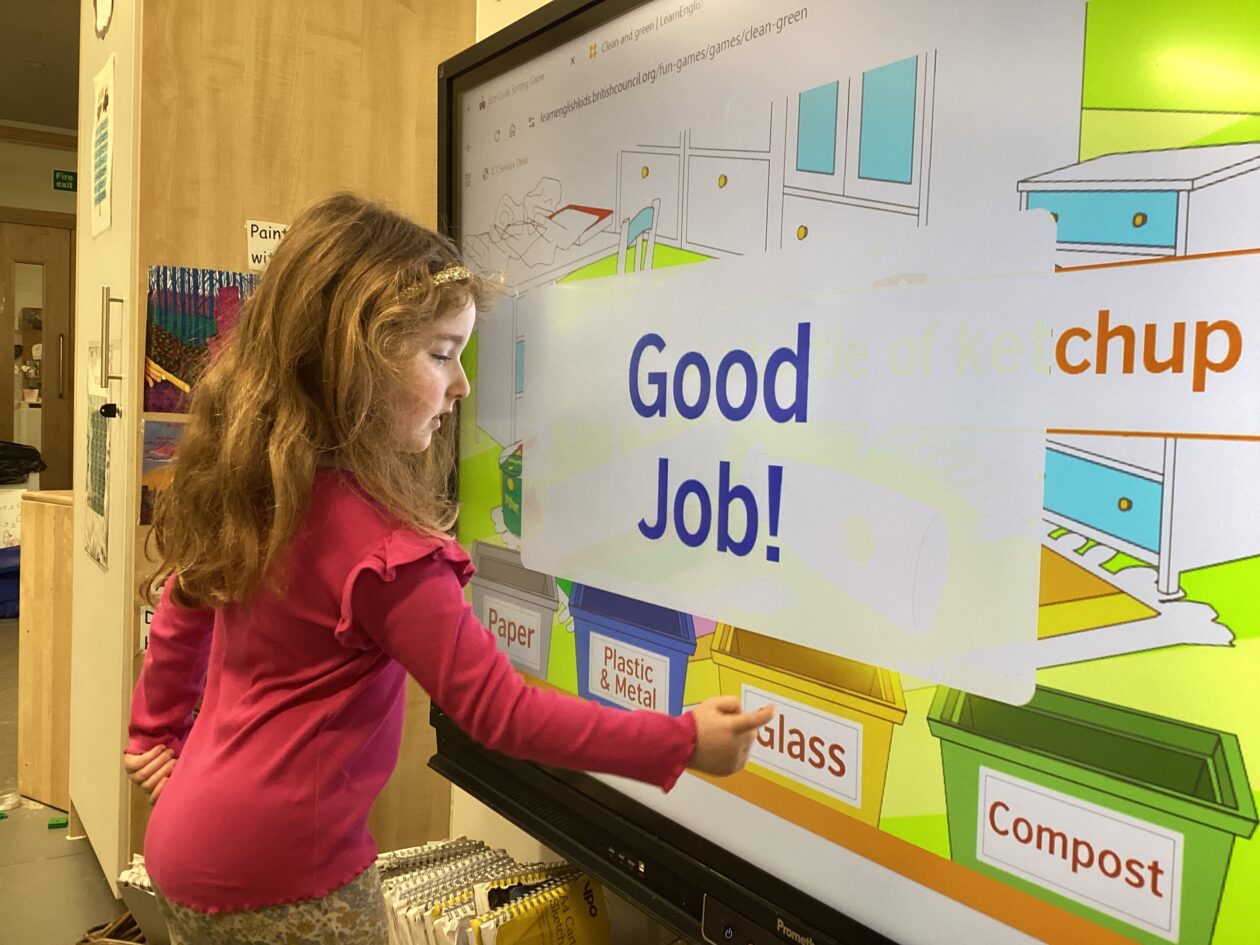
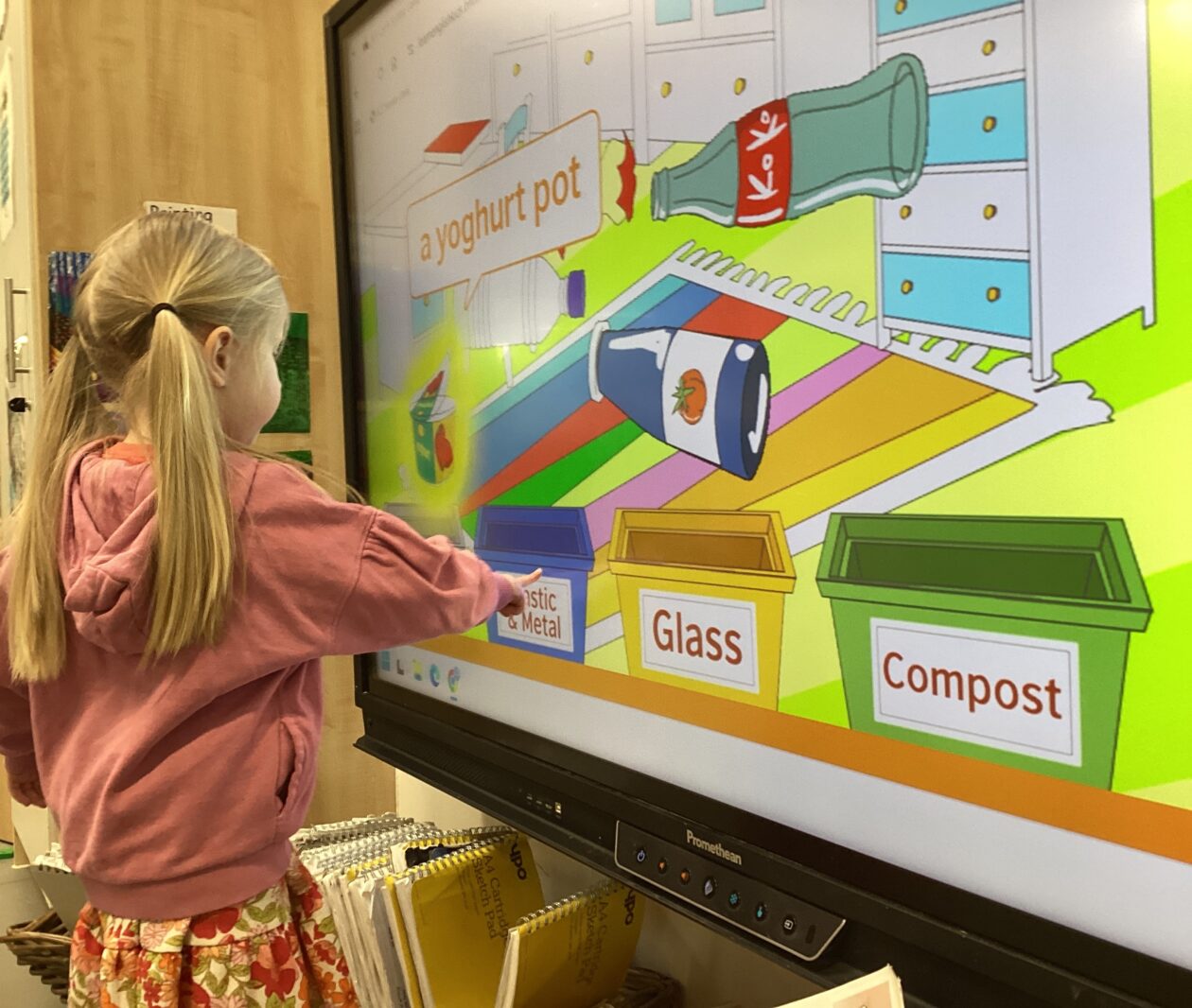
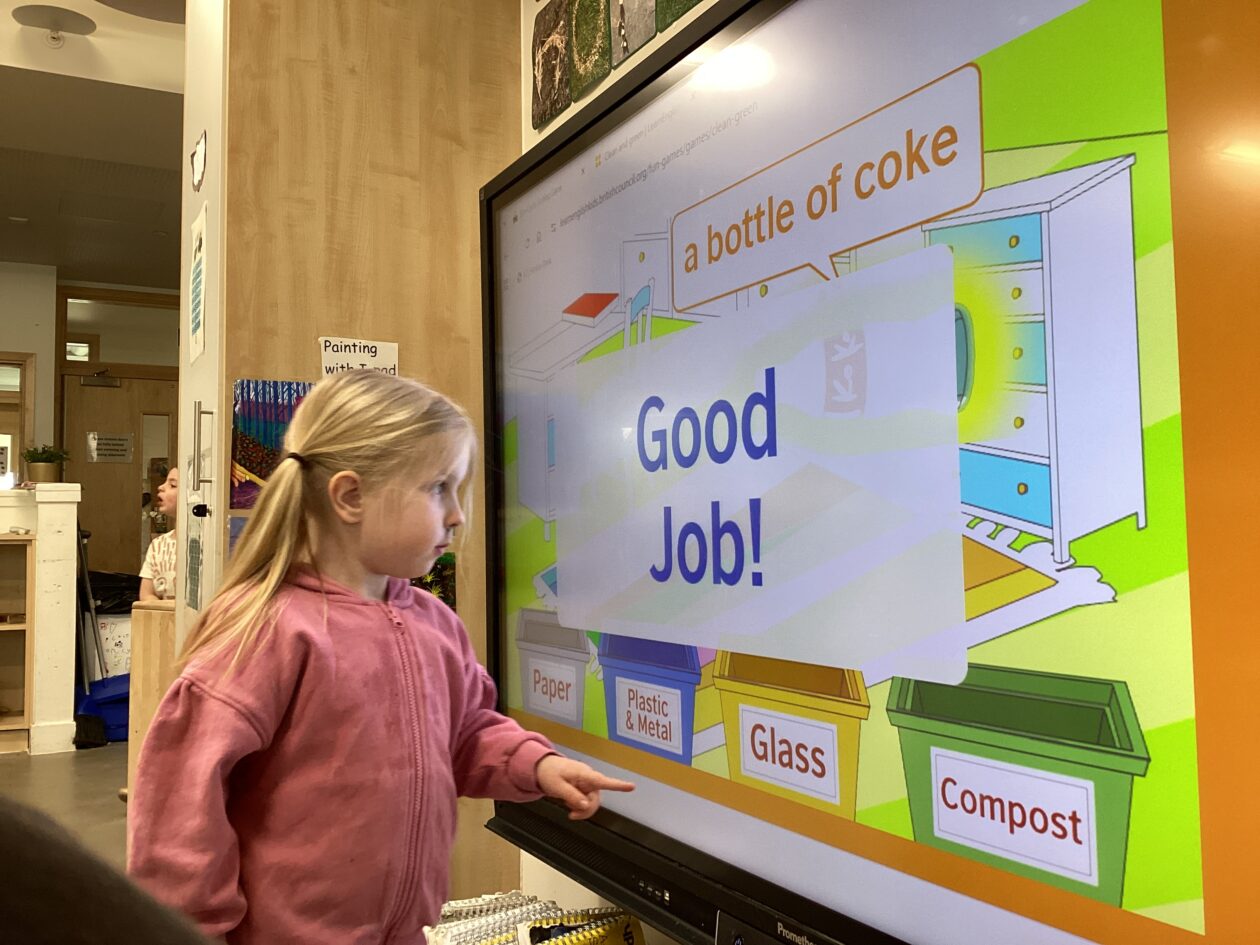
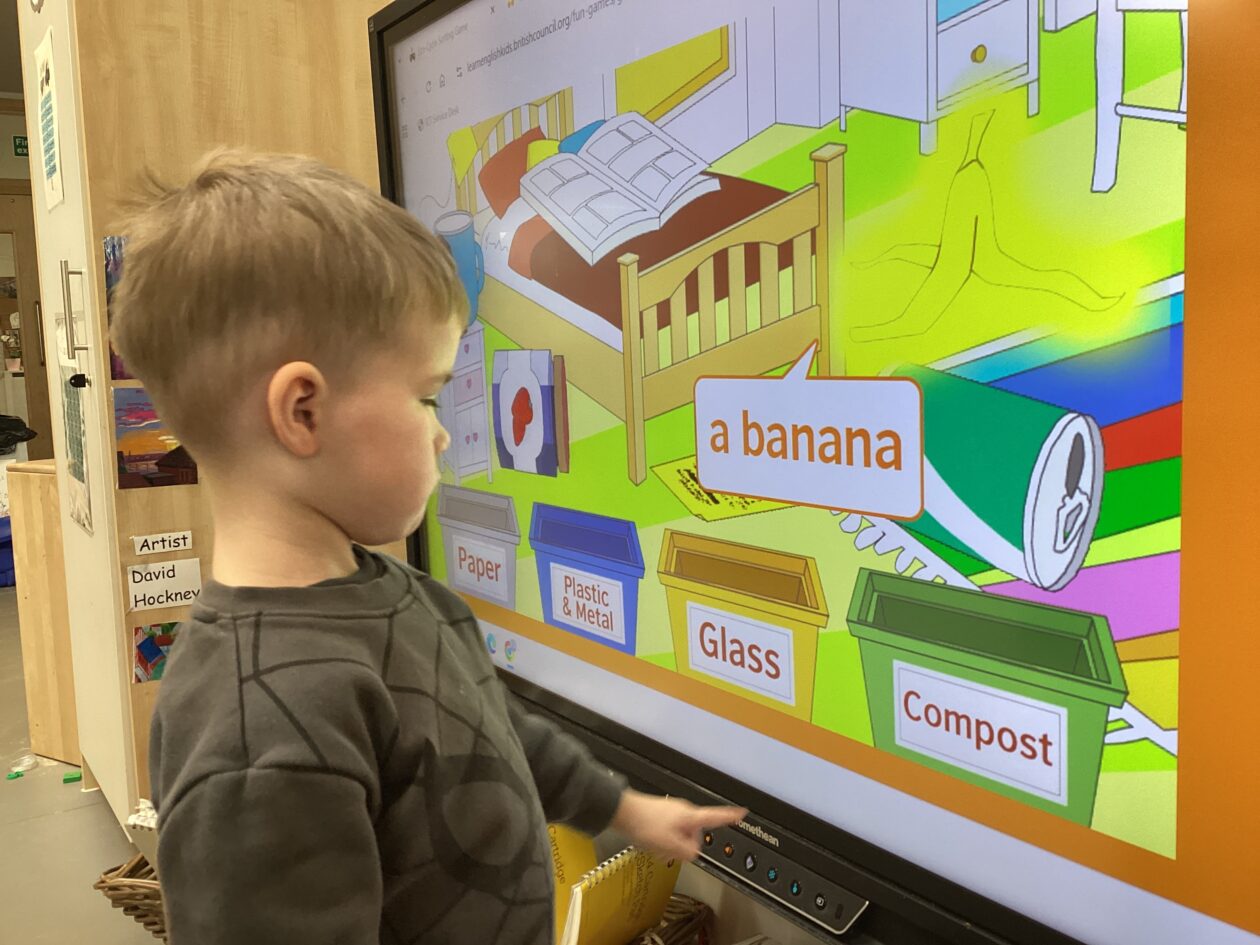
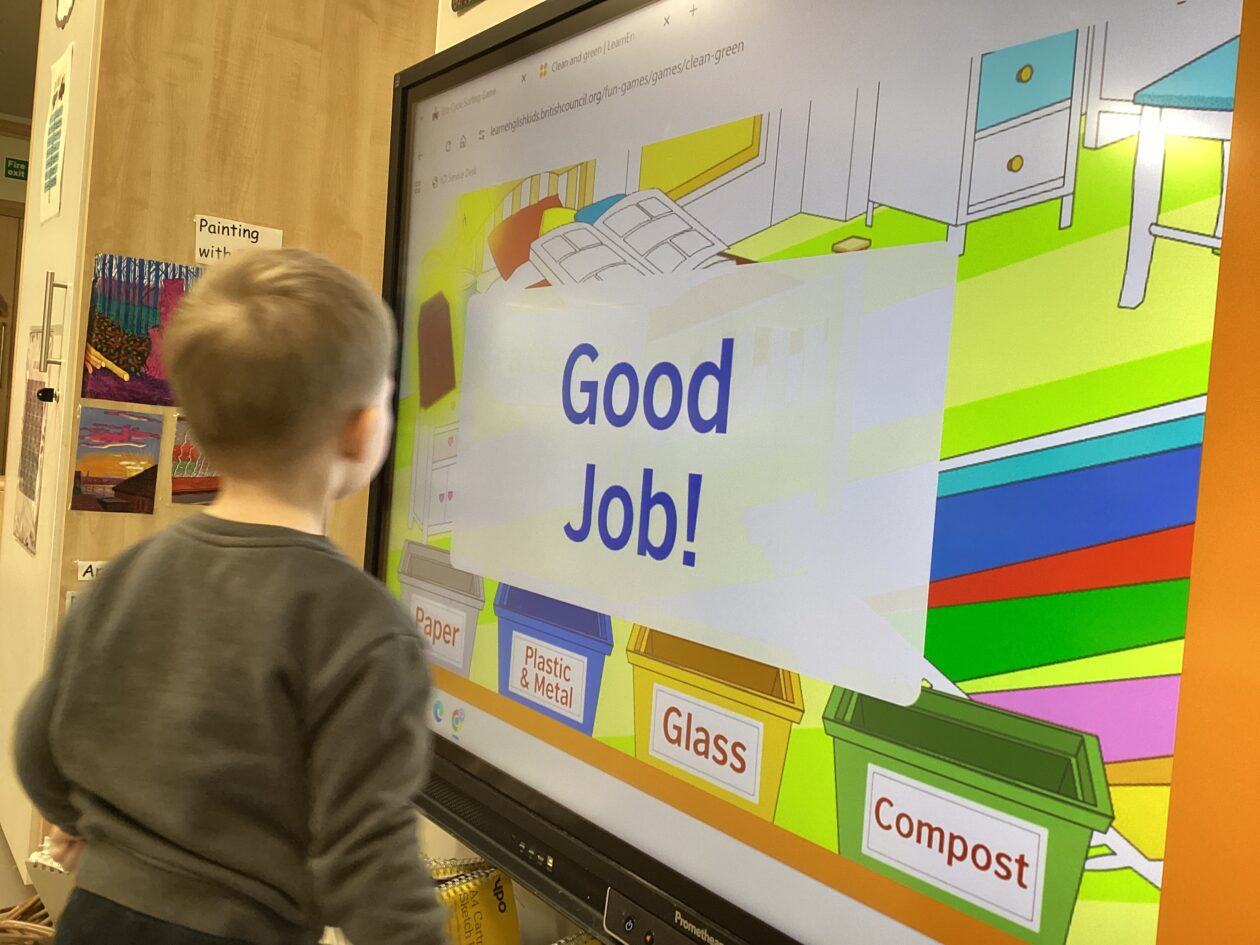
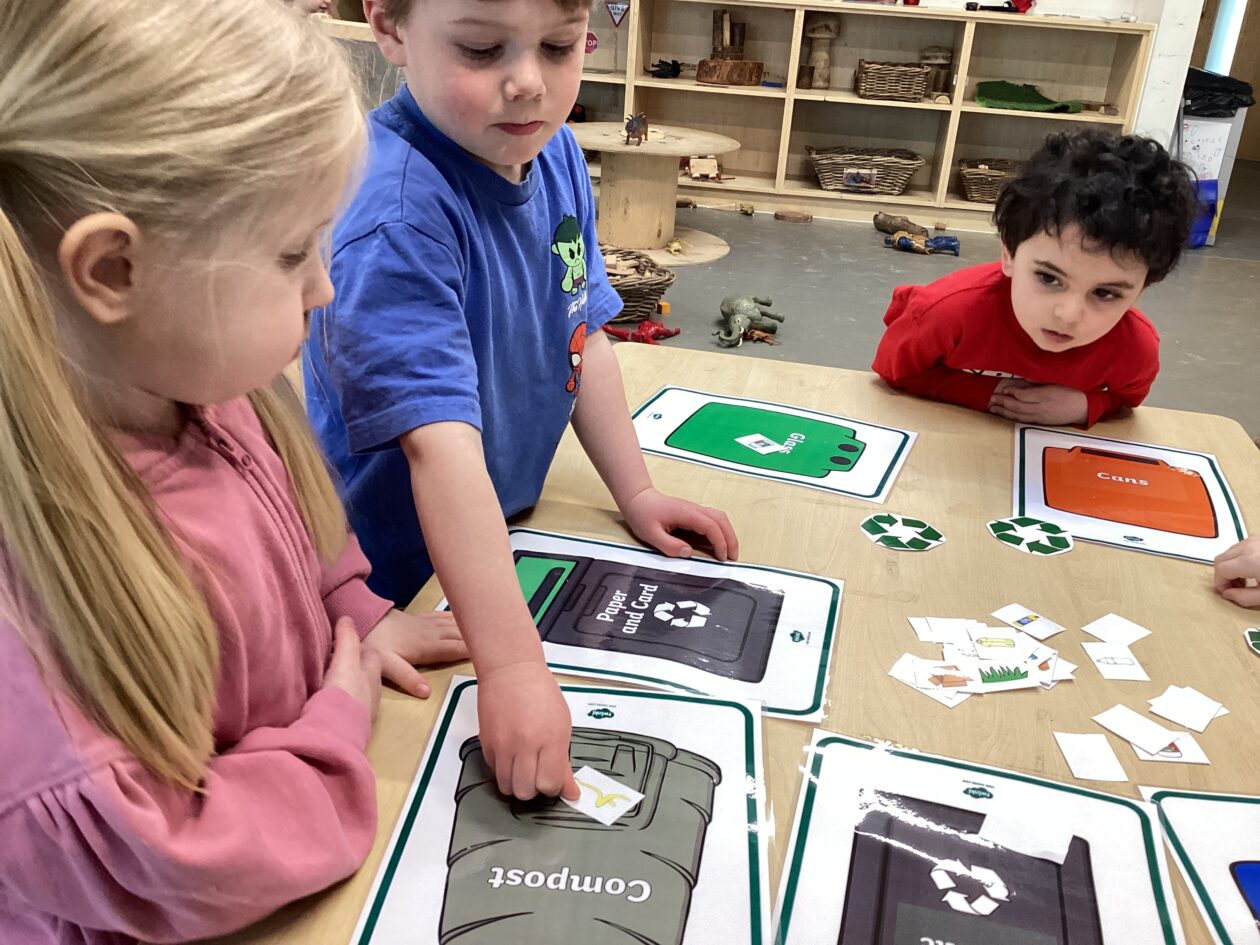
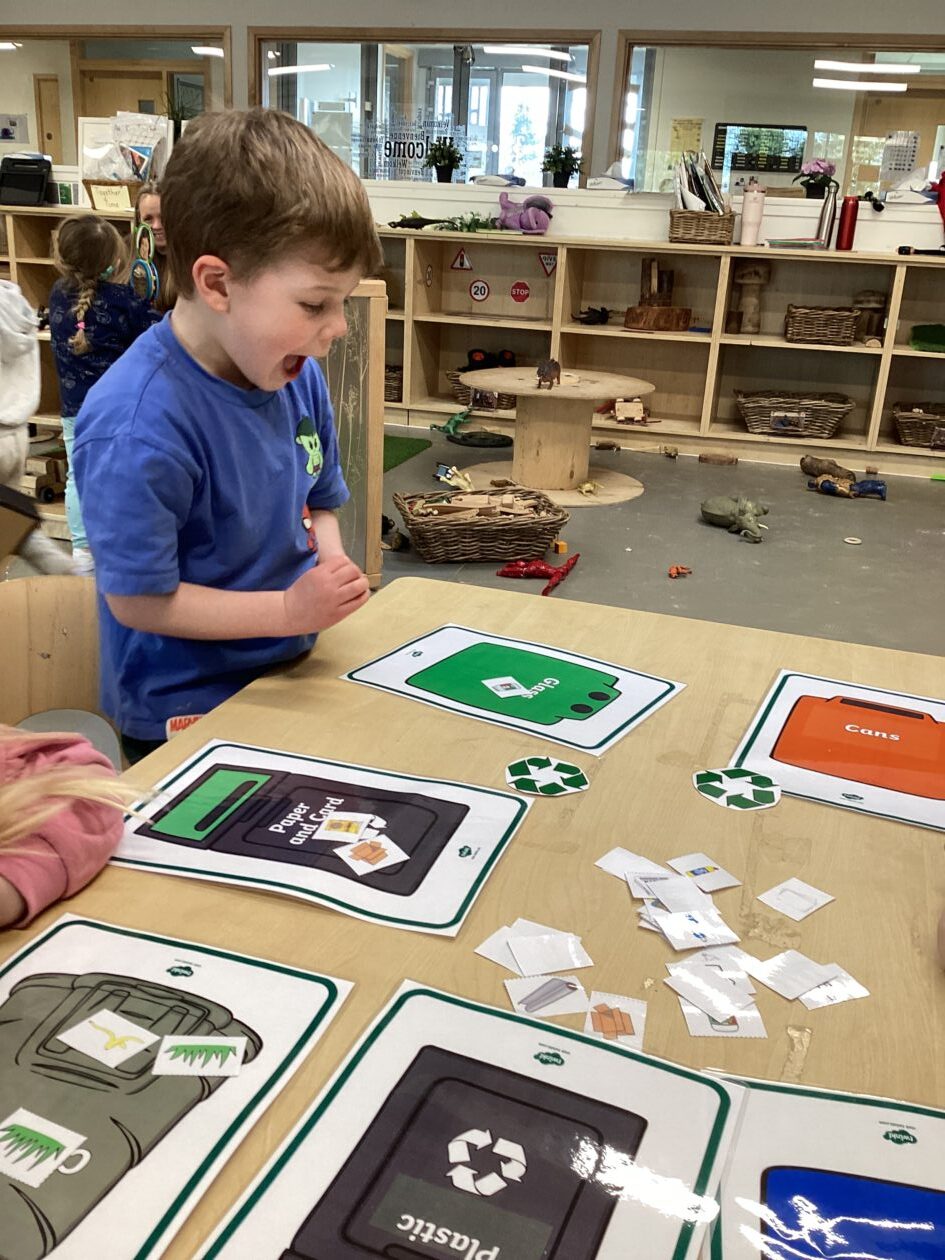
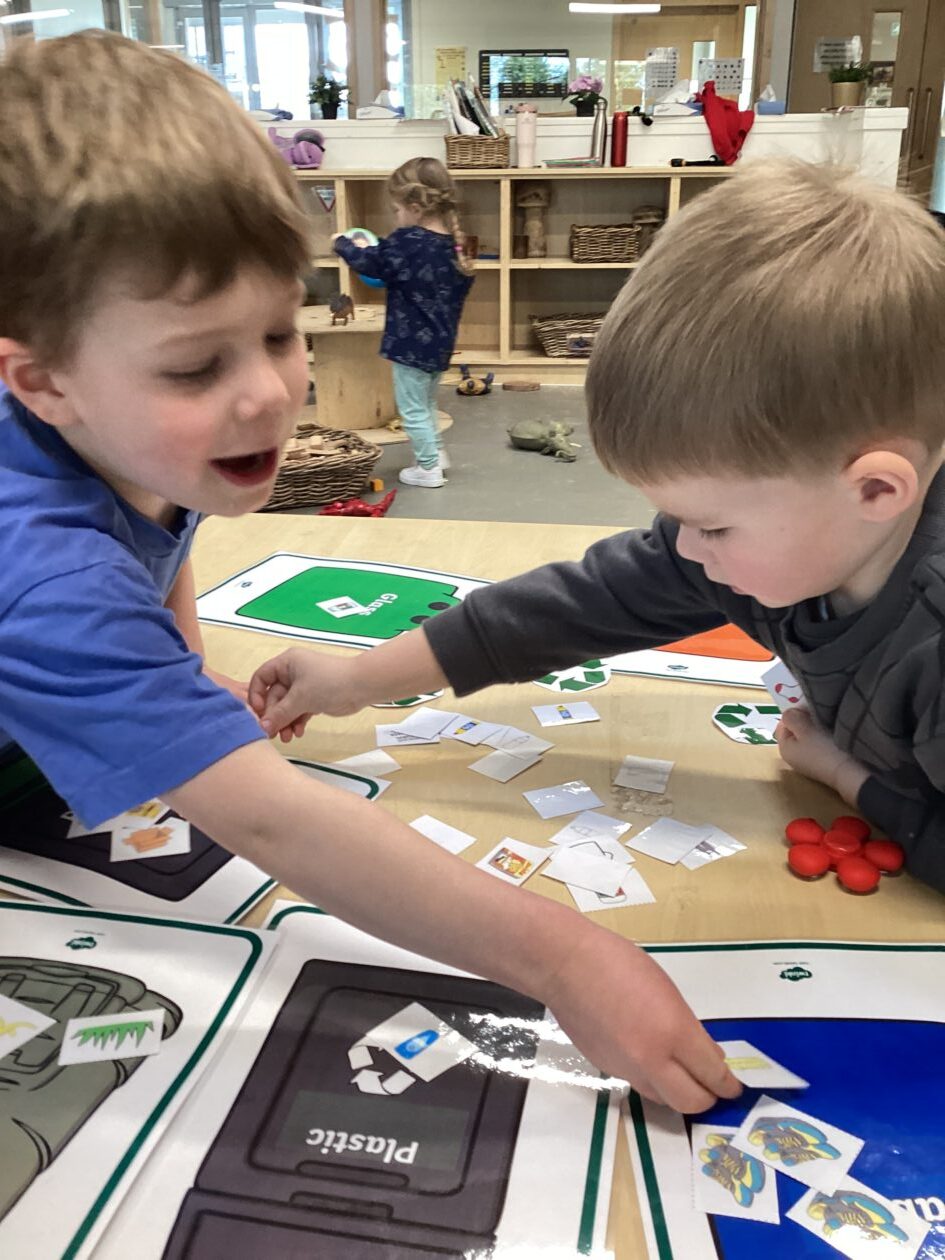
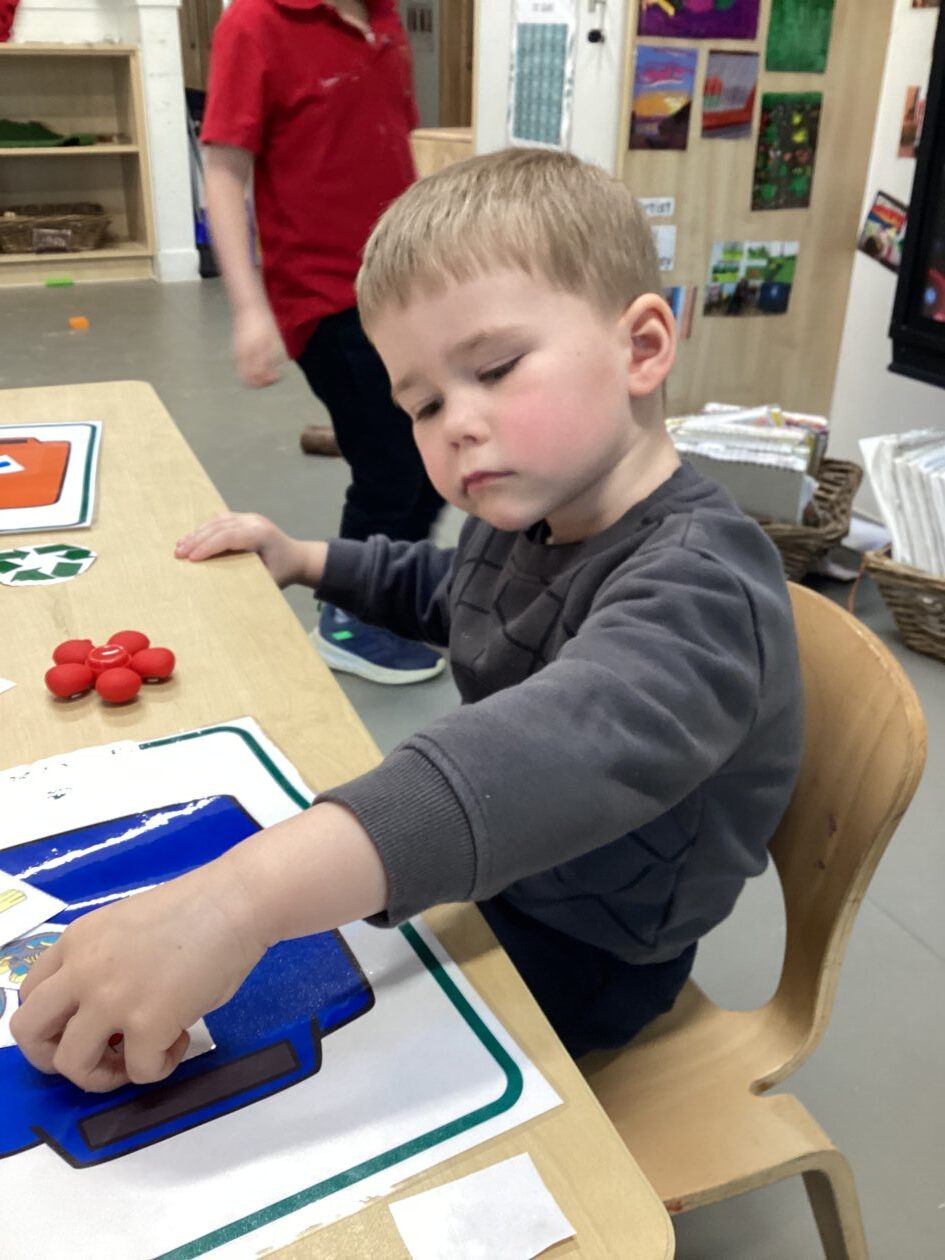
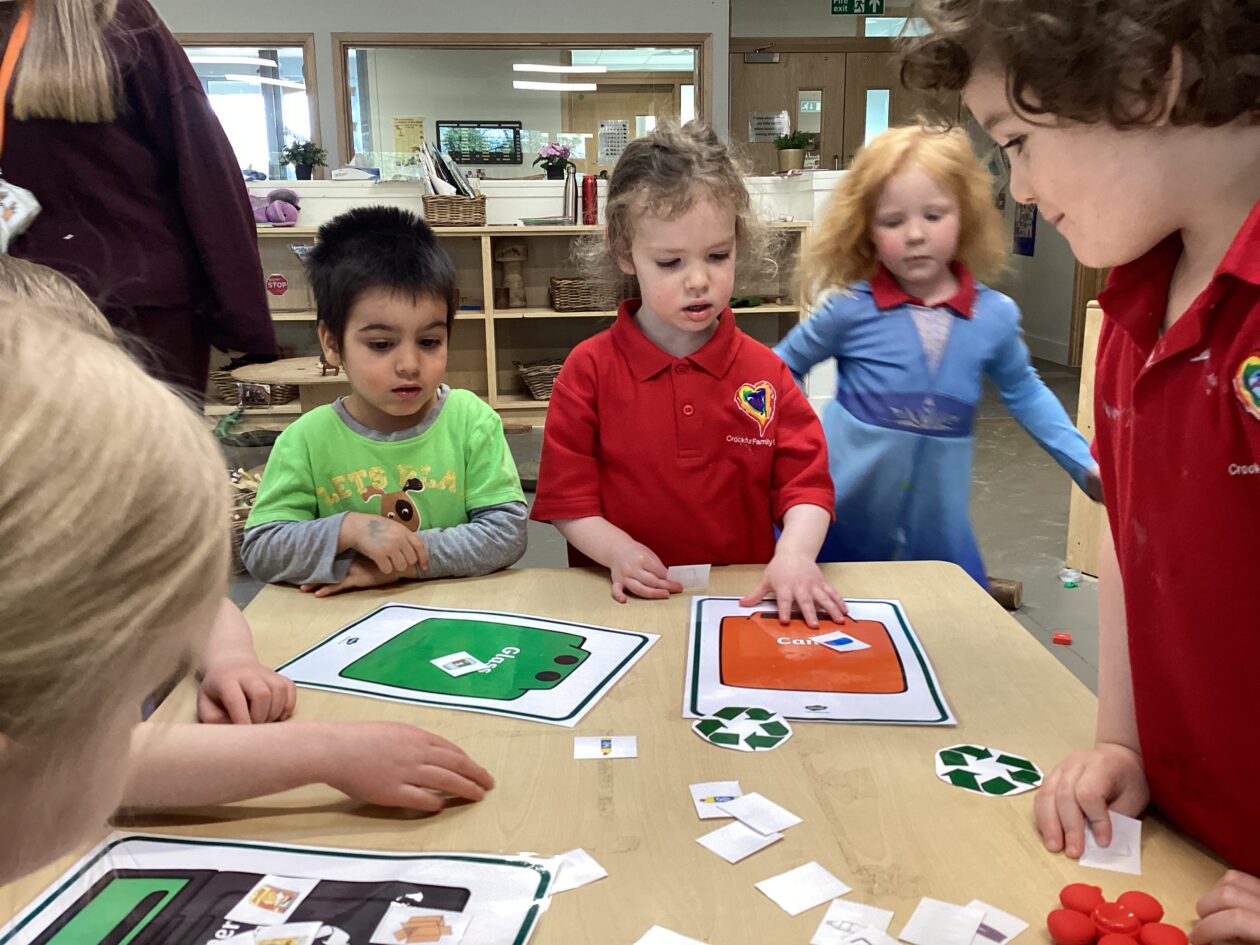
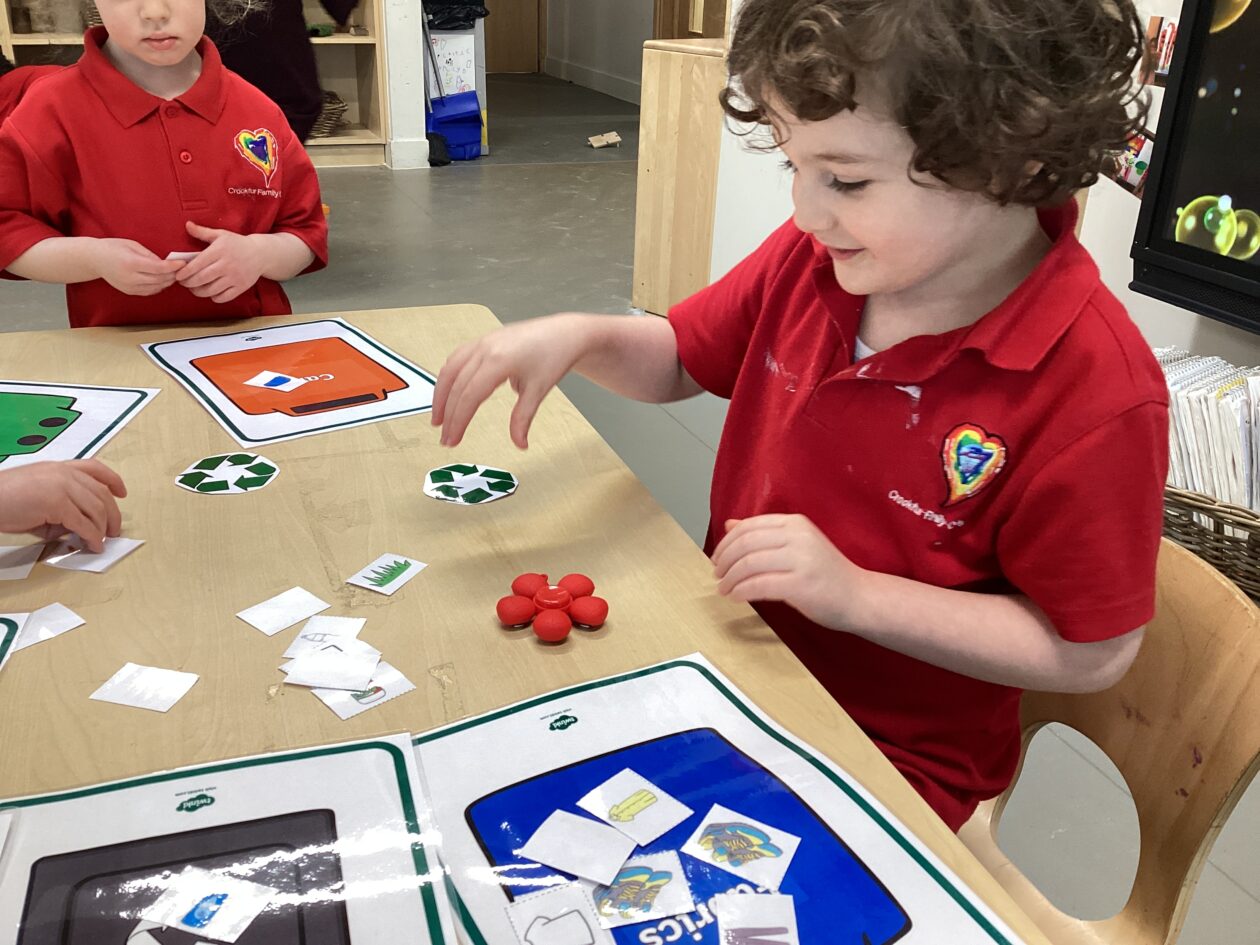
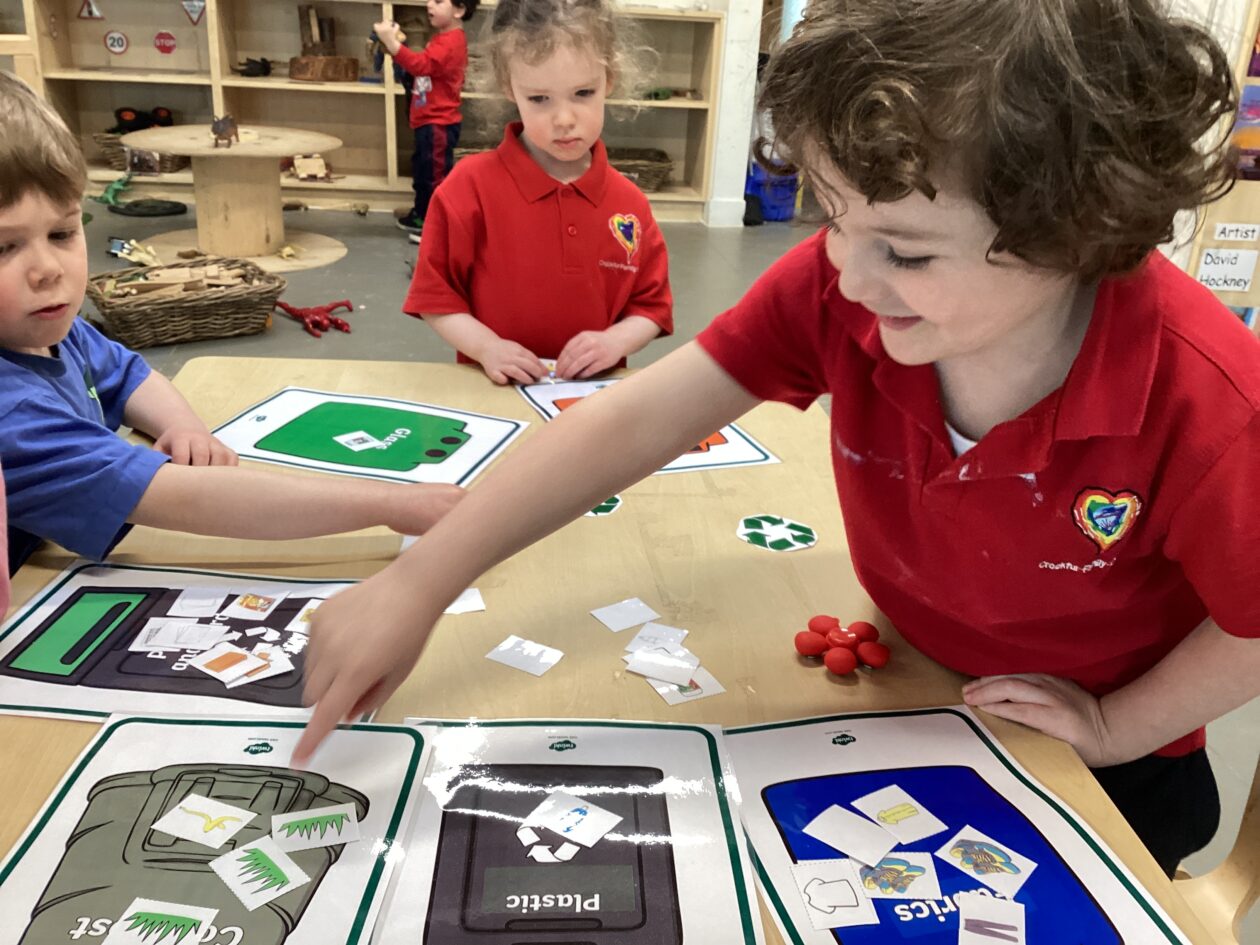
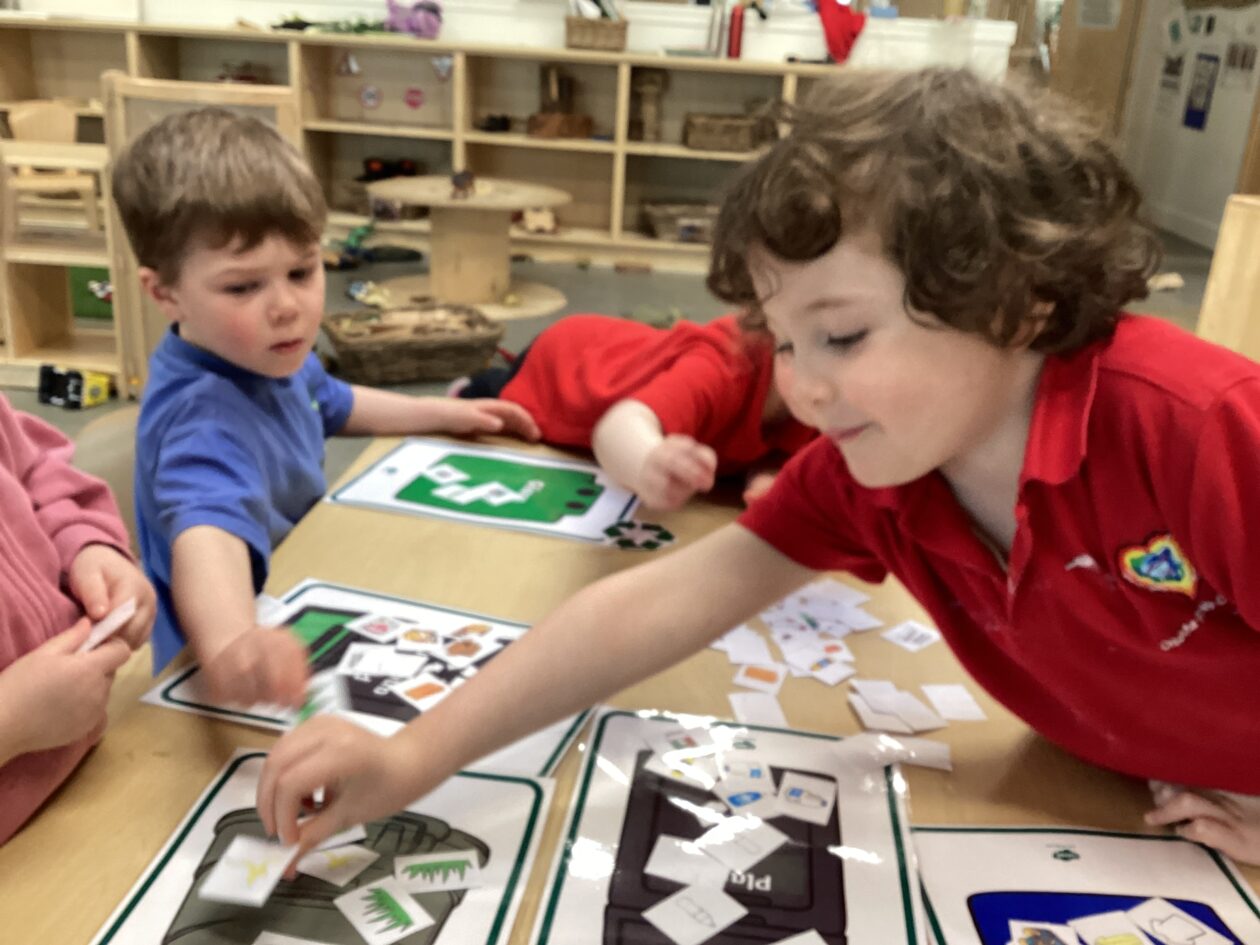
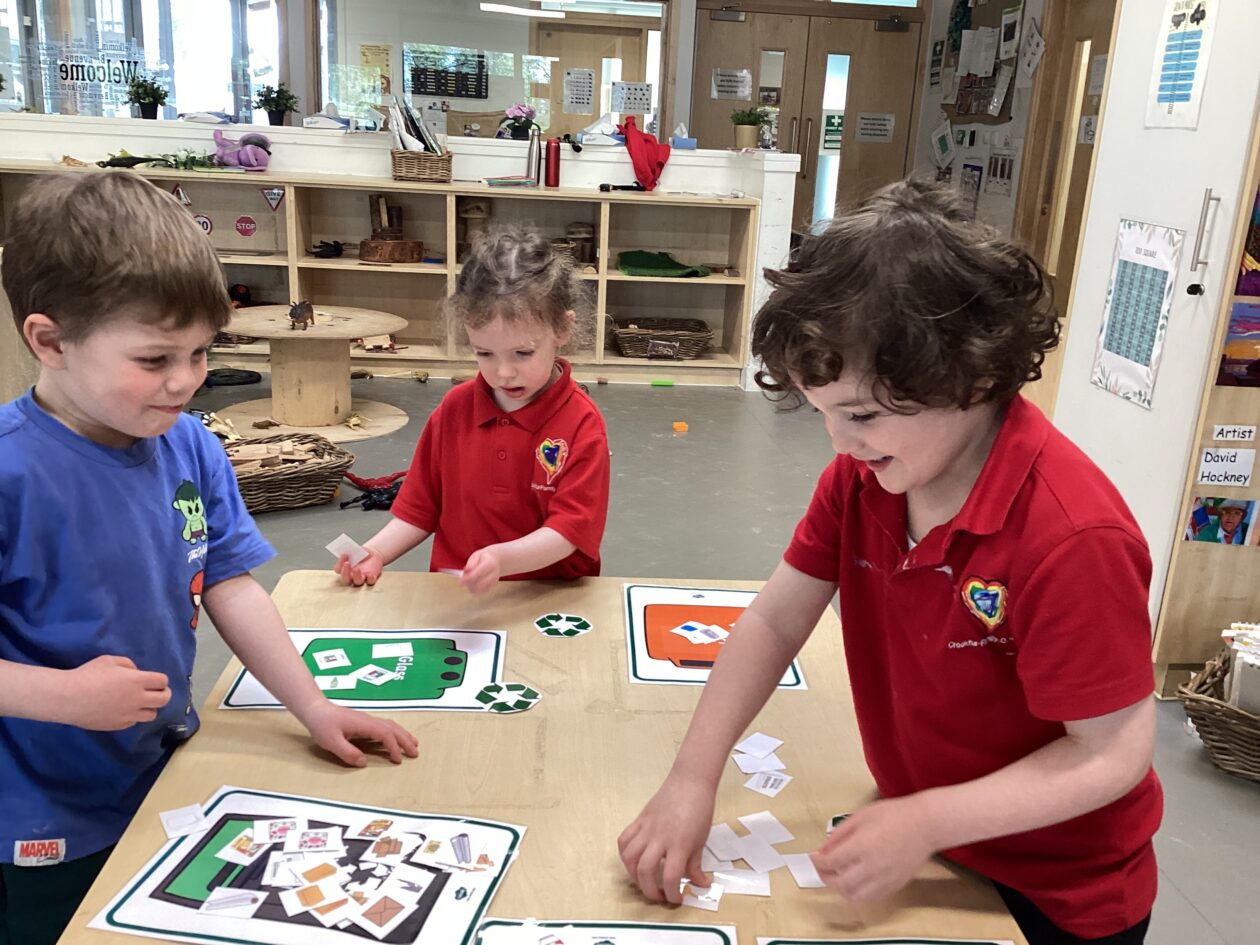
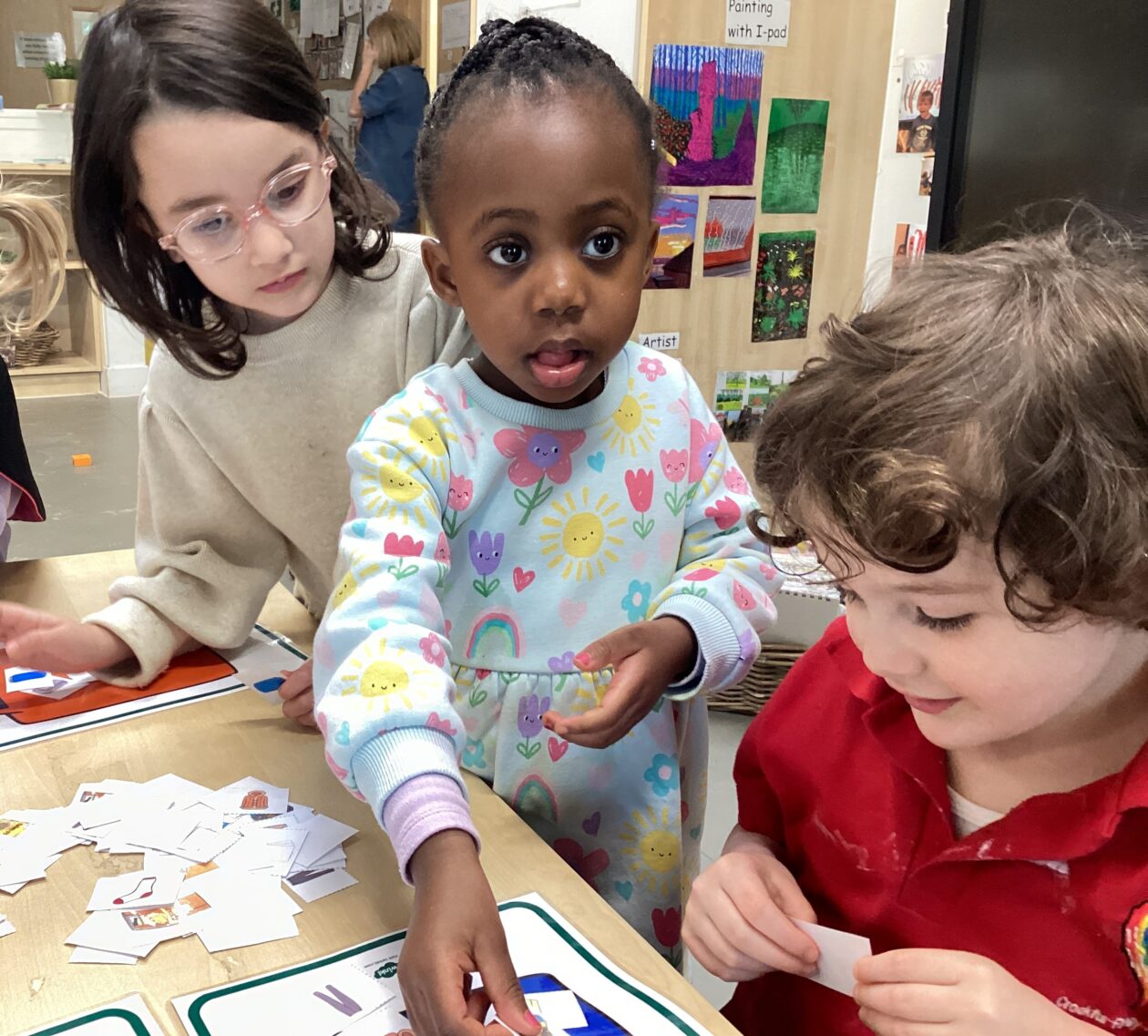
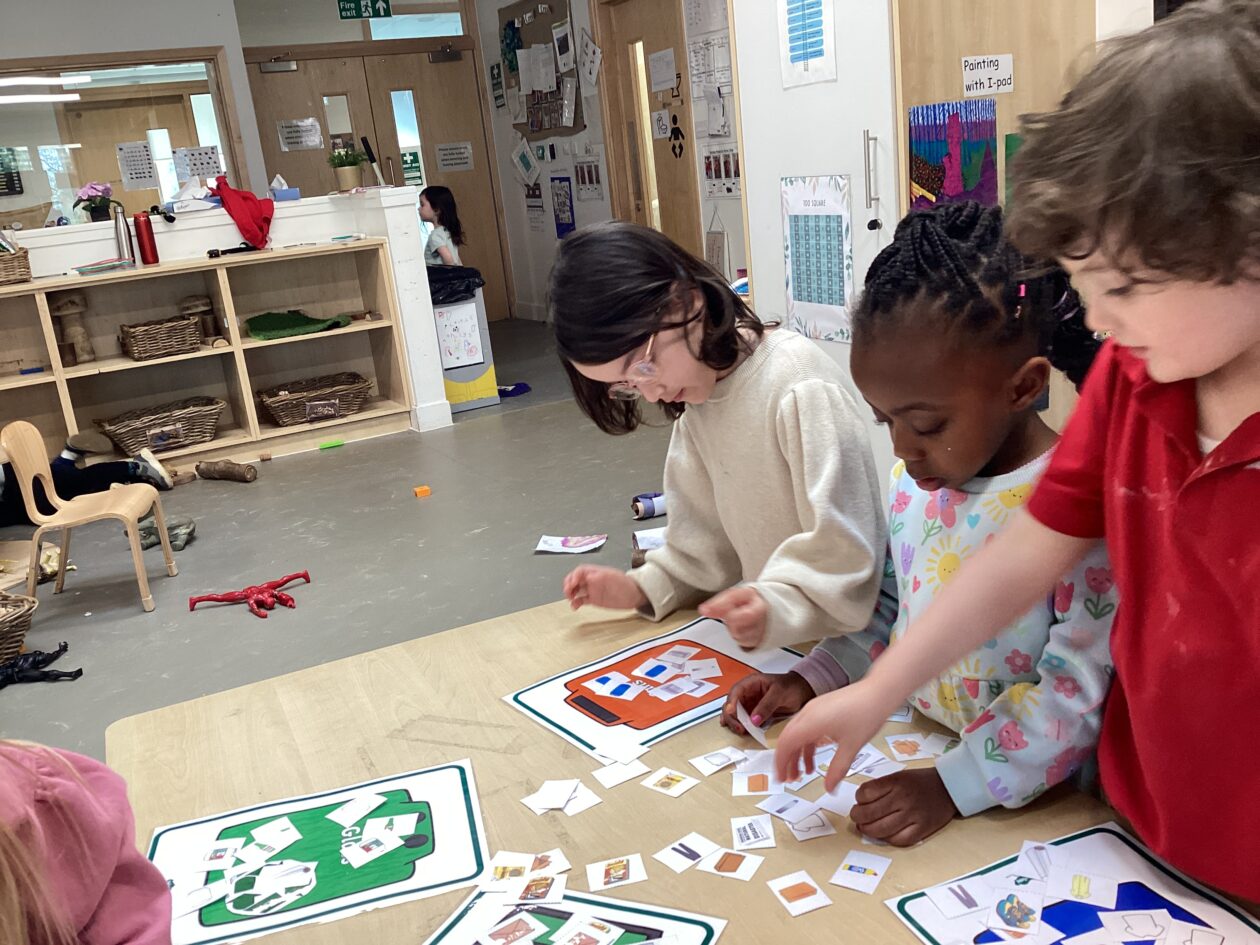
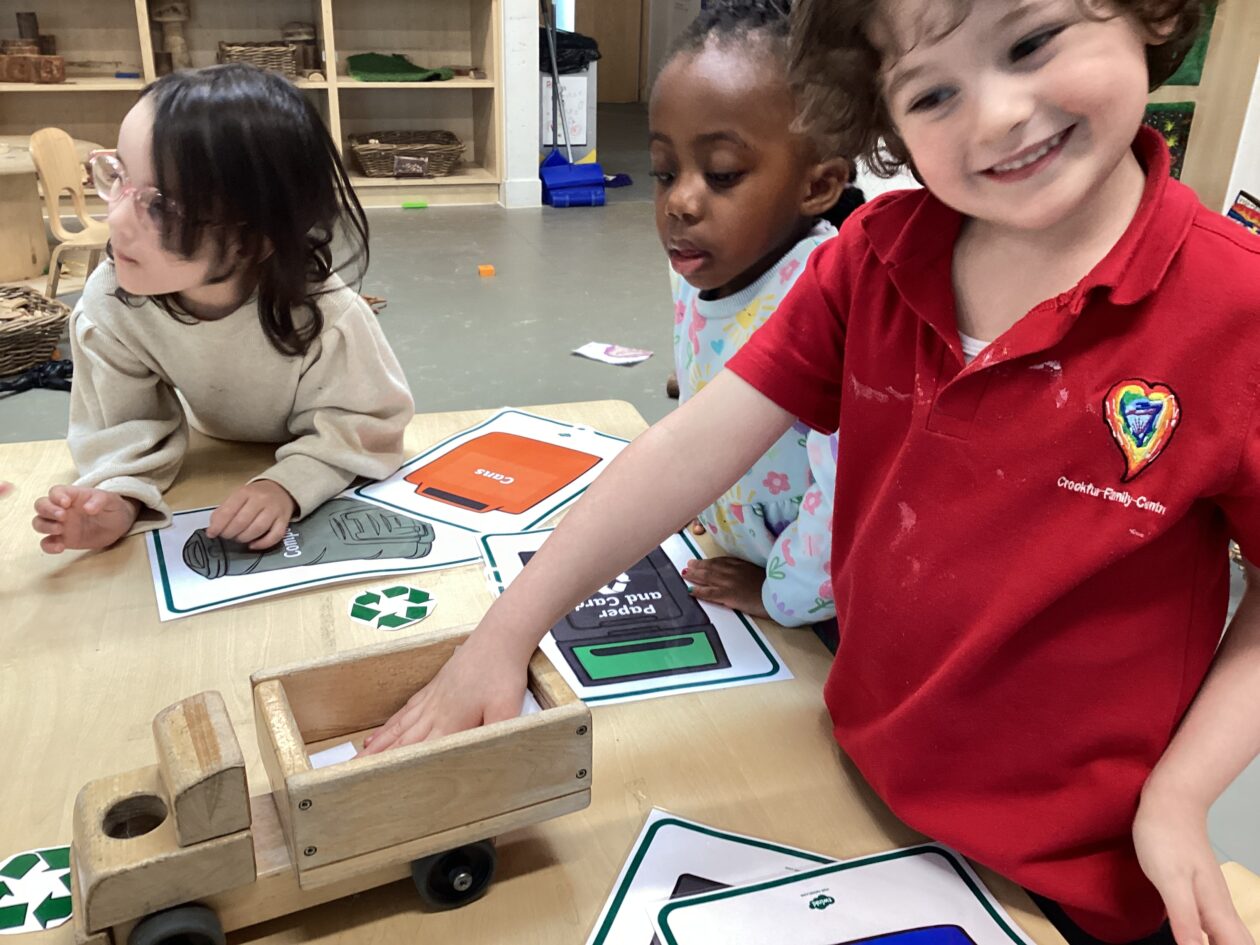
This week we have been focusing on recycling as on Wednesday it was “Global Recycling Day”. We have had discussions surrounding why we need to recycle and if we already recycle in our homes.
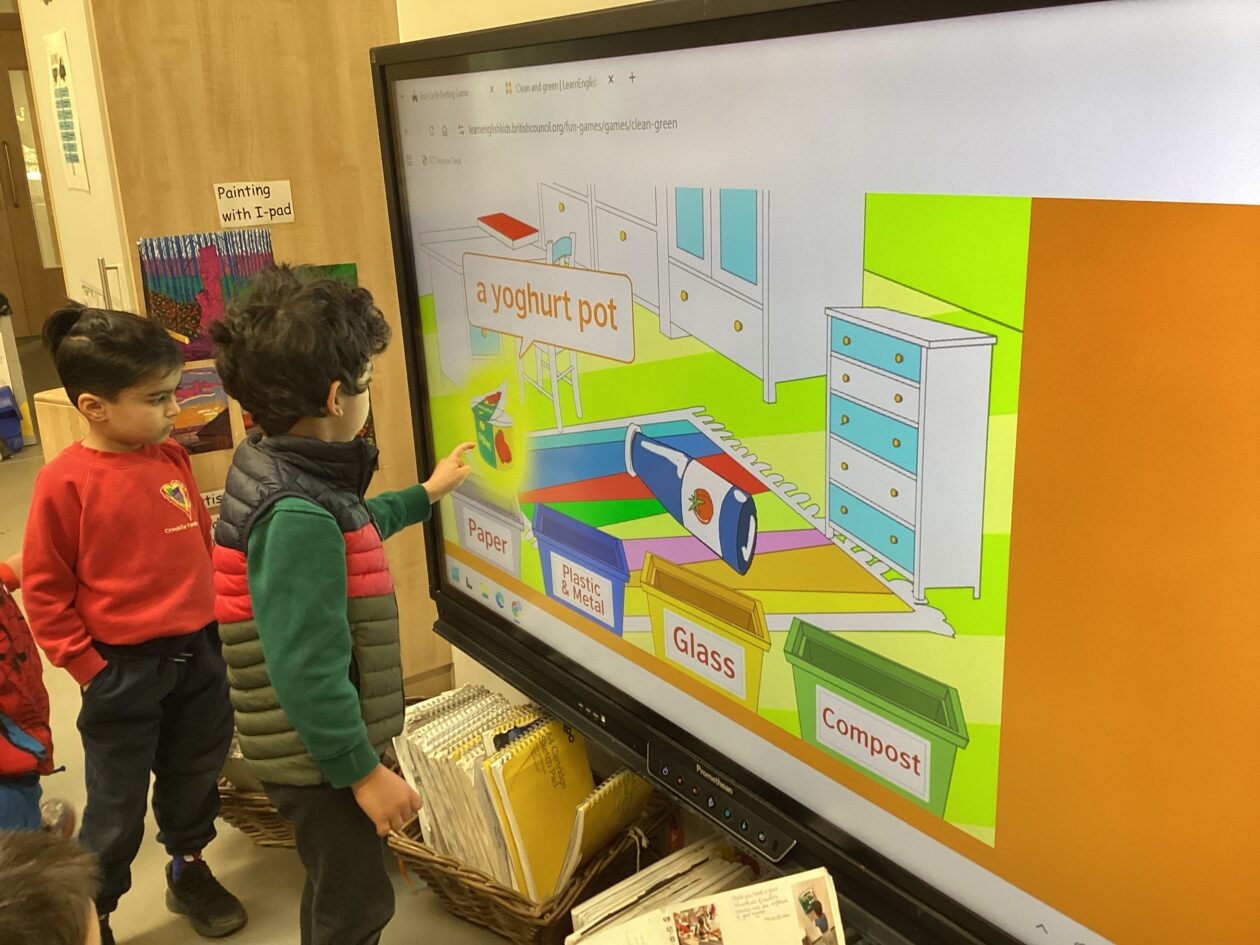
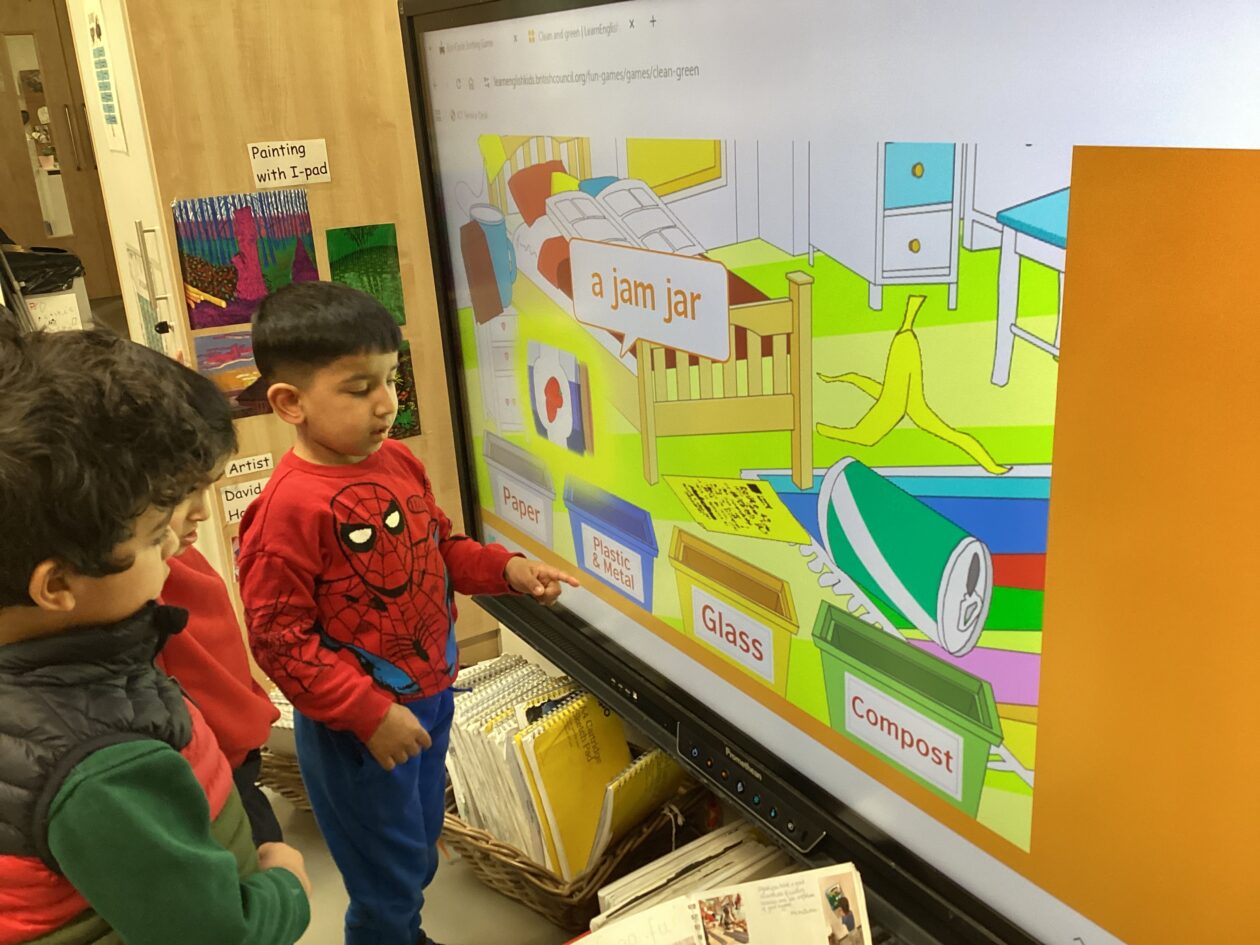
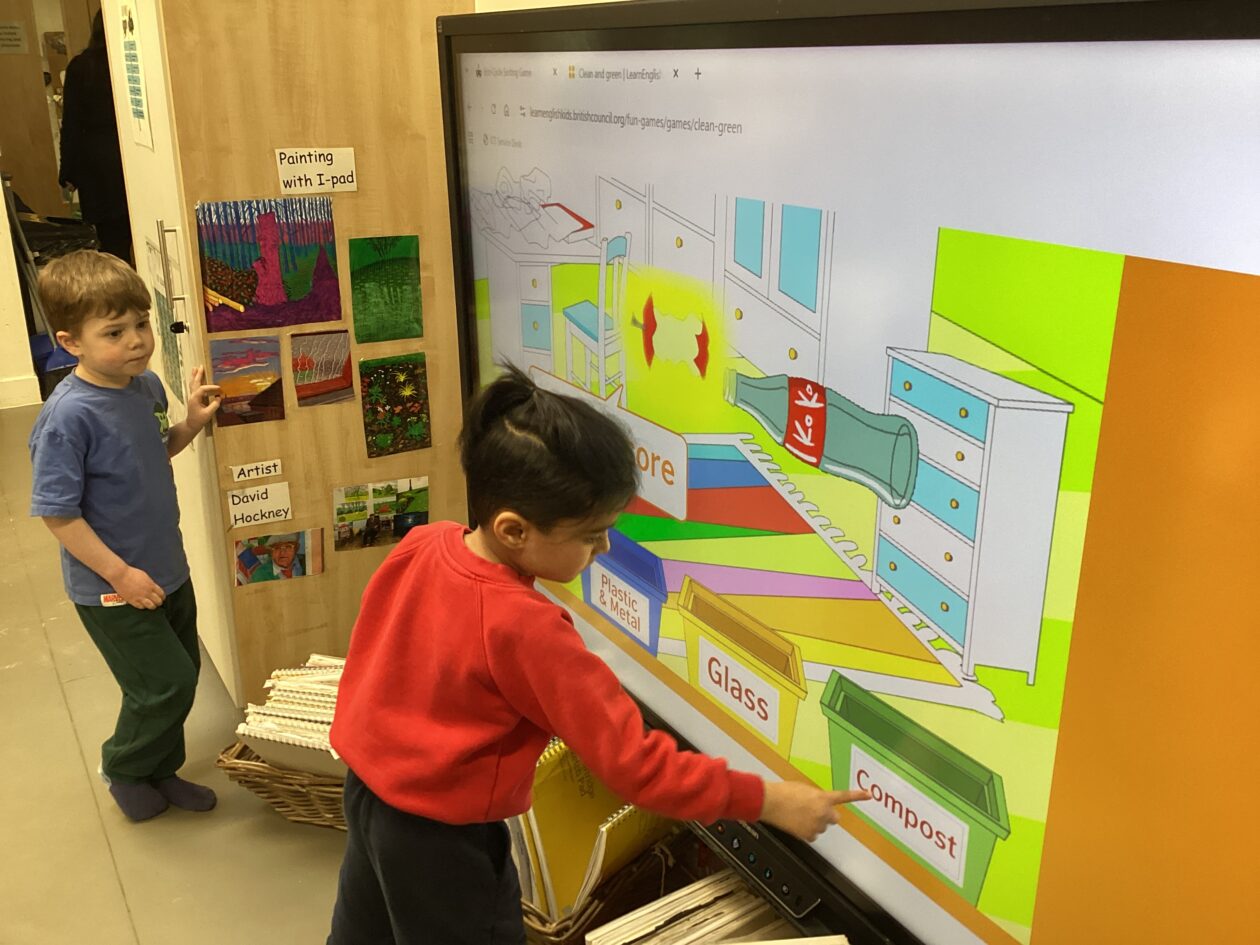
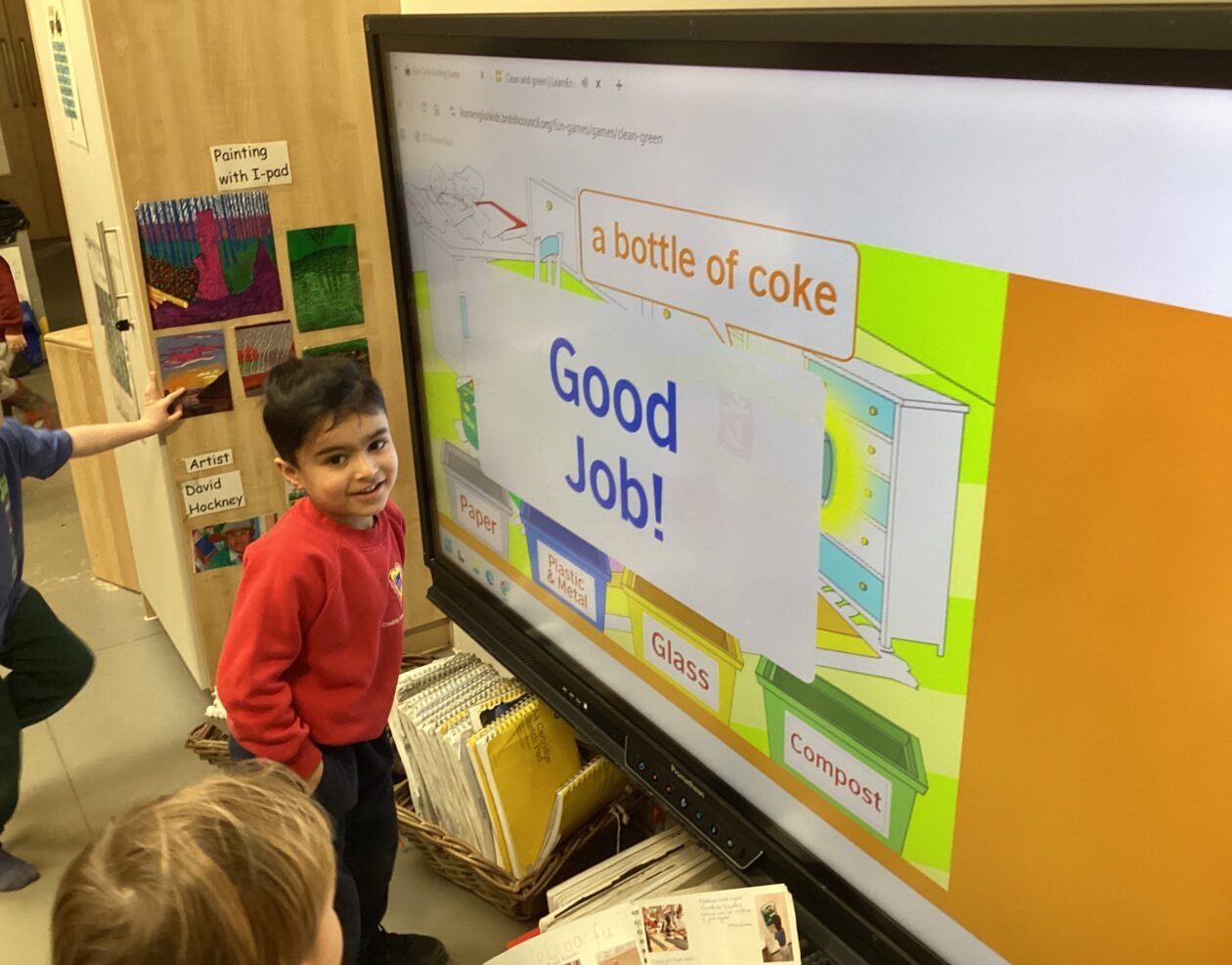
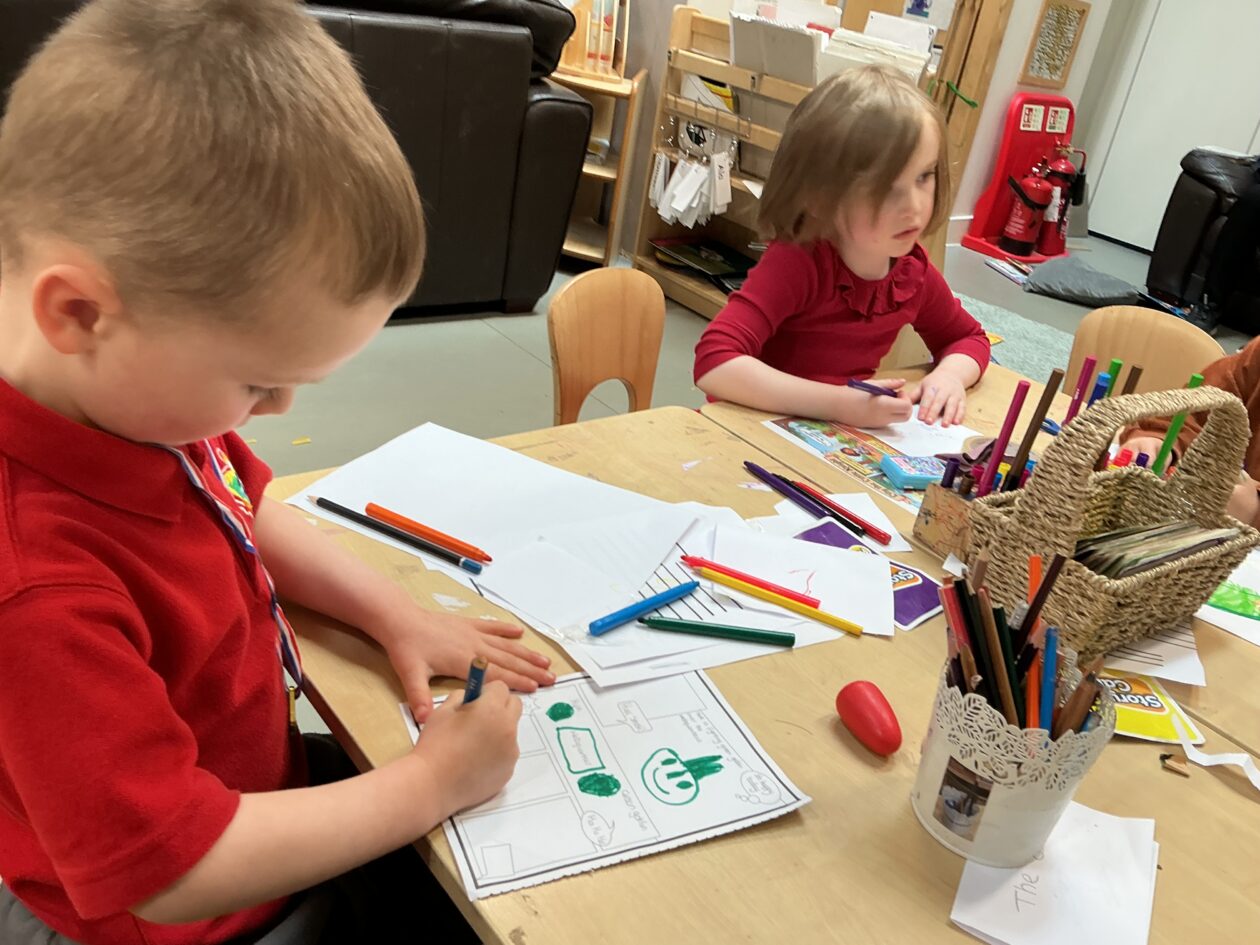
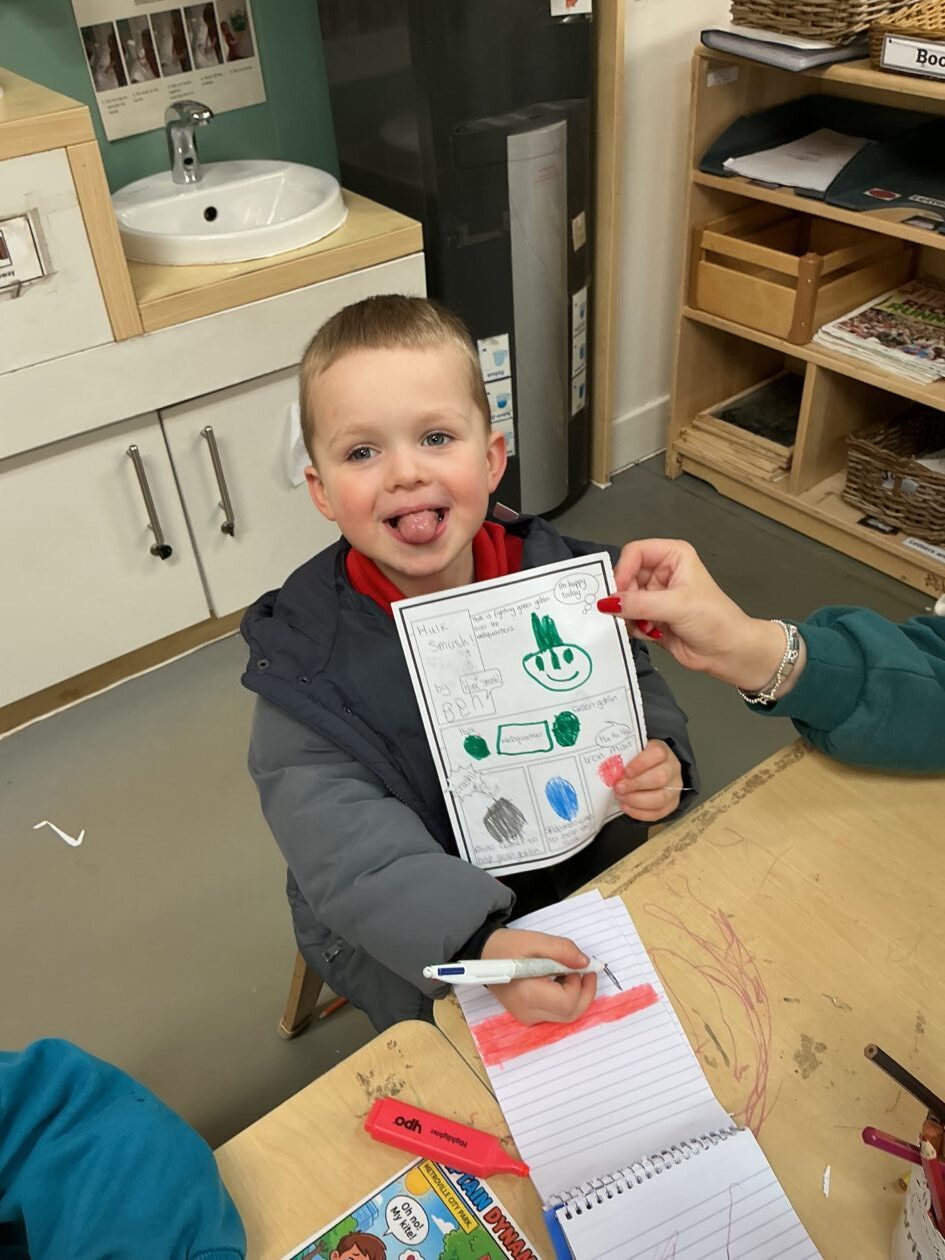
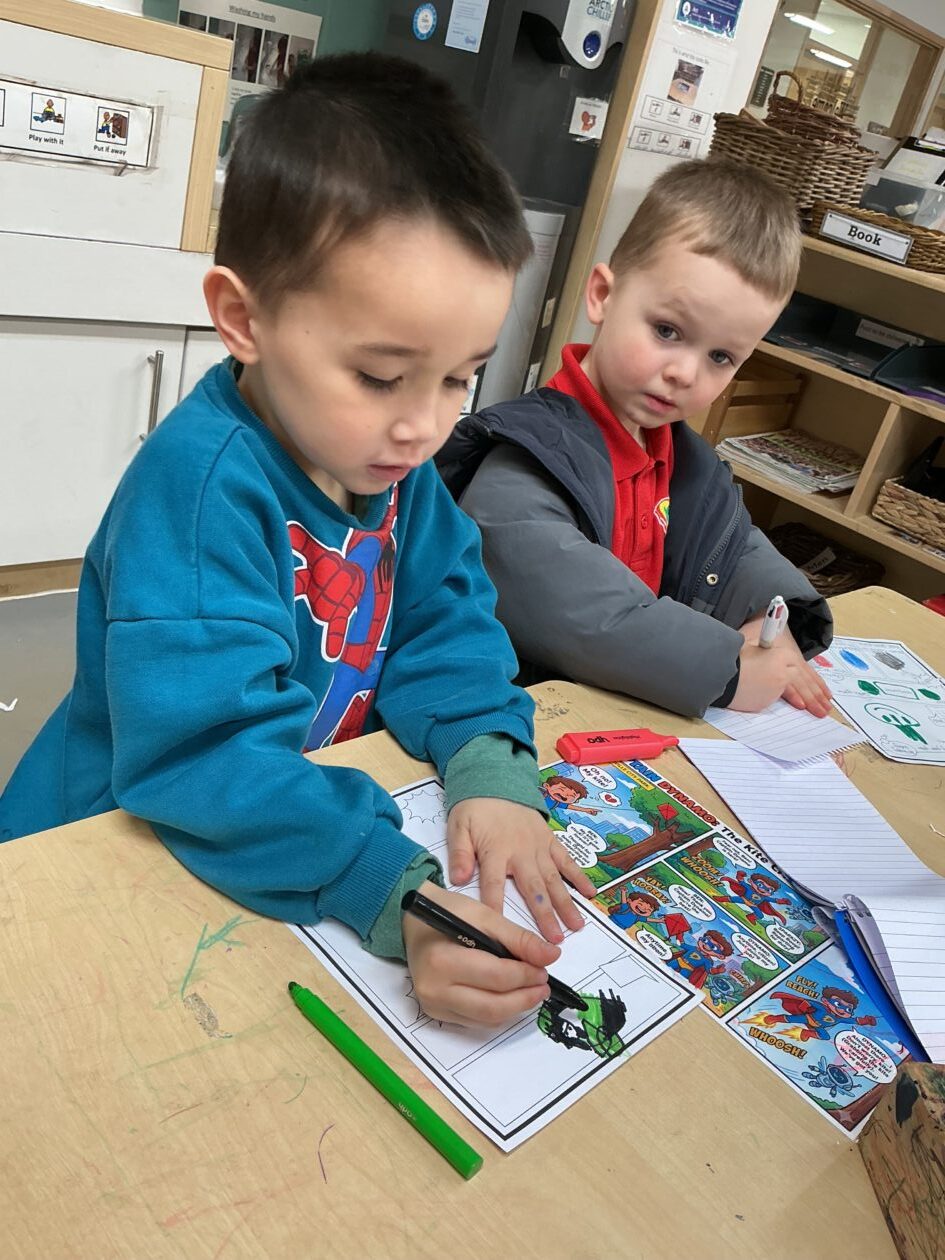
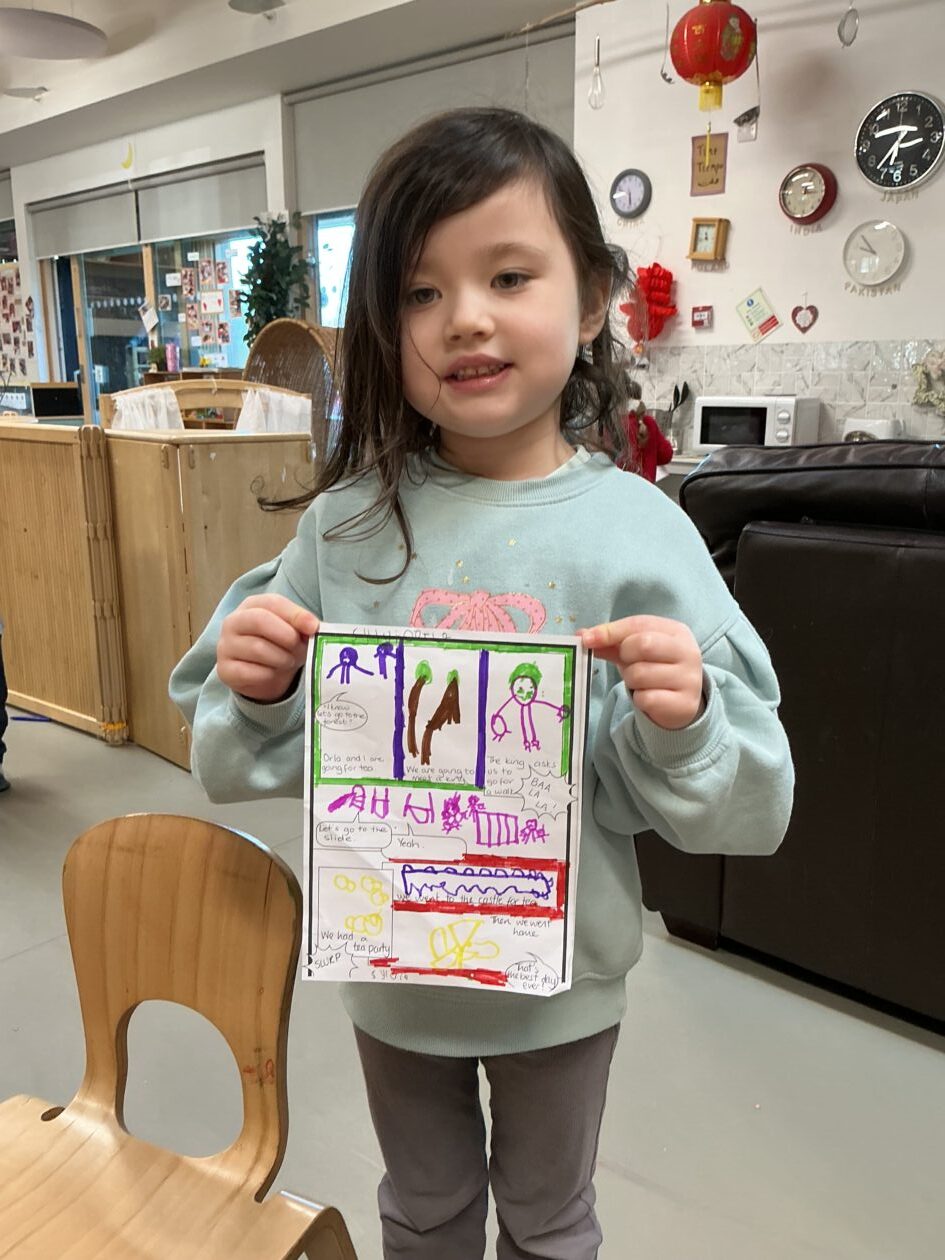
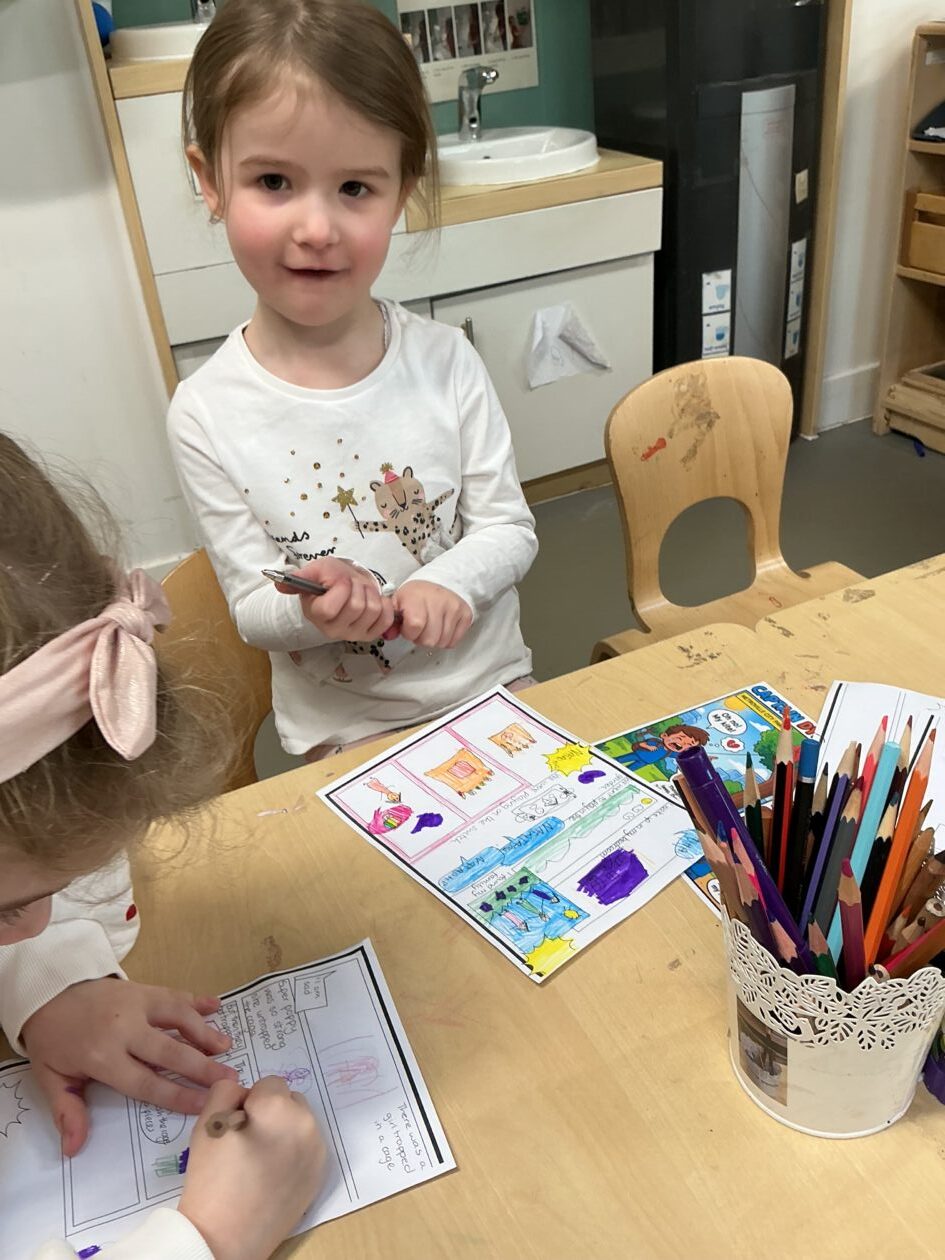
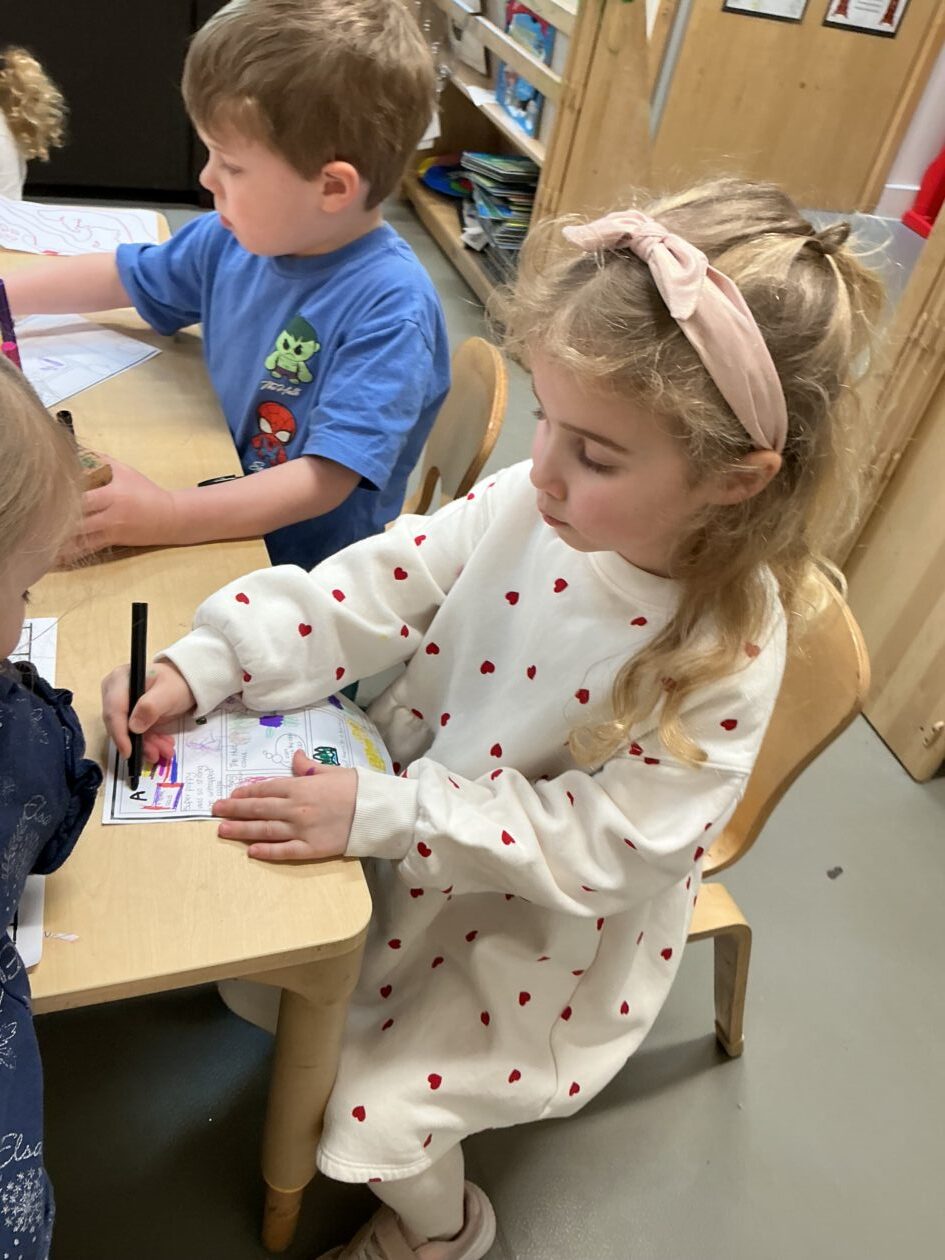
This week in the literacy area we have been exploring comics and creating our own comics. The children have been design and creating their own short stories to add to the comics. We have been exploring the difference between speech bubbles, thought bubbles and sound bubbles. This has encouraged children’s creativity and imagination, make making skills and understanding of the structure of stories having a beginning, middle and end.
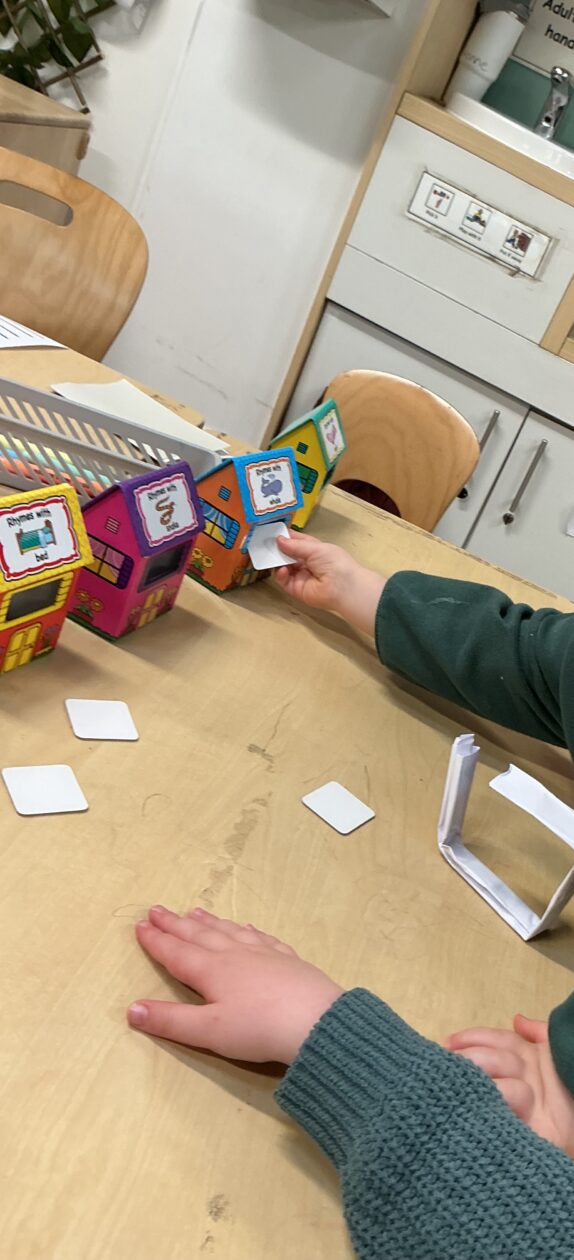
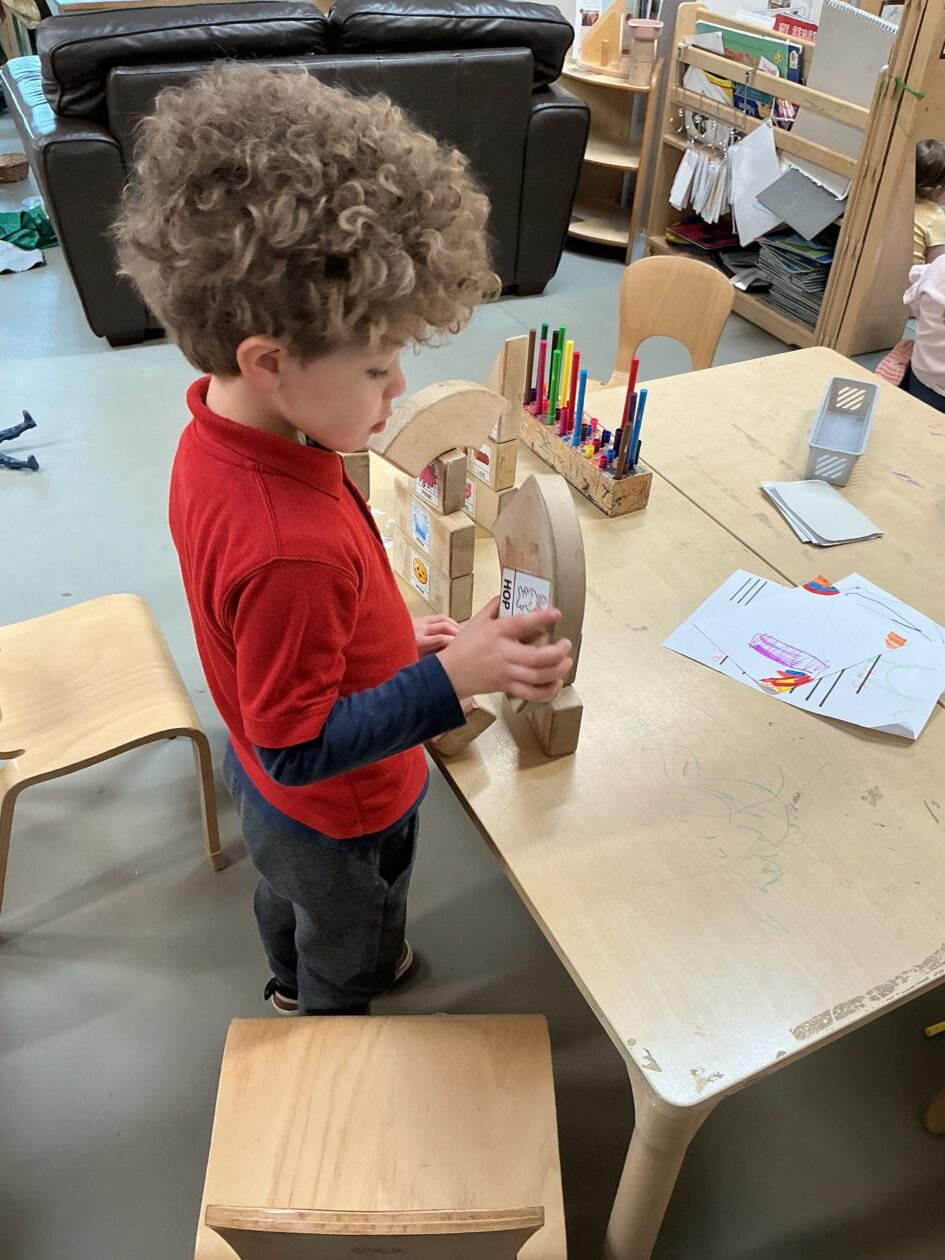
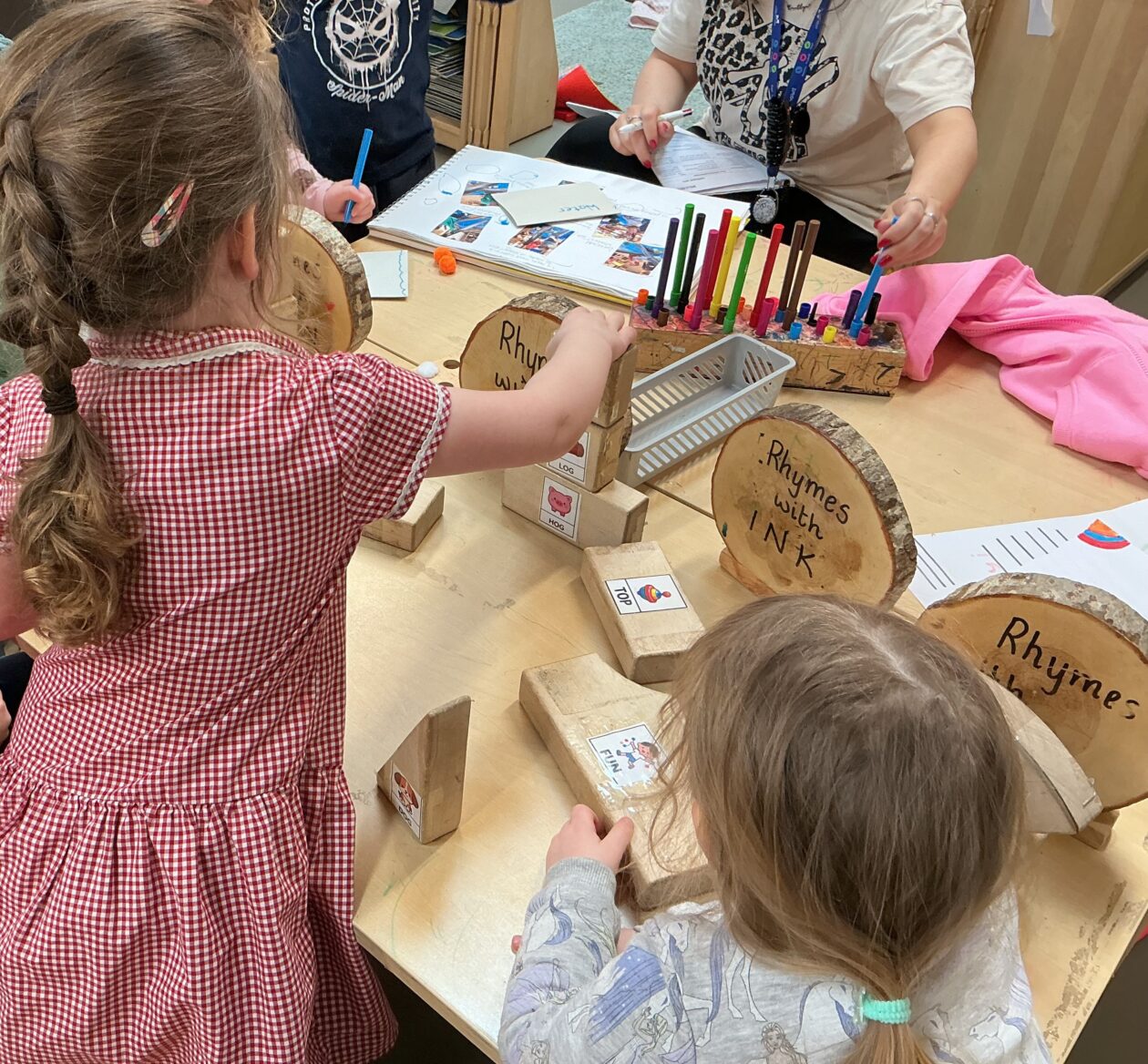
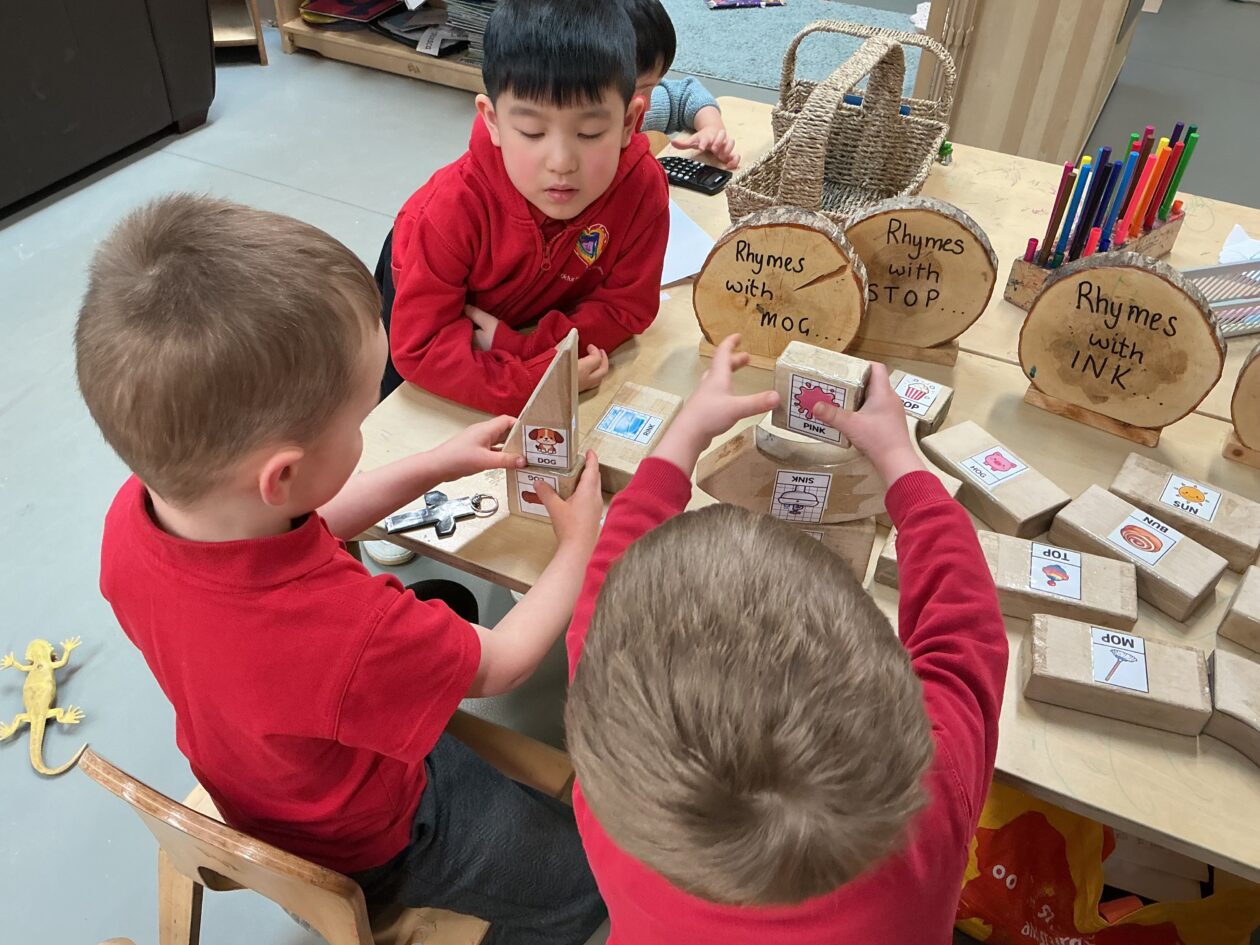
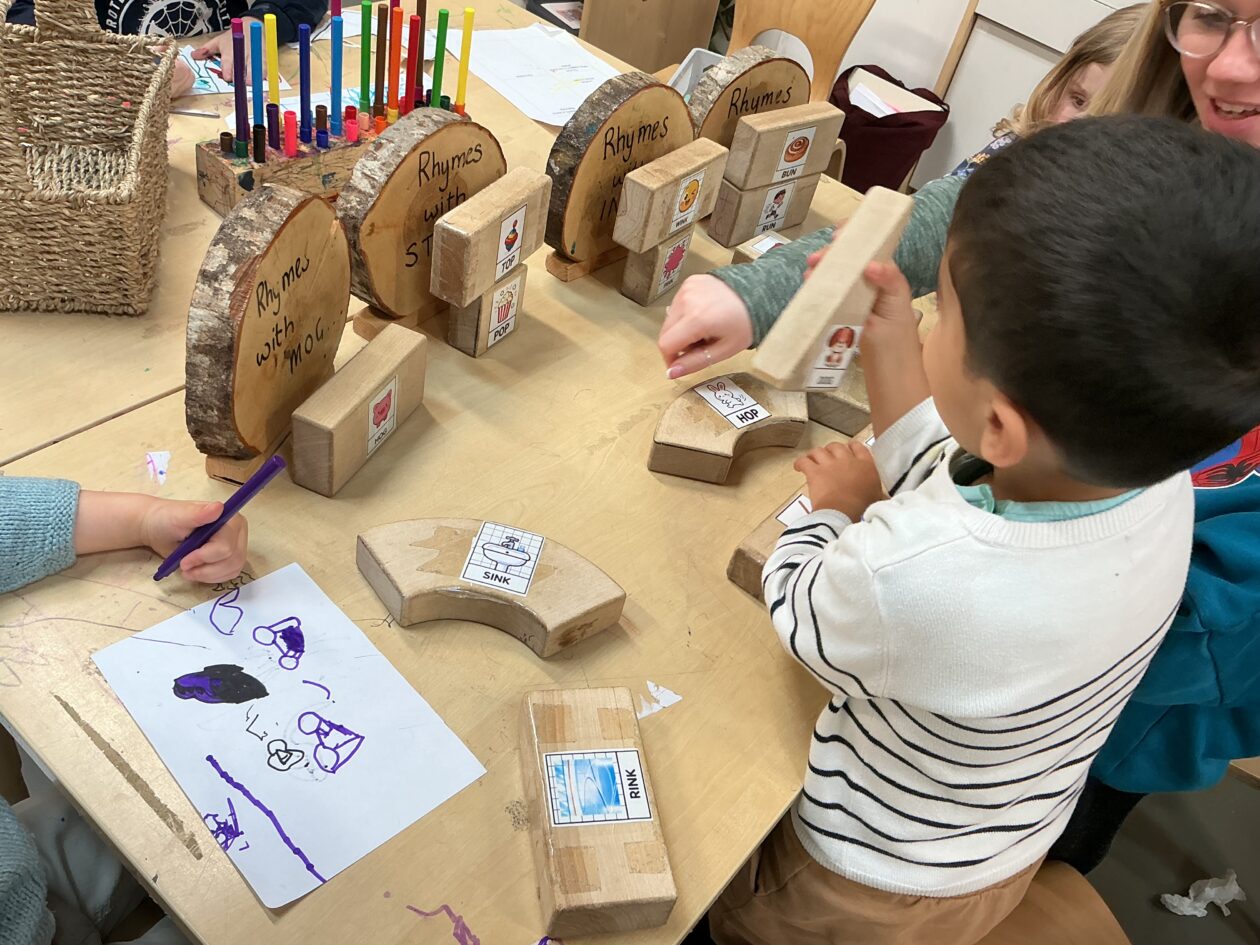
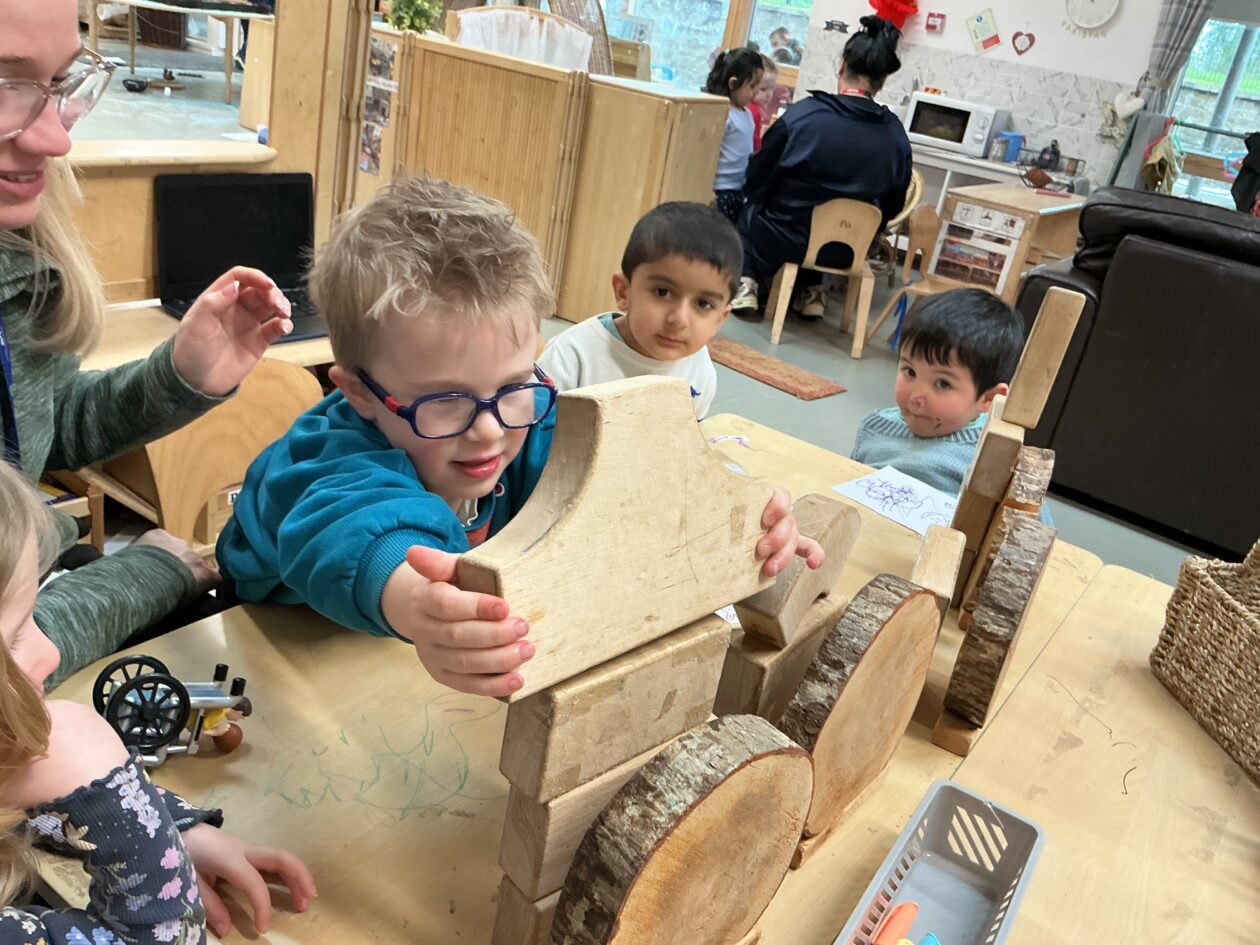
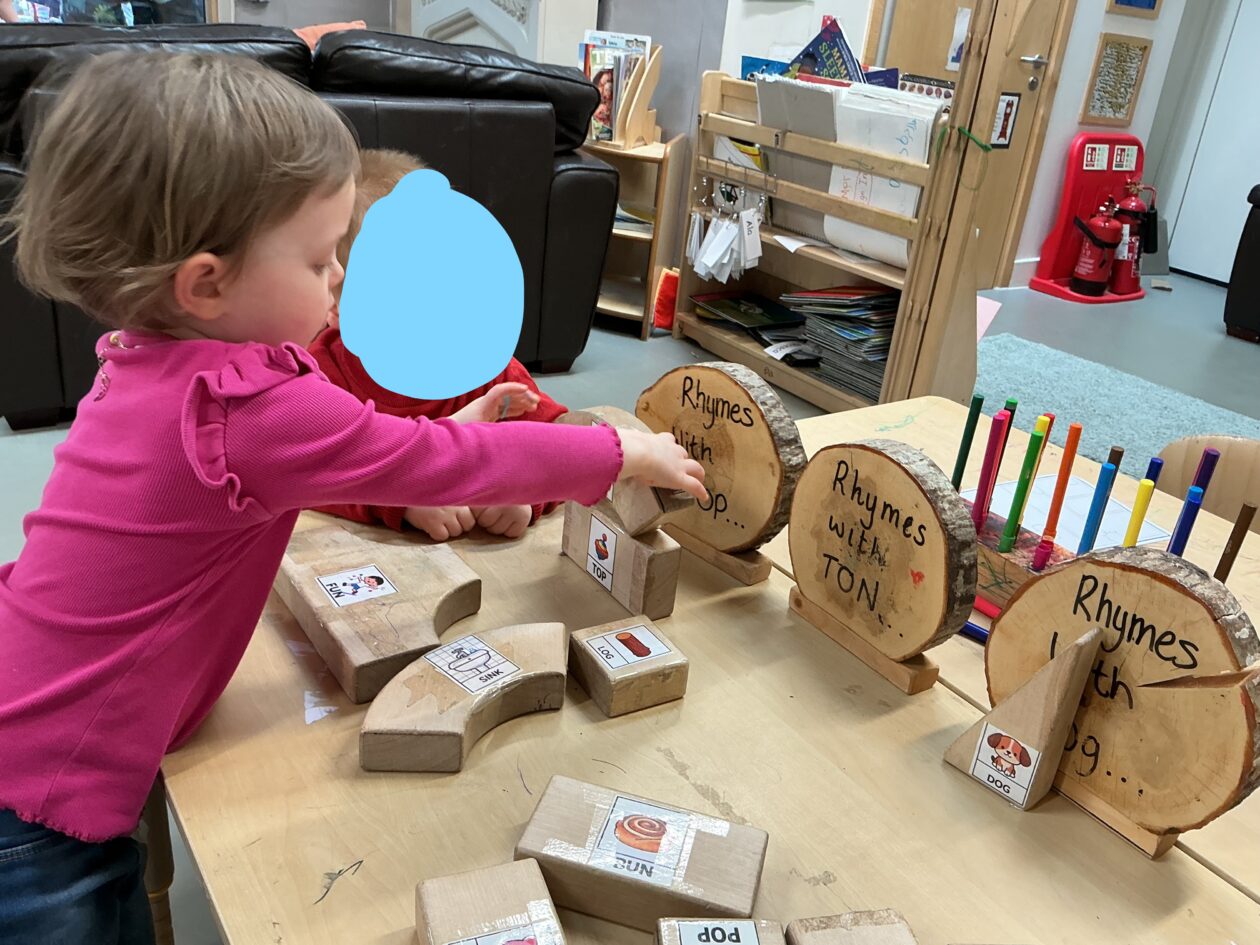
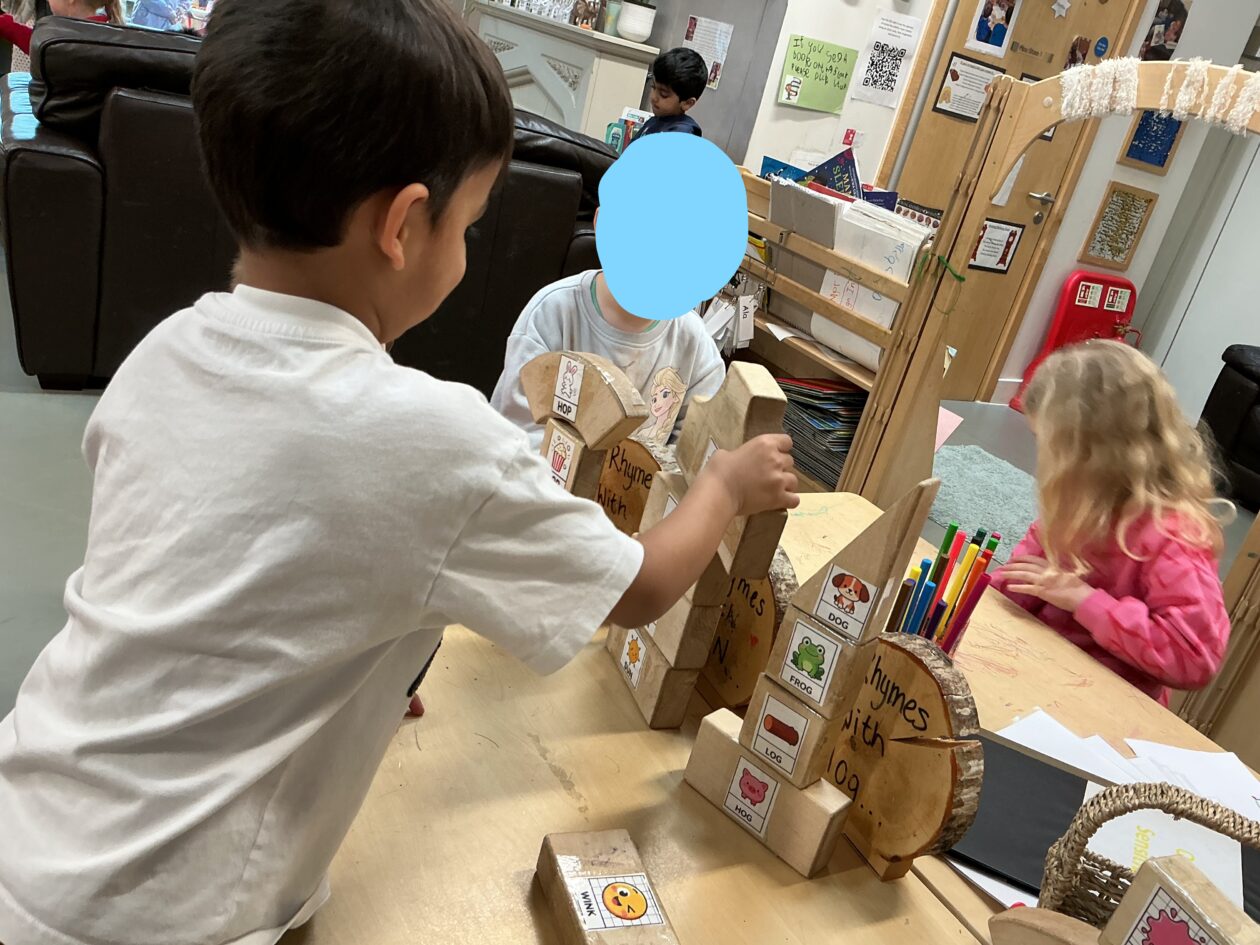
We have also been exploring rhyme through blocks and matching them to build a rhyme tower. The children have been working on listening to the different sounds in words and identifying sounds that are similar.
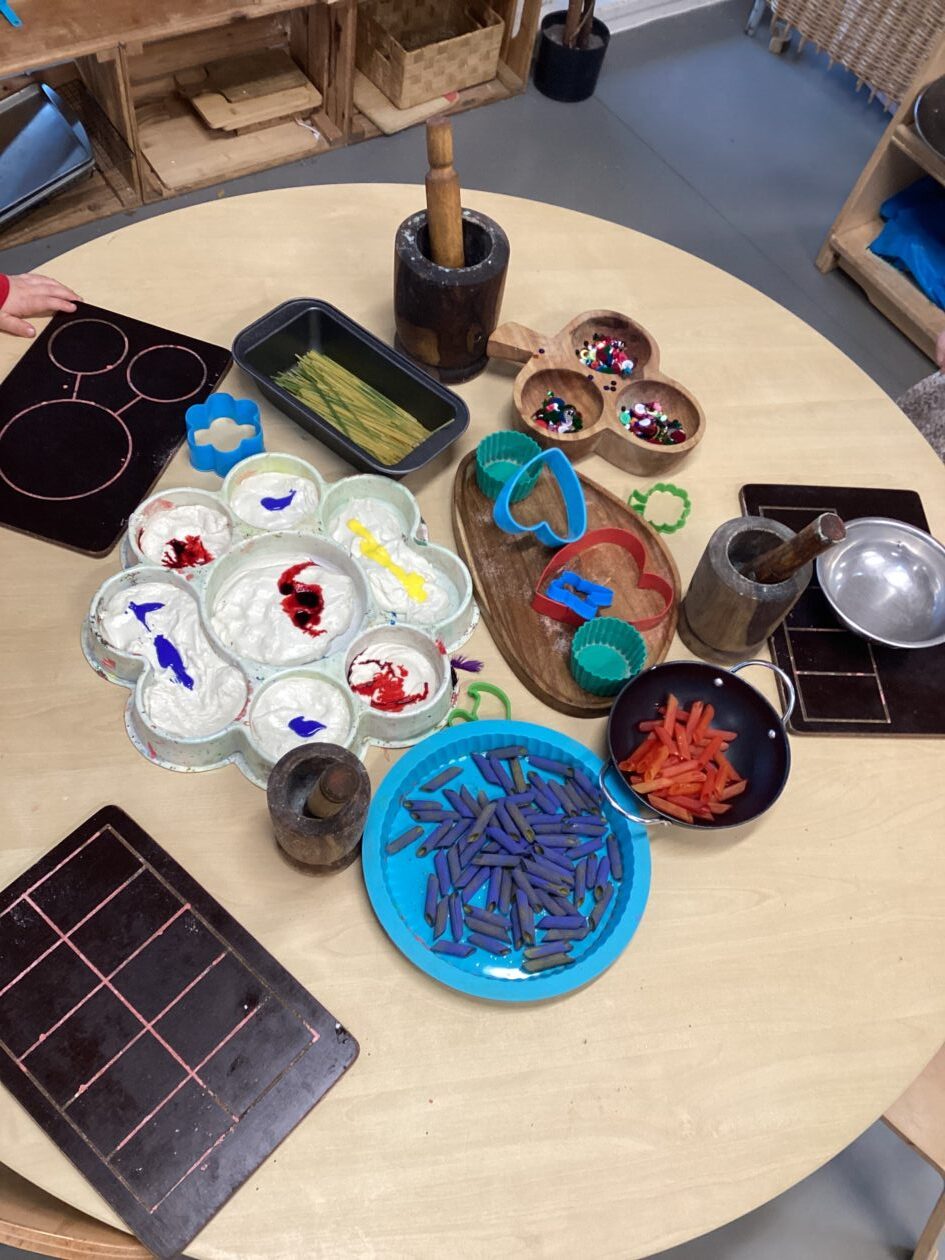
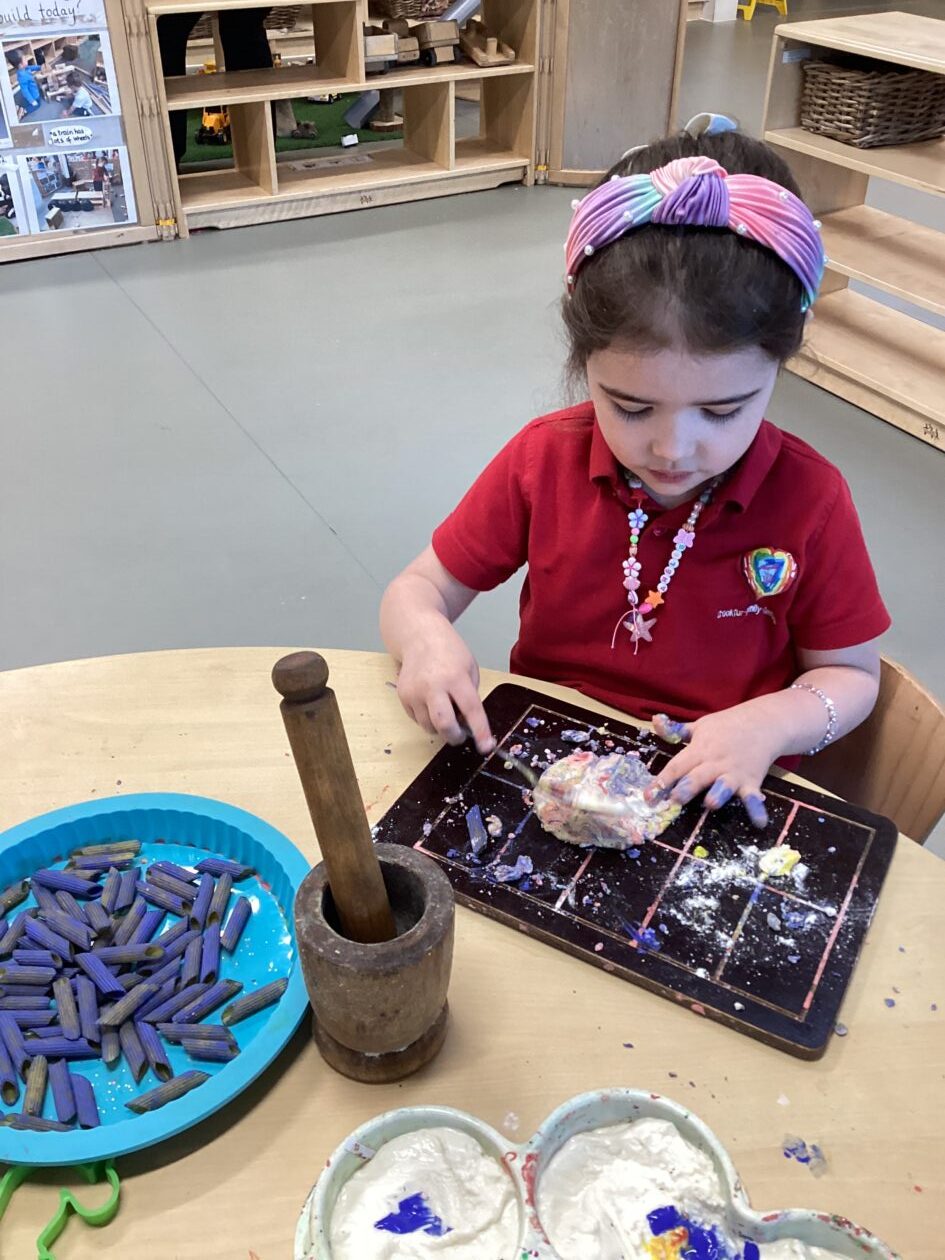
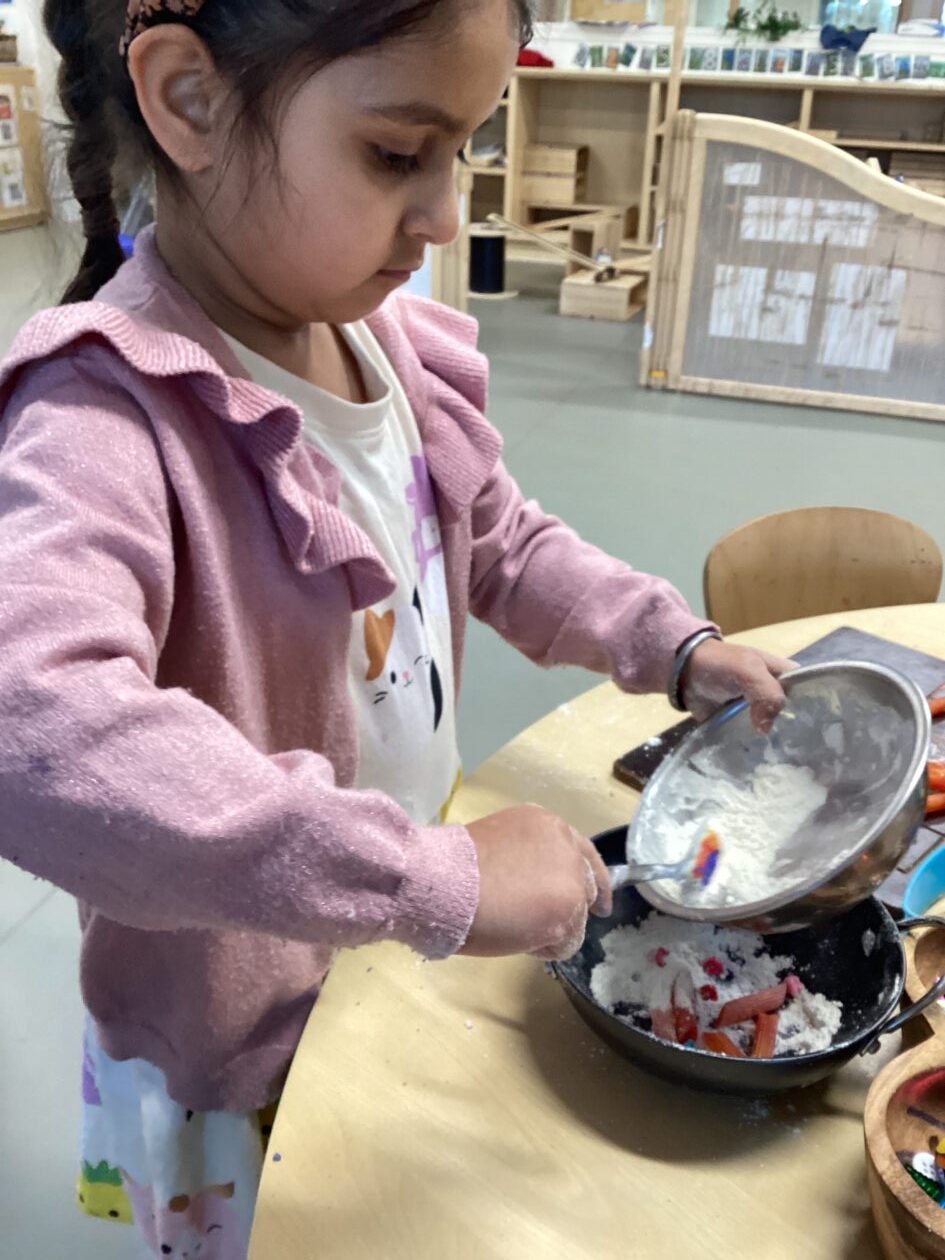
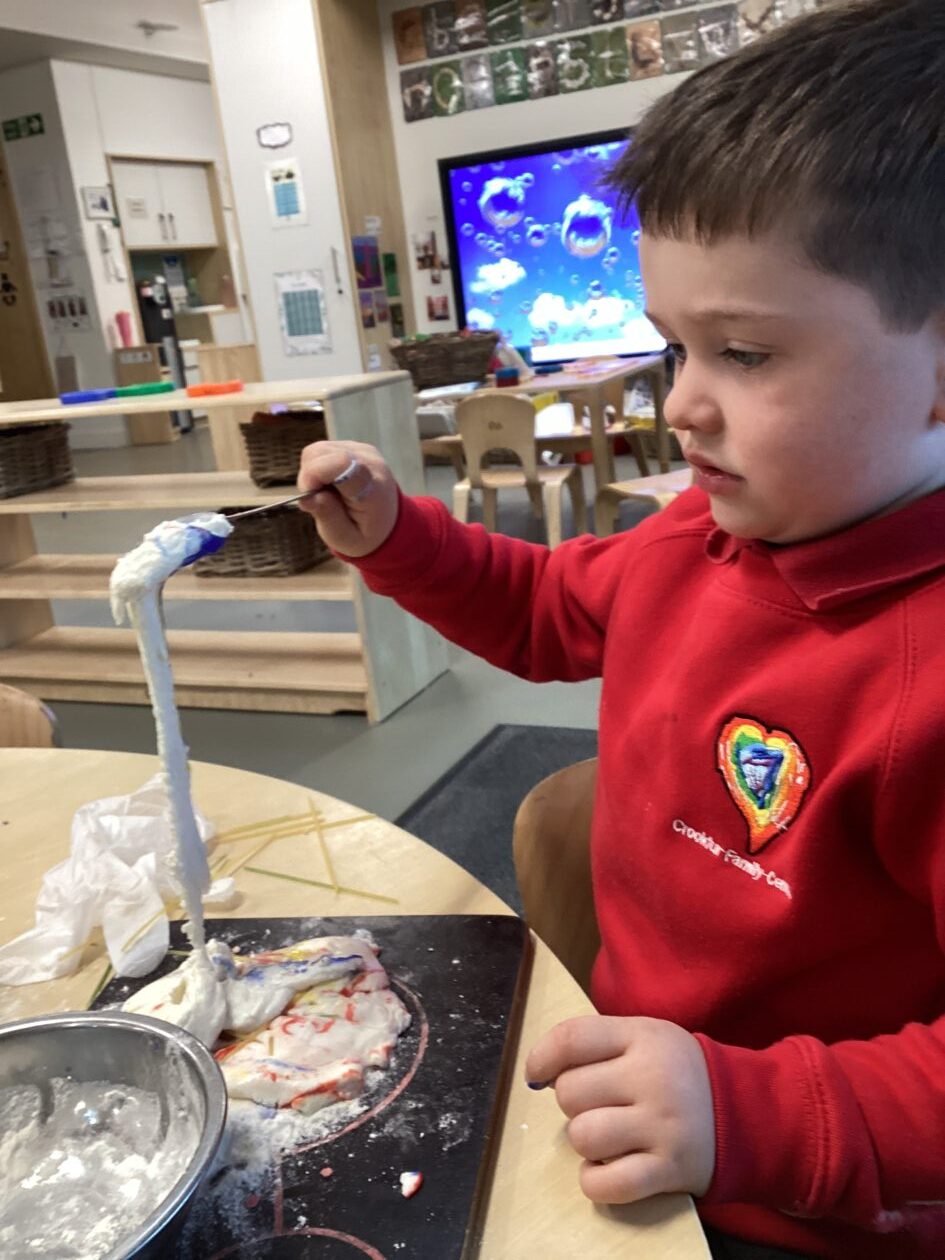
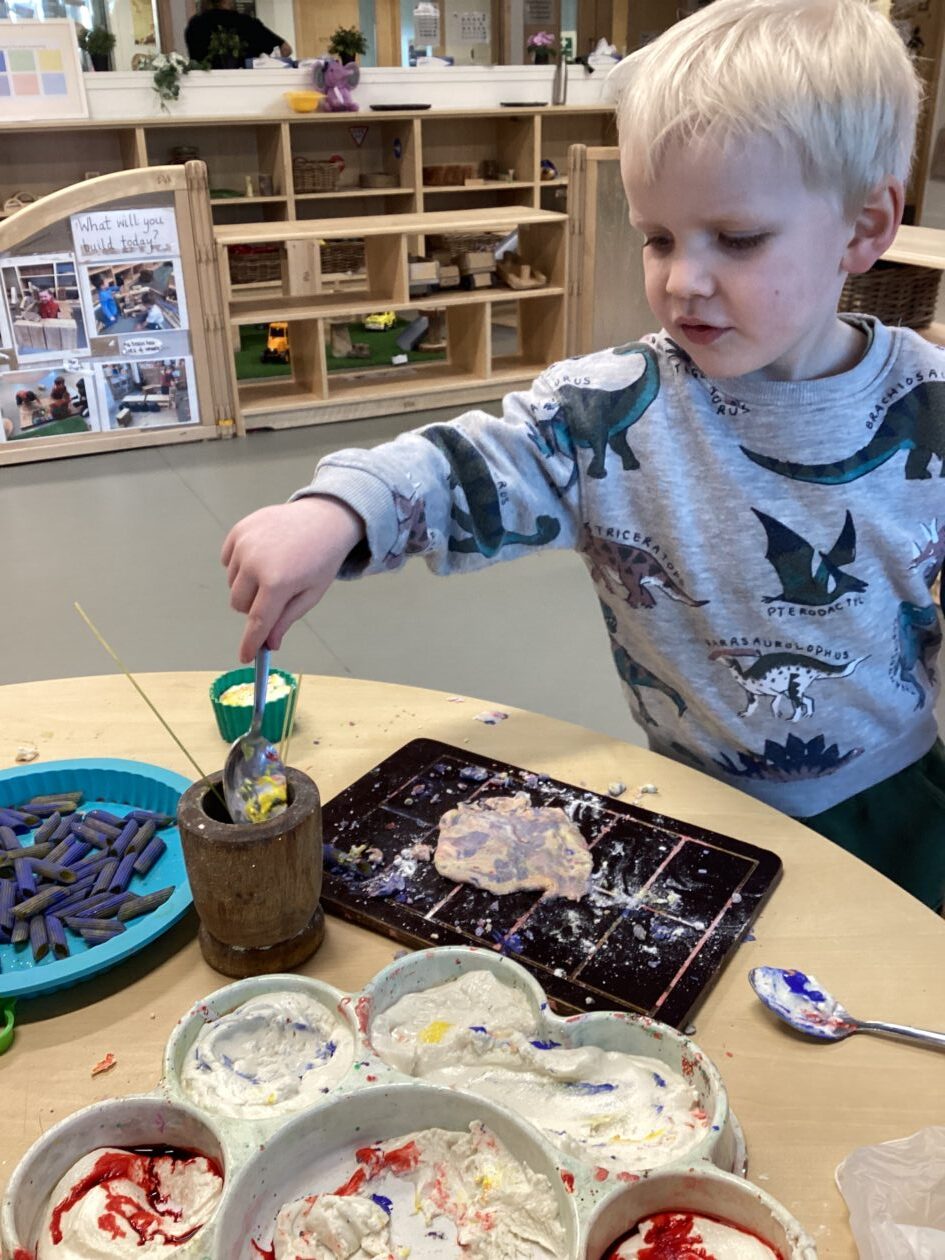
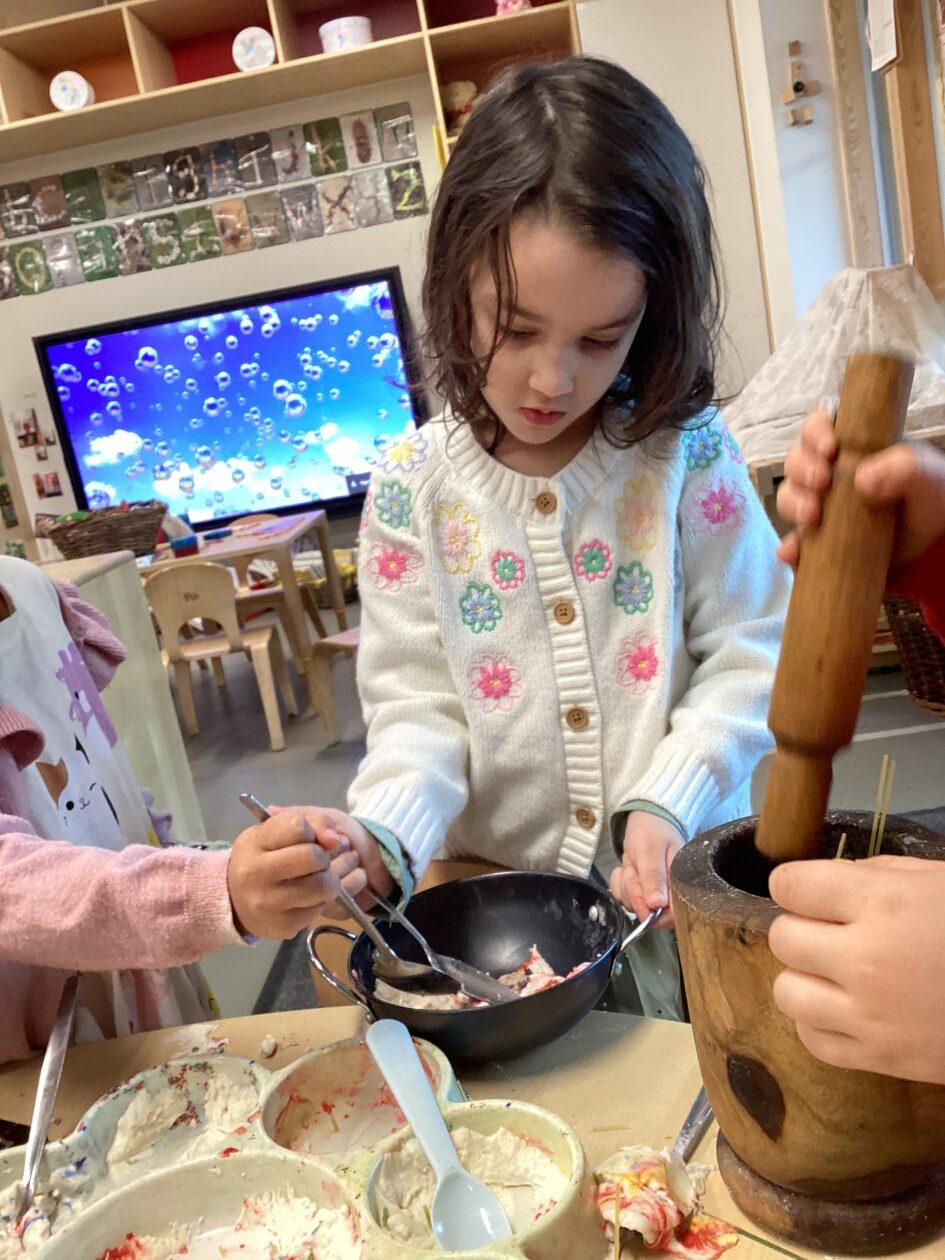
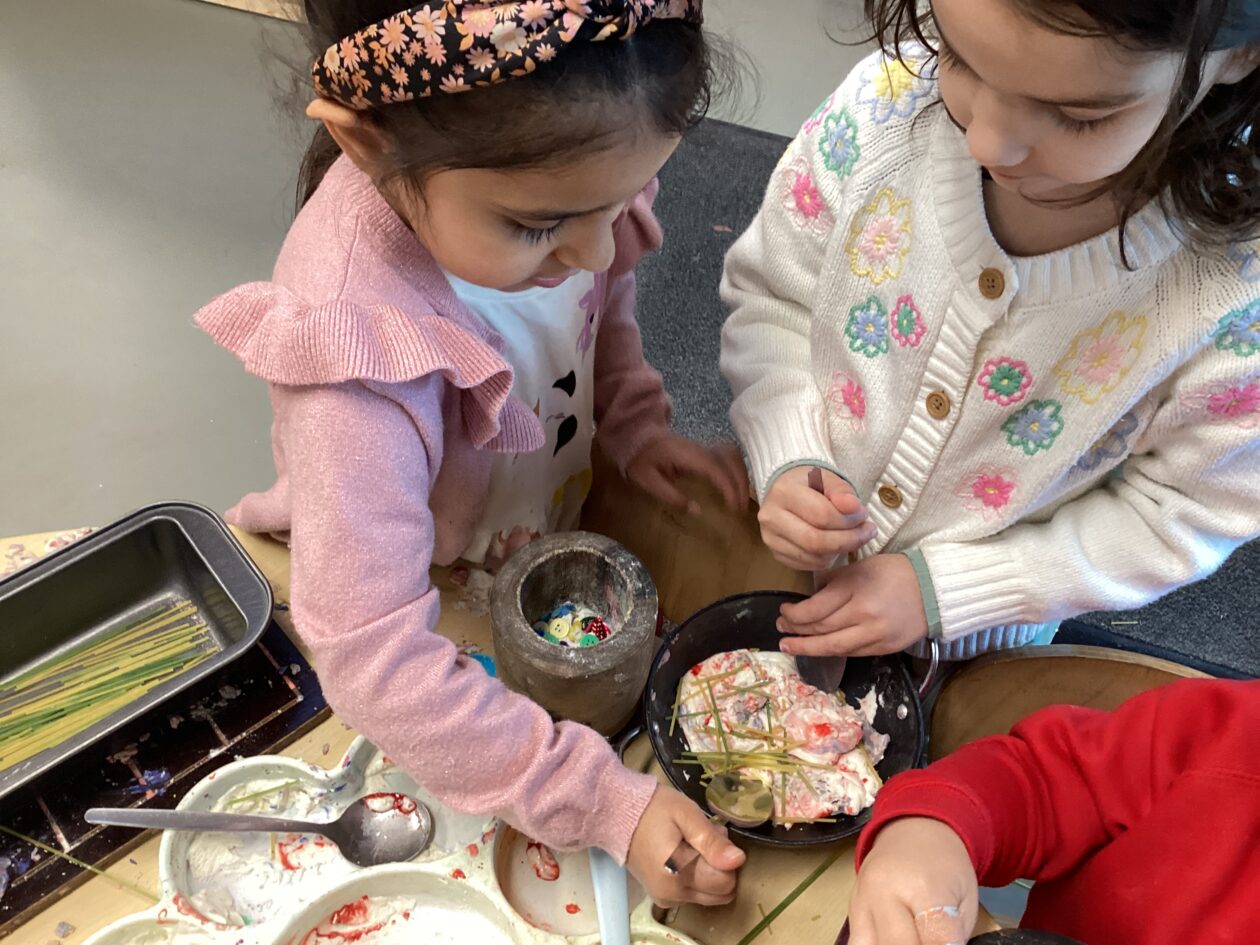
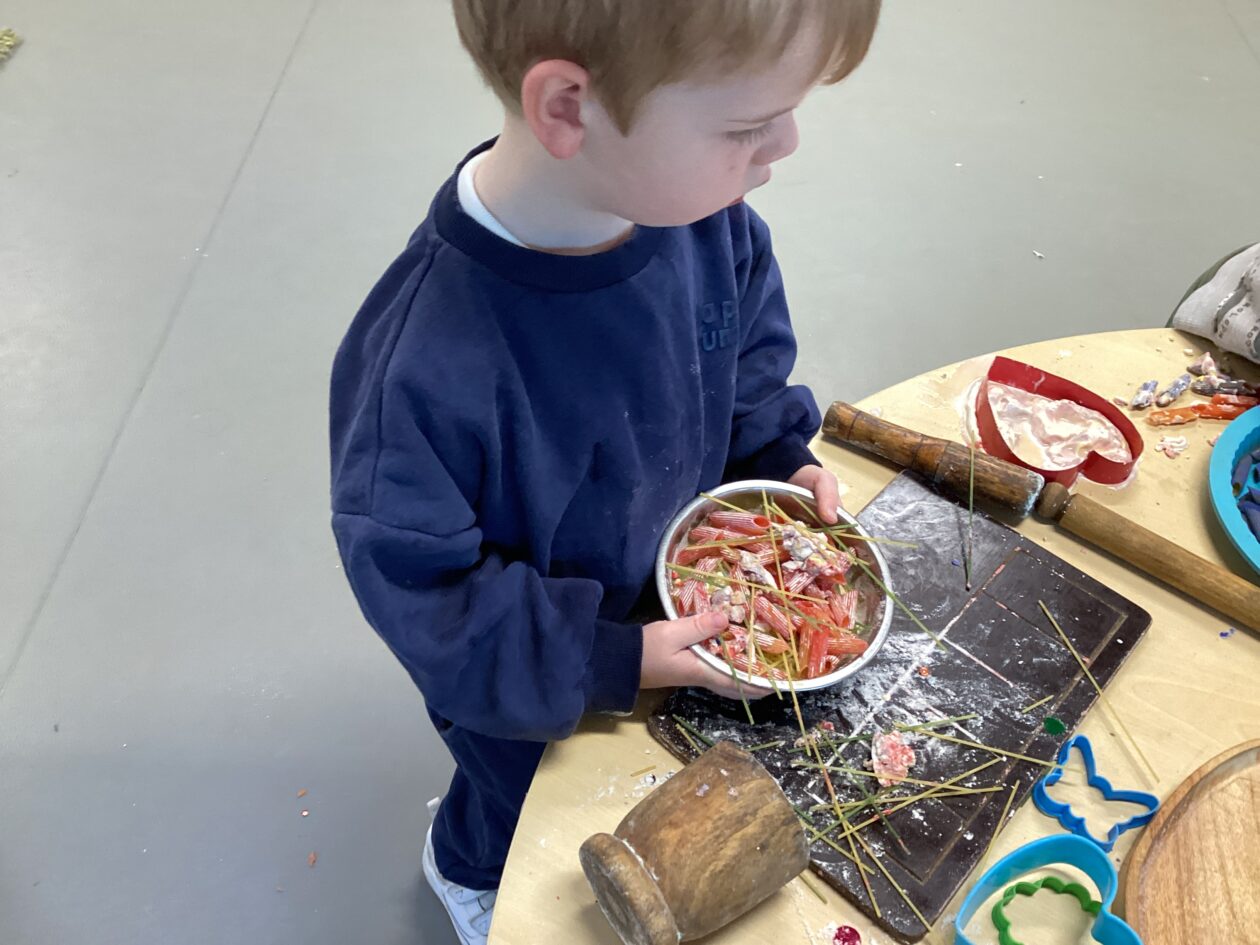
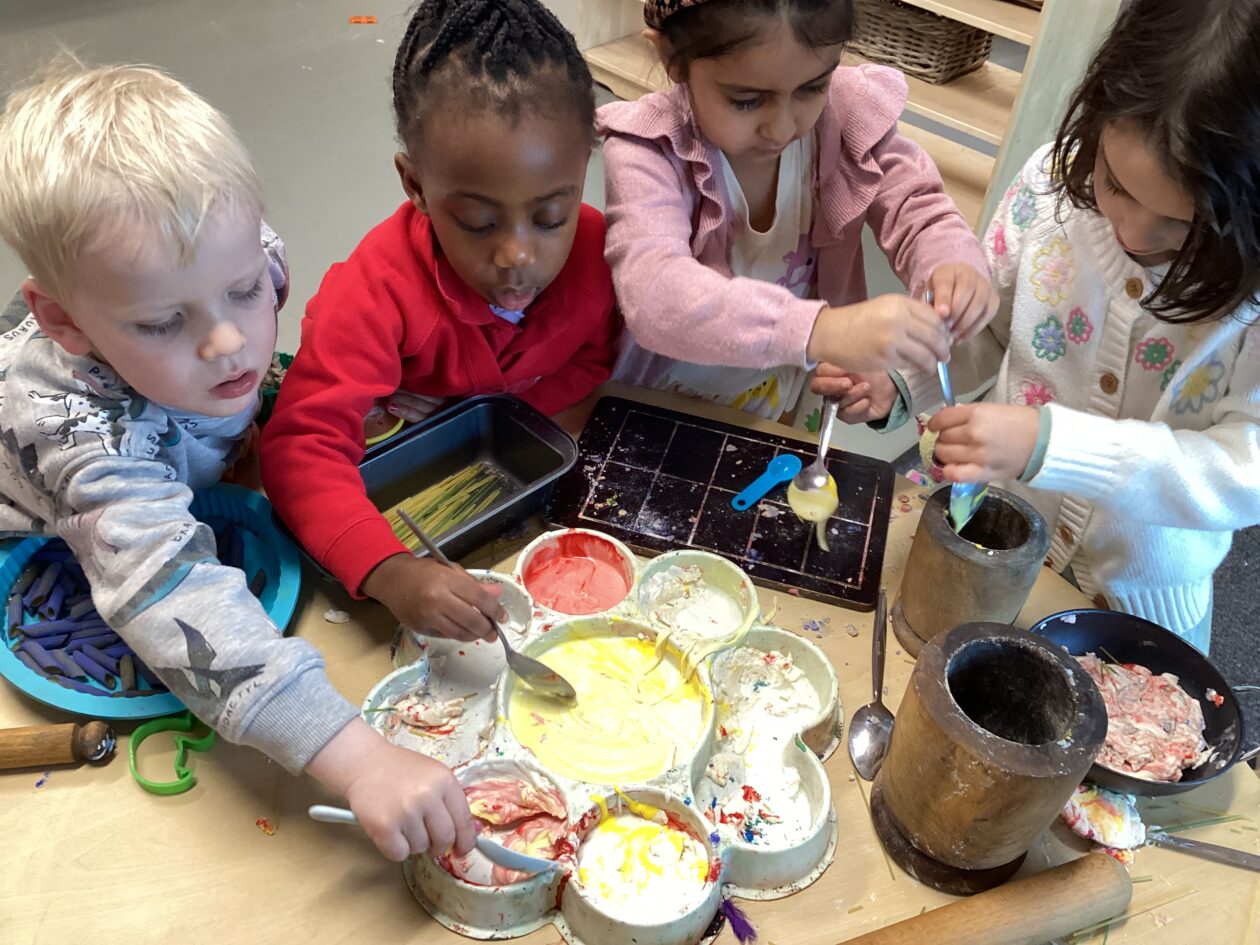
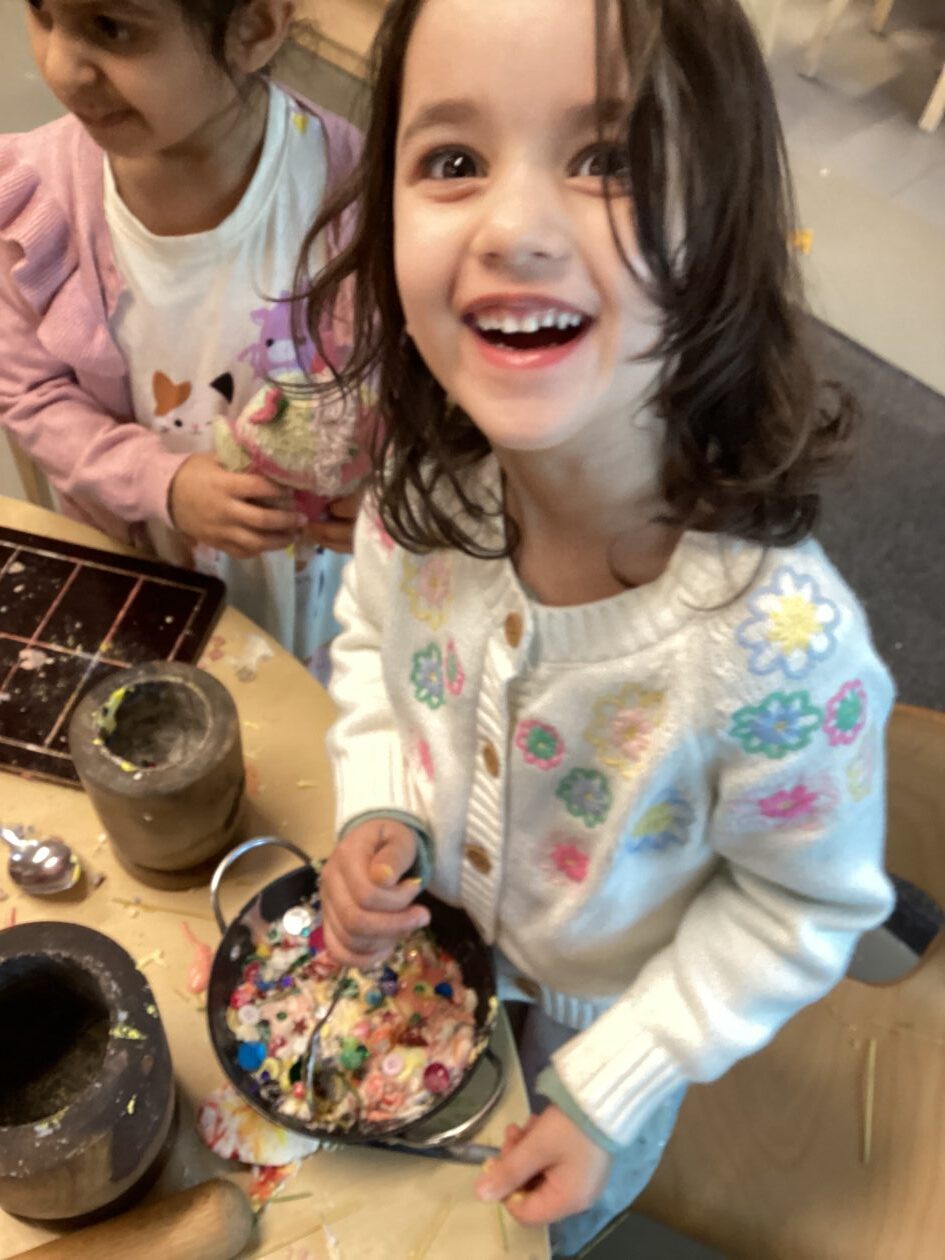
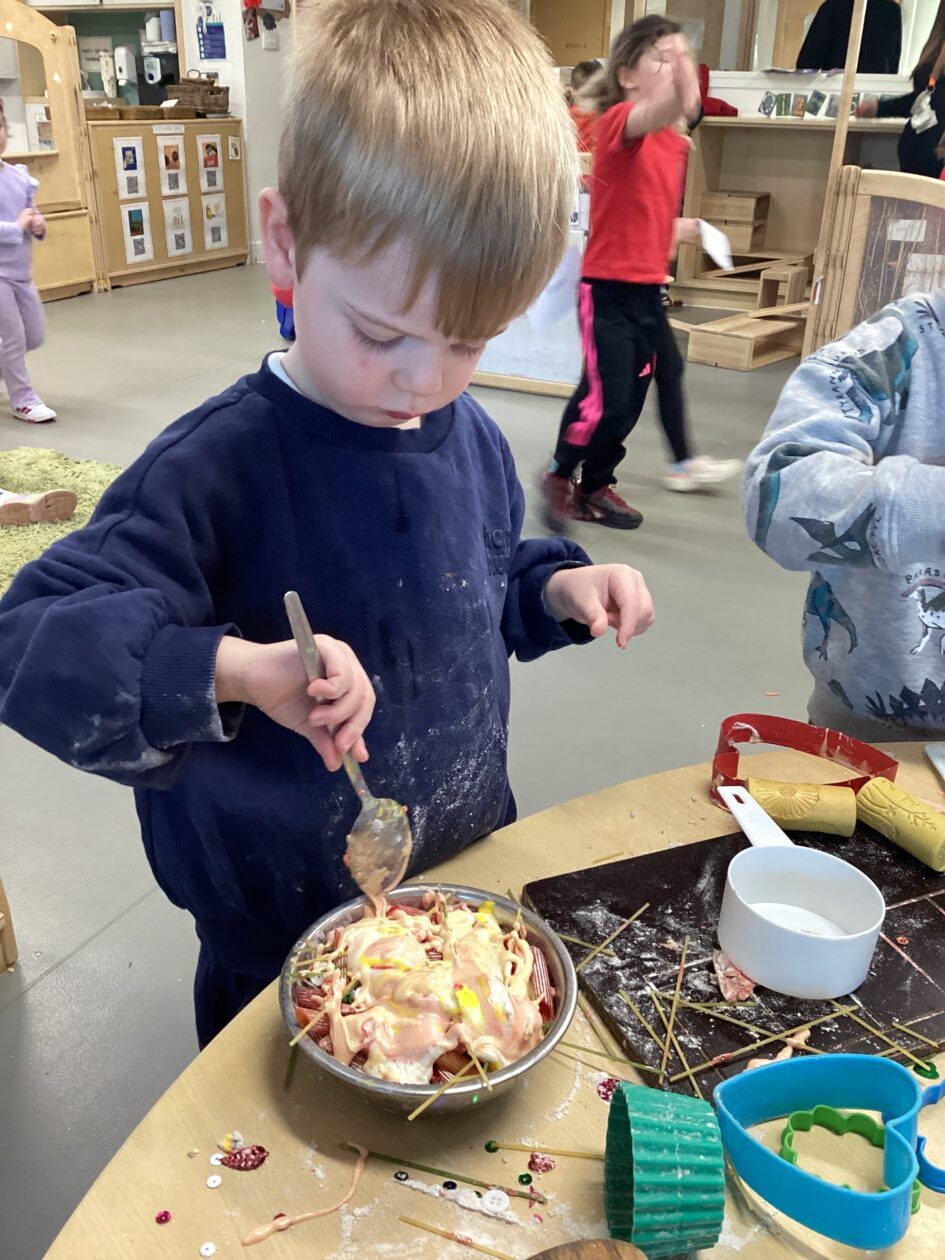
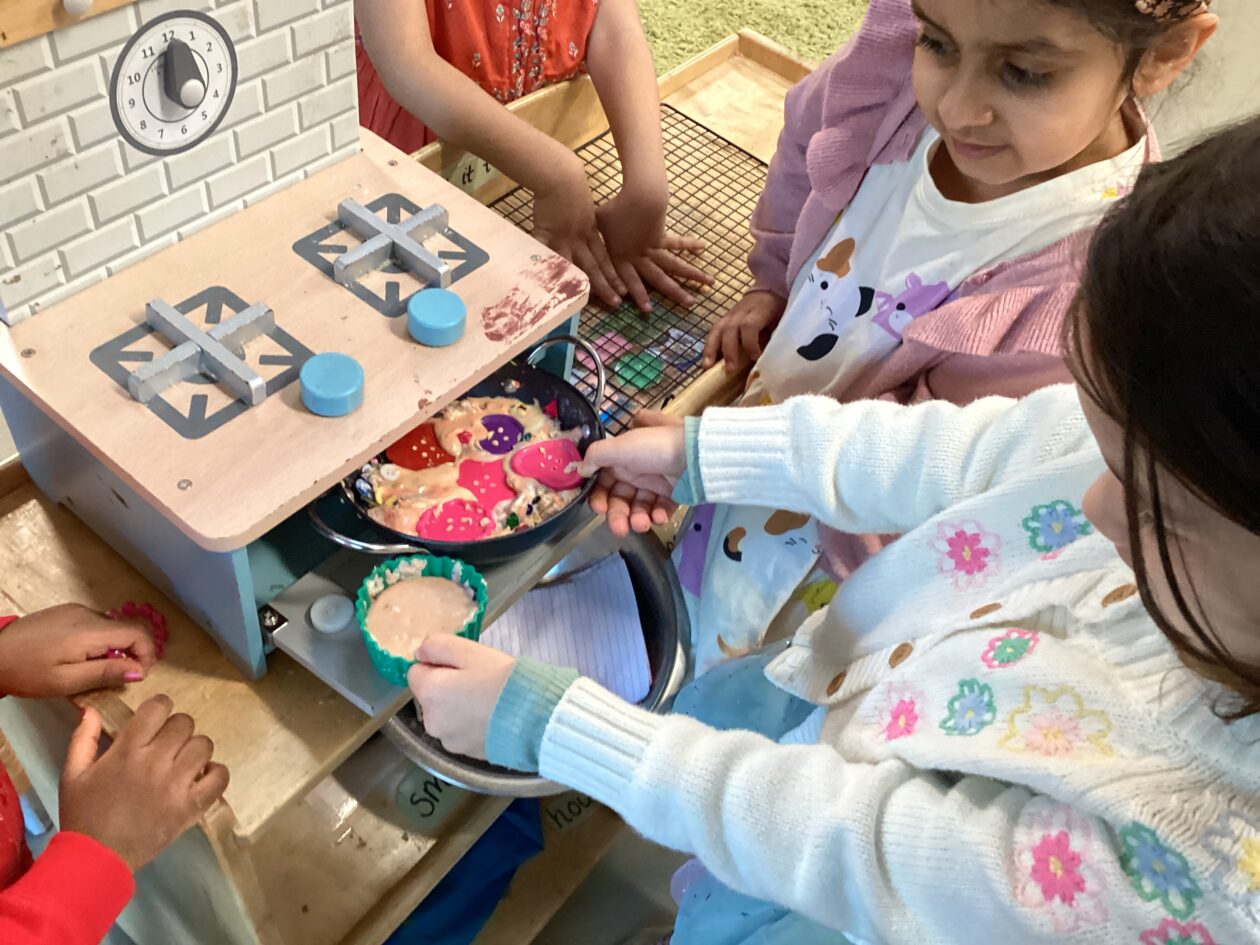
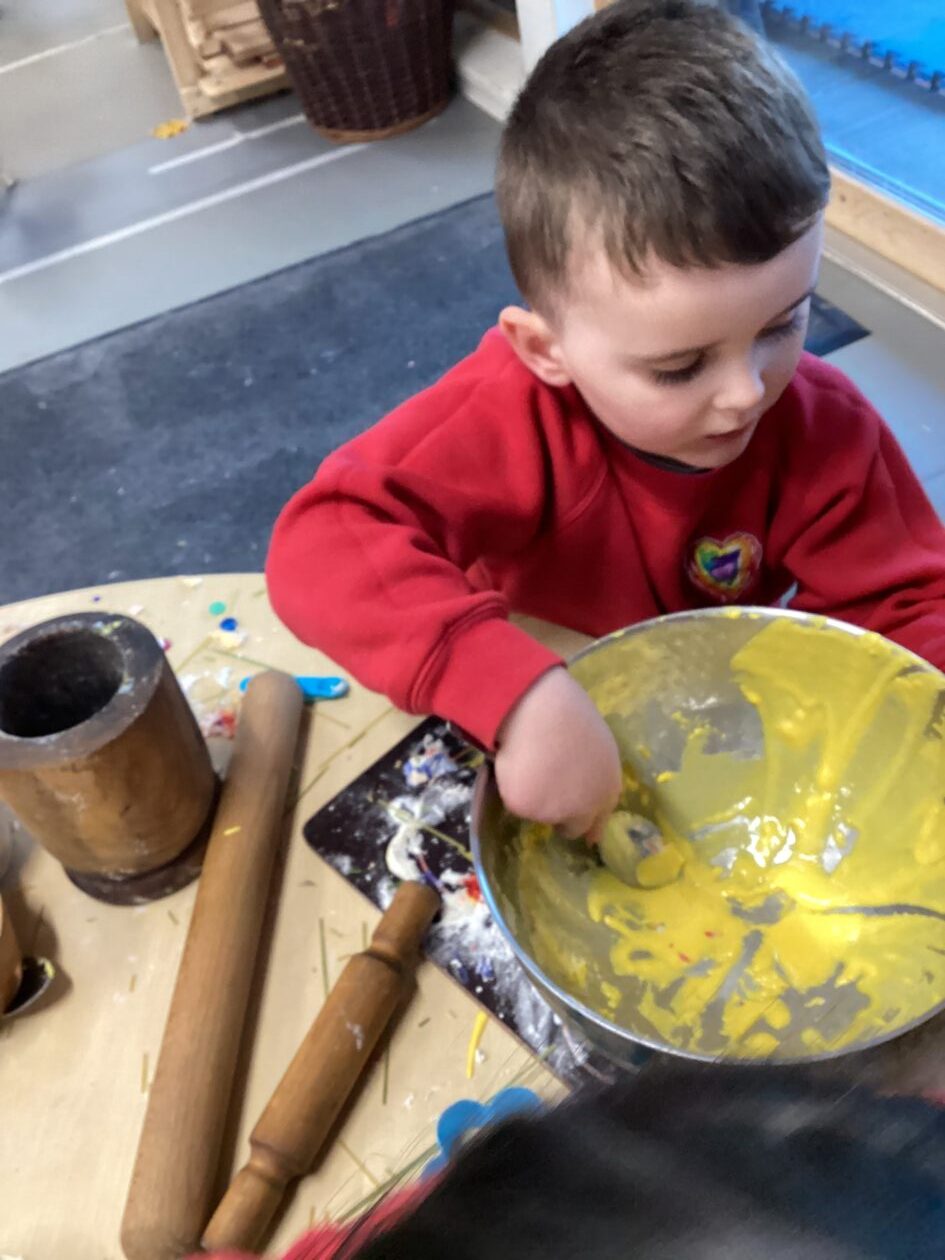
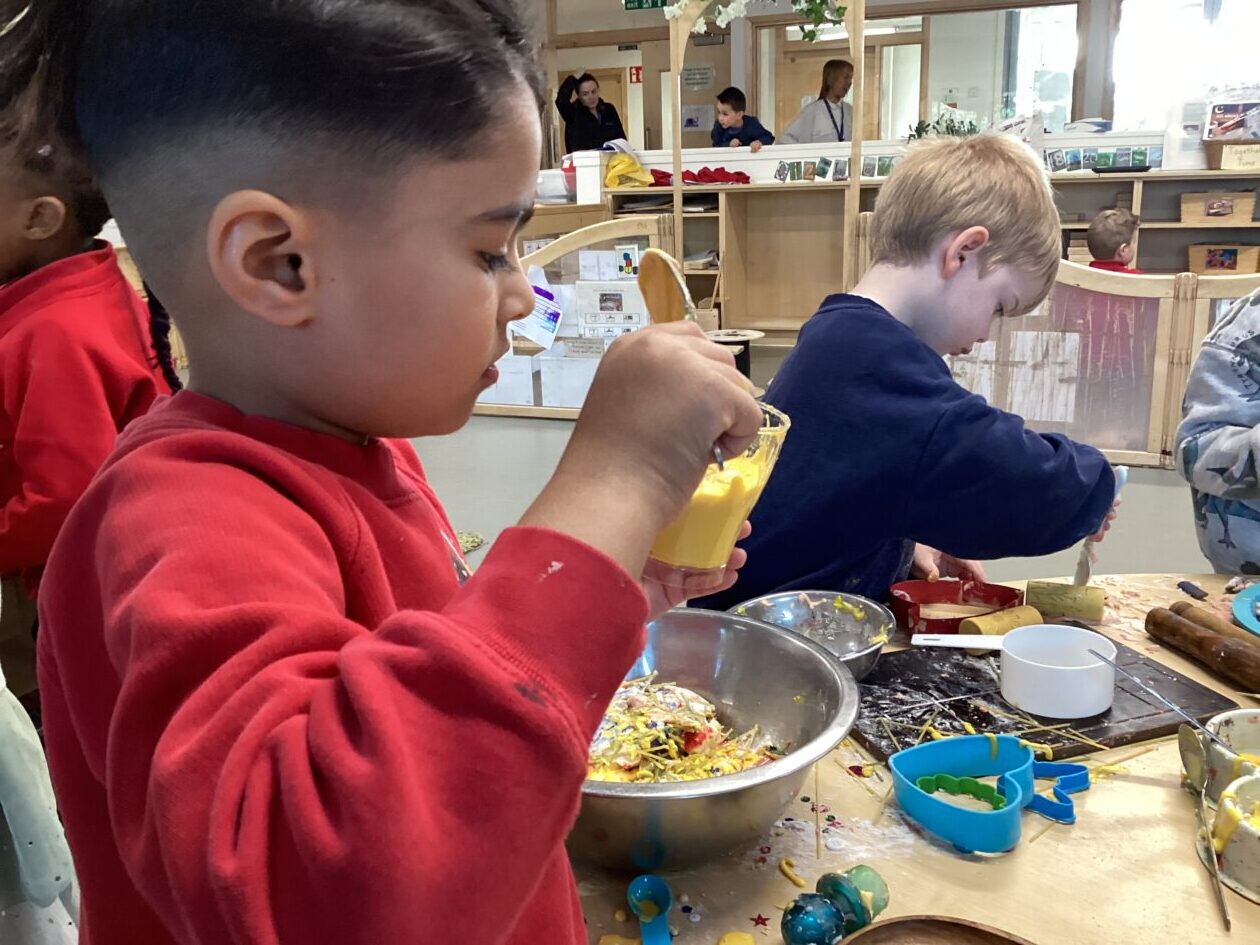
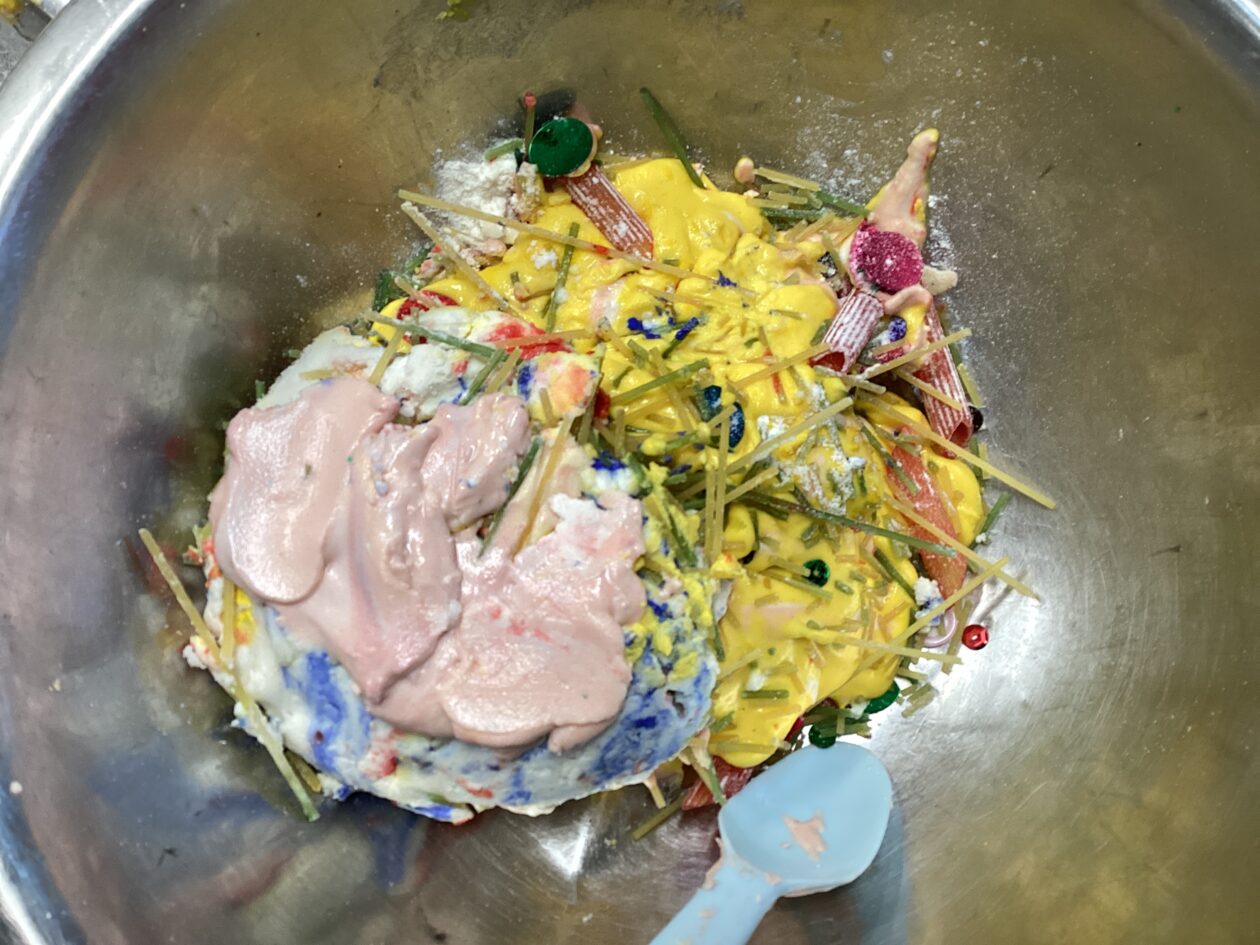
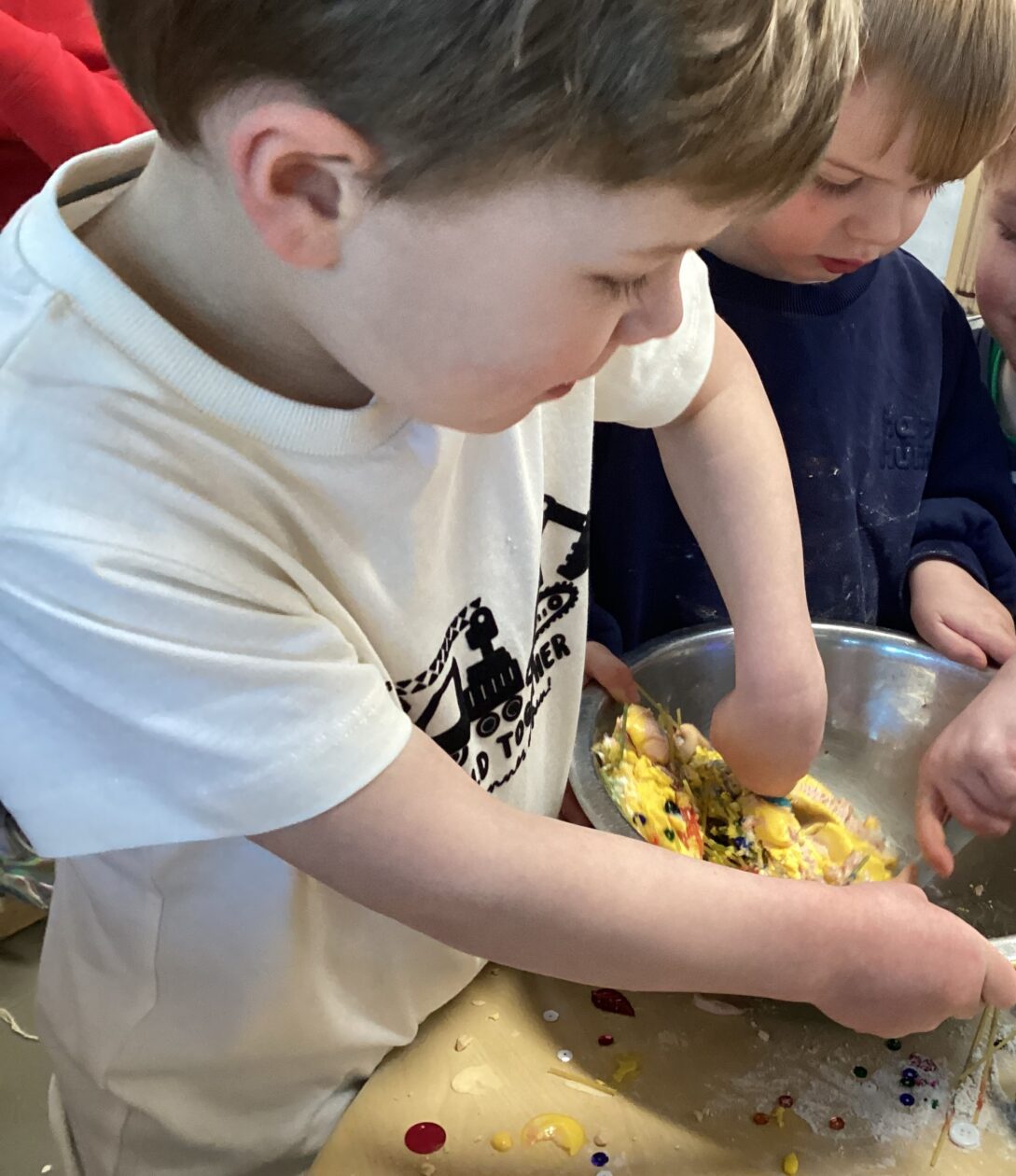
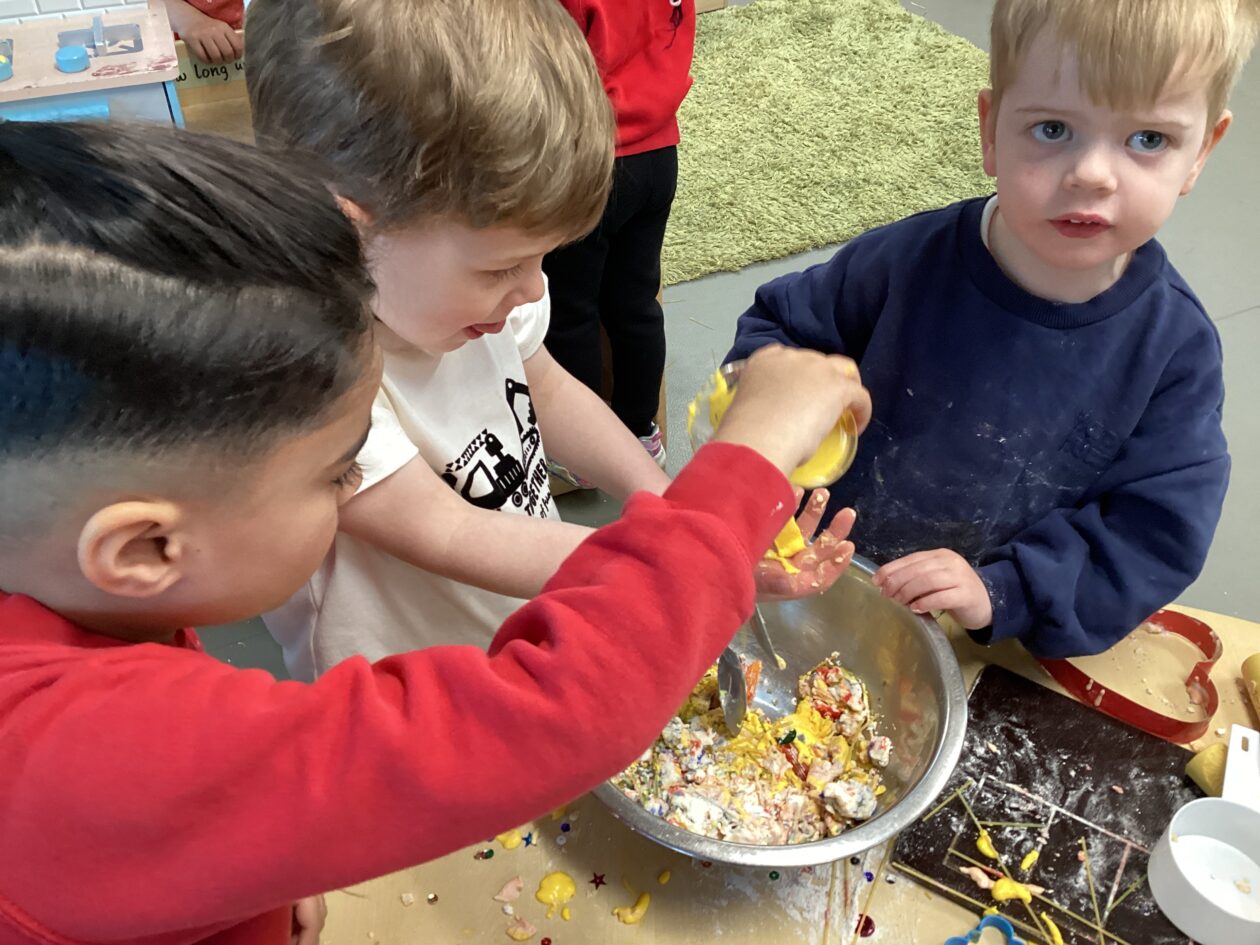
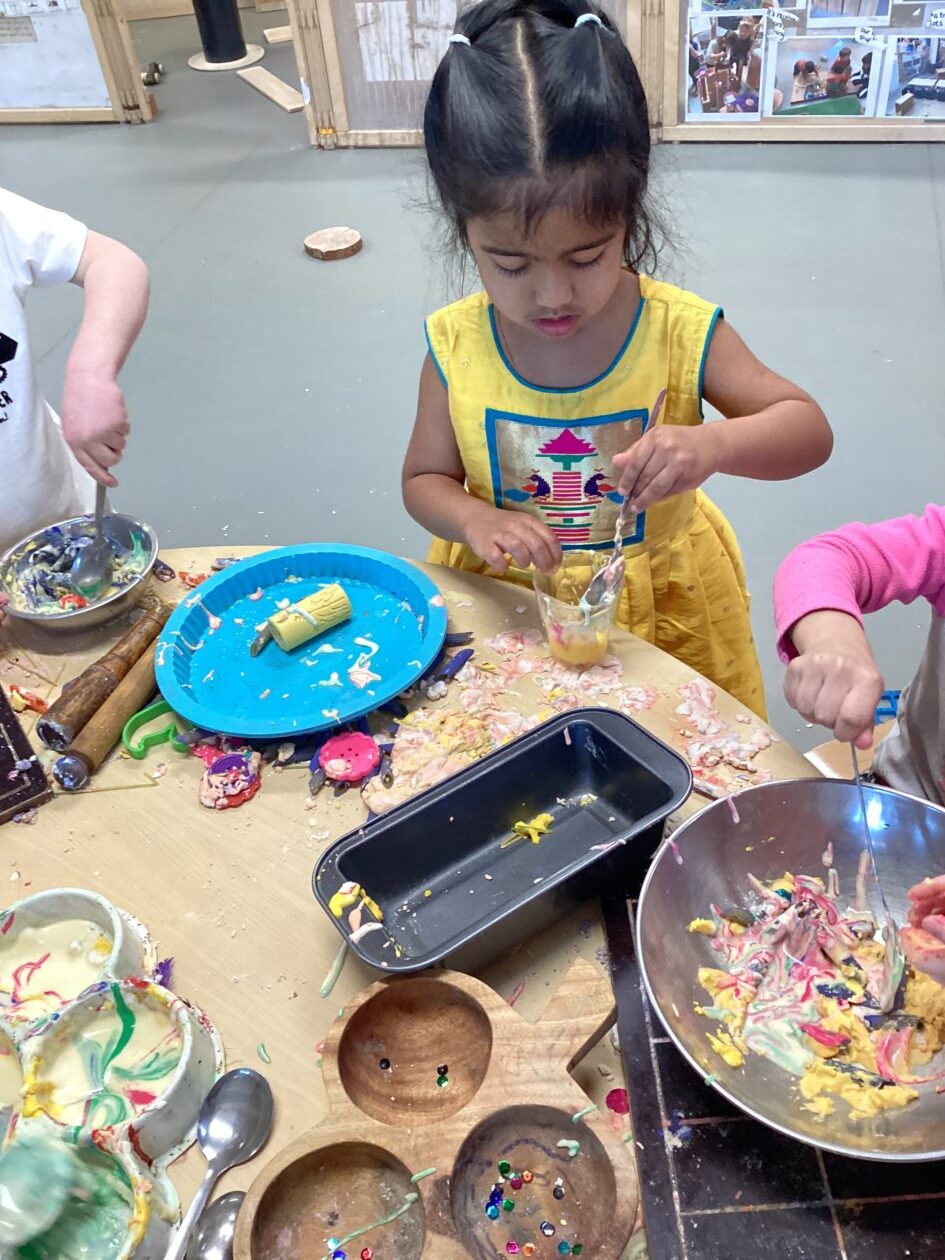
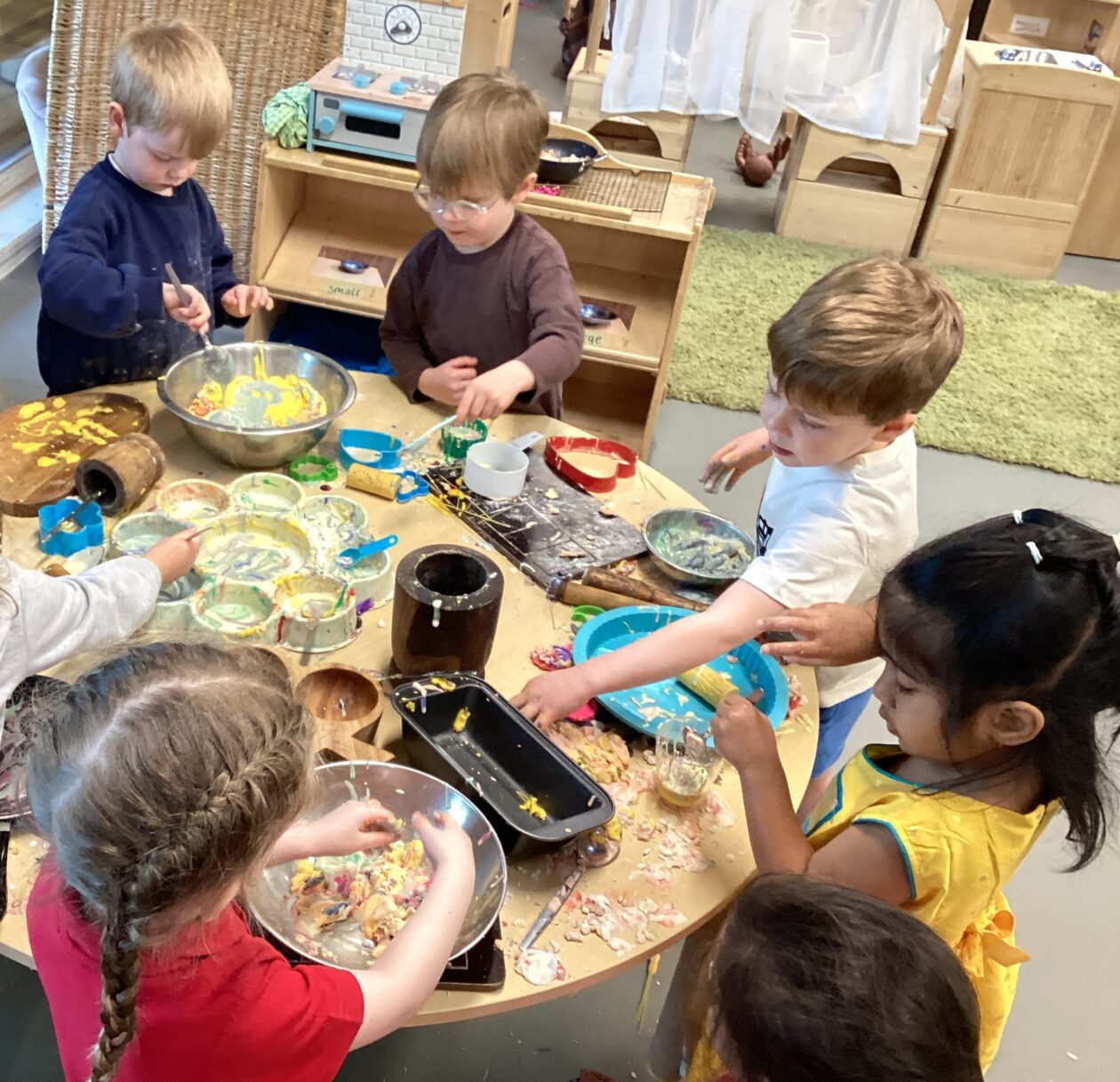
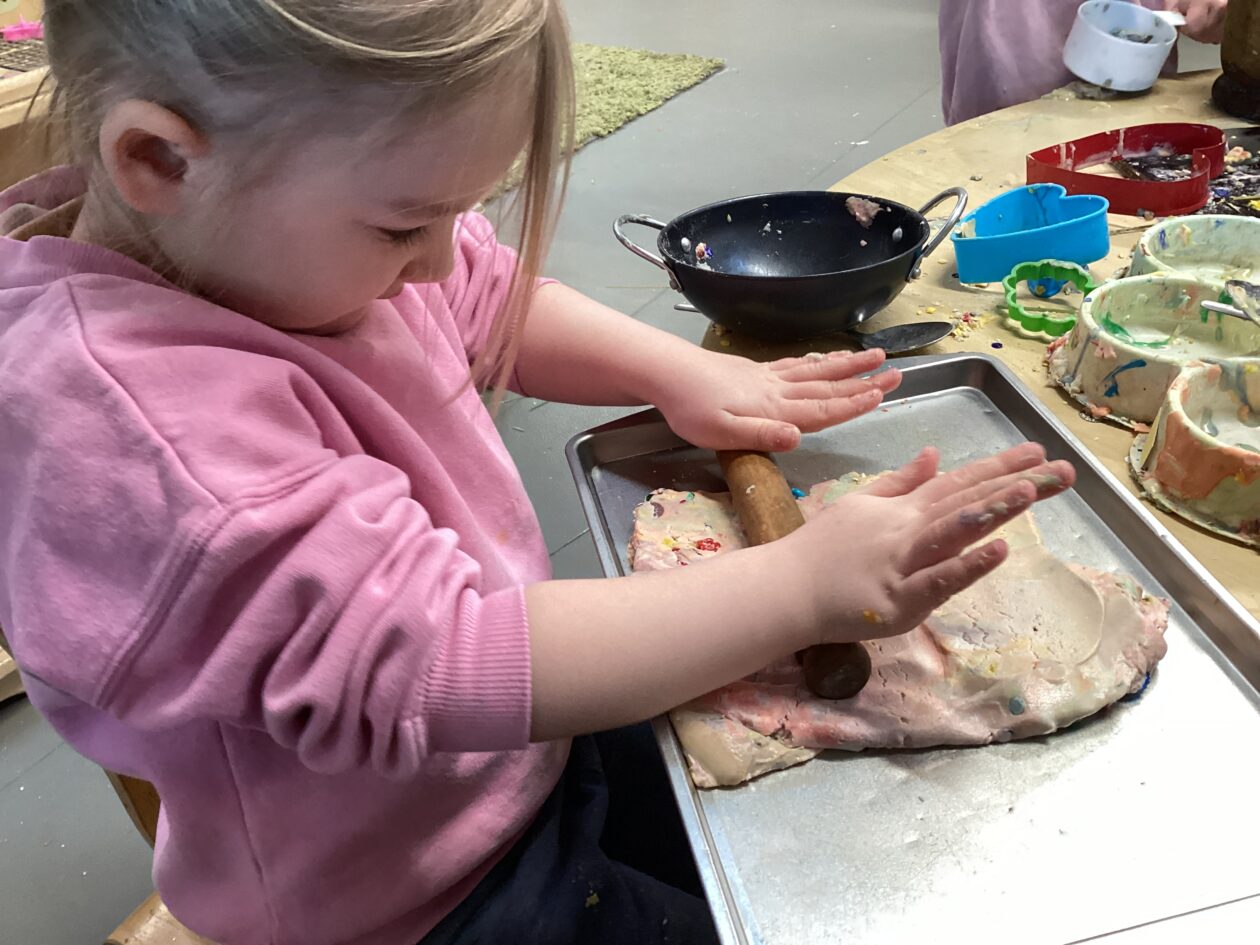
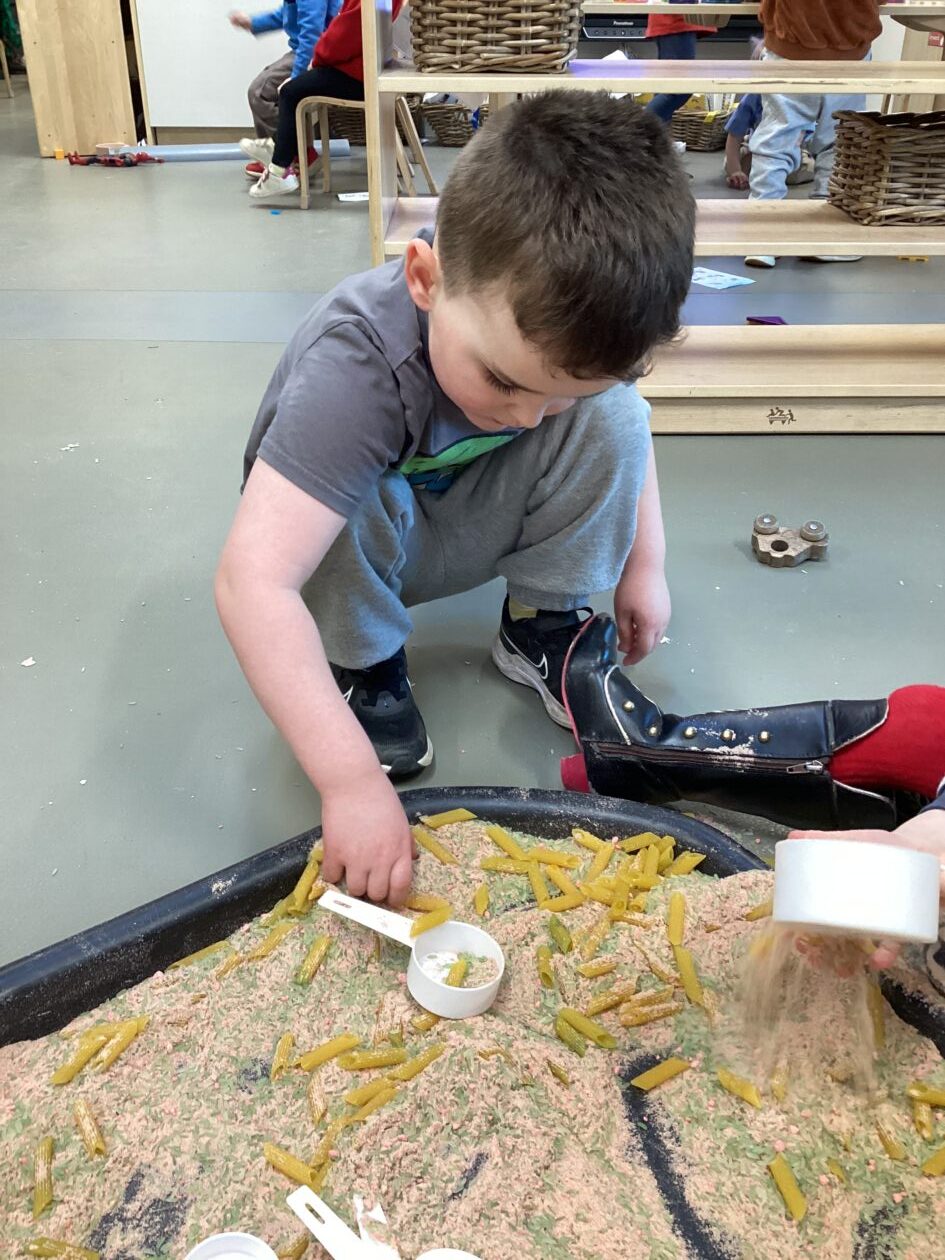
In the malleable area, children engaged in imaginative play by creating pancakes and cakes using a variety of loose parts such as different types of pasta, colourful sequins, and shaving foam in a range of colours. They carefully mixed, scooped, and shaped their “ingredients,” before moving to the home corner to cook and serve their creations through role play. This type of open-ended, sensory-rich play supports creativity and imagination while developing fine motor skills and hand-eye coordination. It also encourages language development as children describe their ideas and engage in collaborative storytelling. Additionally, role play in familiar contexts, like cooking, helps build social skills, confidence, and an understanding of the world around them.
“My cake is almost ready.” LD
“I need some ingredients.” RP
“The red and blue is making purple.” BS
“Would you like raspberry, blackberry, cherry, mint or strawberry?