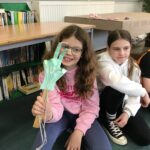
P7 are looking forward to delivering Christmas cards in school for the pupils and staff throughout December!
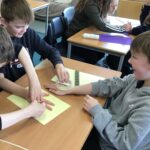
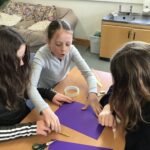
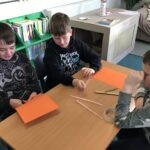
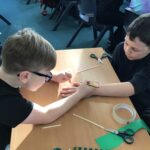
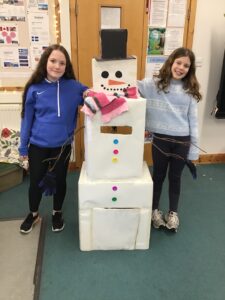
We decided to make a snowman postbox and we think it turned out great!

P7 are looking forward to delivering Christmas cards in school for the pupils and staff throughout December!
We decided to make a snowman postbox and we think it turned out great!
By Merryn Burgess
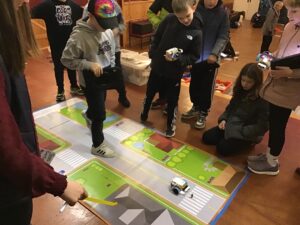
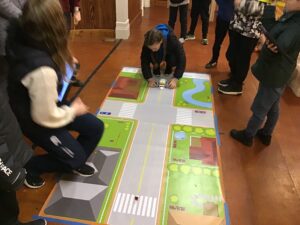
On Monday 17th November, we went on a school trip to Scalloway and had a fantastic robotics lesson with Eleanor!
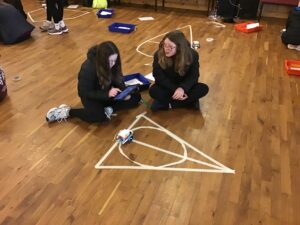
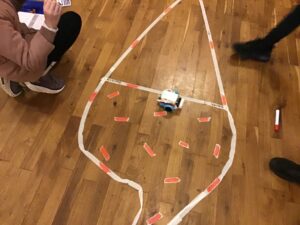
The lesson contained, us measuring the circumference of a robot’s wheel, us slowly trying to drive the robot across a track to hit (but not knock over) a Lego figure and driving our robots along a shape!
First, in partners we got a box full of measuring systems and had to care fully measure the correct circumference of the wheel (It was 17.5cm). Then we had to fill out a sheet. You had to times 17.5 by 1, 3, 5.4 and 10. Basically if we rolled the robot 3 times it would have travelled 52.5 cm.
The second thing we did (in the same partners) was, figure out how to make our robots drive towards a little logo figure hit it but NOT knock it over. Whoever’s robot got closest to the Logo figure won a Lego man!
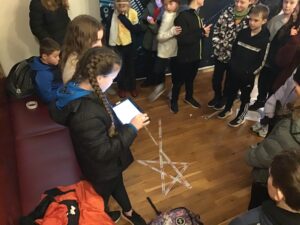
Lastly, we had to come up with a unique shape, mark it out on the floor using masking tape and figure out a way to get our robots to drive around it using the app on the iPad.
Also, we could make our robot light up and make noises!
This was an amazing activity planned by Eleanor, Mrs Emslie and Miss Pearson. It taught us a lot of skills and we really hope that Eleanor can come to Whiteness soon for another STEM day!
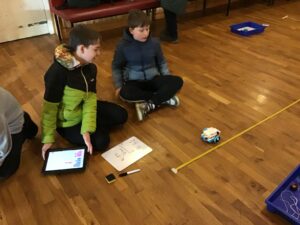
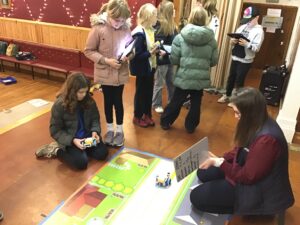
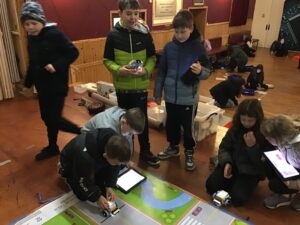
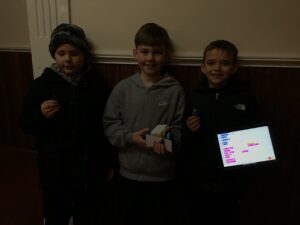
by Mia and Merryn
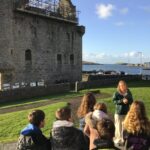
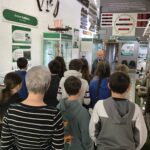
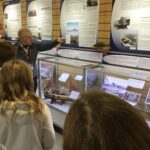
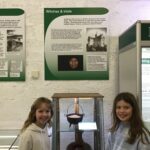
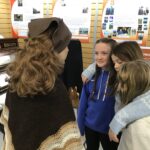
This week we went for a trip to the Scalloway Museum, playpark and the Scalloway College.
At the museum we split into two groups. The groups were P7 and P5/6.
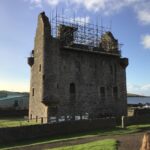
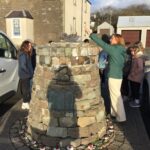
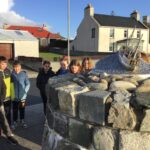
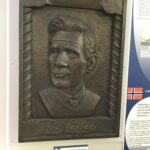
The p7s went for a walk with a lady called Laurie who first took us to the Scalloway Castle and then to see the Shetland Bus memorial.
The top two layers of stones on the memorial actually come from Norwary.
Laurie told us another very interesting fact! Did you know the person the old folks home is named Walter Gray who was born there. He moved to Canada and he was on the radio to the captain of the Titanic all the time it sunk!
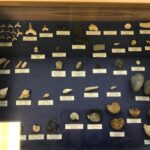
Back at the museum the P5/6s were looking around at all the cool exhibits. We learned more about the Shetland Bus and where witches were burned a long time ago.
Then we swapped and looked around the museum and the 5/6 went for a walk to the Shetland bus memorial.
After that, we walked to the Scalloway playpark and had some fun before we made our way out to the Scalloway college. It was a long trek up but eventually we made it!
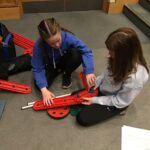
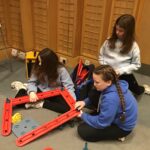
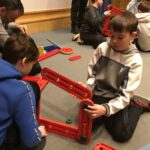
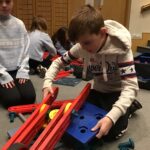
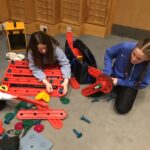
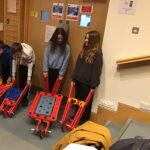
First, we split up into 2 groups basically consisting of P7 and P5/6. We had a STEM challenge using big pieces of Meccano and we had to figure out how to make a wheel barrow that could move from one side of the room to the other carrying an object. We only had a short amount of time so there was a bit of pressure!
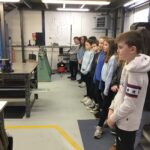
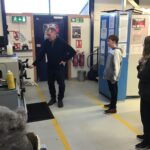
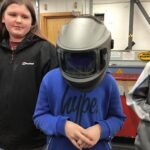
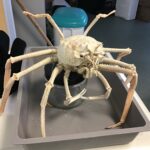
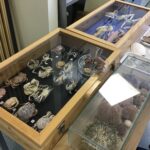
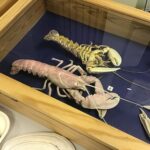
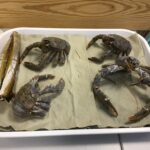
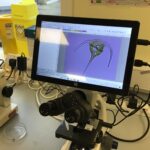
We had a tour of the labs (we saw lots of interesting sea life) and the engineering workshops.
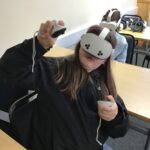
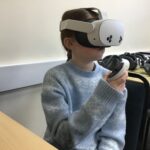
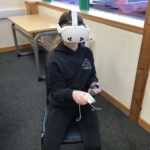
Also, we enjoyed a VR session where we could pick up fish and inspect them.
We had so much fun thanks to all of the amazing staff at the college, Museum and Eleanor who arranged the whole Museum trip and made sure we had an excellent school trip in Scalloway!
Primary 7 have been learning about Type 1 diabetes.
World Diabetes Day is on 14th November each year. A blue circle is the symbol for the occasion which is used to raise awareness.
Insulin is a hormone produced by the pancreas that regulates blood sugar by allowing glucose to enter the body’s cells for energy. If you have diabetes the immune system gets confused so attacks the pancreas. Due to this the pancreas stops making insulin and the blood sugar stays in the blood. This makes the person feel very unwell if they are not given the right amount of care.
Glucose is a type of sugar and a primary source of energy for your body’s cells.
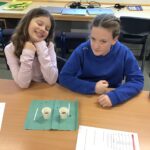
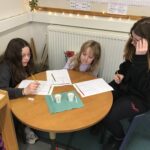
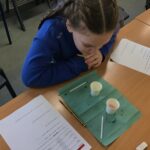
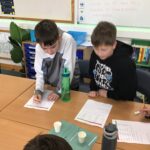
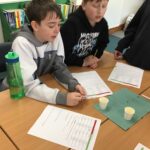
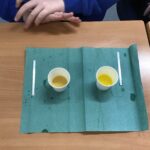
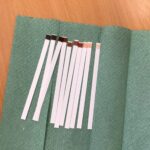
We did an experiment with glucose test strips to see how many mg/l are in different types of food. We had two different types of the same food but one was “low sugar” and one was “high sugar” separated in two pots (we did not know which was which). Then we dipped in the test strips and had to find out which one had more sugar. There was a colour chart and we had to figure out approximately how much sugar was in it.
Before we carried out the investigation, our hypothesis was that the regular Cola would contain the most sugar.
The results surprised us! The darkest colour, which was black, had so much sugar it wasn’t even on the chart! That means the food sample is exceedingly unhealthy and has loads of sugar. That food was a Frube and I think it is safe to say that our parents are never going to let us have them again! The Greek yoghurt was the lightest and was a healthier option compared to the Frube.
It is important that people with Type 1 chose low sugar options when possible to help keep their glucose levels more stable. Also, it it’s important for everyone to know about sugar levels in everyday food and drinks so they can make good choices.
Overall, it was an interesting week learning about diabetes and we all learned a lot more about it.
By Saoirse
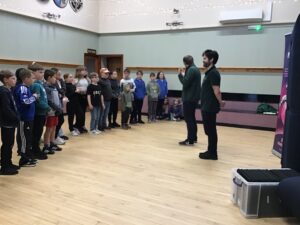
We were lucky to have a visit from the Dynamic Earth Planetarium!
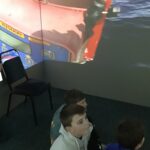
First they showed us how far away space is. Then we went into a rocket ship and we travelled into space. I felt like I was moving – it was crazy!
They showed us the distance Katy Perry travelled when she went into Space and technically she wasn’t even in Space! It is so far away.
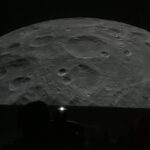
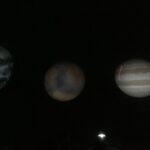
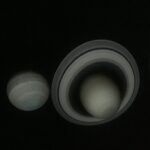
We looked at the stars and the planets and the people told us cool facts about them.
Then we learned about Apollo 11 and it’s journey – it is still in space today!
It was so interesting!
By Evie
By Merryn Burgess
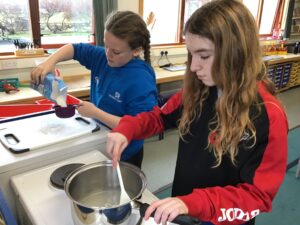
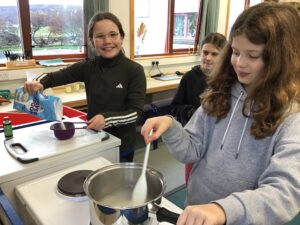
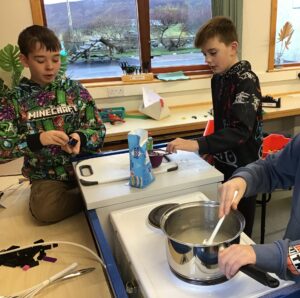
This week we did an experiment making sugar crystals! Sugar crystals is a concentrated (saturated) mixture of sugar and water that turns into a spectacular experiment.
The things we needed was: sugar, skewers, food colouring, chopping board, water, access to a hob and a pot.
First, we all thoroughly washed our hands.
The second thing we did was set the hob to the hottest possible temperature.
Then, we carefully soaked half of the skewers in water.
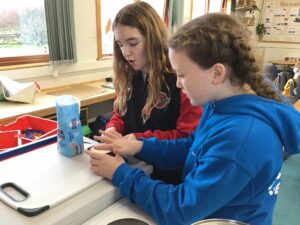
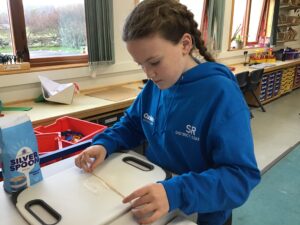
Next, we put a chopping board down a put a little bit of the sugar onto it. Then we rolled the wet end of the skewer onto the sugary chopping board.
Once we did that, we boiled a cup of water and 4 cups of sugar (slowly, putting them in one by one making sure the water turns clear before you add in the next one). We had to make sure we were gently stirring so that the hot water and sugar mixture didn’t splash up at us.
Finally, we got two jars and put 5 or 6 drops of food colouring into one jar. Then we poured half of the mixture into one jar and half of the mixture into the other jar. Lastly, we put the stick held with a peg into the mixture. It was important the stick did not touch the bottom or the sides of the jar.
Now we need to let them sit for a week and be careful not to move or disturb them.
Watch this space…
By Merryn Burgess
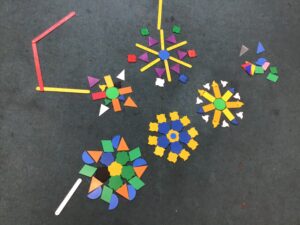
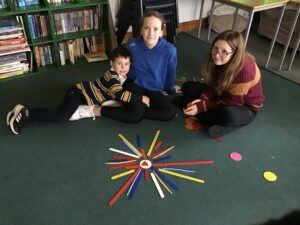
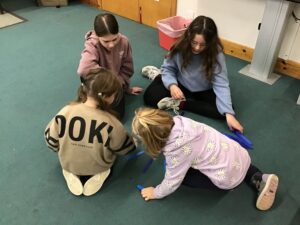
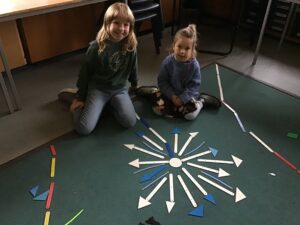
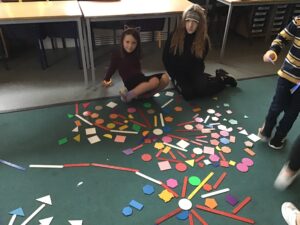
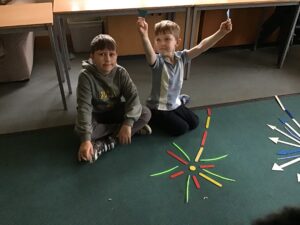
At last week’s budding session, we made firework pictures! Not using paint or pencils – but using 2D shapes!
The P1s have been learning about 2D shapes and symmetry so we based our lesson on that.
First, we partnered up with another P1 and their buddy.
They were lots of boxes with 2D shapes inside them. We had to choose which shapes we wanted.
Once we had chosen our shapes, we had to make a symmetrical picture of a firework.
Everyone’s looked unique and different. We discussed what shapes we had used and how many of each we had used.
We even had glowsticks! Mrs Emslie turned off the lights and the room was glowing.
Once we had finished, we let the P1s keep the glowsticks and make them into bracelets (they really loved it)!
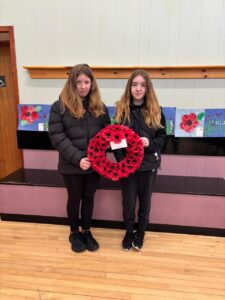
Remembrance Day is a day to remember and honour people who have fought and died in wars. It marks the end of World War I, which ended at 11 a.m. on November 11th, 1918, and people observe a two-minute silence at that time to think about the bravery of soldiers and the importance of peace. Many people wear a poppy, a flower that grew in the battlefields following World War I, as a symbol of remembrance.
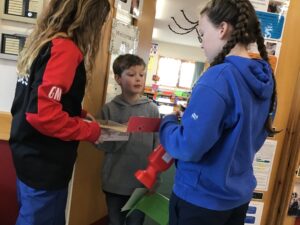
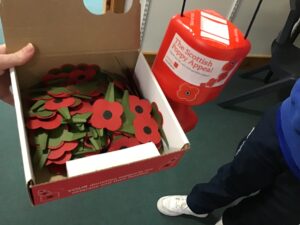
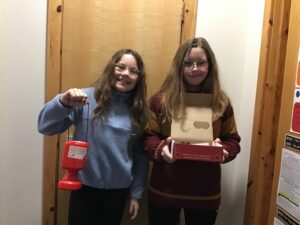
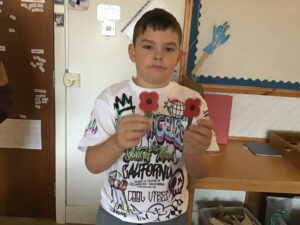
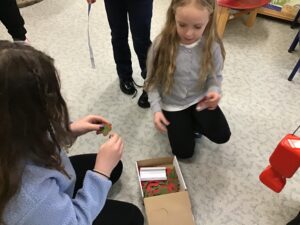
Leading up to remembrance Sunday we had poppies delivered to the school with a donation box. Every day for the past week we have gone around the school asking if anyone wanted to buy a poppy. There is no set price for a poppy but we remind people that all the money is for veterans who fought for our freedom and safety.
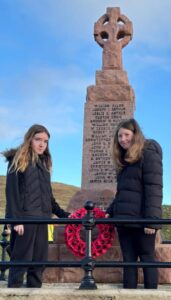
On Sunday the 9th of November our school representatives, Grace and O-Jo, went to the Sunday service and teas. Then they sang songs and prayed. After that they walked to the memorial on the hill nearby the school. They laid a wreath of poppies at the bottom of the memorial and then had two-minute silence, thinking about all who have died in a war.
On the 11th we had a special assembly for remembrance and also had a one-minute silence.
by Saoirse
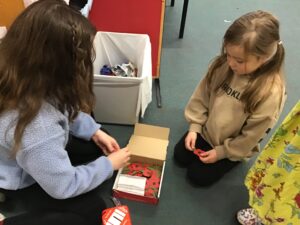
By Mia
This term our topic is Fix It so we are doing lots of experiments with p5 and p6.
We talked about fireworks and chemical reactions. Chemical reactions is when two things mix together and react. There are clues a chemical reaction has happened. A colour change, temperature, bubbles (gas), a new smell and making a solid or a powder.
Chemical reactions and science happen in everyday life. We use activator which makes the slime into a solid and when we go to watch fireworks, they use fuel, oxidizer and metal salts which help the fire work to explode. More common ones you would do more often would be baking, when you bake the ingredients and absorb heat from your oven makes the ingredients solid and that’s how you get you cake or whatever you were making.
Another thing we learned was about chemiluminescence. We noticed that we also see chemiluminescence reactions in ever day life like: an exit sign that is above an exit door in nearly every building.
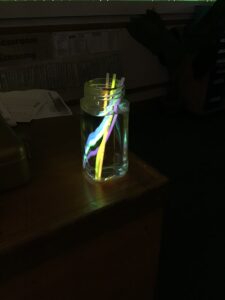
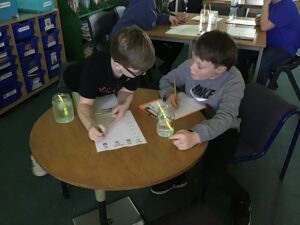
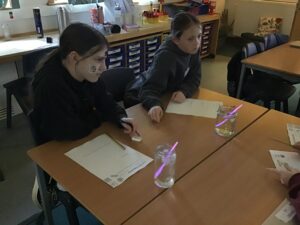
This week on Tuesday we did a glow stick experiment.
We learned about the chemical that is inside the glow sticks (hydrogen peroxide, phenyl oxalate and a fluorescent dye).
There is a little glass cylinder in the glowstick which holds one of the chemicals and around the cylinder there is another chemical mixed with the fluorescent dye.
The glass cylinder is what gives a glowstick the crack sound when you snap it.
We had to predict what would happen in our experiment. This is called making a hypothesis.
For the experiment e filled three glasses full of water: one cold, one room temperature and one hot.
Once we had filed the glasses full of water we cracked and shaked the glow sticks then we put one glowstick in each jar. Then every 5 minutes for the total of 30 minutes we would check and see if the glowsticks had changed.
We found out that the hot water made the glow stick really bright quickly but it faded the fastest. The room temperature water was as you would expect. The cold water glow stick was duller but lasted the longest.
Temperature affects the speed of chemical reactions. This is because the water molecules were moving around very fast so it glowed brightly instantly but the cold water the molecules were moving slowly so it slowed it down.
So we have had so much fun learning about chemiluminescence and watching the glowsticks.

By Merryn Burgess
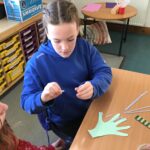
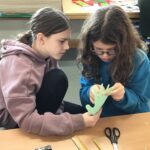
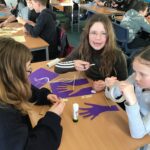
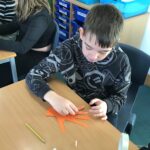
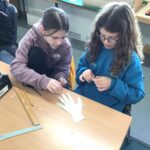
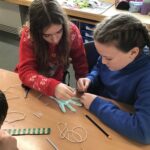
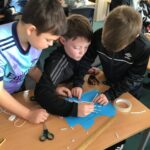
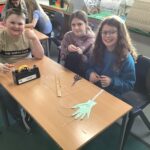
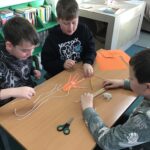
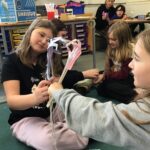
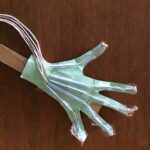
This week we made hand models! The hand models that we made was a STEM activity that we did with P5/6 as part of out topic ‘Fix It’.
Because it was Halloween, we made a skeleton type model of a human hand and were learning about the bones, joints and tendons.
We had a challenge to make a moving hand!
First, we got into groups of 3 and got all of our supplies (card, scissors, sellotape, some straws, string and a ruler.) Then we figured out who had the biggest hand and drew the outline onto the paper.
The second thing we did was carefully cut out the hand and drew on all of the finger joints.
Next, we had to take straws and cut them to the correct size and attach them to the hand. This was to represent the tendon sheaths.
The next bit was quite fiddly! We had to take a piece of string and thread it through the straw and tie a knot at the end so it wouldn’t slip out.
Finally, we stuck the hand model to a ruler (this was acting as the arm.)
It was important we had time to fix our models before the challenges. Some groups realised their straws were too long or that the Sellotape was getting in the way.
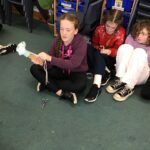
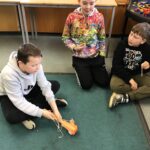
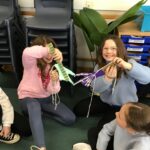
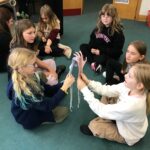
In our groups we had lots of fun activities to do. We had to pull on certain strings to make signals like: a peace sign, the rock sign and the shaka.
Then we had to use our model to pick up a piece of paper.
I liked it when we joined another group and used our model hands to high five, fist pump, pinkie promise and play a game of rock, paper, scissors!