![]()
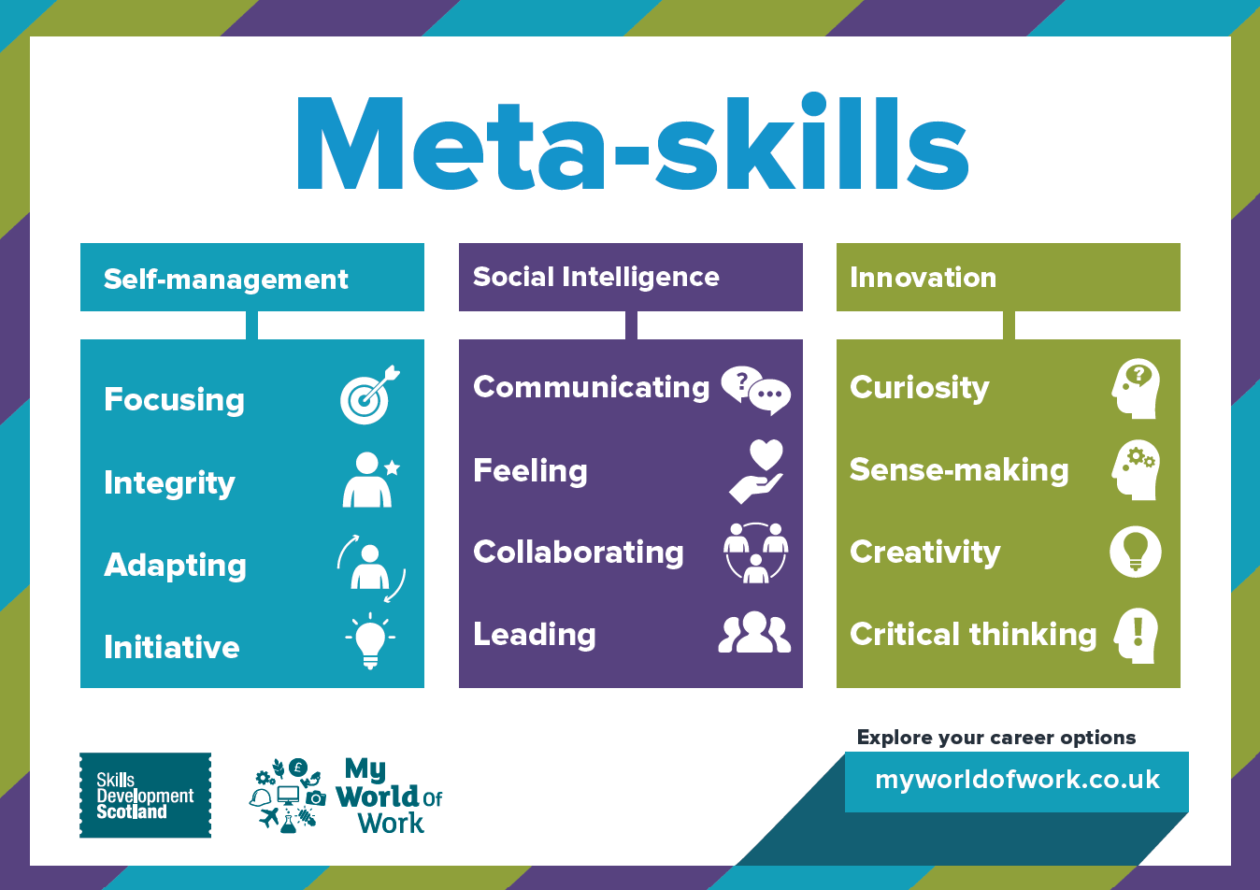
Meta-Skills
“Meta-skills are innate, timeless, higher-order skills that create adaptive learners and promote success in whatever context the future brings. From birth, children use their meta-skills as they test and explore the world around them, and it is these meta-skills that act as a key to unlock the development of other transferable and technical skills. Therefore, it is important that as children and young people progress through their education, practitioners make meta-skills explicitly visible and create opportunities for learners to recognise, understand and explore their meta-skills development.“
Meta-skills Progression Framework, Skills Development Scotland

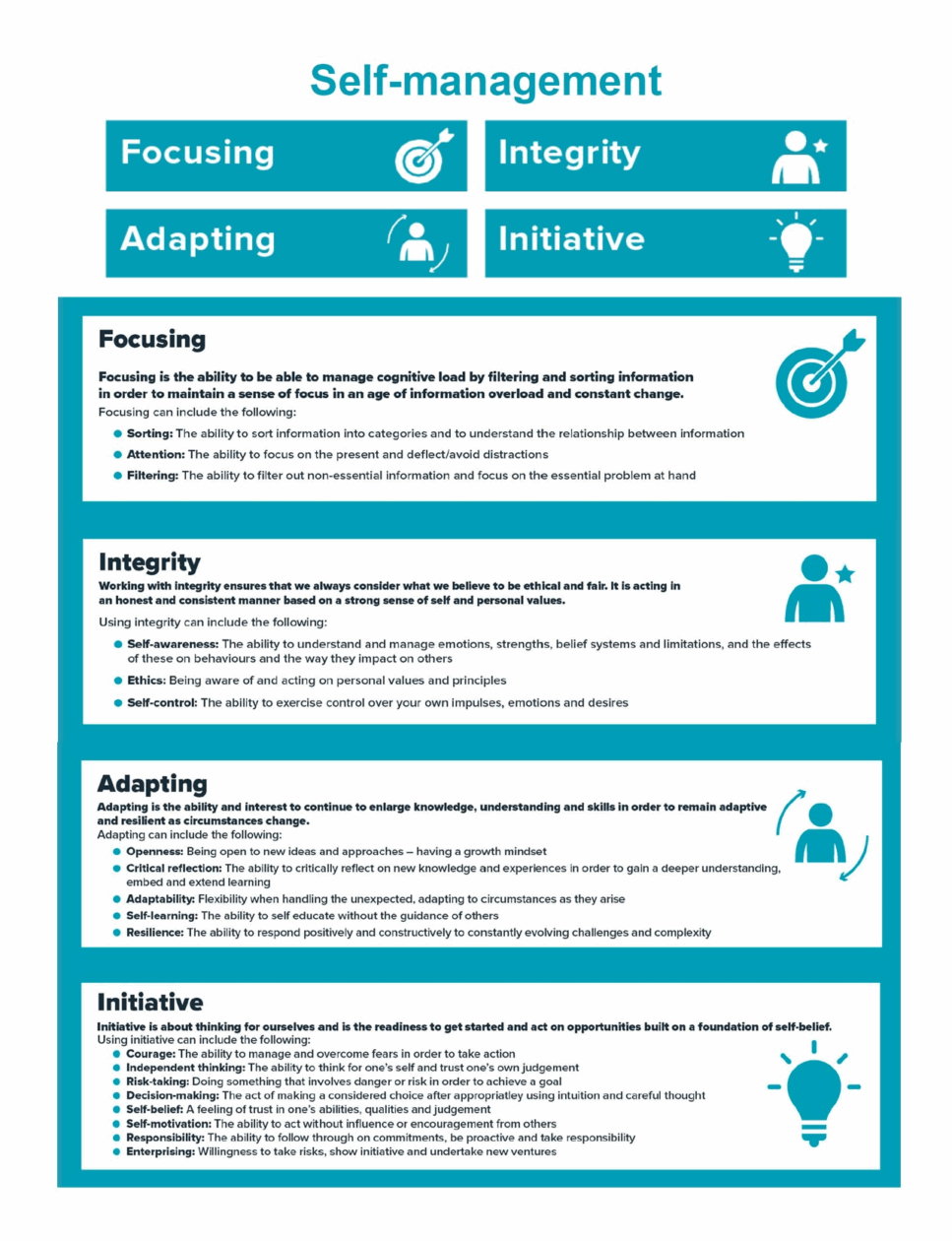
What does FOCUSSING look like in Early Years?
-
- Displaying continuous, interest and involvement in a task over a period of time
- Identifying objects and events as the same or different, and sorting objects into groups
- Accepting changes in their environment in order to be able to focus on a task.
What does INTEGRITY look like in Early Years?
-
- Showing kindness to others and being sensitive to others’ feelings
- Being aware of how their actions can affect others
- Recognising that we have similarities and differences but are all unique.
What does ADAPTING look like in Early Years?
-
- Asking lots of questions and being curious about the world around them
- Recognising simple problems and talking about solutions with others
- Being flexible and resilient when faced with novel or unexpected situation
What does INITIATIVE look like in Early Years?
-
- Beginning to plan, and enjoying completing a given task
- Both following instructions and making their own instructions for others to follow
- Showing confidence through expressing themselves through actions such as making marks, role play, joining games, singing or dancing with a little prompting if needed for support.
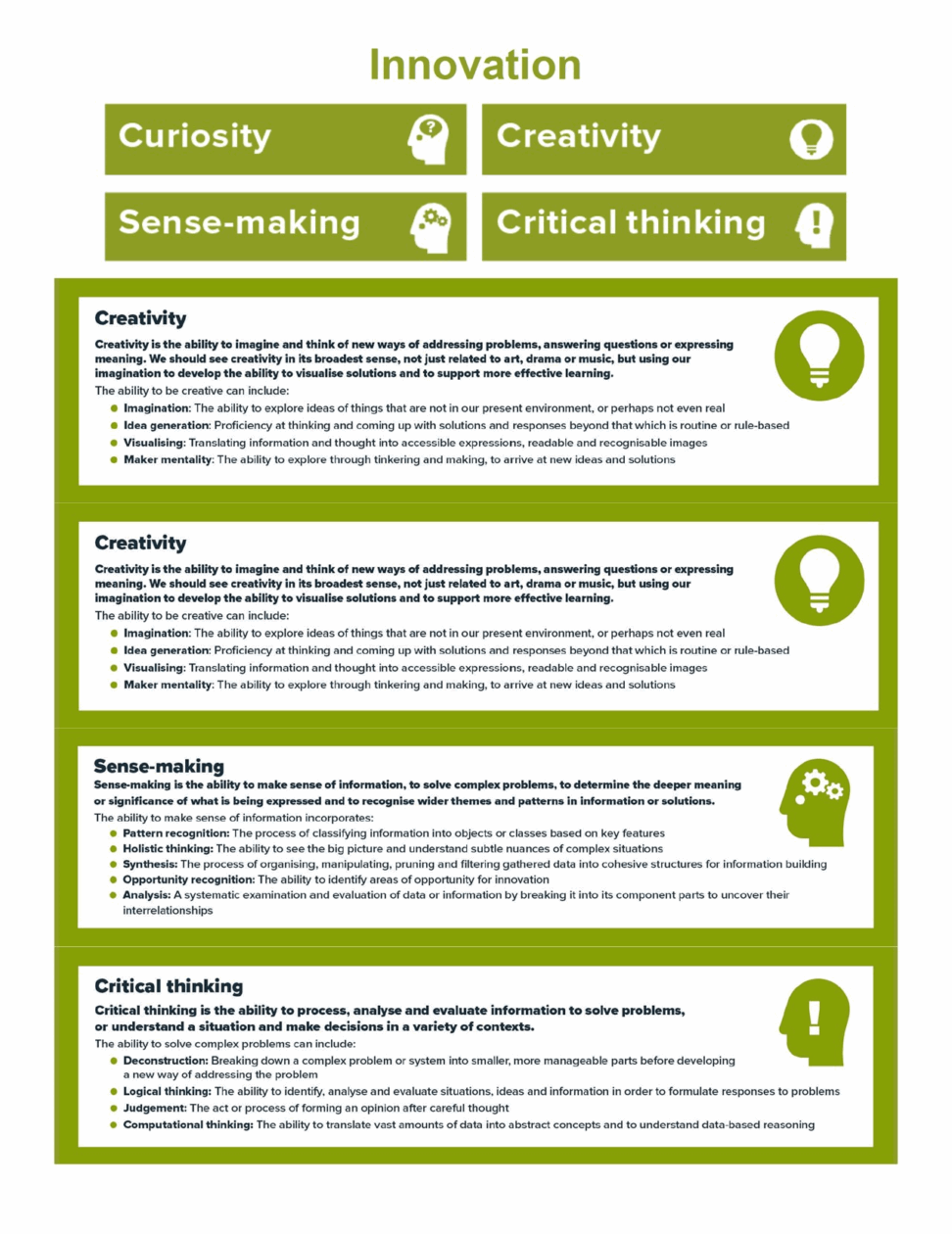
What does CURIOSITY look like in Early Years?
-
- Showing excitement, enjoying the unexpected, the unusual and surprise in learning
- Asking lots of questions about what they are learning
- Observing and asking questions about the world around them
- Using sources of information such as books, digital technologies, family and peers to find relevant information
- Carrying out self-directed learning and recognising and resolving related problems.
What does CREATIVITY look like in Early Years?
-
- Expressing themselves through different types of play such as mark making, role play, making things, tinkering with objects, singing and dancing
- Being willing to take on new challenges
- Engaging well in creative play with friends, for pleasure and as a form of creative expression
- Asking questions about the wider world.
What does SENSE-MAKING look like in Early Years?
-
- Recognising and describing visual and audio patterns and differences
- Recognising problems and talking about solutions
- Asking and answering questions in relation to stories, play and learning in relation to themselves, families and friends
- Listening and understanding what is being said in the context of play, stories and real-life events
- Identifying and naming objects or events as the same or different, and sorting objects into groups
What does CRITICAL THINKING look like in Early Years?
-
- Working with a focus, asking and responding to questions to clarify what they are doing
- Making simple predictions and seeing possibilities
- Asking different types of questions
- Summarising and reflecting on their learning
- Using materials from their environment and coming up with their own ideas on how to solve problems.
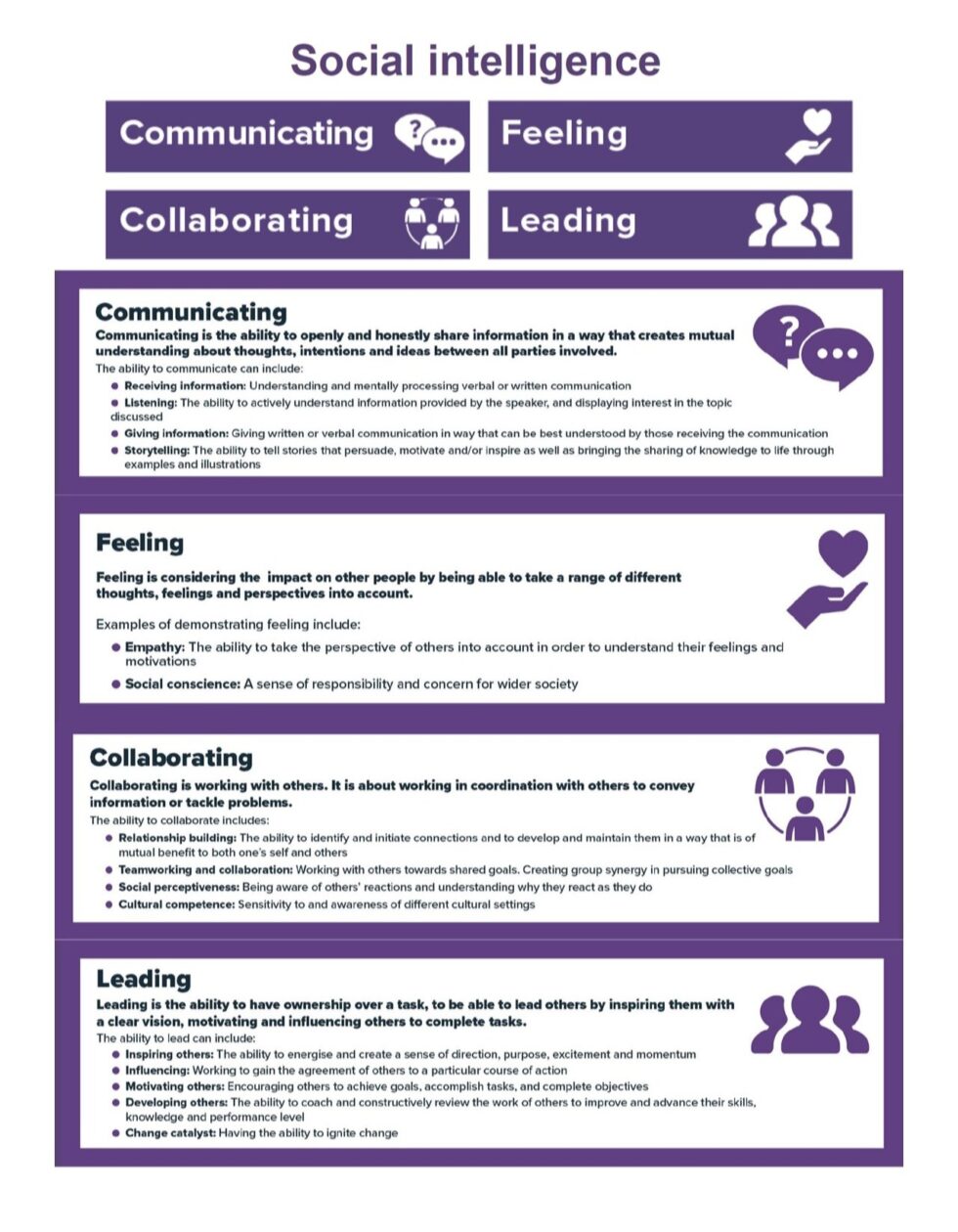
What does COMMUNICATING look like in Early Years?
-
- Enjoying listening to and recalling stories with friends, and using their imagination to tell their own stories
- Expressing themselves through play and storytelling, and talking about their learning
- Talking about memories and experiences
- Learning to use words to suit different purposes
What does FEELING look like in Early Years?
-
- Showing kindness and being sensitive towards others
- Being aware of how actions can affect others
- Expressing genuine concern and responsibility for others and the wider society
What does COLLABORATING look like in Early Years?
-
- Engaging in creative play and working well with friends and less familiar people
- Listening to others in a group
- Being able to join in with others in a one-to-one situation or part of a group
- Being aware of how their actions can affect others
- Learning to use words to suit different purposes.
What does LEADING look like in Early Years?
-
- Listening to other people’s ideas and positively influencing and motivating others during play and learning
- Identifying and justifying their own course of action
- Being confident in different situations/contexts
- Making suggestions in group play.