Computational Thinking across the Curriculum
Coding Across the Curriculum
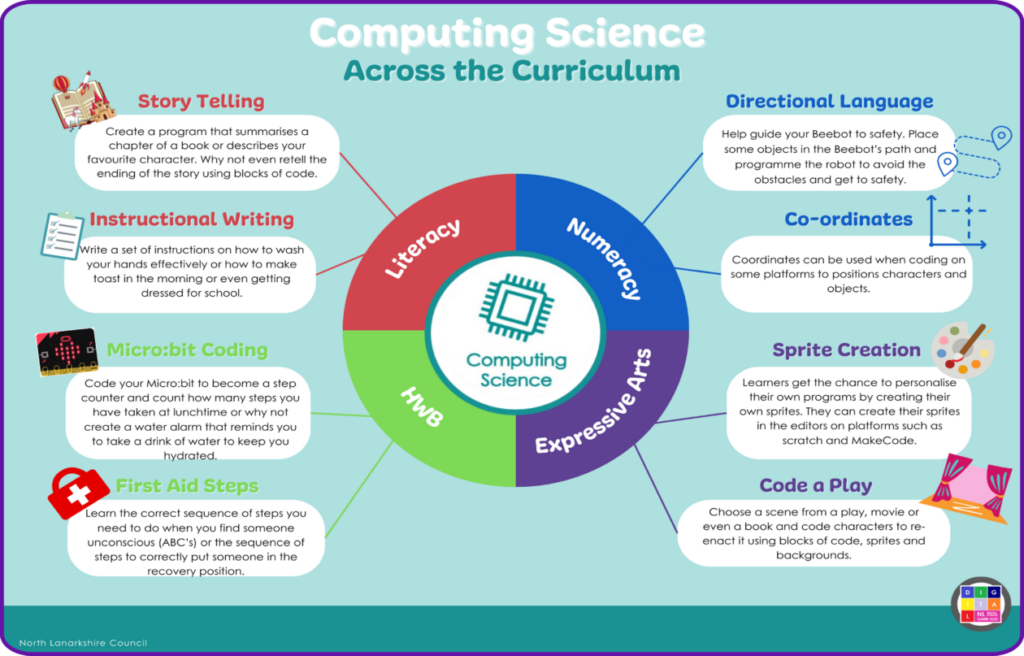
Coding and computing science has become an extremely popular topic for primary school pupils but it can sometimes be challenging for staff access training as other areas of the curriculum take priority. Knowing this I have created an idea to show simple ways computing science can be taught across the curriculum and not just as a stand alone subject.
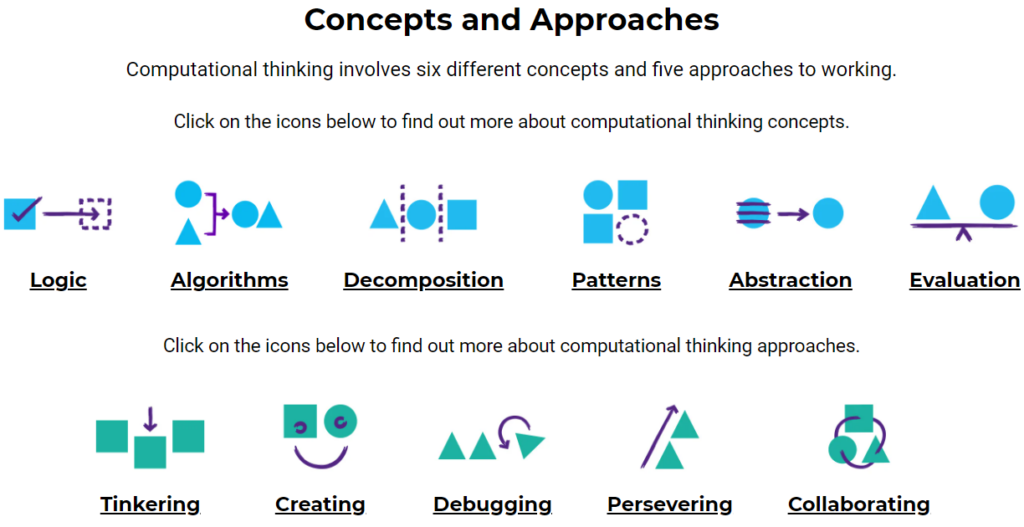
By doing this I am able to introduce the computational thinking skills that can be adapted to fit the lessons planned. For example, the skill of Decomposition can be used widely across the curriculum by breaking down maths problems to gain a better understanding or breaking down a word in to syllables to aid spelling.
This is just one simple example but all the concepts and approaches outlined by Barefoot Computing can be easily added in to a teachers everyday vocabulary to provide learners with a good link between the everyday teaching and computational thinking.
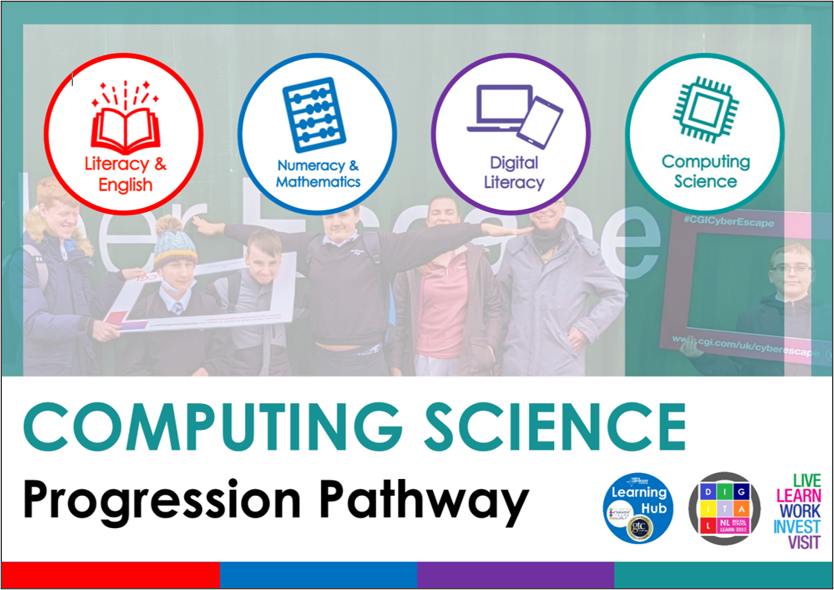
Computing Science Progression Pathways & Exemplified Learning
I was a part of a four person team who spent the best part of a year creating a relatable pathway and examples of activities for primary educators to become more confident teaching computing science and embedding computational thinking. These Progression Pathways are designed for practitioners to use in the planning, teaching, learning and assessing of computing science and in preparing our learners for a digital world of work, life and leisure.
- Each pathway is split across three levels to highlight progress through a level.
- Higher Order Thinking Skills are highlighted in bold and can be used to support staff to form Learning Intentions and Success Criteria.
- Learners can be supported in understanding the purpose of their learning and the journey of computing science learning.
- Practitioners can use the pathways to ensure their professional judgements are consistent, robust and reliable.
- The pathways can support ongoing professional dialogue during the planning, teaching, learning and assessment cycles to ensure a shared understanding of standards and expectations.
Some key guidance for using the Progression Pathways:
- Within the Computing Science curriculum, the organisers build upon each other: the theory (computational thinking), language and tools (concepts and approaches, computing information and process) to then creating (design and build).
- It is a spiral curriculum, where the learners will revisit concepts at increasing depth as they work through the Levels.
- Practitioners should avoid teaching the organisers discretely and plan lessons that combine learning to achieve an outcome.
- The Progression Pathways should be used flexibly to meet learners needs. It does not need to be taught linearly.
- The Progression Pathways are not resource driven to allow staff the autonomy select the most appropriate resources to best suit learners needs and interests and available resources.