
1. The table below compares the rate of extinction of mammal species over two different time periods.
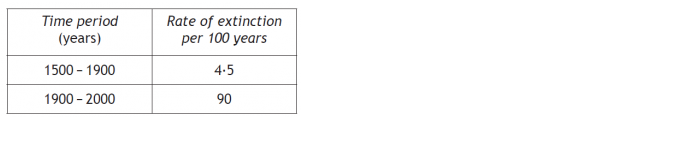
The ratio of extinction rates between 1900 – 2000 compared to 1500 – 1900 is
- A 1:20
- B 1:2
- C 2:1
- D 20:1.
2. The table below shows the results of an investigation into the effect of temperature on the number of eggs laid by female red spider mites.
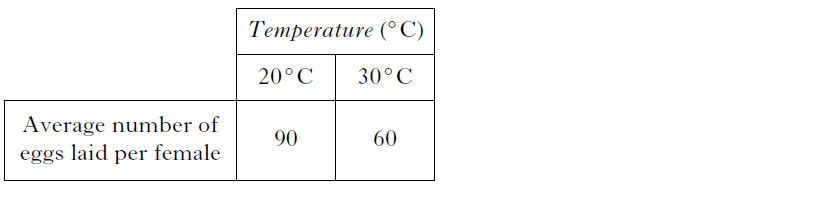
The percentage decrease in the average number of eggs laid per female when the temperature is increased from 20°C to 30°C is
- A 30%
- B 33%
- C 50%
- D 67%.
3. Antibiotic resistance in bacteria is an example of evolution. Which of the following shows the sequence of events leading to this?

4. The Peppered Moth is found in two distinct forms. One form is dark coloured and the other is light coloured. The moths rest on the trunks of trees. Pale coloured tree-trunks in an area were darkened by pollution. What would happen to the numbers of the two forms of the Peppered Moth in that area?
- A The numbers of each form would increase.
- B The dark form would increase and the light form decrease.
- C The numbers of each form would decrease.
- D The light form would increase and the dark form decrease.
5. A species can be defined as a group of organisms which
- A breed together to produce fertile offspring
- B have the same phenotypes
- C contain the same number of chromosomes
- D contain identical genetic material
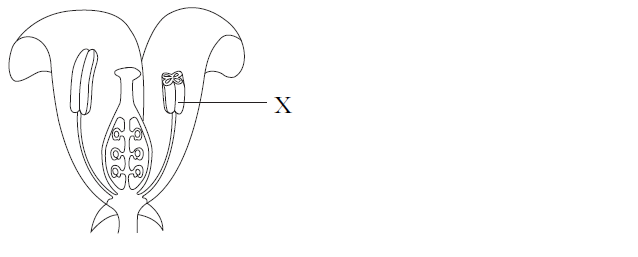
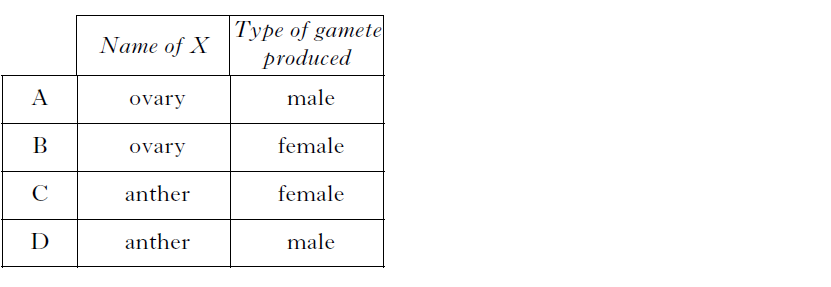
6.The diagram below shows the main parts of a flower. Which line in the table identifies X and the type of gamete it produces?
7.Two groups of the seeds of genetically tall plants were grown under different conditions.
- Group I seeds were grown in high light intensity and high nutrient levels.
- Group II seeds were grown in low light intensity and low nutrient levels.
- All plants in group I were taller than those in group II.
The effect of the different conditions on the phenotype is due to
- A natural selection
- B biodiversity
- C environmental impact
- D polygenic inheritance.
8.The total variety of all living things on Earth is described as
- A an ecosystem
- B biodiversity
- C a community
- D random assortment.
9.The Treecreeper is a bird which feeds on small insects on the bark of trees during the day. What is the correct description of the Treecreeper’s niche?
- A The place where it lives
- B The insects on which it feeds
- C The plants and animals in the woodland environment
- D Its role within the woodland ecosystem

Which one of the following graphs shows the effects of competition for the same food between a successful species and an unsuccessful species?
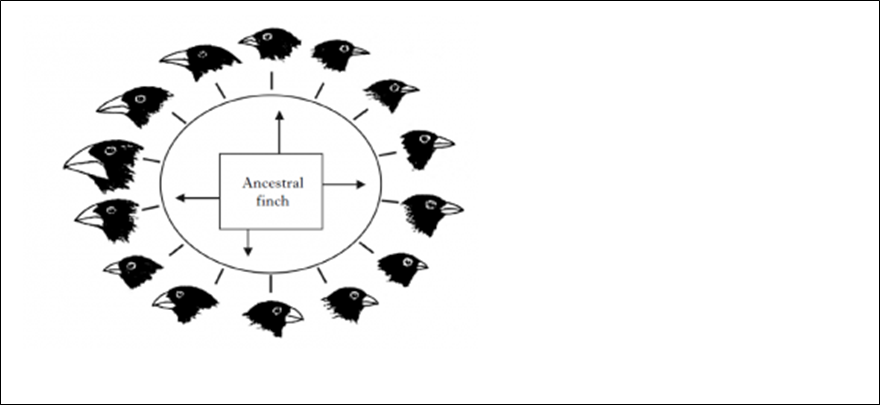
It is thought that Darwin’s finches evolved from one type of ancestral finch. The diagram below shows examples of different species of Darwin’s finches.
(a)
(i) What two observations can be made from the diagram about the structure of the finches’ beaks? (2)
(ii) Name one environmental factor which has led to this variation. (1)
(b) What term is used to describe the role that each finch plays within its community? (1)
(c) The existence of some Darwin’s finches is under threat in the Galapagos Islands due to human activity.
(i) Give an example of a human activity that could be affecting the finches. (1)
(ii) What could be an effect of this human activity on finch biodiversity? (1)