HWrkSht 1_3
The Marking Guide has been made available. Use this where you are having difficulty to help you understand the question better. Simply copying the answers from the Marking Guide will not help you learn, using it to help you understand the questions/ answers will.
You will need your Glow login to access the Marking Guide.
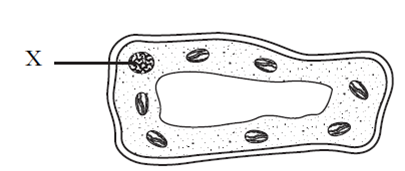
1. The diagram below shows a cell. What is the function of structure X ?
2. The diagrams below show four cells.
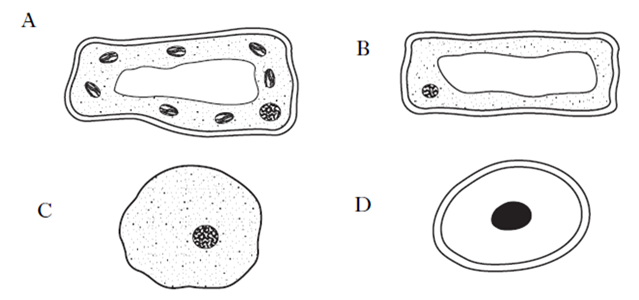
Which cell is most likely a cell from a leaf?
3. If the eyepiece lens magnifies 10 times, what magnification of objective lens is required to produce a total magnification of X400?
4. Which part of a plant cell contains chlorophyll?
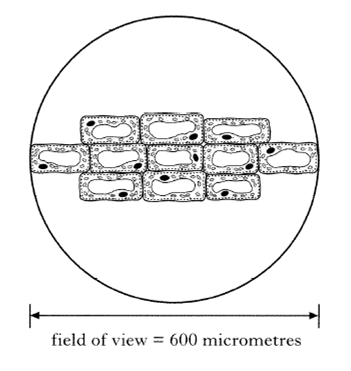
5. Use the information in the diagram opposite to calculate the average length of the cells in the image.
6. The cell organelle shown below is magnified ten thousand times.
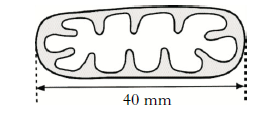 What is the actual size of the organelle?
A. 0.04 μm B. 0.4 μm C. 4μm D. 40μm
7. The diagram below shows Paramecium, a unicellular organism found in fresh water
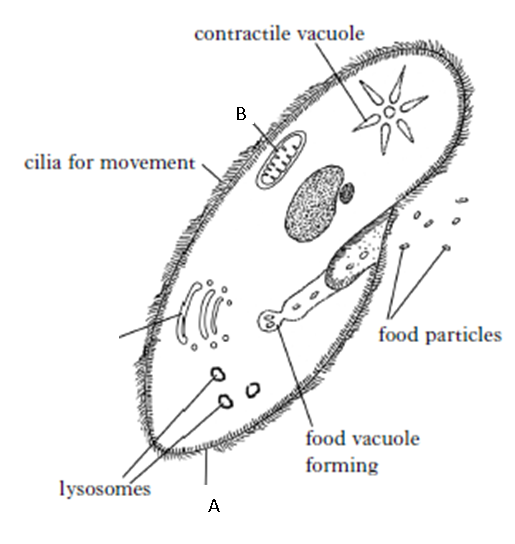
a) Identify structures A and B
b) Is Paramecium a plant or animal cell? Give a reason for your answer.
8. A pupil prepared a microscope slide of onion cells using water.
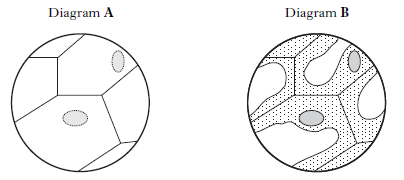
Diagram A shows how the cells looked when first seen with the microscope.
Diagram B shows their appearance after the addition of another liquid.
a) What name is given to a liquid used to make cell structures easier to see?
b) State the difference between the cell wall of a plant and a bacterial cell
c) Name an organelle you would find in an animal cell but not in a bacterial cell
9. Below are four different types of cells
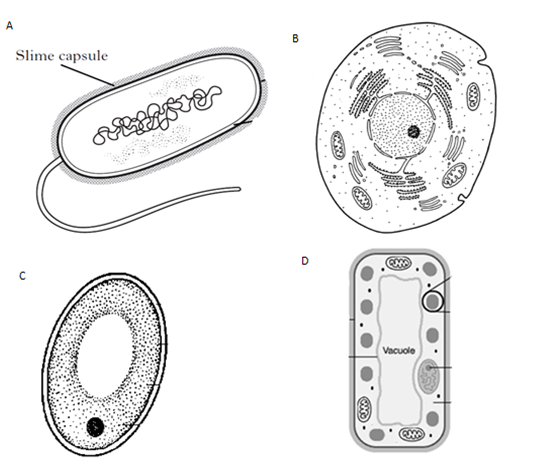
a) Identify the four cells shown
b) Name a structure present in cell type D but absent from the others.
c) Name a structure absent from cell type A but present in all the others.
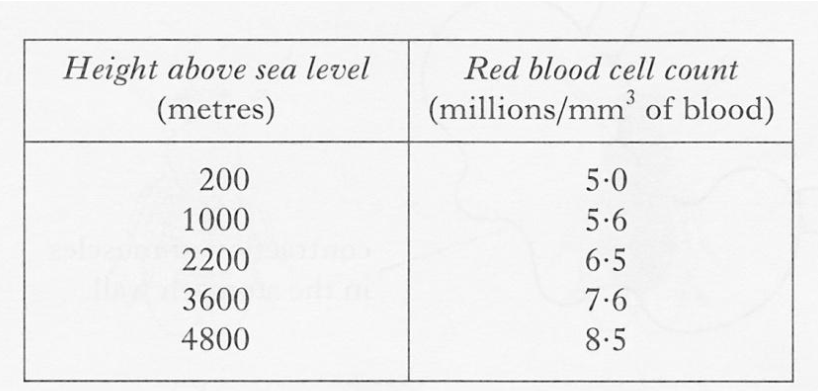
10. The oxygen concentration of the air decreases as the height above sea level increases. The table shows the red blood cell count of a mountaineer taken at different heights above sea level.
(a) Use the information in the table below to produce a line graph.
(b) Describe the relationship between the height above sea level and the red blood cell count.
(c) Suggest a reason why this relationship might exist.
(d) Find out the name of the protein found in Red Blood Cells.
(e) Red blood cells don’t contain a nucleus and are replaced every 120 days. Suggest a reason why they need to be replaced so often.