| 1. | The DNA of a chromosome contains information which determine the structure and function of | |
 |
A. | proteins |
|
B. | fats |
|
C. | carbohydrates |
|
D. | starch |
| 2. | Which of the following is a correct description of a chromosome? | |
|
A. | a chain of DNA bases |
|
B. | a chain of RNA bases |
|
C. | a chain of amino acids |
|
D. | a chain of sugar molecules |
| 3. | All proteins are composed of | |
|
A. | genes |
|
B. | DNA |
|
C. | amino acids |
|
D. | bases |
| 4. | A chromosome | |
|
A. | carries genetic information |
|
B. | controls cell respiration |
|
C. | is the site of photosynthesis |
|
D. | speeds up chemical reactions |
| 5. | A section of chromosome which carries a separate piece of genetic information is called a | |
|
A. | protein |
|
B. | gene |
|
C. | base |
|
D. | nucleus |
| 6. | Which diagram best shows the range of bases in DNA? | ||||||
|
A. |
|
|
B. |
|
||
|
C. |
|
|
D. |
|
||




| 7. | The function of DNA is to | |
|
A. | act as an enzyme |
|
B. | release energy in cells |
|
C. | carry genetic instructions |
|
D. | form cell structure |
| 8. | An amino acid is a unit of the structure of | |
|
A. | protein |
|
B. | DNA |
|
C. | carbohydrate |
|
D. | chromosome |
| 9. | Proteins are chains of | |
|
A. | bases |
|
B. | amino acids |
|
C. | sugars |
|
D. | genes |
| 10. | An explanation of the genetic code is that | |
|
A. | bases sequences of DNA determine the amino acid sequence in a protein |
|
B. | amino acid sequences on DNA determine the base sequence in a protein |
|
C. | amino acid sequences on DNA determine the base sequence in DNA |
|
D. | base sequences in protein determine the amino acid sequence in DNA |
The information in the table below shows the DNA base sequences which code for five amino acids. Use the informtion in he table to answer questions 11, 12 & 13.
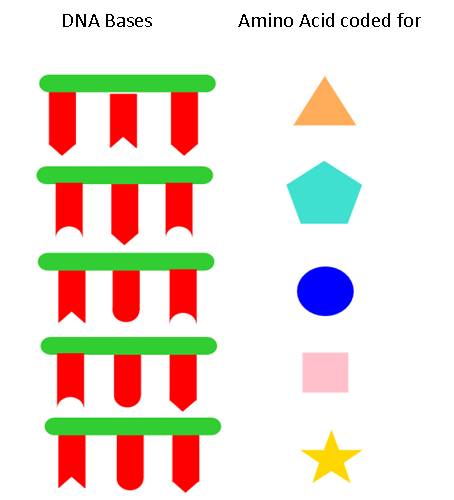
| 11. | Using the information given above. Which of the following pieces of protein would be formed from the sequence of DNA given below?
|
||||||
|
A. |
|
|
B. |
|
||
|
C. |
|
|
D. |
|
||


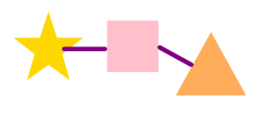
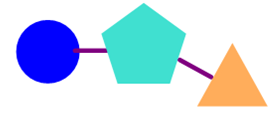
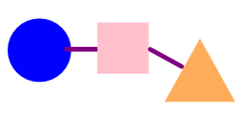
| 12. | Consult the table given above and identify which of the following pieces of protein would be formed from the sequence of DNA given below? 
|
||||||
|
A. |
|
|
B. |
|
||
|
C. |
|
|
D. |
|
||

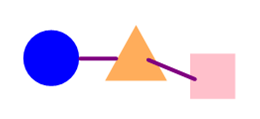
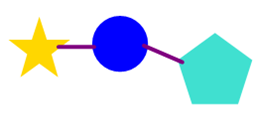

| 13. | Using the information in the table. Which of the following pieces of DNA would form the protein sequence given below.
|
||||||
|
A. |
|
|
B. |
|
||
|
C. |
|
|
D. |
|
||





| 14. | DNA is essential to living organisms because it — | |
|
A. | carries the genetic code |
|
B. | is a spiral helix |
|
C. | can prevent diseases |
|
D. | can break apart |
| 15. | DNA is not present in a | |
|
A. | nucleus |
|
B. | gene |
|
C. | chromosome |
|
D. | membrane |
| 16. | The sugar present in DNA is | |
|
A. | ribose |
|
B. | glucose |
|
C. | maltose |
|
D. | deoxyribose |
| 17. | The structure of a nucleotide is shown below. Which of the diagrams that follow correctly shows two nucleotides joined together?
|
||||||
|
A. |
|
|
B. |
|
||
|
C. |
|
|
D. |
|
||


| 18. | Which of the following is a base pair normally found in DNA? | |
|
A. | A and C |
|
B. | G and A |
|
C. | T and G |
|
D. | A and T |
Use the information from the table below to answer questions 19 & 20.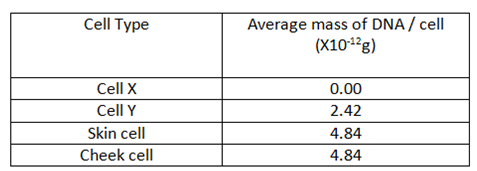
| 19. | Which of the following would cell type X be?
|
|||||||||||
|
A. | sperm cell | |
B. | liver cell | |
C. | muscle cell | |
D. | red blood cell | |
| 20. | What would cell type Y be?
|
|||||||||||
|
A. | sperm cell | |
B. | liver cell | |
C. | muscle cell | |
D. | red blood cell | |