What is the National Guidance?
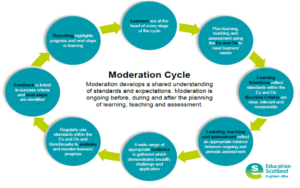
Moderation is the term used to describe approaches for arriving at a shared understanding of standards and expectations for the broad general education. It involves teachers, and other professionals as appropriate, working together, drawing on guidance and exemplification and building on existing standards and expectations to:
- plan learning, teaching and assessment
- check that assessment tasks and activities provide learners with fair and valid opportunities to meet the standards and expectations before assessments are used
- sample evidence from learners’ work and review teachers’ judgements
- agree strengths in learners’ performances and next steps in learning
- provide feedback on teachers’ judgements to inform improvements in practices
Moderation helps to ensure that there is an appropriate focus on outcomes for learners, that learning is at the appropriate level and that learners develop the skills for learning, skills for life and skills for work, including higher order thinking skills, which will allow them to be successful i n the future. Teachers involved in developing their assessment approaches through participation in moderation activities is a highly effective form of professional development.
Useful National Guidance to refer to:
The Moderation Process The Moderation Process1
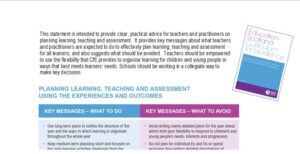
The cfe-statement from Education Scotland: a statement for practitioners.
Within these documents you will find reference to moderation principles and practice.
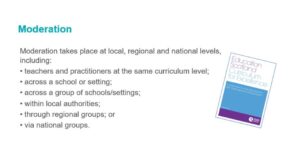
The documents also share a refocus of Curriculum for Excellence, including the expectations around planning learning, teaching and assessment.
The image of the Moderation Cycle below offers a clear visual representation of the key elements of moderation.