Building Thinking Classrooms: A Paradigm Shift in Mathematics
What is Building Thinking Classrooms?
Building Thinking Classrooms (BTC) is a pedagogical framework, developed by Dr. Peter Liljedahl, consisting of 14 specific teaching practices that have been scientifically proven to increase student thinking and engagement. It is based on the premise that traditional classroom structures and routines—like learners sitting at desks facing a teacher—actually discourage active thinking.
The approach is built on three foundational pillars:
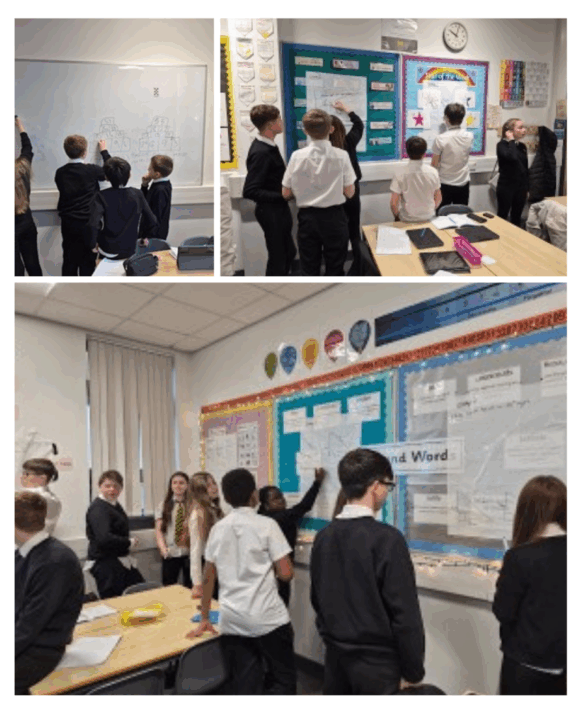
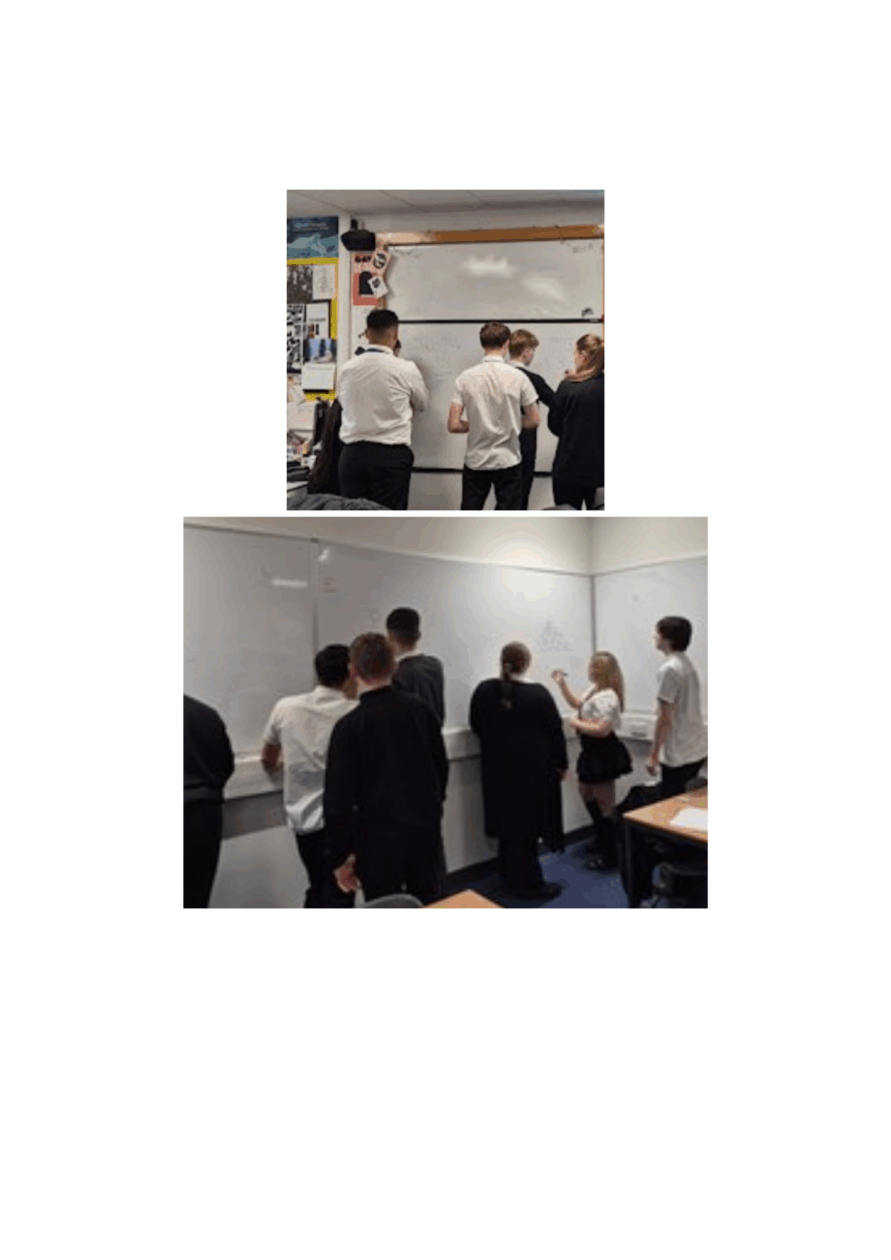
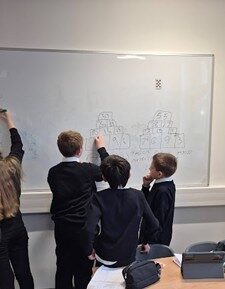
- Vertical Non-Permanent Surfaces (VNPS): Learners stand to work on whiteboards or windows. This increases risk-taking, as mistakes are easily erased, and makes thinking visible to the teacher and peers.
- Visibly Random Groups (VRG): Groups are changed every single lesson using a transparently random method (like playing cards). This breaks down social barriers and eliminates the “status” often associated with fixed ability groups. It also removes ‘ceilings’ that are placed on some learners through fixed groupings.
- Thinking Tasks: Lessons begin with engaging, open-ended tasks that require collaboration and problem-solving, rather than a lecture from the teacher followed by repetitive exercises.
Why Are Teachers Making the Switch?
The BTC approach tackles learner disengagement head-on by breaking down the physical and social barriers to learning. Here is how it redefines the mathematical experience:
- Instant Engagement with VNPS: By moving learners to Vertical Non-Permanent Surfaces (whiteboards or windows), you instantly increase persistence. Students are more willing to take risks when they know they can easily erase and correct.
- Breaking Social Hierarchies: Using Visibly Random Grouping every single day ensures that every learner works with everyone else. This eliminates “cliques,” builds a collaborative culture, and forces mathematical ideas to be the centre of classroom discussion.
- Deep Thinking over Rote Memorisation: Instead of focusing on process-driven methods to solve abstract calculations, BTC starts with Thinking Tasks. Learners grapple with meaningful problems first, building an understanding of what they “need to know”, for conceptual fluency to be achieved.
- Dynamic Mathematical Discussion: Because groups are standing and visible to one another, “knowledge mobility” happens naturally. Ideas spread across the room, sparking high-level discussion and peer-to-peer coaching that a seated classroom can never achieve.
Who benefits from the approach and why?
While BTC is a win for the entire learning community, specific groups see unique benefits:
- Reluctant or Lower-Confidence Learners: Because the environment is “non-permanent,” these learners feel safer making mistakes. They are no longer isolated but are supported by the collective brainpower of a random group.
- High-Achieving Learners: These learners are challenged to move beyond “answer-getting.” They benefit from having to explain their reasoning to peers, which solidifies their conceptual understanding and develops leadership skills.
- Teachers: The role of the teacher shifts from “deliverer of information” to “facilitator of thinking.” Teachers find they have more time to circulate, observe learner-thinking in real-time, and provide targeted, responsive support, through “hints and extensions”, rather than repeating the same teaching points.
- The Classroom Community: The daily randomisation of groups builds a culture of “knowledge mobility,” where learners share strategies and solutions, and learn to trust and work with every one of their classmates, regardless of social standing.
Common Issues Building Thinking Classrooms Helps Address
BTC was designed specifically to solve the flaws in the traditional classroom teaching model:
- Learner Passivity (“Mimicry”): In many maths lessons, learners simply copy the steps the teacher does. BTC forces learners to grapple with the logic themselves, making them the primary drivers of the lesson.
- The “I’m Not a Maths Person” Myth: By removing the stigma of being “wrong” (thanks to the whiteboards) and the pressure of working alone, BTC helps dismantle maths anxiety and builds a growth mindset.
- Classroom Management and “Hiding”: It is easy for a learner to disengage at a desk in the back of the room. It is nearly impossible to “hide” when standing at a whiteboard with two or more peers. Engagement becomes the default state.
- The Expert/Novice Divide: Traditional ability grouping often reinforces who is “smart” and who isn’t, and creates ‘ceilings’ on learning. BTC creates a fluid environment where different learners bring different strengths to the table every day.
Resources
Books
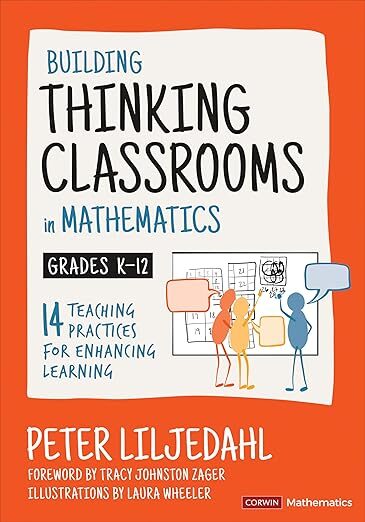
Peter Liljedahl’s book “Building Thinking Classrooms in Mathematics” is a key text, which acts as a comprehensive practitioner guide to the Building Thinking Classrooms approach. This is available to borrow from Learning Resource Services.
Vertical Non-Permanent Surfaces
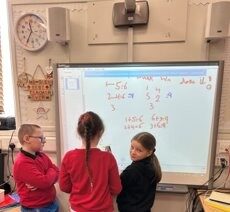
Vertical Non-Permanent Surfaces (VNPSs) are a fundamental feature of a Building Thinking Classroom. VNPS’s make use of any vertical space for learners to record thinking and solutions. They should be wipeable, so that learners can erase and edit their recordings as they go, providing a ‘low-stakes’ experience for all. Here are some practical examples of VNPSs:
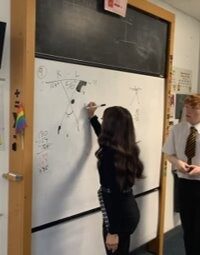
Fixed Wall Whiteboards
Fixed whiteboards are perfect for making VNPSs a regularly used resource across all learning experiences. You may also use existing whiteboards and smartboards for the same purpose.
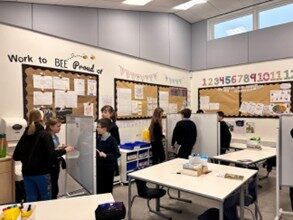
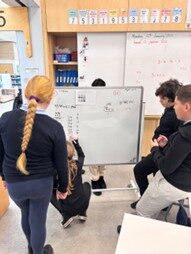
Whiteboards on Wheels
These are a great flexible alternative for learning environments that lack available wall space. An added benefit is that more than one group can have access at the same time, with each group using alternate sides of the board.
Magic White Roll
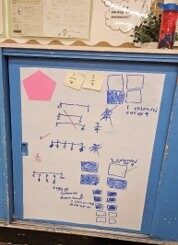
This can be purchased in bulk online, and can be stuck to any vertical surface (walls, doors, windows) with no damage. The roll is wipeable and sheets can be reused.
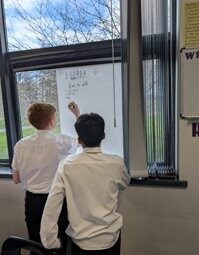
Windows
Chalk pens can be used to write directly onto windows – always a learner’s firm favourite!
CLPL in Falkirk
CLCPL 2024-25
In 2024-25, a cohort of primary and secondary staff were trained in the BTC approach and piloted it within their classrooms. Many have it now implemented firmly within their practice and have seen substantial positive impact on learner engagement and attainment.
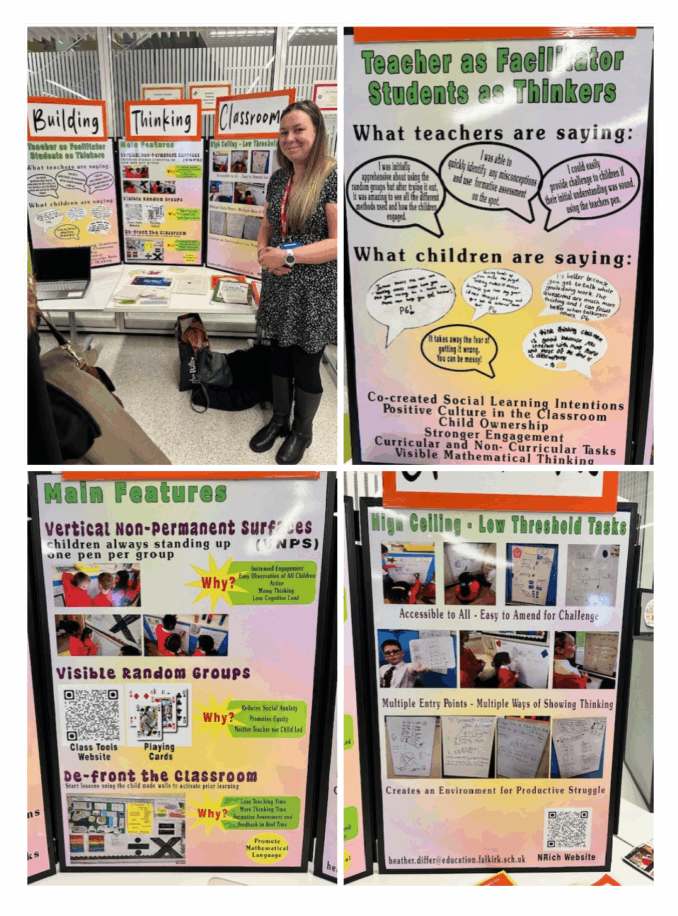
Heather Campbell, class teacher at St Francis Primary, took part in the BTC professional learning programme and has since embedded the approach firmly within her daily practice. She found the training completely re-shaped her pedagogy and, as a result, her learners have found purpose and enjoyment in their maths learning. She has also supported colleagues with implementation of BTC in their practice.
Heather showcased her BTC journey at our Learning to Achieve Marketplace in November 2025, and shared the positive impact this has had on her learners’ engagement and attainment in maths.
CLPL in Falkirk
CLPL 2025-26
Throughout 2025-26, fourteen secondary maths practitioners are taking part in a robust 6-session training programme. They are now trialling the approach with their classes and have engaged in support visits from authority officers. Evaluation feedback so far demonstrates positive changes to pedagogy and impact on learning. We look forward to evaluating the impact of this
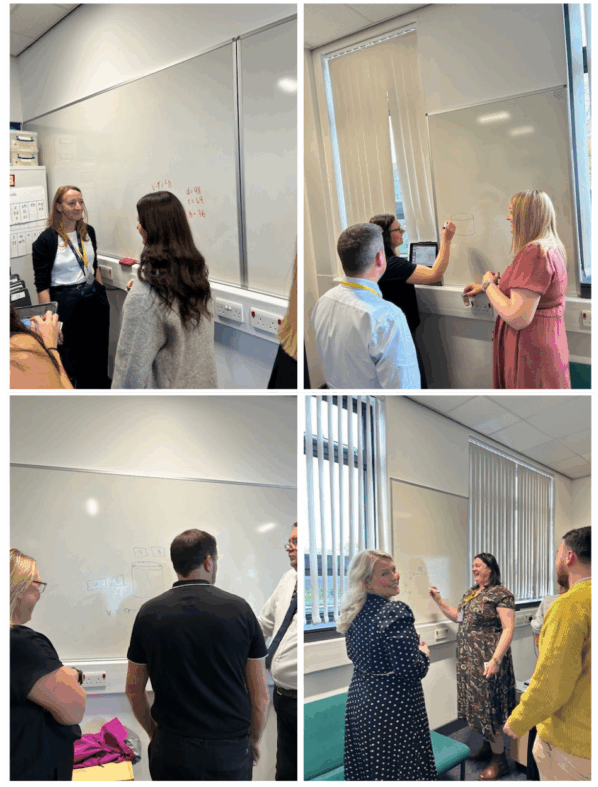
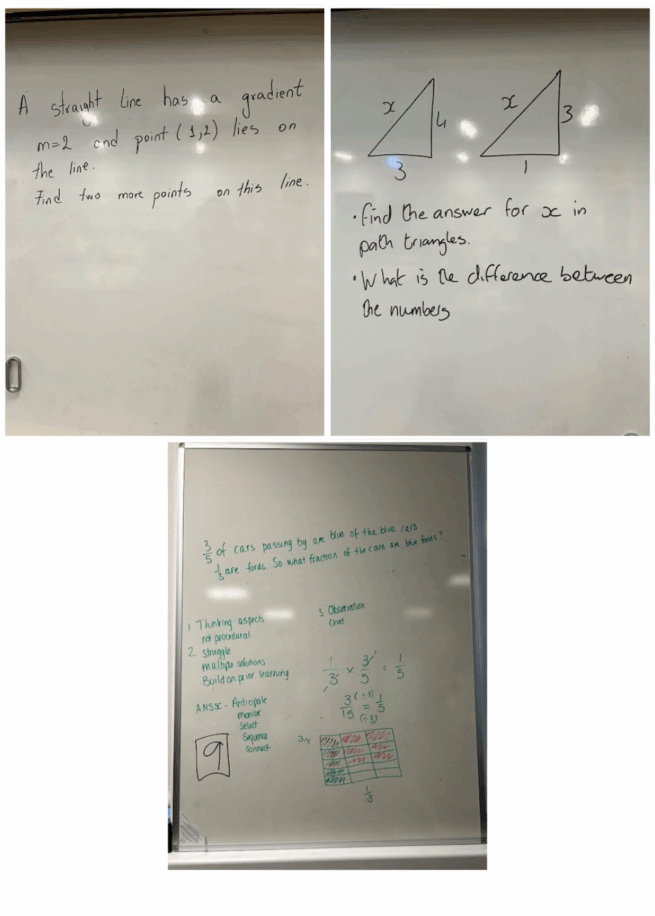
Participants learned the power of using multiple representations to deepen learners thinking. 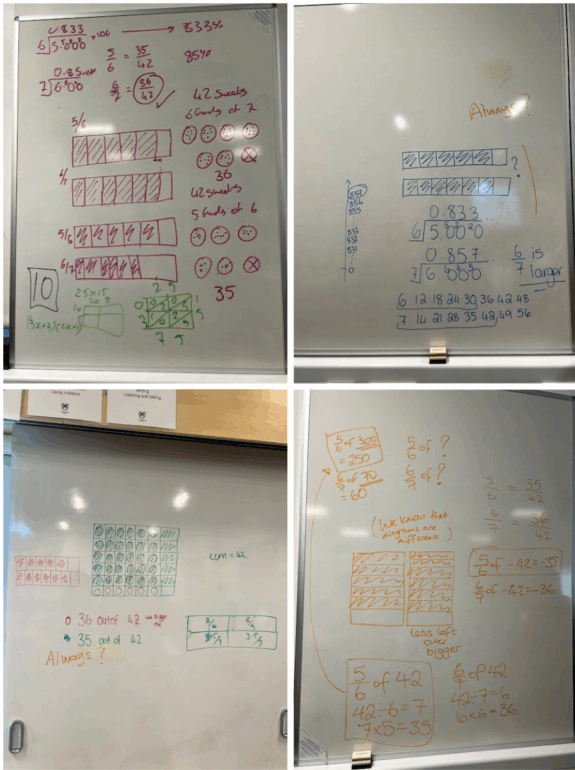
Task Design was identified by participants as a shared focus. We explored how to design ‘thinking’ tasks and shared examples that had been used successfully within practice.