
Why Use Visuals?
Visual supports can be very helpful in helping young children with a range of additional support needs. They support communication and can be used in various environments and in many situations. For some children they are a vital communication support. It is helpful to have consistency at home and in the early learning and childcare setting when using visual supports.
Some of the benefits of using visuals for children and young people include:
- Creating a shared understanding of the day
- Providing structure, routine and predictability by showing what is coming next
- Supporting communication – both expressive and receptive
- Promoting classroom and personal organisation
- Encouraging independence
- Improving understanding
- Building confidence
- Reducing frustration and anxiety
- Helping with consistency across home, the educational setting and the community
Visual supports can be presented in a variety of ways and using a variety of content. For example they can be created very easily with:
- Drawings
- Photographs, including photographs of objects and rooms/areas the autistic learner uses
- Symbols
- Clip art
- Objects
- Written word
Visual supports can be printed and laminated on A4 size paper or made smaller and attached to a keyring which is accessible by the learner. Staff may carry a keyring as well to prompt and model use.
Visual Supports are commonly used for:
- Timetables
- Schedules
- Choice boards
- Helping a learner communicate how they are feeling
- Health and safety communication
- Supporting social communication e.g. visual scripts
- Offering a range of coping strategies.
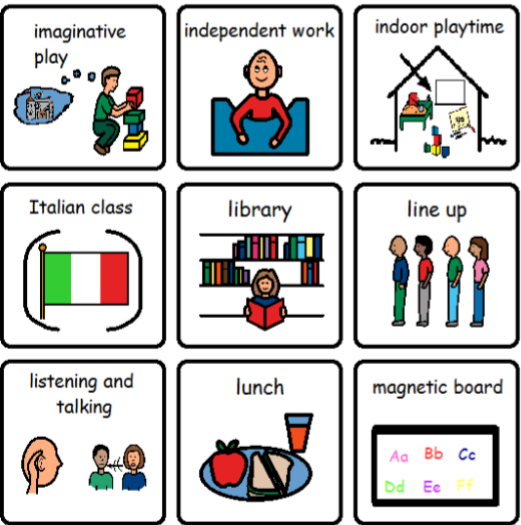
For visuals you can print and use click on the links below to download to your computer. There are also resources focussing on regualtion strategies and sensory circuits at home listed below.
Areas of the Nursery and Timetable
Months of the year and weather
12 Self-Regulation Strategies for Young Children Infographic