Complete
Self-harm
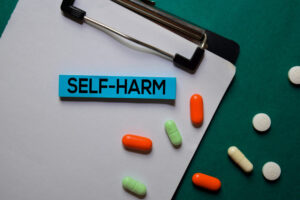
Talking to your teen about self-harm can be difficult. Start with a calm, compassionate, non-judgmental conversation. Share your concern and ask open questions to understand how they’re feeling, for example: “I’m worried about you and noticed these marks. Can you tell me what’s going on?”
Self-harm is when someone deliberately hurts their body to cope with overwhelming emotions, painful memories, or distressing experiences. It is a serious mental health concern in young people.

Most self-poisoning involves prescribed or over-the-counter medication. Most self-injury involves cutting.
Self-harm can include suicide attempts or behaviors with little/no intent to die, often used to cope with distress, relieve tension, or communicate feelings.
Possible warning signs:
- Frequently covering up (e.g., long sleeves)
- Unexplained cuts, bruises, burns
- Blood stains or bloody tissues
- Withdrawal, isolation, avoiding others
- Low mood, low self-esteem, self-blame
- Anger outbursts or risky behaviors (alcohol/drugs)
Helpful questions to explore self-harm (ask gently, not all at once):
- Did you mean to end your life? (important to assess suicidal thoughts)
- When did it start? How often does it happen? What methods are used?
- How do you care for any wounds?
- What usually leads you to harm yourself?
- When was the last time?
A basic wound-care kit may include gauze, alcohol-free wipes, closure strips, dressings, tape, and a bandage.
Prepare for these conversations, ask with care, and ensure support is available. Acknowledge that self-harm is a way to cope with distress and gently discuss healthier alternatives Microsoft Word – Coping mechanisms for self harm-client’s.docx. Involving a mental health professional is crucial, you can make a referral here Make a Referral | Exchange Counselling If you’re concerned about their immediate safety, take them to an A&E or use one of these resources available 24/7:
– Papyrus 0800 068 4141
– Self Injury support 08088008088 text 07537432444
– Calm 0800 585 858
Parental Guide Supporting-Your-Child-A5-Booklet-English-2023
Clips
Websites
YoungMinds – https://www.youngminds.org.uk/parent/parents-a-z-mental-health-guide/self-harm/
Exchange Resource | Exchange Counselling
Self-Harm Video Resources | The Chelsea Psychology Clinic
Self-harm | Advice for young people | Get help | YoungMinds
How to support someone who is self-harming – Samaritans
NSPCC – Understanding child self-harm