Time

Homework this week is a practical task.

Telling the time.

Look at analogue and digital clocks.

O’clock, half past, quarter past and quarter to.

Once you’ve practised this move onto 5 past etc then how many minutes to the next hour.

This is a life skill that is so important. Ask someone to test you at home.

Scots Language Celebration Assembly

Our Scots Language assembly is this Friday.

Just a reminder that everyone is invited to wear something Scottish.

This could be something in your hair, something tartan or a Scottish accessory.

Good luck to Ayla, Isla and Oscar!!!! (our class winners)

Febru-read!!! Reading Challenges for the month of February!!

To continue to promote a love of Reading for Enjoyment, we would like to invite our learners to take part in the Reading Challenge “NRPS Febru-read!!!” We have a challenge for P4-7 and a challenge for P1-3.  If your child would like to take part in a challenge, they can let their teacher know and they will be given a challenge sheet which will allow them to take part.  We will make time at our Personal Achievement Assemblies to celebrate learners who take part.

Digestive System Experiment

Attention!

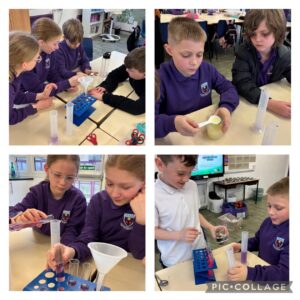
We are carrying out a science experiment. Please bring in one or two resealable plastic bags (just like sandwich bags) and a hair bobble or elastic band. If you have a yellow/brown banana at home you could bring it to school too.

First chapter THURSDAY AND FRIDAY!

We were very lucky this week to enjoy TWO first chapters.
Mrs Butler was our MYSTERY reader! We loved hearing the first chapter of Maze Runner by James Dashner.  We had lots of questions after reading.

Eva also shared the first chapter from a book she enjoys.  Five Children on the Western Front.  This book created a lot of discussion around ‘prologues’ and ‘epilogues’ .
Thank you so much for sharing your time and talent!

Address to a Haggis

Use this link to access the poem.

Remember you are learning the first three verses and the last verse. Good luck.


http://fran6.deport.free.fr/dotclear/documents/address_to_a_haggis.pdf

Robert Burns


Robert Burns 1759 – 1796


Robert Burns was a famous poet from Scotland who lived a long time ago, over 200 years in the past. He was born in 1759 in a small village called Alloway. Robert did not grow up rich. His family worked hard on a farm, and from a young age he learned about nature, animals, and the everyday lives of ordinary people. These early experiences helped him become a poet who wrote about real feelings and real life in a way that many people could understand and enjoy.

Robert Burns loved words and stories. Even though he had to work on the farm, he spent time reading books and learning poems and songs. He wrote many of his poems in the Scots language, which was the way many people in Scotland spoke at the time. He wrote about love, friendship, kindness, and fairness, and he believed that everyone, rich or poor, deserved respect.

One of the things that made Robert Burns special was how much he cared about music and songs. Because of this, many of his poems were meant to be sung, not just read.

The most famous song connected to Robert Burns is Auld Lang Syne. The title might sound strange, but it means “times gone by” or “long ago.” People often sing Auld Lang Syne on New Year’s Eve, when one year ends and another begins. Thanks to Robert Burns, people all around the world share this song together.

Address to a Haggis is a funny and lively poem. In the poem, Burns talks to a haggis as if it was a brave hero instead of just food. He praises it for being strong, tasty, and better than fancy meals from other countries. Using playful and exciting words, he makes the haggis sound proud and important. The poem is often read out loud on Burns Night before people eat haggis, and everyone listens and laughs. It helps children and adults learn about Scottish traditions.

Robert Burns died young, when he was only 37 years old, but his words never disappeared. Today, people still read his poems, sing his songs, and celebrate his birthday on a special night called Burns Night. People enjoy Scottish food, music, and poetry, and remember this talented man, who gave Scotland one of its strongest voices.