Introduction to Transitions
Transitions are a key policy priority in Scottish education, embedded throughout Curriculum for Excellence (CfE). Dumfries and Galloway Council recognise that positive transitions are essential for children’s personal, social, and emotional well-being, as well as their cognitive development and academic success.
This website guidance sets out agreed expectations of all partners on how to support transitions for children and young people with Disabled Complex Needs / Additional Support Needs (ASN), and should be read in conjunction with stage specific transition guidance which for staff can be found (Insert glow link)
The Council adopts a rights-based approach, grounded in the United Nations Convention on the Rights of the Child (UNCRC, updated March 2022). This means every child has the right to be heard, respected, and supported throughout their transition journey.
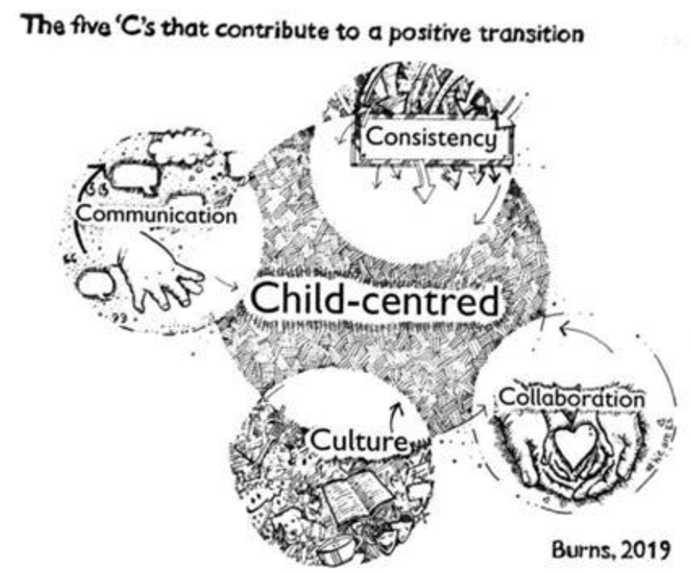
To ensure transitions are meaningful and supportive, planning should be guided by the following themes:
- Child-Centred: Focus on the individual child’s needs, interests, and experiences.
- Culture: A positive and inclusive school culture is essential for ensuring successful transitions.
- Collaboration: Foster strong partnerships between schools, families, and other agencies.
- Consistency: Ensure continuity in relationships, routines, and expectations.
- Communication: Maintain open, honest, and developmental appropriate dialogue with children and families.
Individual Education Planning, Childs Planning and Coordinated Support Planning processes will consider whether a transition plan is required.
Principles for Planning Transitions
- Continuity of Learning
Transitions should build on what children already know and can do. Avoid “fresh start” approaches that ignore prior learning. Instead, ensure a planned progression that supports confidence and continuity. - Family Engagement
Parents and carers play a vital role in supporting transitions. They should be actively involved as partners, with their insights and concerns valued throughout the process. - Child Participation
Children must be given opportunities to express their views and preferences.- UNCRC Article 12 states: “Children capable of forming their own views have the right to express them freely in all matters affecting them, with their views given due weight according to age and maturity.”
- Best Interests of the Child
All decisions and actions must prioritise the well-being and development of the child, considering their individual needs, abilities, and circumstances. - Equity and Inclusion
Transitions must be fair and accessible to all children, regardless of level of additional support need, gender, race, disability or socio-economic background. Discrimination must be actively challenged. - Support for Children and Young People with Stage 3 and 4 Levels of Need
Children with disabilities or those facing complex life transitions require tailored support and reasonable adjustments to ensure full participation and dignity. - Competent and Responsive Adults
Staff must be well-prepared, empathetic, and knowledgeable, creating a sense of trust and security for children and families. Transitions should be gradual and supported, not abrupt or overwhelming and involve all partners in the planning
Why This Matters
Research (Dunlop & Fabian, 2007) highlights that children often experience a “dip” in cognitive and emotional development during transitions. These dips are linked to changes in:
- Environment
- Relationships
- Identity
- Learning expectations
- Curriculum
- Daily routines
By addressing these areas proactively, educators can minimise disruption and enhance children, young people and family resilience and readiness for change.
Practical Implications for Practitioners
- Plan transitions early and collaboratively with colleagues, families, and support services.
- Use transition profiles or passports to share key information about each child. Need these as exemplars
- Create opportunities for visits, familiarisation, and relationship-building with new settings or staff.
- Identify and provide emotional support and reassurance, especially for those children and families who may be anxious or vulnerable.
- Reflect on your own practice and seek professional learning to strengthen transition support.