Ethos and Life of the School as a Community
Curriculum Improvement Cycle Podcast
Whole School Approach to Racism
This Scottish Government guidance is designed to support schools to develop and implement a consistent and robust approach to addressing racism and racist incidents. This can be achieved through actions to create a whole school anti-racist environment, including school culture and ethos, school policies and systems, professional learning and development for school staff, and the curriculum. It also means that schools have a
consistent approach to responding to individual incidents of racism when they occur.
This guidance has been designed to assist school leaders, school staff, and local authorities to implement a consistent and robust whole school approach to responding to racism and racist incidents in schools.
The guidance is applicable to all schools, regardless of the diversity of the pupil population or wider community.
Why use a whole school approach?
Racism can affect all parts of a school community, including pupils, school staff, parents, carers, families, and the wider community. A response to racism and racist behaviour therefore requires a whole school approach, with cohesive, collective and collaborative engagement across the school community. This approach recognises the important
contribution to be made by every member of a school community.
Youth Enquiry Podcast
The next instalment of the Youth Enquiry Service Podcast shines a light on one of the
most important topics for our region: how we support and protect children, young people,
and families. This episode features Sharon Telfer, Lead Inspector with the Care
Inspectorate and part of the team behind the Joint Children’s Services Inspection in
Dumfries and Galloway carried out last November. Sharon shares:
- her reflections from the inspection process
- what the findings mean for services across the region
- how partners can work together to strengthen outcomes
- and, most importantly, what all of this means for children, young people, and
families going forward
•
A thoughtful and insightful conversation that looks ahead to how Dumfries and Galloway
can continue to improve support for its youngest residents
Fairer Futures Fund
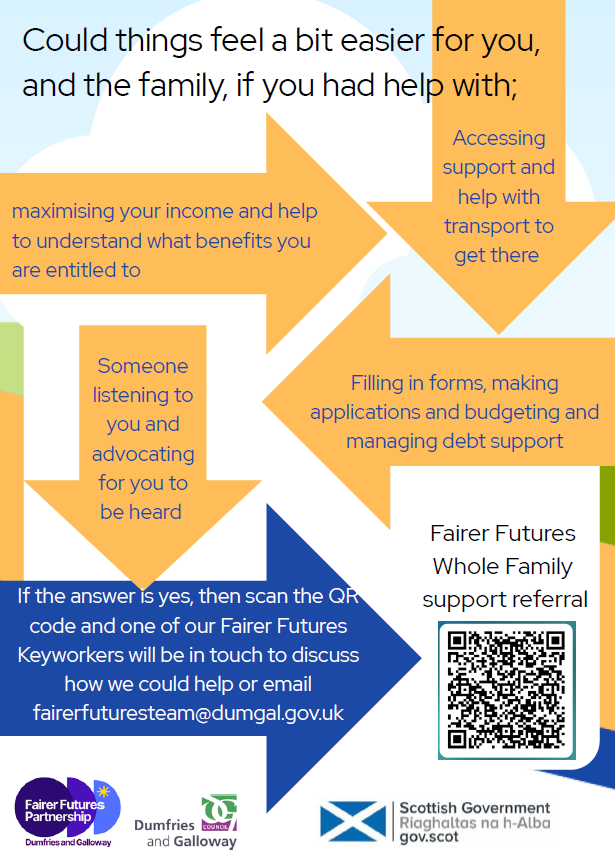
Referrals can be completed by scanning the QR code on the flier or via this link Fairer Futures Referral – Fill in form
You can make a referral as an organisation, or you can leave the flier with your family and they can refer themselves. Please let your families know if you are making a referral.
Eligibility criteria is, referrals must have a willingness to engage with support and live in one of our 4 SIMD priority areas as per below;
- Upper Nithsdale
- Summerhill, Summerville, Lochside, Lincluden, Dumfries Town centre or Locharbriggs
- Stranraer
- Annan
However please get in touch to discuss if you are working with a family experiencing poverty, outwith our priority areas, if they fall into one of the following priority groups;
Lone parent families
Minority ethnic families
Families with a disabled adult or child
Families with a mother aged under 25
Families with a child under one
Larger families (3+ children)
Once the referral is made, it will be allocated to a keyworker and we will make contact with the family to have a chat about what support they are looking for. We will keep you updated on whether your family has taken up support or not.
Tesco Stronger Starts
Learning Conversations: Community Justice Scotland
Challenge Poverty
Earlier in the year, Education and Youth Work worked with the Youth Council to develop a Support for Young People tab on the Cost of Living DG website for young people age 12 to 25. The Support for Young People tab provides information on financial support, benefits, grants, free things to do in the area and much more for young people.
The tab can be accessed at: Support for young people | Cost of Living
Live PL
Digital Discourse Initiative
Connect

Community Benefits
Active Travel
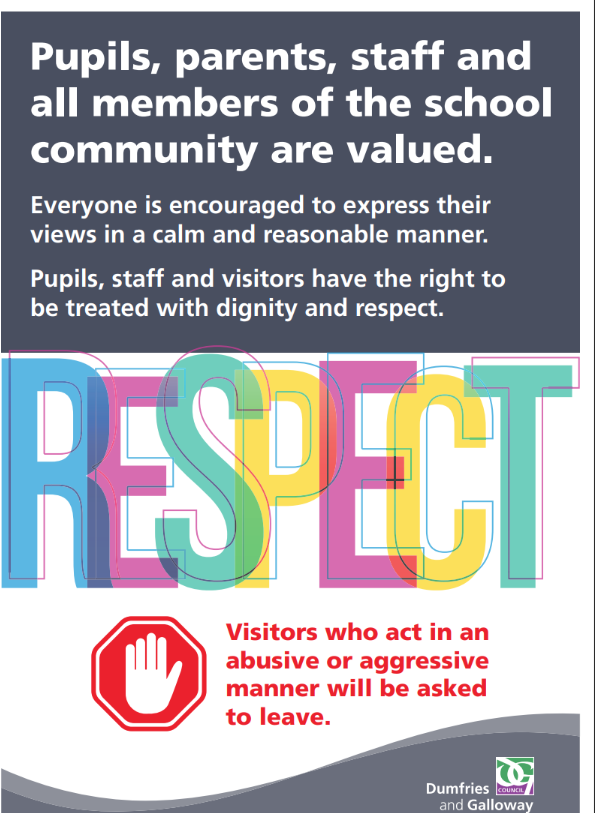
Abusive Behaviour Poster for School and ELC Settings to print and display