Sources

See more information in:
· Learning in 2+ languages (p6)
· NALDIC (What is bilingualism?)
· What is EAL in Education? - The Bell Foundation (bell-foundation.org.uk)
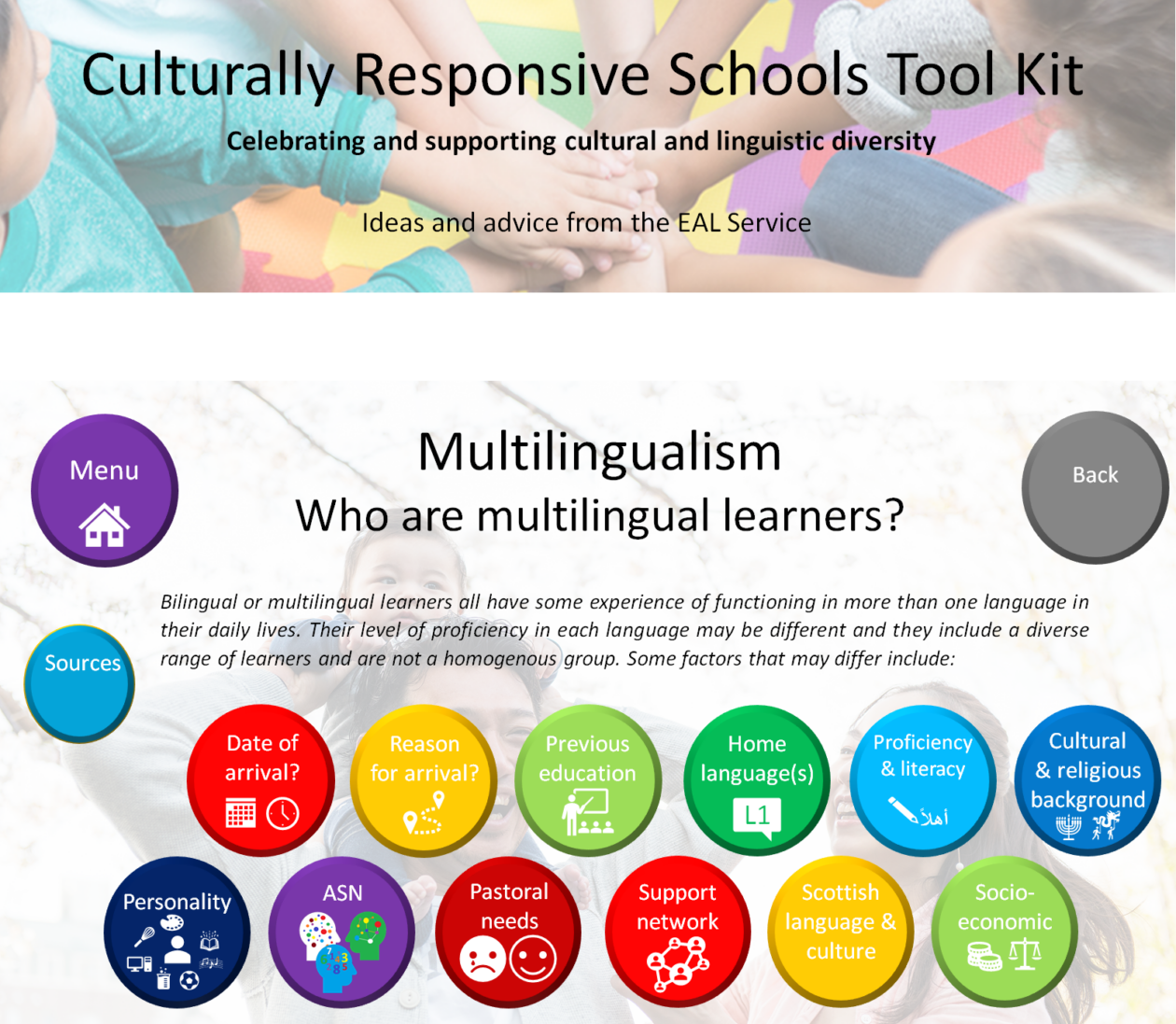
Date of arrival

· Many learners have been born in Scotland or elsewhere in the UK, or have been in the UK since their early years and have come through the education system.
· Many have come to the UK at an older age.
· Learners who arrive later in school will come with different educational experiences and may need more support to settle into the Scottish Education system.
Reason for arrival
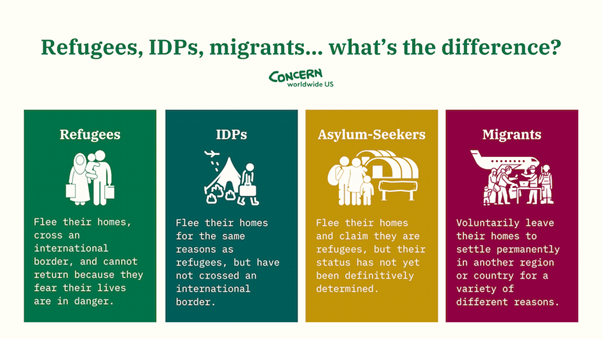
Image from https://concernusa.org/news/refugee-idp-migrant-difference/
· Learners may have arrived as Refugees or may be seeking asylum and may have associated experience of trauma. They may experience cultural disorientation, grief, loss and isolation BEFORE factoring in language learning.
· Other families may have made a choice to move to the UK for employment or to be with family.
Previous education

· Learners may have a complete education from home country and may have age-appropriate skills in first language. The curriculum and pedagogy may differ in their home country and so there may be some approaches to learning and some areas of the Scottish curriculum that they are unfamiliar with.
· Others may have had some gaps in education related to forced relocation while some may have little or no experience of education if they have been displaced for a significant period of time.
· Some learners may have moved from a country where education begins later (age 7 in many countries) and if they arrived into P2/3 they may be starting with little or no experience of formal education and have some catching up to do.
· Where there are gaps in previous education, there is likely a gap in literacy and numeracy skills and perhaps understanding of norms and routines associated with the classroom, but with time learners should be able to begin to close the gap as their acquisition of English advances.
Home language

· In Aberdeenshire there are consistently around 60-70 languages represented by the pupil population with new languages being added most years.
· Many pupils have experience of more than one language at home.
Proficiency and literacy

· Learners may have well developed first language skills, including literacy, which will transfer to support their acquisition of English. They may need to learn the Latin script if their home language has a different writing system.
· Some learners may already have some English literacy skills, while some may even be competent users or English.
· Some learners may be literate in more than one language.
· Some may still be at an early level of literacy in home language, which will make it more challenging to acquire English literacy skills.
Cultural & religious background

· A wide range of cultures and religions are also represented across the pupil population. It is important to learn about pupils’ background and to celebrate the wide range of cultures and religions represented in school. See the ‘cultural awareness’ section for more information.
Personalities, learning styles and other individual differences.

· As with any group of young people, multilingual learners will all be individuals and have their own preferred ways of learning.
· They will have their own strengths and things they find difficult.
· They will have their own interests and hobbies.
· It is important to find out as much as possible at enrolment to understand how best to support learners, and also to ensure they can find ways to pursue their interests and hobbies. Extra-curricular activities are an excellent opportunity to build social English and make friends.
Additional support needs

Image from additional-support-needs-2.jpg (222×221) (glowscotland.org.uk)
· Learners may be high achievers who need additional support to allow them to progress.
· Learners may have learning difficulties that have or have not been identified. See the section Multilingualism section 'EAL & ASN' for more information
Pastoral needs

· As with any children and young people, pastoral needs are important. Needs may include processing trauma, coping with a new language and culture, isolation or difficulty making friends.
Wider support network

· There are some established first language communities where families can support each other, but for many families it can be a challenge to be in a place where they don’t have neighbours, friends or family who share their language and culture.
· This can contribute towards isolation and difficulty in understanding/accessing support.
Experience of English and Doric language and the local culture.

· Knowledge of the cultural norms and routines, the things we take for granted, may be challenging for learners and their families.
· It is important to be mindful that multilingual learners and their families may need support in understanding language and concepts that we may have expected all families would know.
· Concepts such as snow days, guidance teachers, learning through play, free school meals etc may be unfamiliar and even with translation may not make sense to families without some explanation.
· The above points cover how families will be navigating linguistic and cultural differences associated with moving to the UK. They will also be navigating the local dialect, and specific cultural differences relevant to the local area, such as different accents, vocabulary, celebrations, foods, music etc.
Socio-economic backgrounds

Again, learners and their families may come from a range of socio-economic backgrounds. Schools are experienced in working with families across the different SIMD centiles, however it is important to bear in mind that families may not be aware of important information or how to access support such as free school meal entitlement.