General Advice

Modern Studies and History can be very challenging subjects for pupils who are acquiring English as an Additional Language and is usually not advised until pupils are competent users of English. Both subjects have significant language demands in terms of vocabulary and academic language skills, but also focus on issues that are likely to assume cultural capital that would have been acquired from living in the UK, such as knowledge of the political system, knowledge of historical events etc. Geography can be a more suitable option but will still require academic language skills and knowledge of subject specific vocabulary. Understanding knowledge related to locations and countries that are new to the pupil may also be a challenge.
Key strategies
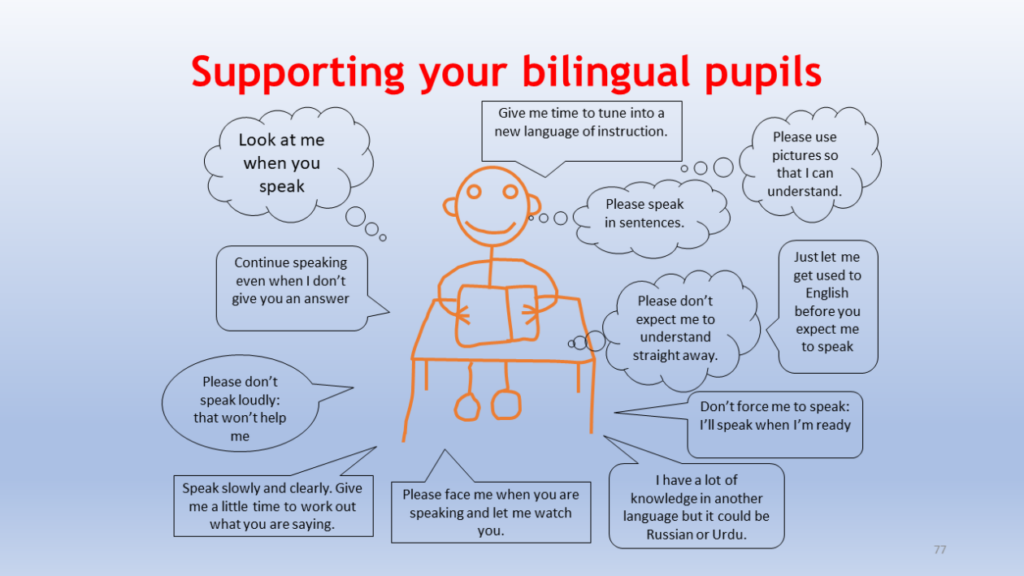
As with all subjects, make use of key EAL strategies (see general strategies section). Some key strategies include:
· using clear visuals.
· making use of first language to support learning using:
o dual language word lists and glossaries.
o dual language dictionaries.
o translation apps including google lens etc (follow good practice – see general advice for more guidance).
· printing out key visuals/info from the board.
· making sure the pupil can access the revision book for the subject.
· using the BBC Bitesize website (English and translated) to support understanding.
· offering past papers with marking instructions so pupils understand what markers will expect.
· encouraging pupils to use Scholar resources (Geography only).
· offering homework and lunch clubs.
Prior knowledge

If pupils who arrive in your classroom have studied History or Modern Studies (or some equivalent) before, they may have learned some of the key skills that would be learned in Scotland such as analysing and interpreting information, using a critical eye etc. They may even have covered some of the same topics such as Brexit or a specific conflict. However, they may have studied different aspects of those topics or information and facts and accounts may have been presented from a different perspective. They may also have studied completely different topics, and classroom pedagogy may have been very different.
Pupils who have studied Geography in other education systems are more likely to have learned similar topics to those covered in the Scottish curriculum. Remember to consider the pupil’s previous educational experiences. They may come with knowledge of a range of concepts and vocabulary in their first language. They may have covered some areas of the curriculum that you have not yet covered in class and likewise, they may not yet have covered some areas that you have covered. Cultural context will still be an issue in Geography, pupils may not have the cultural capital that their peers have, such as knowledge of typical weather and landscapes in the UK.
First language
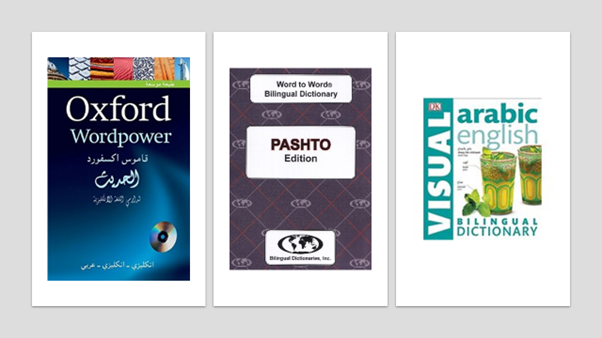
Use translated resources and glossaries if literate in first language.
Supporting the language of the subject
Include the pupil in a group with peers who are a good model of language and behaviour. Provide context for new vocabulary through demonstration, visuals etc. using target vocabulary in spoken and written form alongside practical examples for context.
· As well as subject specific technical vocabulary, there will also be subject specialised words that have a different meaning in the context of the subject, for example: Aspect can mean ‘a particular part or feature of something’ but in geography can also mean ‘the direction toward which a slope faces with respect to a compass or to the Sun's position in the sky’.
· Dual language dictionaries, word banks and glossaries will be helpful in supporting new language. Pre teaching vocabulary and sharing key vocabulary in advance of learning will be helpful. A range of media including visuals, videos, practical demonstrations etc will also support learning of new vocabulary and structures of language. Give pupils opportunities to practise using new language including units such as km².
· The structure of academic language required for all subjects may also be unfamiliar and pose a challenge.
Lots of exposure to new structures in context will be helpful. Encourage all pupils to use new vocabulary and structures during practical activities.
· The format of diagrams and texts may be unfamiliar and be challenging to navigate.
Look at examples and highlight key aspects, including the types of language used. Highlight any key vocabulary used including not only subject specific vocabulary but also homonyms (words with more than one meaning) that may have a different meaning to what the pupils would expect. Also point out the style of language including tenses etc. Ensure pupils have access to examples that they can use as a model for writing.