Introducing Languages
· Each language can be introduced in an assembly. The first assembly could explain how language of the month will work.
· Pupils, their families and any bilingual staff who speak the focus language could introduce the language and some key phrases to the school.
§ Please
§ Thank you
§ Hello
§ Goodbye
§ Colours for lunch bands/options
· They can also look at information about where the language is spoken and some information about cultures in those countries including:
§ Facts about the country(ies)
§ Famous people
§ Inventions
§ Sports
§ Capital City
§ Flag
§ Food
§ Things to see
§ Festivals
· A new language can be introduced each month.
· A Languages Day could provide an end of year celebration event where groups of pupils lead presentations or workshops for parents, or pupils from other schools, on their own culture and language, offering a taster of the learning from each month.
Spoken by all

The new language could be used by all staff and pupils for the month for key activities, from greeting each other in the hall to choosing an option for lunch. Newbury Park primary school developed this comprehensive guide on language of the month.
Language Ambassadors

Use multilingual pupils to be ambassadors for their language. The ambassadors could work across classes which will give them responsibility and build confidence and their sense of pride in their first language.
Display
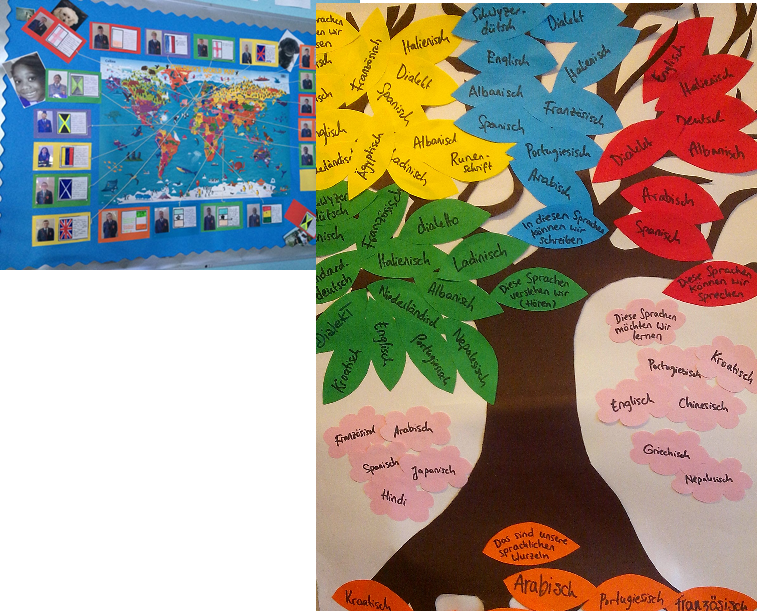
· Display the focus language for the month with a brief explanation of the language of the month approach. Include key phrases and information about the language, and a summary of languages that have been celebrated so far.
· This could take the format of a World Map with flags highlighting: the range of countries where people have lived in the past and where people have family. Include any places that people have visited for other reasons such as holidays. The pins/flags/ribbons could be colour coded.
· It could take the format of a ‘language tree’ with all children taking a leaf for each language they speak to add to the trunk. The languages could be bunched on branches. (The version shown above is from a German school!)
· Include music from the focus language or culture being played as background music in the dinner hall, near the display or at the school reception.
Images from https://www.pinterest.co.uk/pin/303993043593223903/ and LanguageTree_crop_textEN.jpg (2054×2739)
Resources
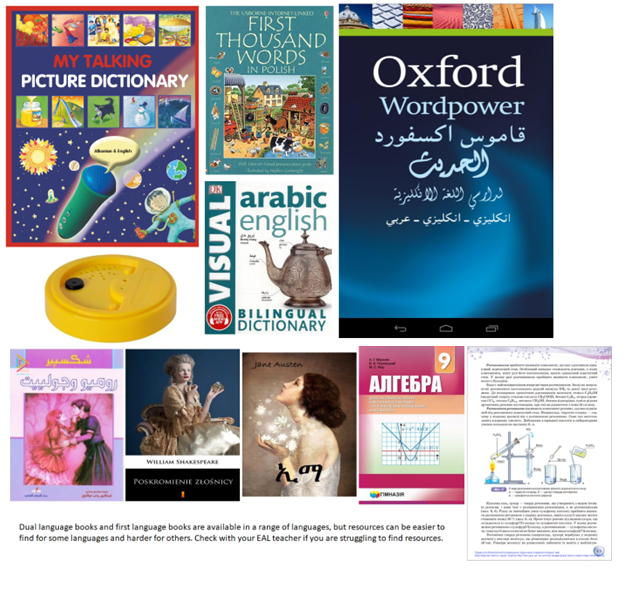
· Collect a range of books in all languages represented across the school and make a space for them in the library.
· Borrow dual language/first language books and the EAL Language boxes from the library service (available through curricular kit boxes).
· Ensure there are dual language and visual dictionaries available to pupils in the classroom and ensure that class teachers understand how pupils can use them. There is more information on making use of these in the ‘Inside the classroom’ section.
· Ensure that there are a range of dual language books and first language texts for pupils to read for pleasure, and to support classwork if possible.
· Include classics from other countries in English and the original language, and versions of well-known stories from different cultures, in English and other languages. For example Wojtek the bear. Stories told in other languages from other countries may offer a different perspective on events such as World War 2.
· Include books about famous people from different countries including singers, actors, inventors, athletes, artists etc.
· Create a ‘book exchange’ where families can bring and borrow books. It can be hard to source books and stories from different cultures and in different languages. This would allow families to swap books without any cost.
· Ensure that links to the library service’s online library are displayed for parents and pupils to see.
The Digital Library - Live, Life Aberdeenshire (livelifeaberdeenshire.org.uk) Online books magazines and newspapers are available in several languages through Aberdeenshire library login
Useful links

Calendar

Link languages to international days/national holidays. You can find a comprehensive calendar of significant dates here: Free Resources and Downloads | Happy Ltd
Ask children if they have any celebrations or festivals significant to them.
Some key dates/events include:
January
· Burns (Doric and Scots) - January 25th.
· Chinese New Year – some time from 21st January – 20th February.
February
· Lithuania restoration of the State Day – February 16th. Why Lithuania Celebrates Two Independence Days (theculturetrip.com).
· International mother language day - 21st February.
March
· Zero discrimination day – 1st March.
· Day of Restoration of Independence of Lithuania – 11th March. Why Lithuania Celebrates Two Independence Days (theculturetrip.com).
· International day for elimination of racial discrimination 21st March. International Day for the Elimination of Racial Discrimination | UNESCO
May
· Poland Constitution Day 3rd May.
· African World Heritage Day 5th May.
· World day for cultural diversity 21st May.
· Africa Day 25th May.
June
· Gypsy, Roma and Traveller History Month June. Gypsy, Roma and Traveller History Month - Friends, Families and Travellers (gypsy-traveller.org)
· The Big Lunch June. The Big Lunch x WWF | WWF
· Russia Day 12th June.
· World Refugee Day 20th June.
· World Music Day 21st June.
August
· Independence Day of Ukraine 24th August.
September
· European Day of Languages 26th September.
November
· Inter Faith Week November.
· Independence Day – Poland 11th November. Independence Day - Poland.pl (polska.pl)
· Independence Day – Latvia 18th November.
· World Children’s Day 20th November.
December
· Romania Great Union Day 1st December. ROMANIA NATIONAL DAY - December 1, 2024 - National Today