Tenses
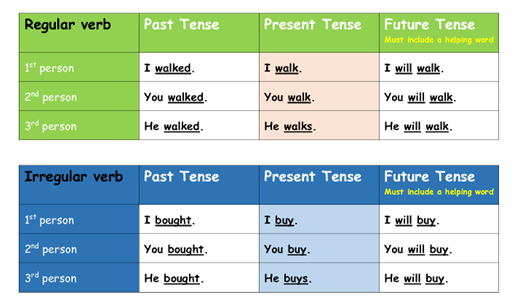
Tenses are often an area of difficulty. Different languages represent tense in different ways and so this may not come naturally to pupils. It is important to expose pupils to a range of tenses in context.
o Character and animal descriptions are a good way to practise present simple tense.
o Stories are a good way to practise past tense.
o Newspaper articles use a range of tenses and are helpful as a way of exploring when different tenses are appropriate.
o As levels of English progress, introduce more tenses through reading examples of good writing before beginning writing. An author may use past perfect continuous to create an interesting opener to set the scene: ‘I had been walking along the dark cold dirt track for many hours when I eventually caught sight of the glowing light.’ These are good opportunities to introduce different tenses in context.
There are lots of good display resources that can help pupils visualise tenses, and games where they can practise using different tenses e.g. Present simple and present continuous | LearnEnglish Kids (britishcouncil.org)
Articles
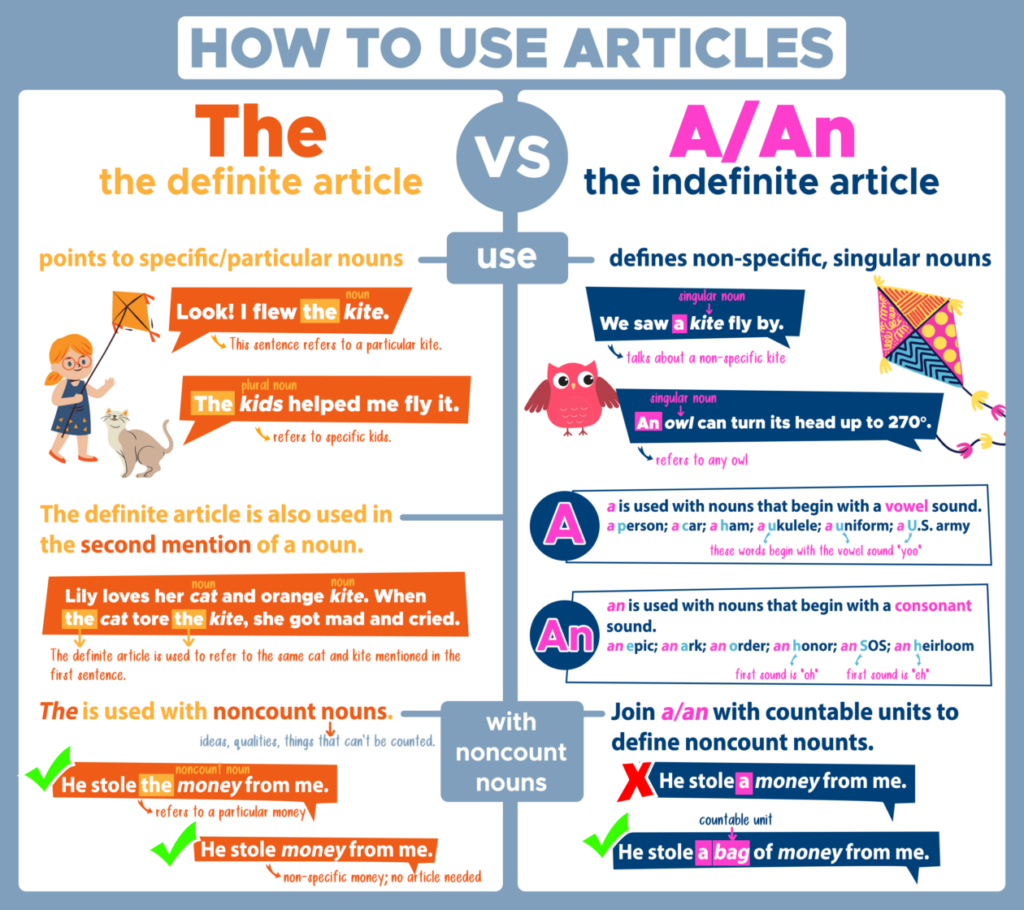
Some languages do not use articles, so pupils would be likely to miss out ‘a/the’. Adding articles to word lists/display can be really helpful. There are good display posters and websites that help to explain the concept:
Articles | LearnEnglish Kids (britishcouncil.org)
Articles: 'a', 'an', 'the' | LearnEnglish (britishcouncil.org)
Articles: A Complete Grammar Guide | Grammarly
Image from Articles Definite Indefinite And No Article English Grammar (fity.club)
Plurals, pronouns and prepositions

Remember that plurals, pronouns and prepositions can be confusing – houses, sheep, puppies; he, she, his, her; in, on etc.
This can be supported by having a picture of each character with the associated pronouns that refer to them. Visual guides to prepositions of place are also helpful.
See Possessives: pronouns | LearnEnglish (britishcouncil.org) and Learn the prepositions of place including in, at and on in English - BBC Bitesize
Word order
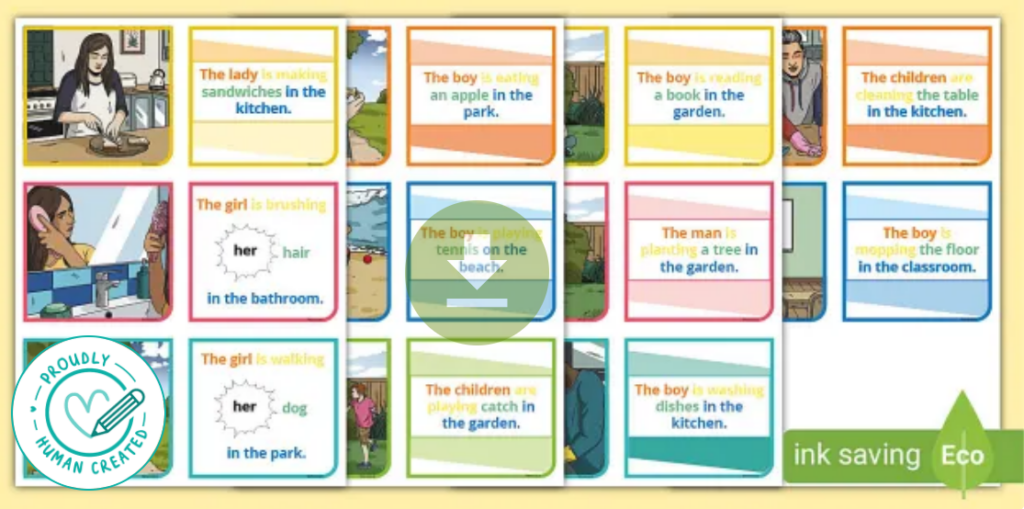
Word order differs from English in some languages. You can support pupils in learning word order using pre prepared ‘Sentence makers’. Use cut up words to form sentences. Colourful semantics is an excellent way of visualising where words should come in a sentence. See What is Colourful Semantics? - Answered - Twinkl
Colourful Semantics: A teacher's guide (structural-learning.com)
Image from https://www.twinkl.com