English or ESOL?

The following information is an extract from Aberdeenshire’s ESOL Guidelines:
What is SQA ESOL? SQA English for Speakers of Other Languages (ESOL) is a qualification which is delivered in units that focus on the development of literacy and communication of the English language. Each unit focuses on the development of the skills of speaking, listening, reading and writing. The SQA ESOL courses provide opportunities to develop language for everyday use and in work and study contexts. The courses focus primarily on accurate receptive and productive use of language and, whilst encouraging an understanding of genre, there is no requirement for direct study of English literature.
English subject or SQA ESOL? Bilingual pupils should have every opportunity to develop the full range of English language skills, including the study of literature, in a context where they can interact with other young people who have English as a first language. This environment provides the language enrichment that they require in order to fully develop their English language skills. For most bilingual pupils, who transfer from primary or enrol in a Scottish school for the first time at some point during their early secondary education, gaining a qualification in English will be the preferred option. Most newly arrived pupils will be involved in mainstream English classes after enrolment into secondary school. There should be no discrete SQA ESOL classes in Broad General Education (BGE). Bilingual pupils should be in mainstream classes, supported, where appropriate, by an EAL Teacher or school-based staff from the ASN department. Teachers should take account of the young person’s progress in English language. All bilingual pupils should have a ScotXed English language level recorded on SEEMIS Click and Go. Pupils who are working towards Fluent (Level 5) as their English language level should not be presented for SQA ESOL
Who are the ESOL courses for?
“These courses are for learners whose first language is not English, who have developed their English language skills in reading, writing, listening and speaking to an appropriate SCQF level and/or completed ESOL qualifications at a lower SCQF level.” SQA Course Specification.
SQA ESOL is designed for bilingual pupils who require a qualification in English but who are not able to gain it in English subject at the necessary level to progress in Higher Education. A successful candidate at National 5 and Higher ESOL will be able to understand university lectures, take notes, access reading material, write essays and participate fully in oral work including assessments. Universities generally accept Higher ESOL for most courses except English.
SQA ESOL qualifications should be considered as an option for recently arrived bilingual pupils in S5/S6 where an ESOL qualification will better meet their needs or those pupils working towards ScotXed level 4 or below. It should also be considered for young people who arrive during S3/S4 and will not be able to achieve either National 4 or 5 in English subject.
SQA ESOL may be appropriate for young people who have had only a short period of secondary education in the UK. Some of them may have had extensive education in their home country and some may have had no previous education or interrupted education. Some may have been educated through the English language.
SQA ESOL may be appropriate where a pupil is performing better in subjects that are not as heavily language dependent e.g. Mathematics and IT. Refer to EAL Service for assessment.
SQA ESOL may also be appropriate for a pupil who is under performing in any subject and this is due to her/him having had little prior education or being very new to learning English.
SQA ESOL may also be appropriate for a pupil who has not passed English National 4 the previous session.
Who should NOT be entered for these examinations?
• Native speakers of English.
• Bilingual pupils who have progressed through all or most of their primary schooling in the UK.
• Bilingual pupils who are working towards or have attained ScotXed Level 5 - Fluent.
• Bilingual pupils who are being entered for National 4 English.
For more information see:
Aberdeenshire ENGLISH FOR SPEAKERS OF OTHER LANGUAGES Guidelines
Supporting pupils in SQA English

Pupils who are not yet competent users of English will still be in mainstream English classes in Broad General Education. Use EAL strategies mentioned in listening, talking , reading and writing to support pupils to access the curriculum and engage in learning. Use of visuals, glossaries, key word lists, sequencing activities, graded readers are some of the most helpful strategies, but there are many others that will be helpful.
Key strategies
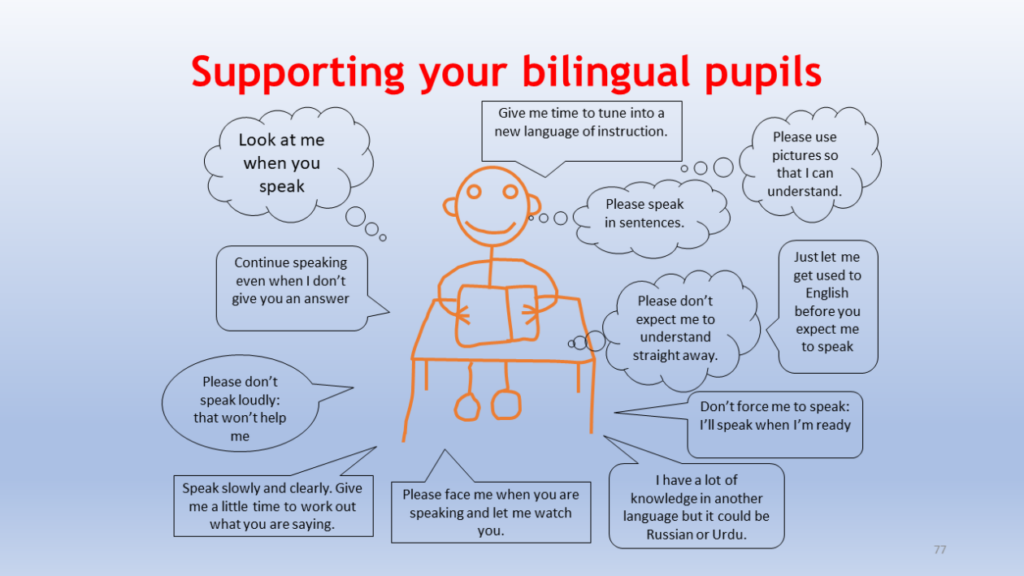
As with all subjects, make use of key EAL strategies (see general strategies section). Some key strategies include:
· using clear visuals.
· making use of first language to support learning using:
o dual language word lists and glossaries.
o dual language dictionaries.
o translation apps including google lens etc (follow good practice – see general advice for more guidance).
· printing out key visuals/info from the board.
· making sure the pupil can access the revision book for the subject.
· using the BBC Bitesize website (English and translated) to support understanding.
· offering past papers with marking instructions so pupils understand what markers will expect.
· encouraging pupils to use Scholar resources.
· offering homework and lunch clubs.
Prior knowledge

Remember to consider the pupil’s previous educational experiences. They may come with knowledge of a range of concepts and vocabulary for exploring languages in their first language. They may have covered some areas of the curriculum that you have not yet covered in class and likewise, they may not yet have covered some areas that you have covered. They may already have many of the required skills in critical analysis and analysing and comparing texts etc.
First Language
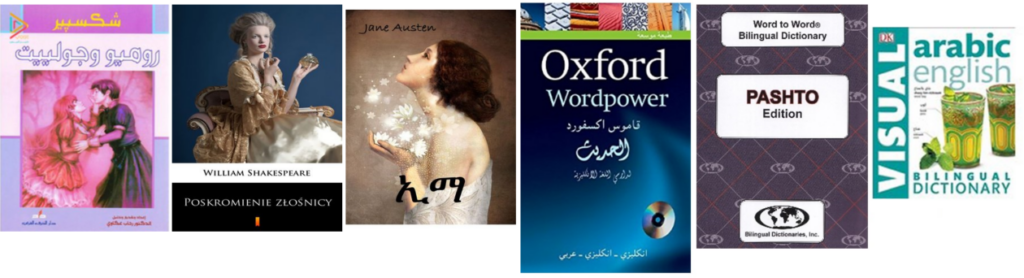
Use translated resources and glossaries if literate in first language.
Supporting the language of English

Include the pupil in a group with peers who are a good model of language and behaviour. Provide context for new vocabulary through examples, visuals etc. using target vocabulary in spoken and written form.
· Dual language dictionaries, word banks and glossaries will be helpful in supporting new language. Pre teaching vocabulary and sharing key vocabulary in advance of learning will be helpful. A range of media including visuals, videos, and audio books/text to speech software/apps will also support learning of new vocabulary and structures of language. Give pupils opportunities to practise using new language in spoken language with peers as well as in writing.
· Even for competent users of English, the structure of academic language required for English may challenging, as may be the higher order thinking skills such as using inference and reading between the lines. Pupils will be supported by lots of practice and exposure to modelled responses from teachers or peers who are good models of language.
· The format of some texts may be unfamiliar and be challenging to navigate e.g. discursive essays, critical essays etc.
Look at examples of texts and highlight key aspects, including the types of language used. Highlight any key vocabulary used including not only subject specific vocabulary but also homonyms (words with more than one meaning) that may have a different meaning to what the pupils would expect. Also point out the style of language including tenses etc. Ensure pupils have access to examples that they can use as a model for writing.
Cognitive level vs linguistic level
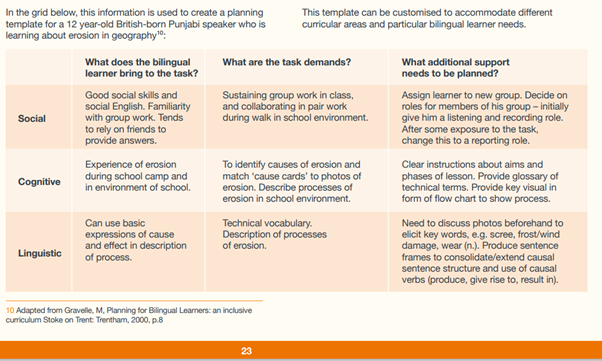
For all subjects, CfE levels should reflect the child’s cognitive ability, except for Literacy, which should reflect the child’s current level of English literacy skills. For pupils who are new to English they should be supported to take part in the mainstream curriculum at their level of English.
See more information on supporting linguistic, cognitive and social demands of a task: Learning in 2 + Languages | Resources | National Improvement Hub (education.gov.scot)
Language teaching in different countries

Find out about the languages spoken by the pupils in your class. Depending on their first language (L1), they may experience some influence of first language on their acquisition of English. See the section on Influence of L1. Speakers of languages which are closer in structure to English (e.g. Dutch, German) should find it easier to acquire English than speakers of languages which are further away in structure (e.g. Mandarin, Arabic etc.)
Language may be taught in different ways in different education systems, for example the pupils may be taught both ‘language’ and ‘literature’ and may need time to understand the expectations of English subject.
Also be aware that pupils may not be used to the style of some aspects of learning/pedagogy used in Scotland for example cooperative learning.